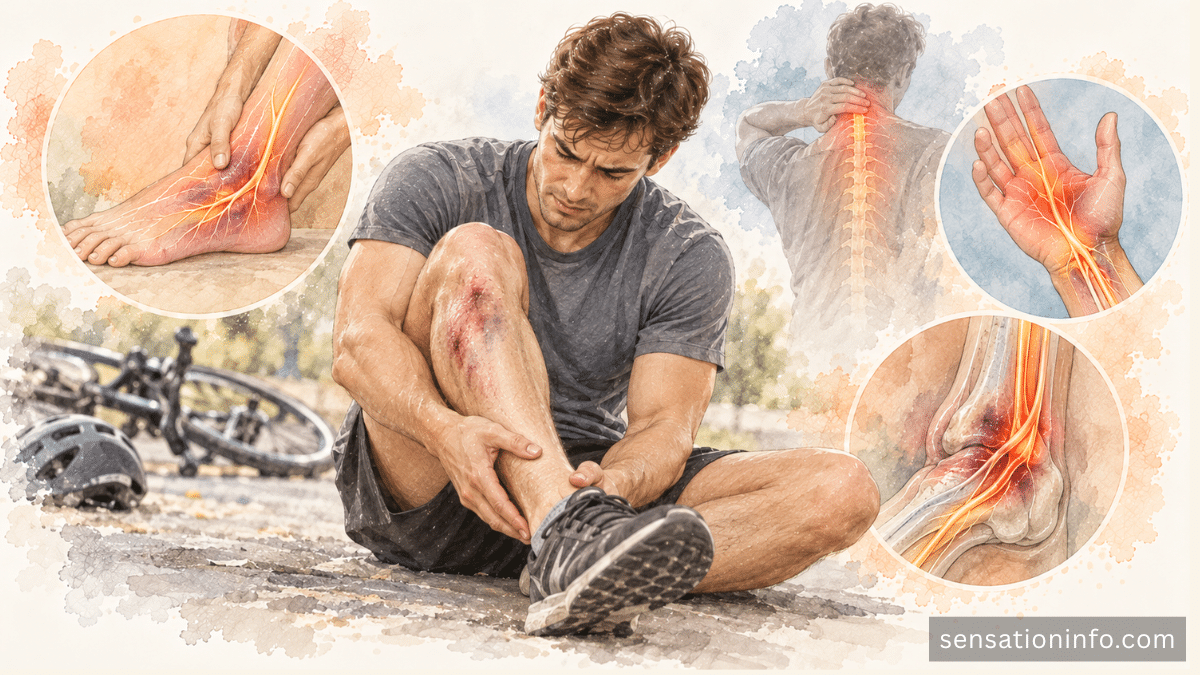

Numbness after an injury can result from temporary pressure, swelling around a nerve, a cut or crush injury, a fracture, a dislocation, or damage to the spinal cord or brain. It may occur with tingling, burning, pain, weakness, bruising, or reduced movement. Sudden loss of sensation, severe weakness, or a cold or discolored limb needs urgent care. Call 112 in India or 911 internationally.
What kind of injury happened?
The mechanism of injury helps determine which tissues may be affected. A brief pressure injury may cause temporary tingling, while a deep cut, crush, fracture, dislocation, or severe stretch can injure a nerve or blood vessel.
| Injury pattern | Symptoms to watch for | Recommended response |
| Brief pressure or awkward position | Tingling that resolves after movement | Monitor if fully resolved |
| Bruise or swelling | Local numbness, tenderness, or pressure | Arrange care if persistent or worsening |
| Cut or puncture | Numb skin, weakness, bleeding, or loss of movement | Prompt medical assessment |
| Crush injury | Severe pain, swelling, numbness, or weak movement | Emergency assessment |
| Fracture or dislocation | Deformity, inability to use the limb, or altered sensation | Do not straighten it; seek urgent care |
| Head, neck, or back trauma | Weakness, widespread numbness, confusion, or walking problems | Call 112 in India or 911 internationally |
Numbness after an injury should be assessed according to function and progression, not only the amount of pain.
Which warning signs require emergency help?
Call 112 in India or 911 internationally, or go to the nearest emergency department, if numbness after injury occurs with:
•Inability to move the limb, progressive weakness, or loss of grip.
•A cold, pale, blue, severely swollen, or very painful arm or leg.
•Severe bleeding, an open fracture, obvious deformity, or a crush injury.
•Head injury with confusion, repeated vomiting, loss of consciousness, seizure, severe headache, or weakness.
•Neck or back injury with numbness in both legs, walking difficulty, or loss of bladder or bowel control.
•New groin or saddle numbness with leg weakness or urinary retention.
•Sudden facial drooping, speech trouble, vision change, or severe dizziness.
•Rapidly worsening numbness, swelling, pain, or loss of function.
Keep the injured area still and follow emergency instructions. Do not delay care to test sensation repeatedly.
Is the numbness improving or spreading?
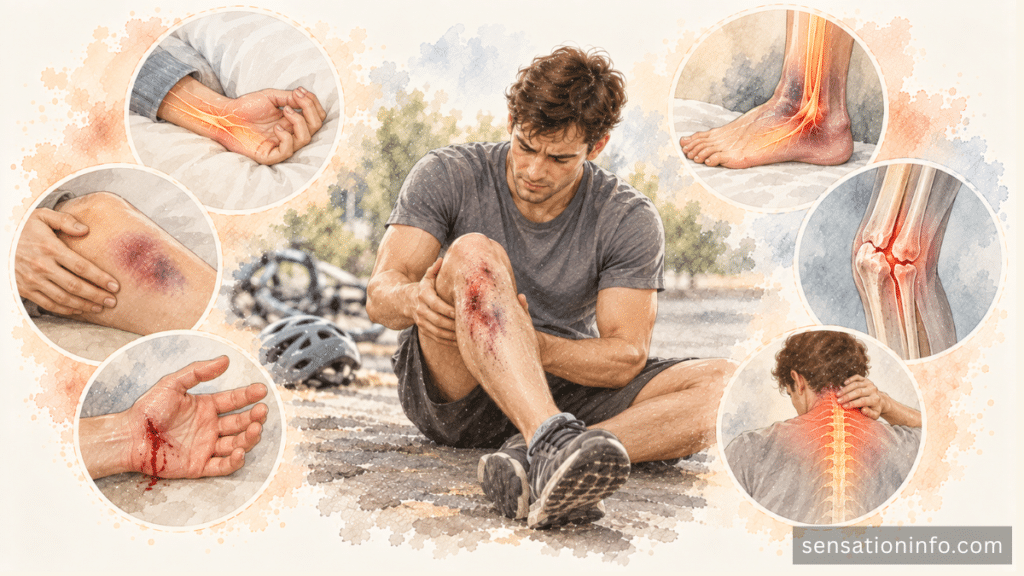
The direction of change is important. Numbness that fades as swelling settles may be less concerning than numbness that spreads, becomes constant, or is joined by weakness.
| Course after injury | Possible meaning | What to do |
| Brief and fully resolved | Temporary pressure or irritation | Monitor for recurrence |
| Stable numb patch near a wound | Local skin nerve injury or healing | Arrange follow up |
| Increasing numbness with swelling | Pressure on a nerve or blood flow problem | Prompt assessment |
| Numbness with weakness or loss of movement | Significant nerve, spinal, or muscle injury | Urgent or emergency care |
| Numbness in both limbs after spinal trauma | Spinal cord problem | Call 112 in India or 911 internationally |
| Persistent numbness weeks after injury | Nerve injury or another condition | Specialist evaluation may be needed |
A nerve can recover slowly, but waiting is not safe when function is worsening.
How can a nerve be injured?
Peripheral nerves carry signals between the brain and spinal cord and the rest of the body. An injury can compress, stretch, bruise, inflame, or cut a nerve.
Symptoms may include numbness, tingling, burning, electric pain, weakness, muscle twitching, cramps, reduced reflexes, or difficulty with fine movements. The location depends on which nerve is affected.
Can swelling cause temporary numbness?
Yes. Swelling, bleeding, a hematoma, a tight bandage, a cast, or a brace can increase pressure around a nerve. Swelling can also affect blood flow.
Do not remove or alter a surgical dressing, cast, or brace unless directed by the treating team. Contact a clinician promptly if pain increases, fingers or toes become cold or discolored, swelling is severe, or movement becomes difficult.
What symptoms follow a cut or wound?
A wound may damage small skin nerves or a larger nerve. Numbness near the wound can occur with a cut, but numbness extending beyond it, weakness, or inability to move a finger or toe needs assessment.
Control bleeding with firm pressure if safe and follow first aid advice. Do not probe a deep wound or close it yourself. Seek prompt care for contaminated, deep, puncture, bite, or heavily bleeding wounds.
Numbness with a wound can also occur with infection, swelling, or a retained foreign object.
What happens after a fracture or dislocation?
A fracture or dislocation can stretch or compress nearby nerves and blood vessels. Numbness, tingling, weakness, severe swelling, deformity, or a change in limb colour may occur.
Do not straighten, force, or repeatedly move a deformed limb. Support it in the position found and seek urgent medical care. A cold or pale limb, absent movement, or rapidly increasing pain is an emergency.
What if the injury affects the head, neck, or back?
Head, neck, and back injuries can affect the brain, spinal cord, nerve roots, or peripheral nerves. Numbness may occur with weakness, confusion, headache, vomiting, balance problems, or changes in bladder and bowel function.
Keep the spine as still as reasonably possible after major trauma and wait for emergency instructions. Call 112 in India or 911 internationally for new neurologic symptoms after a head, neck, or back injury.
Can pain hide a nerve injury?
Severe pain and swelling can make movement difficult, but numbness and weakness may indicate nerve involvement even when pain is not extreme. Some nerve injuries cause burning or electric pain, while others produce reduced sensation with little pain.
Do not use the amount of pain to decide that an injury is minor. Function, sensation, skin colour, temperature, swelling, and progression all matter.
What other causes can appear after an injury?
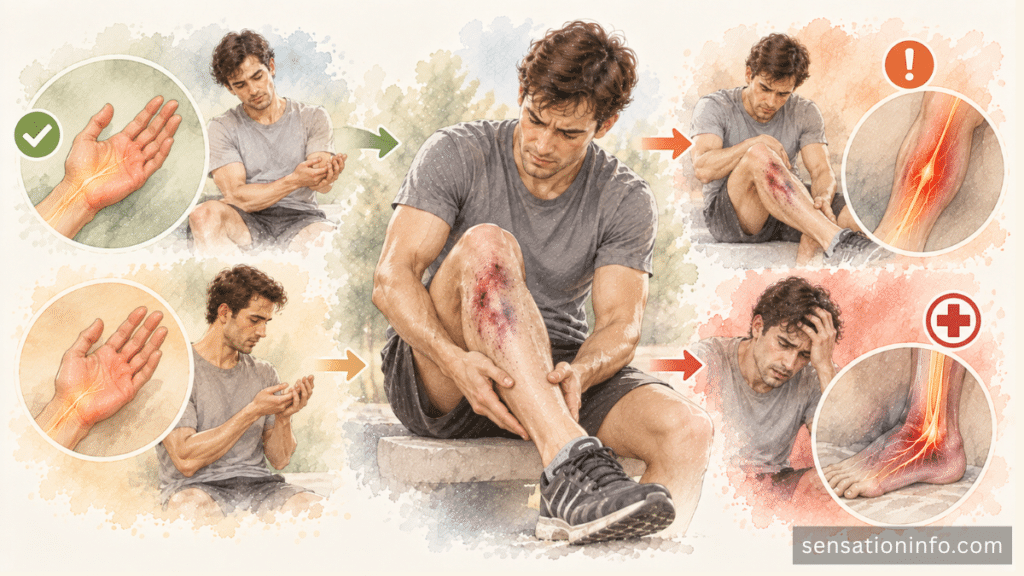
Nerve compression from a cast or brace
A tight immobilizer can compress a nerve or restrict circulation. Increasing numbness, severe pain, swelling, weakness, or cold fingers or toes needs prompt review.
Compartment syndrome
Severe swelling and pressure within a muscle compartment can cause intense pain, tightness, numbness, weakness, and reduced movement. It can develop after a fracture, crush injury, bleeding, or strenuous activity and requires urgent assessment.
Infection
A wound infection may cause increasing redness, warmth, swelling, drainage, fever, chills, or worsening pain. Numbness with rapidly spreading redness or severe illness needs prompt care.
Complex regional pain syndrome
Some people develop persistent pain, swelling, temperature or colour changes, sensitivity, and movement difficulty after an injury. Early assessment can help guide rehabilitation and symptom management.
An underlying neuropathy
Diabetes, vitamin deficiency, alcohol, medicines, kidney or thyroid disease, and other conditions can affect nerve resilience and recovery. Symptoms in both feet or hands may suggest a broader condition rather than the injury alone.
How should you protect the injured area?
Follow the treatment plan for immobilization, wound care, movement, weight bearing, and follow up. Protect numb skin from heat, cold, pressure, and sharp objects. Check the skin for burns, blisters, swelling, and colour change without using extreme temperatures to test sensation.
Do not massage a severely swollen or discolored limb. Do not use forceful stretching, high velocity manipulation, or unapproved supplements to speed nerve recovery.
How is post injury numbness diagnosed?
A clinician will ask how the injury happened, when numbness began, whether it is spreading, and whether weakness, pain, swelling, wounds, movement changes, or circulation symptoms are present.
The examination may check the wound, bones, joints, skin, sensation, strength, reflexes, coordination, pulses, temperature, swelling, and gait. Tests may include X-rays, ultrasound, computed tomography, magnetic resonance imaging, blood tests, nerve conduction studies, or electromyography.
Emergency symptoms require immediate assessment. A routine nerve study may be arranged later when the injury is stable.
How is nerve injury treated?
Treatment depends on the type and severity of injury. A dressing, cast, or brace may need adjustment. Fractures and dislocations require appropriate reduction and immobilization. Wounds may need cleaning, closure, antibiotics, or repair.
Nerve compression, compartment syndrome, major blood vessel injury, infection, or spinal injury may require urgent procedures. Rehabilitation, physical therapy, occupational therapy, and specialist nerve treatment may support recovery.
Do not begin treatment with prescription medicines or supplements without professional guidance.
How long does numbness take to improve?
Recovery varies according to whether a nerve was compressed, stretched, bruised, partially damaged, or cut. Temporary pressure may resolve quickly, while nerve injuries can take weeks or months. Some severe injuries may leave lasting changes.
Improvement in sensation does not guarantee normal strength, and a lack of early improvement does not prove that recovery is impossible. Attend follow up appointments and report new weakness, spreading numbness, or worsening pain.
When should you see a clinician?
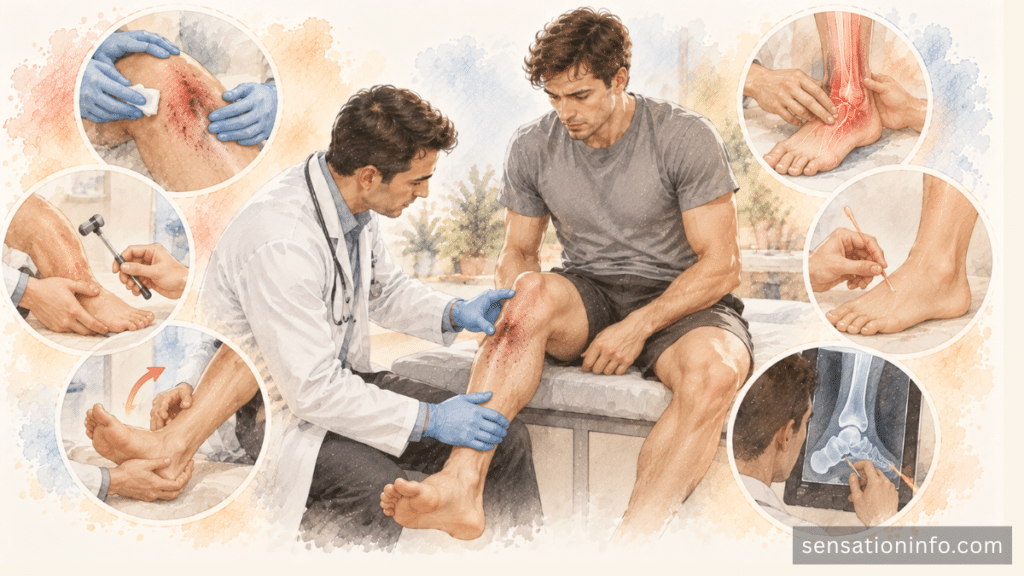
Arrange medical care for numbness that persists after an injury, returns, spreads, affects sleep or daily activities, follows a wound, or occurs with tingling, burning, weakness, swelling, or reduced movement.
Seek prompt care for a tight cast or bandage, worsening pain, fever, a wound change, a cold or discolored limb, or difficulty walking. Call 112 in India or 911 internationally for severe trauma, sudden neurologic changes, loss of movement, major bleeding, or rapidly worsening symptoms.
Key Takeaways
1.Numbness after injury may involve temporary pressure, swelling, a wound, fracture, dislocation, nerve injury, spinal injury, or circulation.
2.Worsening numbness, weakness, loss of movement, severe swelling, or a cold or discolored limb needs urgent assessment.
3.Head, neck, and back injuries with neurologic symptoms require emergency care.
4.Call 112 in India or 911 internationally for major trauma, sudden weakness, severe neurologic symptoms, or serious circulation changes.
5.Persistent post injury numbness should be evaluated because nerves can recover slowly and early treatment may matter.
Frequently Asked Questions
Temporary numbness can follow pressure or swelling, but numbness may also indicate nerve, spinal cord, or blood vessel injury. Persistent, spreading, or function limiting symptoms need medical assessment.
A tight cast, brace, or bandage can compress a nerve or limit circulation. Do not alter it unless instructed. Contact the treating team promptly if numbness increases or fingers or toes become cold, swollen, or discolored.
Temporary pressure may resolve quickly, while a bruised, stretched, or damaged nerve may take weeks or months to recover. The injury type, nerve, swelling, and treatment affect the timeline
Avoid massage when the limb is severely swollen, very painful, cold, pale, blue, or weak. Follow the treating clinician’s instructions instead, especially after a fracture, crush injury, or procedure.
Doctor’s Recommendation
Post injury numbness should be evaluated by mechanism, location, function, and progression. The existing neuropathy guide provides background on nerve symptoms, while a numb limb after a cut, crush, fracture, dislocation, or spine injury needs direct examination.
Conclusion
Numbness after an injury can result from pressure, swelling, a damaged peripheral nerve, a fracture, a dislocation, a wound, spinal trauma, or reduced blood flow. Keep the injured area safe, monitor function and circulation, and follow the treatment plan. Call 112 in India or 911 internationally for emergency warning signs and arrange care for persistent or worsening numbness.
References
Mayo Clinic. Peripheral Nerve Injuries: Symptoms and Causes.
Mayo Clinic. Peripheral Nerve Injuries: Diagnosis and Treatment.
Mayo Clinic. Numbness: Causes and Definition.
Cleveland Clinic. Compartment Syndrome: Causes, Symptoms and Treatment.
National Library of Medicine. Numbness and Tingling. MedlinePlus Medical Encyclopedia.