
Pins and needles in the neck can come from posture, tight muscles, an irritated nerve, a skin problem, shingles, or an injury. When the sensation travels into an arm or occurs with weakness, severe headache, dizziness, trouble walking, or speech or vision changes, it needs urgent assessment. Call 112 in India or 911 internationally.
Is the sensation on the skin or deeper in the neck?
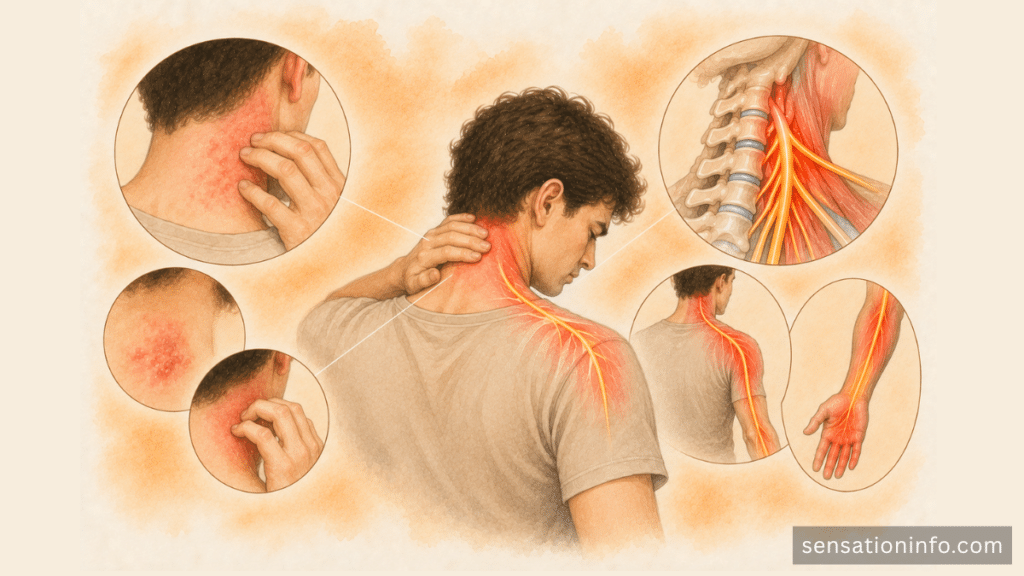
Pins and needles may feel like prickling, buzzing, crawling, burning, or tiny electric shocks. A surface sensation may occur with redness, itching, a rash, or irritation from clothing, hair products, heat, or friction.
A deeper sensation may feel as though it starts near the spine, muscles, shoulder, or collarbone. It may travel into an arm, hand, or fingers when a neck nerve is irritated. The location and path are more useful than the word used to describe the sensation.
Tell a clinician whether the feeling is on one side or both, whether it travels, and whether neck movement changes it.
Which red flags need emergency care?
Call 112 in India or 911 internationally, or go to the nearest emergency department, if pins and needles in the neck occur with:
•Sudden weakness or numbness in the face, arm, or leg.
•Facial drooping, trouble speaking, confusion, new vision changes, or severe imbalance.
•A sudden severe headache, fainting, seizure, or inability to stay awake.
•Trouble breathing, swallowing, or controlling the arms or legs.
•New loss of bladder or bowel control or numbness in the groin.
•Severe neck pain after a crash, fall, sports injury, or other trauma.
•Fever with marked neck stiffness, confusion, or a rapidly spreading rash.
•Chest pressure, breathlessness, sweating, nausea, or discomfort spreading to the arm or jaw.
Sudden neurologic symptoms may indicate a stroke or another emergency. Neck symptoms after major trauma may involve the spinal cord or a blood vessel. Do not drive yourself when these warning signs are present.
Does posture or movement bring it on?
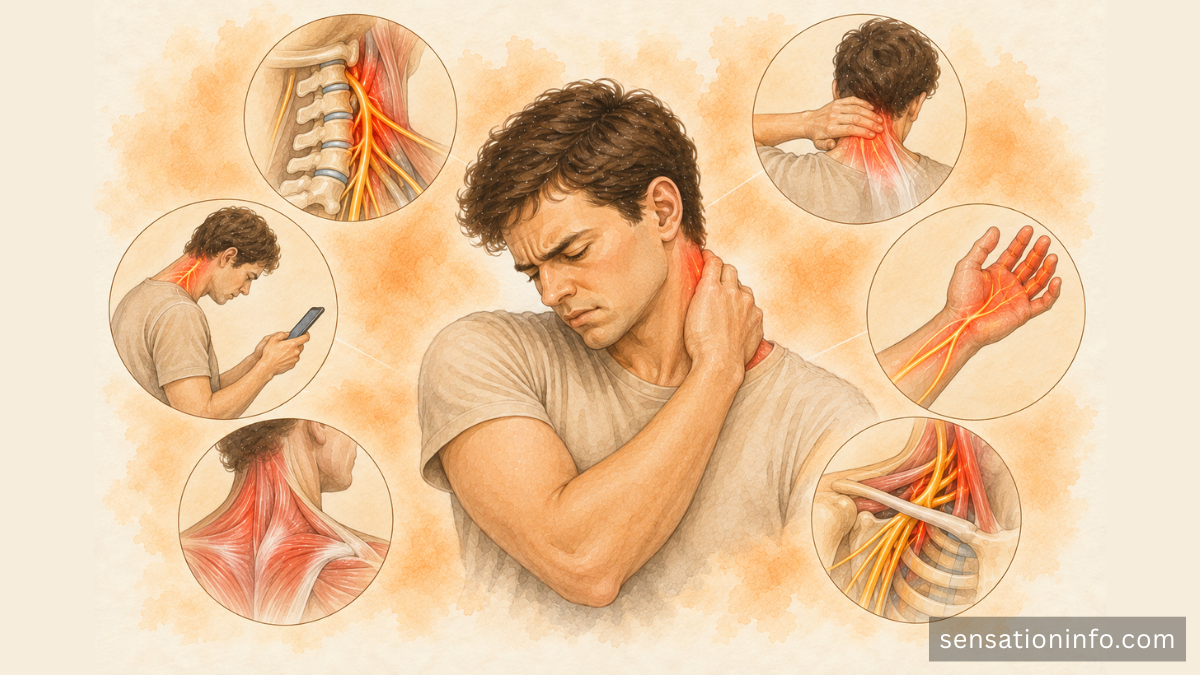
Pins and needles that appear after looking down at a phone, using a laptop, driving, sleeping awkwardly, or holding the head in one position may follow muscle tension or nerve irritation. Symptoms that worsen when you turn, bend, or extend the neck may involve a cervical nerve root, joint, muscle, or disc.
A posture related pattern does not prove that the problem is minor. Stop movements that cause a shock like sensation, weakness, severe pain, or dizziness. Persistent or spreading symptoms need assessment.
What causes pins and needles in the neck?
Cervical radiculopathy
Cervical radiculopathy occurs when a nerve root in the neck becomes compressed or inflamed. It may cause burning, sharp pain, tingling, pins and needles, numbness, or weakness that travels into the shoulder, arm, or hand.
A herniated disc, age related changes, arthritis, bone spurs, or narrowing around the nerve can contribute. Coughing, straining, or neck movement may increase the symptoms.
Muscle tension and posture
Long periods at a desk, repeated phone use, driving, heavy bags, or an awkward sleeping position can overwork neck muscles. Tight muscles can cause aching and may irritate nearby tissues or nerves.
Change positions regularly, keep screens near eye level, and use a comfortable supported posture. Seek care if the sensation persists, radiates, or comes with weakness or loss of feeling.
Cervical spine wear and tear
Cervical spondylosis describes age related changes in the discs and joints of the neck. It can cause stiffness, pain, and nerve irritation. If the spinal cord is affected, clumsiness, balance changes, weakness, or walking difficulty may develop.
New coordination problems, falls, bladder or bowel changes, or progressive weakness require prompt medical evaluation.
Thoracic outlet syndrome
Thoracic outlet syndrome can compress nerves or blood vessels between the lower neck and upper chest. It may cause pins and needles, pain, heaviness, weakness, swelling, or color changes in an arm or hand.
Symptoms that worsen when the arm is raised, especially with a cold, pale, blue, or swollen hand, require medical assessment.
Local nerve pressure
Pressure near the shoulder, collarbone, elbow, or wrist can create a sensation that is felt in the neck or travels down the arm. Repetitive work, a heavy strap, sleeping position, or an injury may contribute. The affected nerve pattern can help a clinician identify the likely site. Persistent weakness, loss of grip, or clumsiness needs evaluation.
Shingles
Shingles can causecause tingling, burning, pain, or itching on one side of the neck before a stripe of grouped blisters appears. Contact a clinician promptly if a one sided rash develops.
Seek urgent care if the rash is near the eye, widespread, associated with severe illness, or accompanied by breathing difficulty or confusion.
Skin irritation
Contact with soaps, hair products, fragrances, jewelry, clothing, sun, heat, or chemicals can irritate the skin of the neck. Itching, redness, peeling, swelling, or small bumps may accompany the prickling.
Remove the suspected trigger and rinse away chemicals safely. Seek care for facial swelling, breathing difficulty, a spreading rash, severe pain, or signs of infection.
Injury or whiplash
A sudden movement of the head can strain muscles, ligaments, discs, or nerves. Pins and needles may occur with stiffness, headache, shoulder pain, or symptoms in an arm.
Do not forcefully manipulate or stretch the neck after an injury. Severe pain, weakness, numbness, confusion, vomiting, difficulty walking, or loss of movement requires urgent care.
Migraine and other neurologic conditions
Some migraine episodes cause sensory changes, including tingling in the face, head, or neck. Multiple sclerosis, seizures, spinal cord disease, and other neurologic conditions may also produce unusual sensations.
Sudden symptoms need emergency assessment because stroke can resemble a migraine or nerve problem. Recurrent or unexplained symptoms should be evaluated by a clinician.
Infection and inflammation
An infection near the skin, throat, lymph nodes, joints, or spine can cause pain or unusual sensation. Fever, swelling, drainage, severe stiffness, confusion, or feeling very unwell increases concern.
Fever with severe headache and marked neck stiffness is an emergency.
Does the symptom travel into an arm?
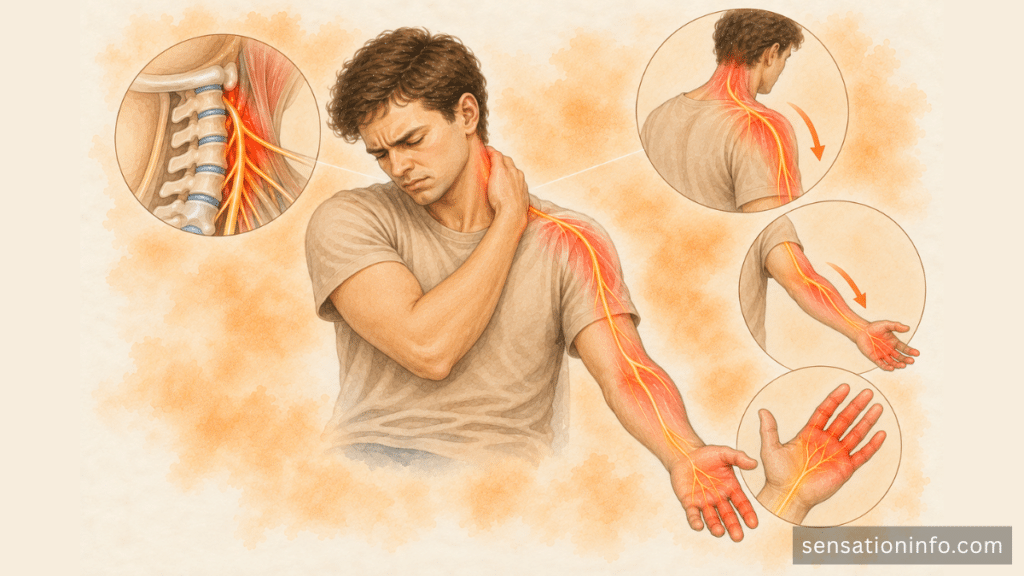
The route of the pins and needles can provide clues.
| Symptom route | Possible area involved | What to do |
| Neck skin only with itching or redness | Skin irritation or rash | Remove the irritant and monitor for improvement |
| Neck into one shoulder or arm | Cervical nerve root or nearby nerve | Arrange clinical evaluation if persistent |
| Lower neck into arm with swelling or color change | Nerve or blood vessel compression | Seek prompt or emergency care depending on severity |
| Neck with face or leg symptoms on one side | Brain or central nervous system | Call 112 in India or 911 internationally |
| Neck with both arms, legs, walking, or bladder changes | Spinal cord or widespread neurologic problem | Seek urgent medical care |
A symptom path is not a diagnosis. It is information to share with a clinician.
What can you do safely at home?
Avoid positions and activities that clearly trigger the sensation. Take breaks from screens, keep the head in a neutral position, and avoid carrying heavy bags on one shoulder.
Protect numb skin from heat, cold, cuts, and pressure. Do not use strong heat or perform forceful neck exercises. Do not manipulate the neck after a fall, crash, or other injury.
Keep a record of onset, duration, affected areas, triggers, neck pain, arm symptoms, rash, fever, weakness, dizziness, and changes in walking. Call 112 in India or 911 internationally for emergency warning signs.
How is neck prickling diagnosed?
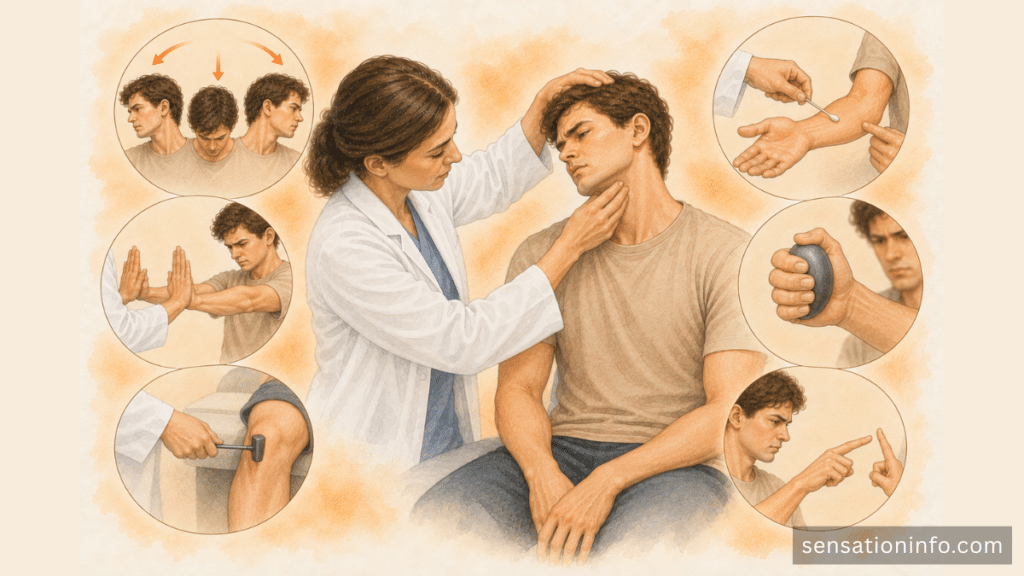
A clinician will ask about posture, work, phone use, driving, sleep, exercise, injuries, medicines, illness, rash, and the exact path of the sensation. The examination may assess neck movement, strength, sensation, reflexes, coordination, walking, skin, pulses, and arm function.
Testing may include blood tests, X rays, magnetic resonance imaging, computed tomography, nerve conduction studies, electromyography, or other studies. Emergency neurologic symptoms require immediate assessment rather than waiting for an outpatient test.
How is the cause treated?
Treatment depends on the cause. Posture and muscle problems may improve with activity changes, physical therapy, and clinician guided exercises. Cervical radiculopathy may require physical therapy, medicines selected by a clinician, injections, or surgery in selected cases.
Skin irritation requires removal of the trigger. Shingles may require prescription antiviral treatment. Thoracic outlet syndrome, spinal cord compression, infection, stroke, or a circulation problem needs condition specific care.
Do not self treat persistent or progressive weakness with exercise or forceful stretching.
When should you make an appointment?
Arrange care if pins and needles last beyond a brief episode, return often, travel into an arm, affect sleep or work, follow an injury, or occur with neck pain, numbness, weakness, clumsiness, or a rash.
Seek prompt care for fever, severe headache, worsening stiffness, swelling, arm color change, or symptoms that affect balance. Call 112 in India or 911 internationally for sudden weakness, facial drooping, speech trouble, vision changes, severe dizziness, breathing difficulty, or major trauma.
Key Takeaways
1.Pins and needles in the neck may involve posture, muscles, cervical nerves, skin, shingles, injury, blood vessels, or another neurologic condition.
2.A sensation that travels into one arm may follow a cervical nerve or another nearby nerve.
3.Sudden weakness, speech trouble, vision changes, severe imbalance, breathing difficulty, or major trauma requires emergency care.
4.Call 112 in India or 911 internationally for serious neurologic, breathing, chest, or movement symptoms.
5.Persistent, recurrent, spreading, or unexplained neck prickling needs assessment by a qualified clinician.
Frequently Asked Questions
Possible causes include posture, muscle tension, cervical radiculopathy, local nerve pressure, shingles, skin irritation, injury, migraine, infection, blood vessel compression, and other neurologic conditions. Persistent or unexplained symptoms need medical evaluation.
The sensation may follow a cervical nerve root or another nerve near the shoulder, collarbone, elbow, or wrist. Numbness, weakness, loss of grip, or persistent symptoms need medical evaluation.
An injury can strain muscles, discs, ligaments, or nerves. Severe pain, weakness, numbness, confusion, vomiting, difficulty walking, or loss of movement requires urgent assessment. Avoid forceful stretching or neck manipulation.
A spinal cord problem can cause altered sensation, weakness, clumsiness, walking difficulty, or bladder and bowel changes. New or progressive symptoms need prompt care, and emergency warning signs require immediate assessment.
Doctor’s Recommendation
Pins and needles in the neck should be mapped carefully because a surface skin problem, cervical nerve root, nearby nerve, or spinal cord issue can feel similar. If the sensation is broad rather than localized, the existing guide to pins and needles all over the body may help readers compare patterns, but swelling, color change, weakness, or sudden neurologic symptoms need direct medical care.
Conclusion
Pins and needles in the neck can result from posture, muscle tension, a cervical nerve, shingles, skin irritation, injury, or a more serious spinal or neurologic problem. Note whether it stays on the skin, changes with movement, travels into an arm, or occurs with weakness, fever, severe headache, or balance changes. Call 112 in India or 911 internationally for emergency warning signs and arrange care for symptoms that persist or return.
References
Cleveland Clinic. Cervical Radiculopathy: Symptoms and Treatment.
Cleveland Clinic. Numbness and Tingling: Causes and Treatment.
Mayo Clinic. Neck Pain: Symptoms and Causes.
Centers for Disease Control and Prevention. Shingles Symptoms and Complications. CDC.
National Library of Medicine. Numbness and Tingling. MedlinePlus Medical Encyclopedia.