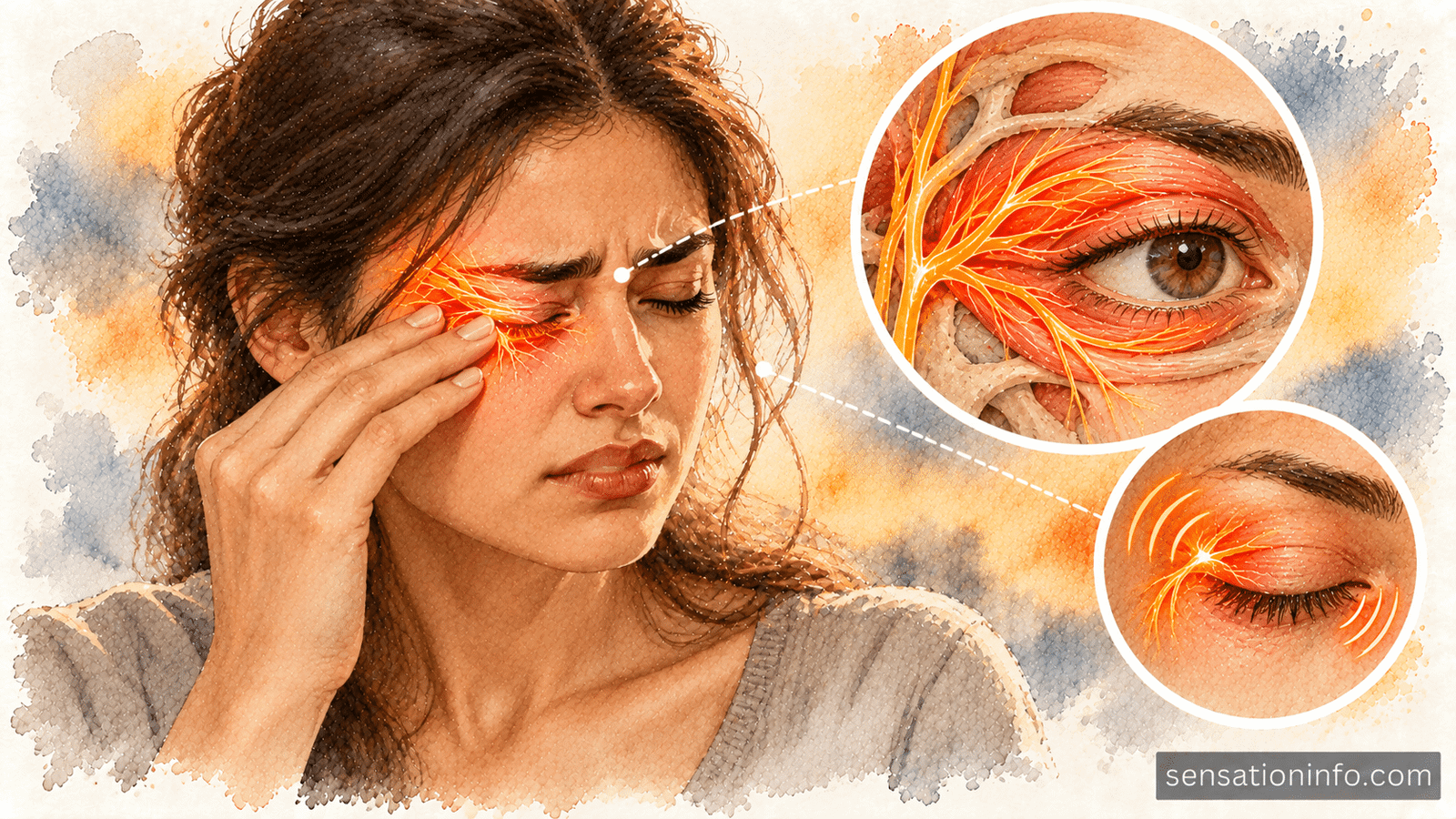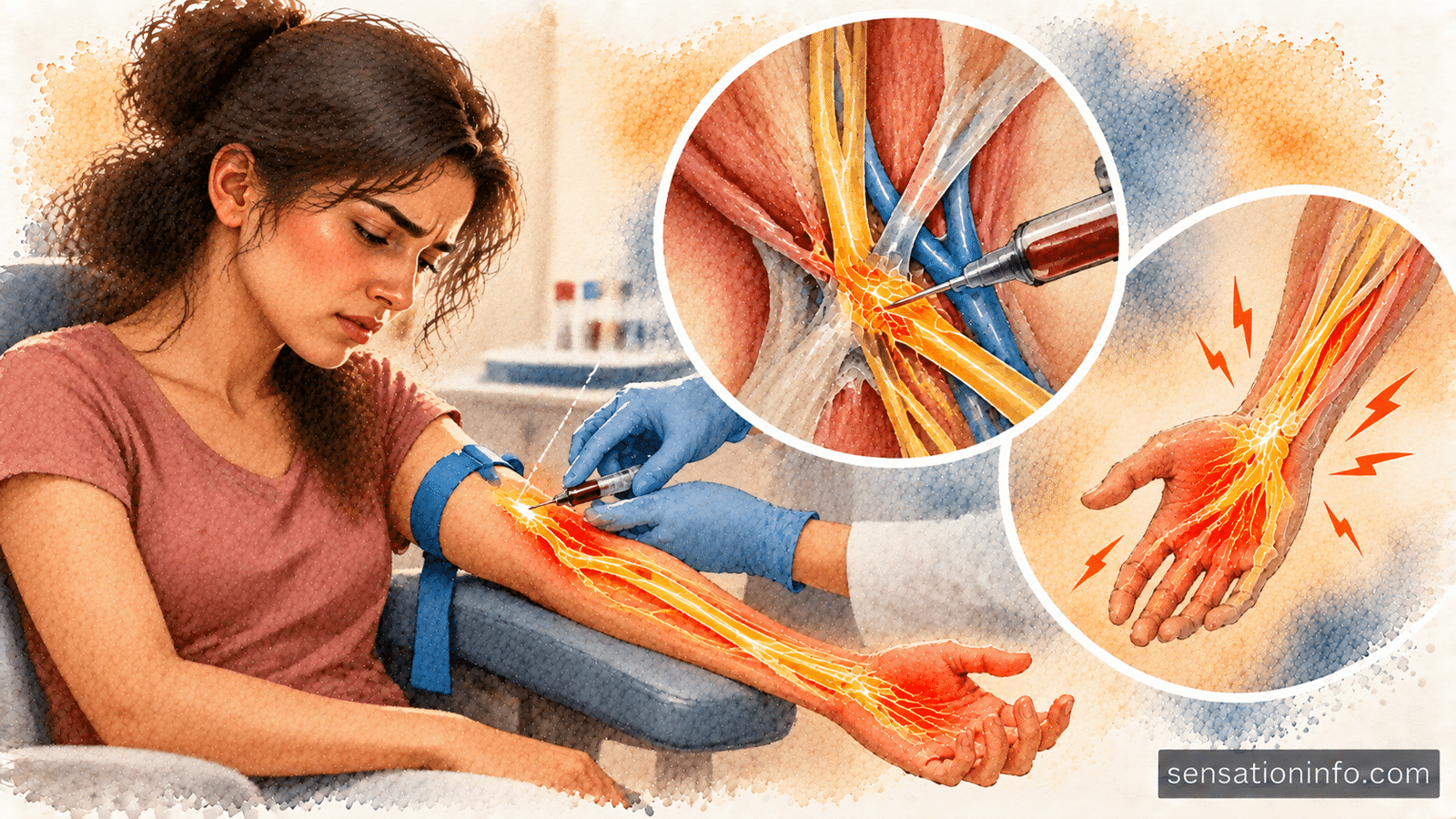

Getting blood drawn is a routine medical task but sometimes things go wrong under the skin. If you feel a sudden burning pain in arm after blood draw you might have a bruised or irritated nerve. While most people only expect a small surface bruise a deep needle stick can sometimes cause unrelenting burning pain shooting down one arm that makes moving your hand incredibly difficult. Understanding exactly how a needle affects your delicate nerves can help you heal faster and know exactly when to seek professional medical help.
How a Needle Can Hurt Your Nerves
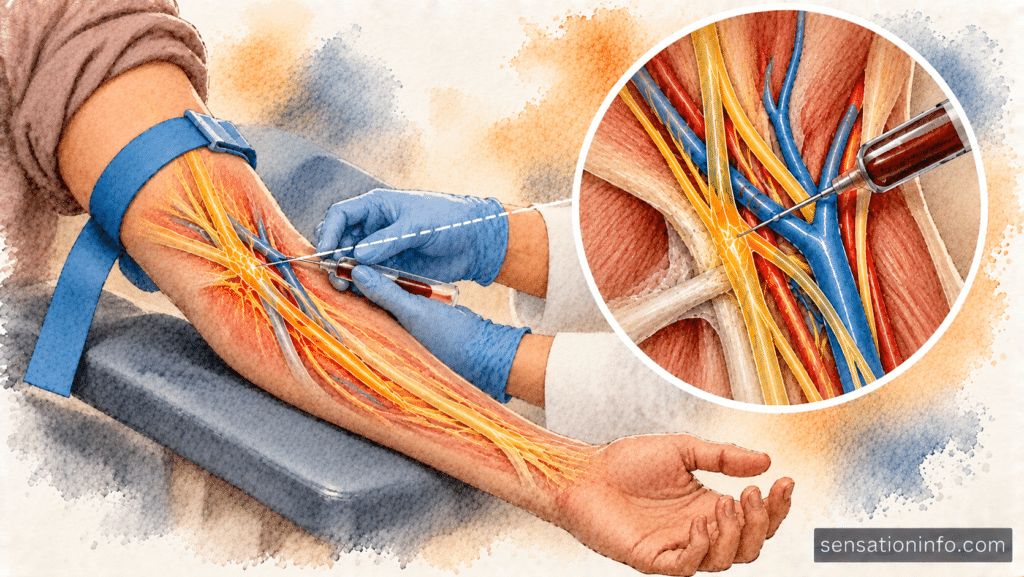
To understand why your arm burns you need to know how the inside of your elbow is structured. Medical professionals call the inside of your elbow the antecubital fossa. This small space is very crowded.
Your veins run incredibly close to your major arm nerves. When a phlebotomist or a nurse inserts a needle into a vein to draw blood or start an intravenous line they are working mere millimeters away from these sensitive nerve cords. Sometimes the needle accidentally touches a nerve. This unwanted contact causes immediate irritation and a host of painful physical symptoms.
Types of Needle Injuries
A nerve does not have to be completely cut to cause severe pain. In fact complete nerve cuts during a routine blood draw are incredibly rare. Most nerve pain comes from three specific types of minor injuries.
- A Direct Nick: The sharp tip of the needle slightly scrapes the outer protective coating of the nerve.
- Physical Compression: The needle pokes through the back of the vein and blood leaks out into the arm tissue. This pooled blood forms a hard lump called a hematoma. This lump physically crushes the nerve against the muscles.
- Chemical Irritation: If you are receiving intravenous fluids or medications the liquid can leak outside the vein. These strong medical chemicals can severely burn and inflame the nearby nerve tissue.
What does Burning Pain in Arm After Blood Draw Feels Like
Nerve pain feels completely different from a standard muscle cramp or a normal bruise. When a nerve is angry it sends highly confused electrical signals to your brain.
If your nerve was touched by a needle you will likely notice one or more of these specific feelings:
- A sudden electrical shock shooting down your forearm and into your fingers the moment the needle goes in.
- A lingering burning feeling that feels like a bad sunburn under your skin.
- A completely dead or heavy feeling in your hand or fingers.
- Intense tingling that feels like your arm has fallen asleep.
- A crawling feeling where normal light touch causes extreme pain.
Medical professionals call this extreme sensitivity dysesthesia. It is a strange crawling nerve sensation where normal clothing touches feel like fire. If your arm hurts when your long sleeve shirt brushes against it you are almost certainly dealing with an irritated nerve.
Normal Bruising Versus Nerve Pain
It is very common to have a sore arm after giving blood. Many people mistake a standard hematoma bruise for permanent nerve damage. Knowing the exact physical difference is the fastest way to figure out what is happening inside your arm.
Quick Symptom Comparison Guide
| Symptom Feature | Normal Blood Draw Bruise | Nerve Irritation or Injury |
| Type of Feeling | Dull ache physical stiffness soreness. | Electrical shocks burning buzzing dead numbness. |
| Exact Location | Right exactly where the needle went in. | Shoots down the arm into the fingers or wrist. |
| Skin Feeling | Normal but tender if you press on it hard. | Highly sensitive to light touch or totally numb. |
| Healing Time | Slowly fades away over three to seven days. | Can last for several weeks or months. |
A normal bruise stays in one place and feels like a dull ache. Nerve pain travels down the arm and feels like electricity or fire. If your pain shoots past your elbow and down toward your wrist you are dealing with a nerve issue.
Which Nerve Was Hit?
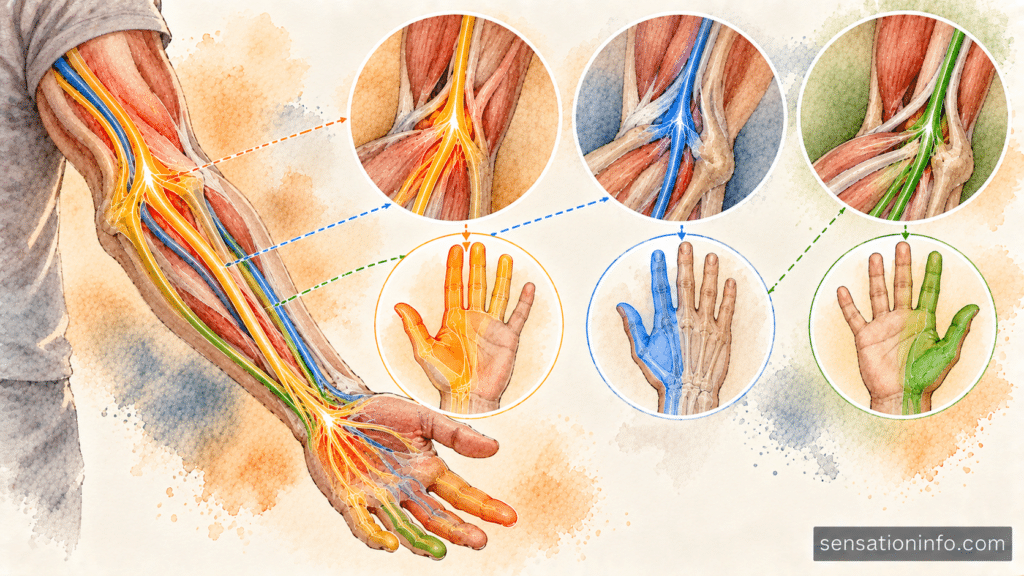
There are three main nerves that travel through your elbow pit. The specific fingers that feel numb or tingly will tell your doctor exactly which nerve was injured by the needle.
The Median Nerve
This is the nerve most often irritated during a blood draw. It sits very close to the large basilic vein. If the median nerve is hit you will feel burning and electrical shocks traveling down the middle of your forearm. The tingling will settle firmly into your thumb your index finger and your middle finger.
The Radial Nerve
This nerve runs closer to the outside of your elbow. If the radial nerve is scratched the burning pain will shoot down the back of your forearm. You will likely feel a patch of dead numbness on the back of your hand right between your thumb and index finger.
The Ulnar Nerve
This nerve runs along the inside of your elbow near your funny bone. If the ulnar nerve is irritated the electrical zaps will shoot down the inside of your forearm. The tingling will settle specifically into your pinky finger and the ring finger next to it.
Warning Signs: When to Seek Immediate Care
Most nerve irritation from a needle stick is a temporary warning sign that simply needs time to heal. However severe pressure from leaked blood can permanently kill delicate nerve cells. You must pay close attention to how your hand feels in the days following your blood draw.
Seek medical evaluation immediately if your arm pain happens alongside any of these serious warning signs:
- You start dropping your keys or a coffee cup because your grip feels suddenly very weak.
- You cannot physically open your hand all the way or straighten your fingers.
- Your hand or arm becomes incredibly swollen hot to the touch and bright red.
- The burning pain is so severe that it wakes you up from a deep sleep.
- You notice a rapidly growing hard lump under the skin where the needle was placed.
A rapidly growing hard lump means the vein is still actively bleeding under the skin. This expanding blood pool can completely crush the nerve and requires immediate medical attention to prevent permanent damage.
How Long Does the Burning Pain Last?
The timeline for completely resolving nerve pain depends entirely on how badly the nerve was injured.
If the needle simply brushed against the nerve the buzzing feeling often goes away completely within a few hours to a few days. The nerve was just surprised and needs time to calm down.
If the needle scratched the nerve or if a large blood bruise is crushing it the recovery takes much longer. Nerves heal incredibly slowly. When you are dealing with persistent tingling and dead numbness after a minor tissue injury it can take four to twelve full weeks for the feeling to return to normal.
During the healing process the damaged nerve must regenerate its outer protective coating. It is very normal for the dead numbness to turn into a buzzing or itching feeling before finally returning to normal baseline feeling.
Fast Relief and Treatment for Nerve Pain
Treating a burning arm focuses entirely on reducing the internal swelling and calming the angry nerve signals.
Simple Home Care Strategies

The absolute best treatment immediately after a nerve injury is dedicated rest. You must drastically reduce how much you use that specific arm.
- Ice Therapy: Apply an ice pack to the inside of your elbow for fifteen minutes at a time. This shrinks the blood vessels stops any bleeding and reduces the swelling that crushes the nerve. Do not use heat in the first forty eight hours because heat increases bleeding.
- Arm Elevation: Keep your injured arm propped up on a pillow when sitting on the couch. Elevating the arm helps drain trapped fluid away from the elbow and takes physical pressure off the nerve.
- Gentle Movement: Do not completely freeze your arm. Slowly bend and straighten your elbow a few times a day to keep the joint from getting painfully stiff.
Medical Interventions
When home care is not enough your doctor may recommend specific medications to help calm the nerve tissues. Standard oral medications like ibuprofen often fail completely to stop nerve tingling because they only target tissue swelling rather than the nerve itself.
Doctors frequently prescribe anticonvulsant medications such as gabapentin (Neurontin) or pregabalin (Lyrica) for severe burning pain. These powerful drugs actually change how your nerves send electrical signals to your brain effectively turning down the volume on the fire and pins and needles.
If a massive blood lump is actively crushing the nerve a doctor might need to perform a minor procedure to drain the trapped blood. Once the blood is removed the nerve can finally breathe and start healing.
How to Prevent Nerve Injury in the Future
If you have experienced a painful nerve hit you might feel very anxious about getting your blood drawn again. You can take active steps to protect yourself during future medical visits.
- Speak Up Early: Tell the person drawing your blood that you have had a severe nerve injury in the past. Ask them to use a different vein or a completely different arm.
- Ask for a Smaller Needle: Pediatric needles or butterfly needles are much smaller and less likely to cause deep tissue damage.
- Watch for the Shock: If you feel an immediate electrical zap the exact moment the needle goes in tell the nurse to stop immediately. A sharp zap means they are touching the nerve. They should remove the needle and try a different spot.
- Stay Hydrated: Drink plenty of water before your appointment. Plump hydrated veins are much easier to see and hit safely preventing the nurse from digging around under your skin with the needle.
Key Takeaways
- Burning pain in the arm after blood draw is usually caused by the needle touching or scratching a nearby nerve.
- Nerve pain feels like electrical shocks burning and dead numbness shooting down into the fingers.
- A normal blood draw bruise aches locally but a nerve injury causes pain that travels far away from the needle site.
- The median nerve is the most commonly injured nerve during routine elbow blood draws.
- You must seek medical care immediately if your hand becomes weak or if you cannot straighten your fingers.
- Treatment involves resting the arm using ice packs to reduce swelling and taking specific nerve medications if the pain is severe.
Frequently Asked Questions
A mild dull ache and a small purple bruise are perfectly normal for up to a week. However severe burning pain electrical zaps or numbness in your fingers are not normal and indicate a nerve issue.
If the sharp needle tip touches the nerve it sends a massive sudden electrical signal to your brain. This causes an involuntary muscle reflex making your arm jerk or pull away instantly.
Do not use heat for the first forty eight hours. Heat opens up blood vessels and can cause more bleeding under the skin which puts more pressure on the nerve. Use ice packs first to stop the swelling.
Doctor’s Recommendation
If the burning pain in your arm makes you drop objects lasts longer than a few weeks or turns into an unbearable electrical shock it is time to see a medical professional. A board certified pain management specialist can perform detailed nerve tests and offer targeted treatments that general doctors do not typically provide. We strongly suggest reading our guide on finding a top rated specialist to manage severe and burning nerve pain to help you locate a qualified doctor who can safely evaluate your nerve injury.
References
National Institute of Neurological Disorders and Stroke. Paresthesia Information Page. 2023.
American Society of Phlebotomy Technicians. Venipuncture Complications and Nerve Injury. 2022.
Mayo Clinic. Peripheral Neuropathy: Symptoms and Causes. 2022.
Cleveland Clinic. Venipuncture Risks and Nerve Damage. 2021.