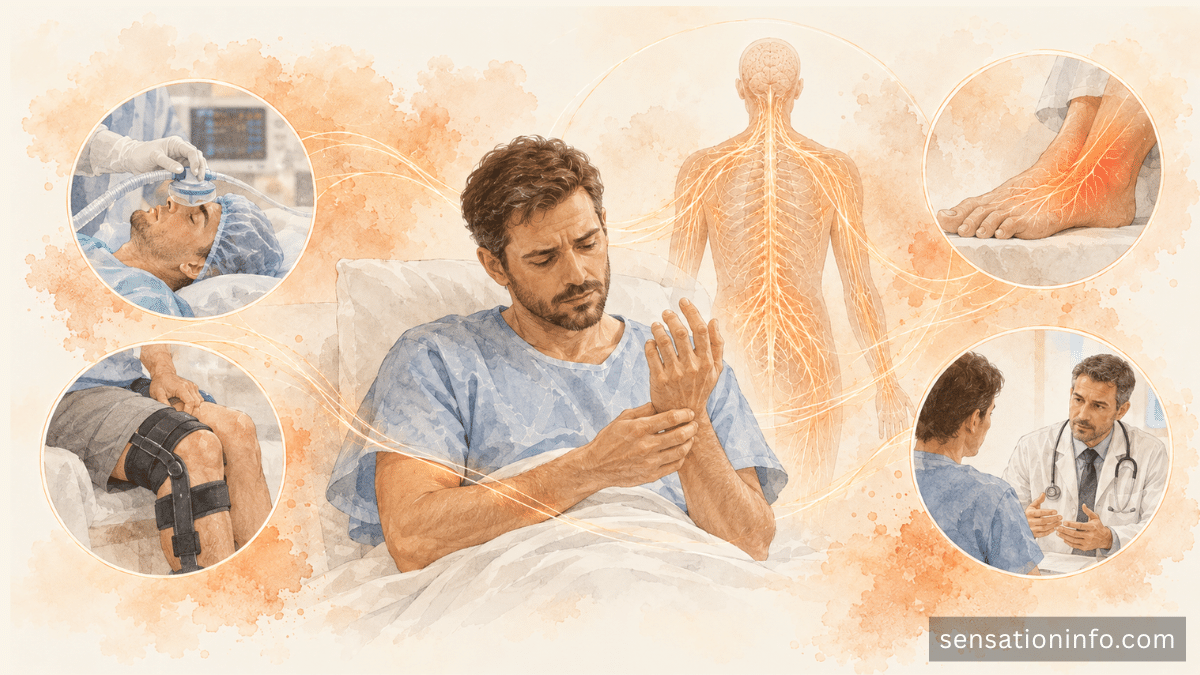

Numbness after surgery can be a temporary effect of anesthesia, a nerve block, swelling, or the position used during an operation. It can also reflect pressure from a dressing, cast, or brace, a nerve injury, infection, a blood clot, or another complication. The expected recovery depends on the procedure and the body area involved.
What is the timing of the numbness?
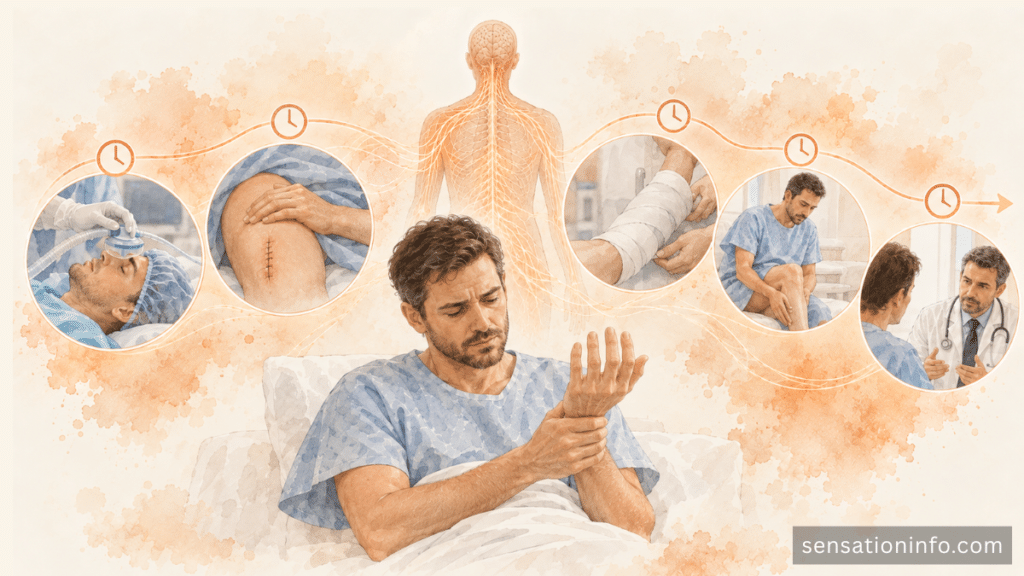
The time the numbness begins and how it changes are important. Numbness present immediately after a nerve block may be expected for a limited period, while new or worsening numbness after an initial recovery deserves attention.
| Timing or pattern | Possible explanation | Appropriate response |
| Present while a planned nerve block is active | Temporary anesthetic effect | Follow the surgical team’s instructions |
| Mild around the incision or operated area | Local swelling or healing tissues | Monitor the expected recovery plan |
| Appears after a tight dressing, cast, or brace | Pressure on a nerve or circulation | Contact the surgical team promptly |
| Begins after prolonged positioning | Nerve compression or stretch | Report persistent symptoms or weakness |
| Worsens after initially improving | Swelling, nerve problem, infection, or another complication | Contact the surgeon promptly |
| Sudden with weakness, confusion, chest symptoms, or breathing difficulty | Possible emergency | Call 112 in India or 911 internationally |
Do not assume that every postoperative sensation is normal. The surgeon or anesthesia team knows which symptoms and time course are expected for your procedure.
When should you call the surgeon urgently?
Contact the surgical team promptly if numbness is persistent, worsening, spreading, affecting movement, or accompanied by increasing pain, swelling, a cold limb, colour change, drainage, fever, or a tight dressing or cast.
Call 112 in India or 911 internationally, or go to the nearest emergency department, for:
•Sudden weakness, facial drooping, trouble speaking, confusion, severe dizziness, or loss of consciousness.
•Severe breathing difficulty, chest pressure, fainting, or a very fast or irregular heartbeat.
•A limb that becomes cold, pale, blue, severely swollen, or difficult to move.
•New groin or saddle numbness with loss of bladder or bowel control.
•Rapidly spreading weakness, inability to walk, or inability to move the operated limb.
•High fever with confusion, severe pain, rapidly spreading redness, or feeling very unwell.
•Severe symptoms after a head, neck, or back procedure.
If you are unsure whether a symptom is expected, use the discharge number provided by the hospital or contact the surgical team. Do not wait for a routine follow up when function or circulation is changing.
Which types of numbness can occur after surgery?
Numbness may affect the skin around an incision, the area supplied by a nerve block, a pressure point from positioning, or a larger part of the limb. It may be accompanied by tingling, burning, reduced temperature sensation, weakness, or pain.
A small numb patch near an incision can occur as superficial skin nerves heal. Numbness in an entire limb, a hand with weak grip, or a foot that cannot lift needs more urgent attention. Understanding the general causes of numbness can also help differentiate surgical side effects from pre-existing nerve conditions.

Could anesthesia or a nerve block be the reason?
General anesthesia, regional anesthesia, and local nerve blocks can temporarily reduce sensation. The anesthesia team should explain which areas may be numb and the expected duration.
A nerve block that lasts longer than the team advised, becomes more intense, or occurs with new weakness should be reported. Do not drive or walk without support while a leg or arm is still numb.
Do not take additional medicines or repeat a nerve block unless directed by the treating team.
Can the surgical position irritate a nerve?
During a long operation, pressure or stretch may affect a nerve near the shoulder, elbow, hip, knee, or other contact point—similar to the chronic nerve entrapment sometimes evaluated in carpal tunnel syndrome. Symptoms may include numbness, tingling, burning, weakness, or difficulty moving a hand or foot. Postoperative nerve symptoms can improve, but persistent weakness or loss of function requires assessment. Tell the team when the symptoms were first noticed and whether they are improving, stable, or worsening.
Could swelling or a dressing cause numbness?
Swelling around an operation can increase pressure on nearby tissues. A dressing, splint, cast, or brace that is too tight may also affect a nerve or blood flow.
Do not cut, remove, or adjust a surgical dressing or cast unless the surgical team tells you to do so. Contact the team promptly if numbness increases, fingers or toes become cold or discolored, swelling is severe, or pain is disproportionate.
What postoperative conditions can cause persistent numbness?
Local nerve irritation or injury
A nerve may be stretched, bruised, compressed, or cut during an operation or by postoperative swelling. Symptoms depend on the nerve and may include pain, tingling, numbness, weakness, or reduced reflexes.
Infection
Infection may cause increasing pain, redness, warmth, swelling, drainage, fever, chills, or feeling unwell. Numbness around a wound with rapidly spreading redness or severe pain needs prompt assessment.
Blood clot or circulation problem
A clot or circulation problem may cause swelling, pain, heaviness, color change, or coldness. Sudden chest pain, breathlessness, coughing blood, fainting, or severe limb symptoms require emergency help.
Spinal or brain complication
After surgery involving the spine, brain, neck, or major blood vessels, new weakness, numbness, severe headache, confusion, speech trouble, or difficulty walking requires immediate attention.
Underlying neuropathy
Diabetes, vitamin deficiency, alcohol use, kidney disease, thyroid disease, and other conditions can affect nerve recovery. The existing neuropathy symptoms guide offers background when numbness affects multiple areas, but new postoperative weakness should be discussed with the treating team.
How long can numbness last?
There is no single recovery time. A local skin patch may remain numb while small nerves heal. A nerve block may last according to the specific anesthetic and technique. A compressed or injured nerve can take weeks or months to recover, and some symptoms may persist.
Your procedure, nerve involved, degree of injury, swelling, medical conditions, and treatment plan all affect recovery. Ask the surgeon what changes are expected and what should trigger a call.
Numbness that is not improving, becomes more extensive, or interferes with movement should not be ignored.
What should you tell the surgical team?
Record when the numbness began, the exact area, whether it is spreading, the presence of weakness or pain, and whether it changes with limb position. Note the procedure, anesthesia or nerve block, dressing or cast, new medicines, fever, swelling, wound changes, and ability to walk or use the hand.
A photograph of swelling or skin colour change may help if symptoms fluctuate, but it should not delay urgent care.
How is postoperative numbness evaluated?
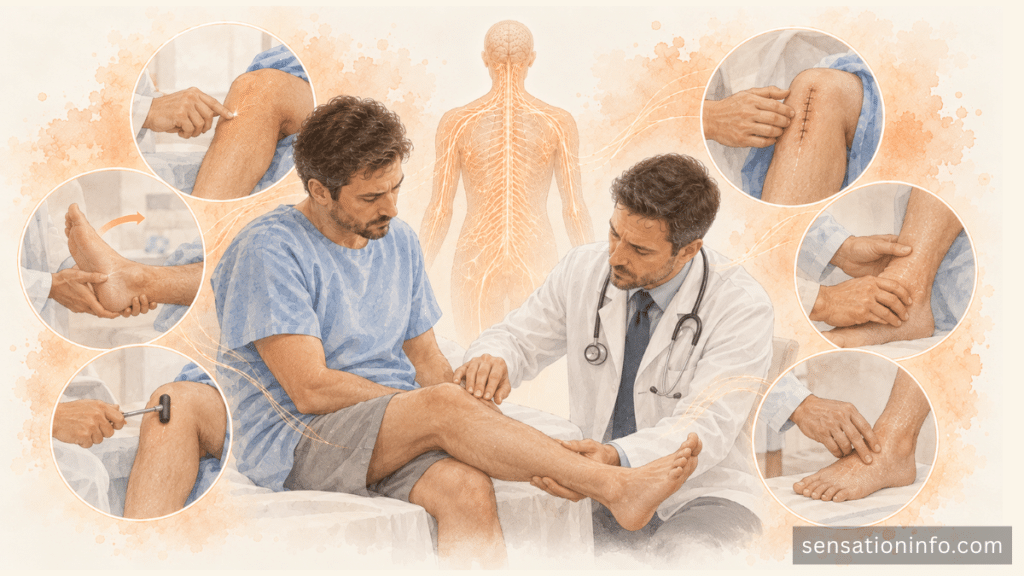
The clinician may review the operation and anesthesia record and examine sensation, strength, reflexes, movement, pulses, skin temperature, swelling, the incision, and the dressing or cast. They may compare both sides of the body.
Testing may include blood tests, ultrasound, X rays, magnetic resonance imaging, computed tomography, or a specialized nerve conduction study depending on the procedure and symptoms. Urgent neurologic or circulation changes may require immediate imaging or hospital observation.
How is it treated?
Treatment depends on the cause. The surgical team may adjust a dressing, manage swelling, treat infection, evaluate blood flow, or arrange nerve and rehabilitation care. A nerve block may simply need time to wear off when the course is expected.
Nerve compression, significant injury, a clot, infection, or spinal complication needs condition specific treatment. Physical therapy or occupational therapy may help restore safe movement after the cause has been assessed.
Do not self prescribe antibiotics, steroids, supplements, or strong pain medicines. Follow the discharge instructions and contact the responsible team when symptoms change.
How can you protect a numb area?
Check the skin regularly for pressure, burns, blisters, colour changes, and wounds. Keep the area away from hot water, heating pads, open flames, and very cold surfaces. Use support when walking if the leg feels numb or weak.
Follow restrictions on lifting, driving, exercise, wound care, and weight bearing. Do not test sensation with sharp objects or extreme temperatures.
When should you make a follow up appointment?
Arrange review if numbness persists beyond the expected period, interferes with sleep or daily activity, affects grip or walking, returns after improving, or occurs with ongoing pain, tingling, weakness, swelling, or a wound change.
Contact the surgeon promptly for symptoms that are worsening or unexplained. Call 112 in India or 911 internationally for sudden neurologic symptoms, severe breathing or chest symptoms, major circulation changes, loss of consciousness, or rapidly progressive weakness.
Key Takeaways
1.Numbness after surgery may be related to anesthesia, a nerve block, positioning, swelling, a dressing, an injury, infection, or circulation.
2.A small numb area near an incision may recover gradually, but the surgical team should define what is expected.
3.Worsening numbness, weakness, a tight cast, a cold or discolored limb, fever, or severe pain needs prompt contact with the care team.
4.Call 112 in India or 911 internationally for sudden neurologic symptoms, severe chest or breathing symptoms, major circulation changes, or rapidly progressive weakness.
5.Protect numb skin and do not change surgical dressings or medicines without professional guidance.
Frequently Asked Questions
It can be temporary after anesthesia, a nerve block, swelling, positioning, or an incision. The surgical team should explain what is expected for your procedure. Persistent, worsening, spreading, or function limiting numbness needs prompt contact.
The duration depends on the anesthetic, dose, technique, and body area. Follow the anesthesia team’s instructions and report numbness that lasts longer than expected or is accompanied by new weakness
Pressure or stretch during a long operation can irritate a nerve near the shoulder, elbow, hip, knee, or another contact point. Persistent numbness, burning, tingling, or weakness should be reported
It can, but numbness may also be caused by a temporary block, swelling, or pressure. The type and duration of the operation, the nerve involved, and the pattern of weakness or sensation change help guide evaluation.
Doctor’s Recommendation
Postoperative numbness should be judged against the specific operation, anesthetic, nerve block, and discharge instructions. A symptom that is improving may be monitored as advised, while new weakness, worsening numbness, or circulation changes should be reported promptly. The left arm numbness guide can help readers describe a limb pattern, but the surgical team remains the correct source for procedure specific advice.
Conclusion
Numbness after surgery can be temporary, but it can also signal pressure on a nerve, swelling, infection, a circulation problem, or another complication. Track the timing and distribution, protect the numb area, and contact the surgeon when symptoms persist, worsen, or affect function. Call 112 in India or 911 internationally for emergency neurologic, chest, breathing, or circulation symptoms..
References
Mayo Clinic. Numbness: Causes and Definition.
Mayo Clinic News Network. When to Worry About Numbness and Tingling.
National Library of Medicine. Numbness and Tingling. MedlinePlus Medical Encyclopedia.
Cleveland Clinic. Numbness and Tingling: Causes and Treatment.
National Institute of Neurological Disorders and Stroke. Peripheral Neuropathy.