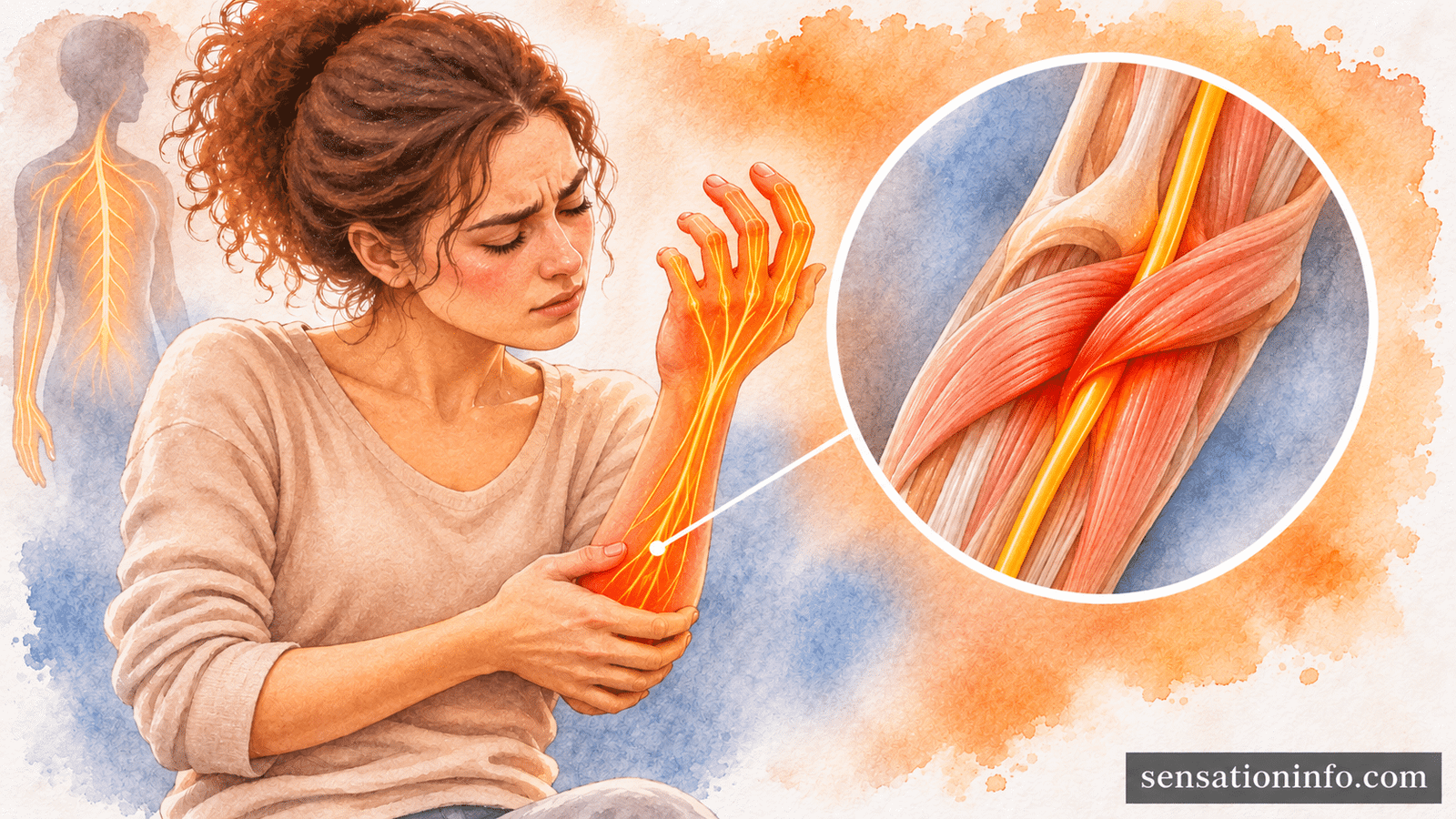

Experiencing a sudden, agonizing jolt of pain simply by stepping into the wind is the classic hallmark of trigeminal neuralgia. This severe neurological condition occurs when a major cranial nerve misfires, turning everyday sensations like chewing, talking, or feeling a light breeze into excruciating electric shocks. If this sudden facial pain is accompanied by a drooping face, slurred speech, or weakness on one side of your body, call emergency services immediately as this indicates a stroke. Otherwise, if you have been experiencing isolated tingling face jaw sensations that rapidly escalate into sharp jolts of pain, you are likely dealing with localized nerve compression that requires specialized medical treatment.
Why Does a Cool Breeze Trigger Trigeminal Neuralgia Pain?
A breeze triggers pain because the damaged nerve can no longer keep touch signals and pain signals apart. Moving air brushes sensitive spots on the face, and the faulty nerve fires a burst of pain instead of a normal sensation.
The Trigeminal Nerve and Its Three Branches
The trigeminal nerve, also called the fifth cranial nerve, carries feeling from your face to your brain. It has three branches:
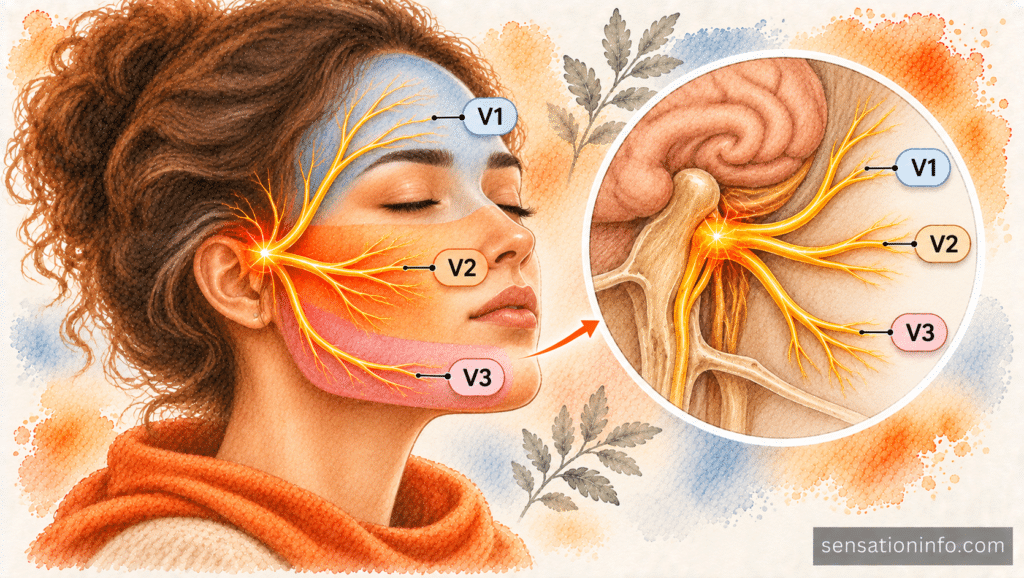
The human body possesses two trigeminal nerves, with one dedicated to each side of the face. The thing is, this nerve splits into three very distinct branches right before it reaches the surface of your skin. And understanding these specific branches helps doctors pinpoint exactly where the nerve is taking on damage.
| Nerve Branch | Anatomical Name | Areas of the Face Affected by Pain |
| V1 (Upper) | Ophthalmic Nerve | Forehead, upper eyelid, and the bridge of the nose |
| V2 (Middle) | Maxillary Nerve | Lower eyelid, cheek, upper lip, and upper teeth/gums |
| V3 (Lower) | Mandibular Nerve | Lower jaw, lower lip, lower teeth/gums, and chewing muscles |
The pain usually stays strictly on one side of the face. And it most commonly attacks the lower V2 and V3 branches, which explains why so many patients initially rush to the dentist thinking they have an infected tooth.
Why a Cool Breeze Triggers Extreme Facial Pain
A cool breeze triggers extreme facial pain in these patients because the damaged nerve literally loses its ability to distinguish between a gentle touch and a painful injury. Healthy nerves are coated in a thick, protective layer of fat called the myelin sheath. This biological insulation keeps the electrical signals moving smoothly along the nerve fiber without leaking out.
But in patients with this condition, something physically rubs against the nerve at the base of the brain and aggressively strips away this protective insulation. This leaves the raw, highly sensitive nerve fibers completely exposed to the elements.
The Mechanics of Nerve Demyelination and Allodynia
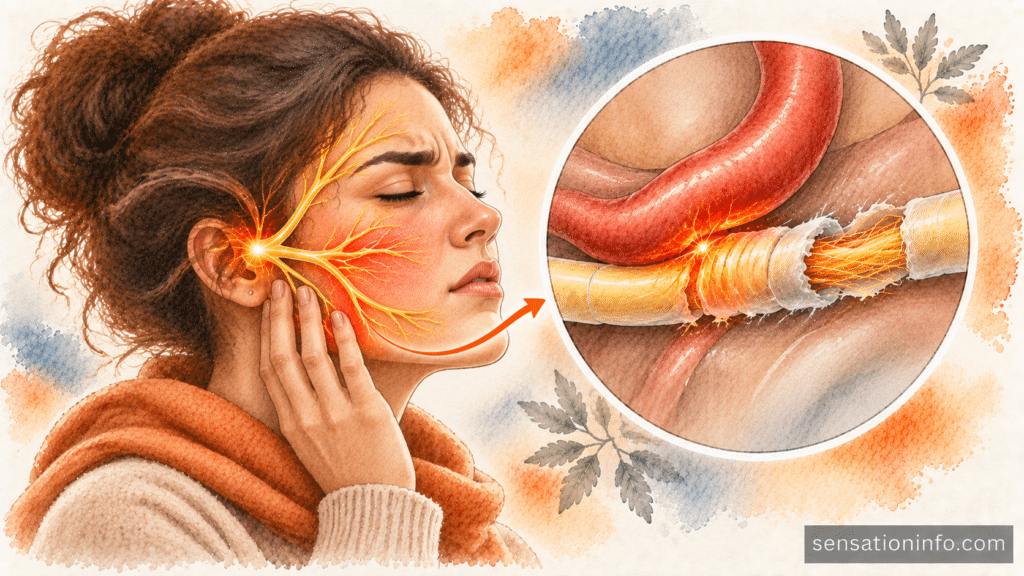
Allodynia is a specific type of neuropathic pain where a completely normal, non-painful stimulus—like a cool breeze or a soft shirt—provokes a severe pain response. When the trigeminal nerve loses its myelin sheath, it essentially becomes a frayed electrical wire. The exposed sensory fibers begin crossing signals with the pain fibers.
So, when a cool breeze brushes across your cheek, the sensory fibers register the light touch. But because the insulation is missing, that gentle sensory signal instantly jumps over to the raw pain fibers. Your brain receives a massive, distorted signal and registers it as a violent facial injury. This crossed-wire phenomenon is known as dysesthesia, and it explains why simple daily tasks become terrifying hurdles.
Patients frequently report severe attacks triggered by:
- The vibration of an electric toothbrush against their gums.
- Applying makeup or washing their face in the morning.
- A light gust of wind hitting their cheek outdoors.
- The physical motion of chewing food or simply talking.
- Shaving or running a towel across their jawline.
Recognizing the Distinct Symptoms of Trigeminal Nerve Pain
Recognizing the distinct symptoms of trigeminal nerve pain prevents you from undergoing unnecessary dental surgeries. Actually, a large percentage of patients undergo multiple root canals and tooth extractions before finally realizing their teeth are perfectly healthy. The pain originates deep in the brain stem, but you feel it vividly at the very end of the nerve branch in your jaw or teeth.
Electric Shock Sensations vs. Standard Dental Aches
You can usually differentiate between an electric shock sensation in body conditions and standard dental decay based on the timing and the exact quality of the pain.
Look for these highly specific clinical warning signs:
- The “Jolt” Factor: The pain hits instantly like a lightning bolt or a hot poker, rather than a dull, constant, throbbing ache.
- The Refractory Period: The intense pain usually lasts anywhere from a few seconds to two minutes, followed by a pain-free period where the nerve resets.
- The Trigger Zones: You can point to a highly specific, dime-sized spot on your cheek or lip that instantly triggers the attack when lightly brushed.
- The Lack of Night Pain: The pain rarely wakes you up from a deep sleep, unlike a severely infected tooth which throbs constantly through the night.
If you are experiencing dull pins and needles around the jaw that worsens when you clench your teeth, you are more likely dealing with a temporomandibular joint (TMJ) disorder rather than trigeminal neuralgia.
Why Are Trigeminal Neuralgia Attacks Worse in Cold or Windy Weather?
Cold air and wind are among the most common triggers, so winter and windy days often bring more attacks. Many of my patients notice their worst weeks line up with the first cold snap of the year.
These are the practical steps I suggest while medical treatment takes effect. They do not fix the nerve, but they can cut down how often moving air reaches your trigger zones.
- Cover your face outdoors. A soft scarf or face covering blocks wind and cold air.
- Redirect indoor air. Point car vents, fans, and air conditioners away from your face, since moving air indoors triggers attacks too.
- Keep water lukewarm. Wash your face and rinse your mouth with water that is neither hot nor cold.
- Choose soft foods during flares. Chew on the less painful side, and use a straw for drinks.
- Keep a pain diary. Note what you were doing before each attack, and bring it to your next visit.
How Doctors Diagnose and Treat Severe Facial Pain
Doctors diagnose this severe facial pain based almost entirely on your medical history and a detailed description of your symptoms. There is no single blood test that confirms the disease. However, a neurologist will almost always order a high-resolution MRI of your brain. This specific imaging test allows the doctor to look deep into your skull to see if a rogue blood vessel is physically pressing against the trigeminal nerve root.
Medications and Surgical Decompression Options
Standard over-the-counter painkillers like ibuprofen or acetaminophen are completely useless against this specific type of nerve pain. Instead, neurologists prescribe anticonvulsant medications. These drugs were originally designed for epilepsy, but they work by slowing down the electrical firing rate of the irritated nerve, effectively blocking the pain signals from reaching your brain.
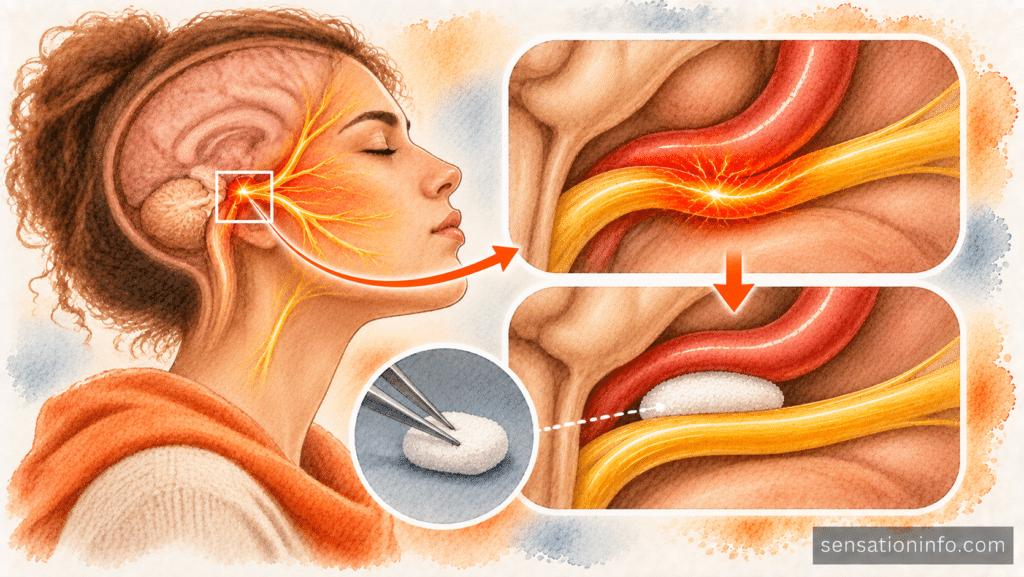
If medications lose their effectiveness over time, surgical options become necessary. Microvascular decompression (MVD) is a neurosurgical procedure where a surgeon places a tiny Teflon sponge between the compressed trigeminal nerve and the pulsating blood vessel causing the irritation. This surgery directly addresses the root cause of the demyelination and offers the highest chance for long-term, drug-free pain relief.
When Is Surgery Worth Discussing?
I bring up surgery when medicine stops controlling the pain or the side effects become hard to live with. The right choice depends on your health, your MRI results, and how you weigh lasting relief against the risk of facial numbness.
This is how I lay out the main options when patients ask me to compare them. A neurosurgeon will help you decide which one fits your situation.
| Option | How it works | How soon it helps | How long relief lasts | Main tradeoff |
|---|---|---|---|---|
| Microvascular decompression (MVD) | A surgeon places a soft cushion between the nerve and the pressing blood vessel | Soon after surgery | Often 10 years or longer | Open brain surgery with risks such as hearing loss, facial weakness, or stroke |
| Gamma Knife radiosurgery | Focused radiation is aimed at the nerve root, with no incision | Up to a month | Pain may return, often within 3 to 5 years | Facial numbness can develop months or years later |
| Glycerol injection, balloon compression, or radiofrequency ablation | A needle procedure damages pain fibers on purpose (rhizotomy) | Usually quickly | Pain may return after a few years | Facial numbness is common |
When an MRI shows a blood vessel pressing on the nerve and a patient is healthy enough for surgery, MVD usually offers the longest relief.
When Should I Get Help Right Away?
Any new, shock like facial pain deserves a doctor visit, but most cases are not emergencies. A few signs, though, need faster care.
These two situations need emergency care. Do not wait to see whether they pass.
- Sudden face drooping, numbness, or weakness with slurred speech or confusion: Call 911. These are warning signs of a stroke.
- Facial pain with fever, spreading swelling, or trouble opening your mouth: Go to urgent care or the emergency room the same day.
These signs are not emergencies, but they need a prompt visit. They make me look harder for a cause other than classic TN.
- Pain that comes with numbness in the face that does not go away
- Pain on both sides of the face
- Hearing loss, ringing in the ear, or facial weakness along with the pain
- Facial pain that starts before age 40
- Pain that no longer responds to your medicine
Key Takeaways
- Trigeminal neuralgia is a chronic pain condition caused by the irritation or compression of the major cranial nerve supplying sensation to the face.
- A cool breeze causes severe pain because the nerve loses its protective myelin sheath, causing normal touch signals to cross over into raw pain fibers.
- The pain feels like a sudden, severe electric shock or a lightning bolt, rather than the dull, throbbing ache typical of standard dental problems.
- Standard painkillers do not work; the condition requires specialized anticonvulsant medications to slow down the misfiring electrical nerve signals.
- If medications fail, a microvascular decompression (MVD) surgery can permanently move the offending blood vessel away from the compressed nerve.
Frequently Asked Questions
Trigeminal neuralgia rarely goes away permanently on its own. While patients frequently experience spontaneous periods of remission where the pain vanishes for months, the electric shock attacks almost always return and tend to worsen in severity over time.
A severe dental injury or a botched tooth extraction can cause a similar condition called atypical facial pain or traumatic trigeminal neuropathy. However, classic trigeminal neuralgia is almost always caused by a blood vessel compressing the nerve deep inside the brain, not by surface dental work
Anticonvulsant drugs are highly effective because they chemically stabilize the hyperactive electrical firing of damaged nerve cells. By blocking the rapid electrical impulses, these medications prevent the severe pain signals from traveling up the trigeminal nerve into the brain.
Doctor’s Recommendation
If you are currently experiencing localized numbness or tingling following a severe pain attack, you must handle the affected area with extreme care to avoid triggering another shock. I recommend reading our guide on effective at-home treatments for facial numbness to learn safe, gentle techniques for managing sensory disruptions without aggravating an already highly sensitized cranial nerve.
References
- National Institute of Neurological Disorders and Stroke (2024): Trigeminal Neuralgia Fact Sheet
- Mayo Clinic (2023): Trigeminal Neuralgia Symptoms and Causes
- Cleveland Clinic (2022): Trigeminal Neuralgia Overview and Treatments
- American Association of Neurological Surgeons (2023): Trigeminal Neuralgia Patient Information