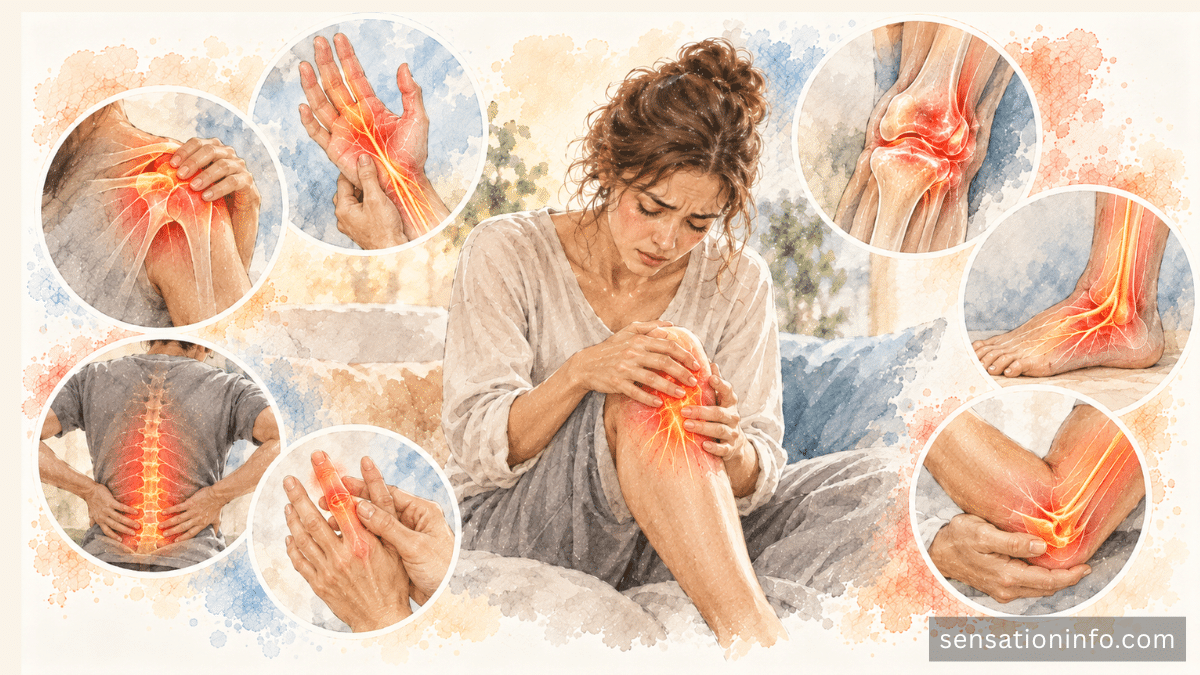

A burning sensation in joint may be linked to inflammation, arthritis, an injury, tendon or ligament irritation, nerve pain, or a nearby skin problem. The pattern matters. A joint that is hot and swollen, a limb that changes colour, or severe pain with fever requires prompt medical assessment.
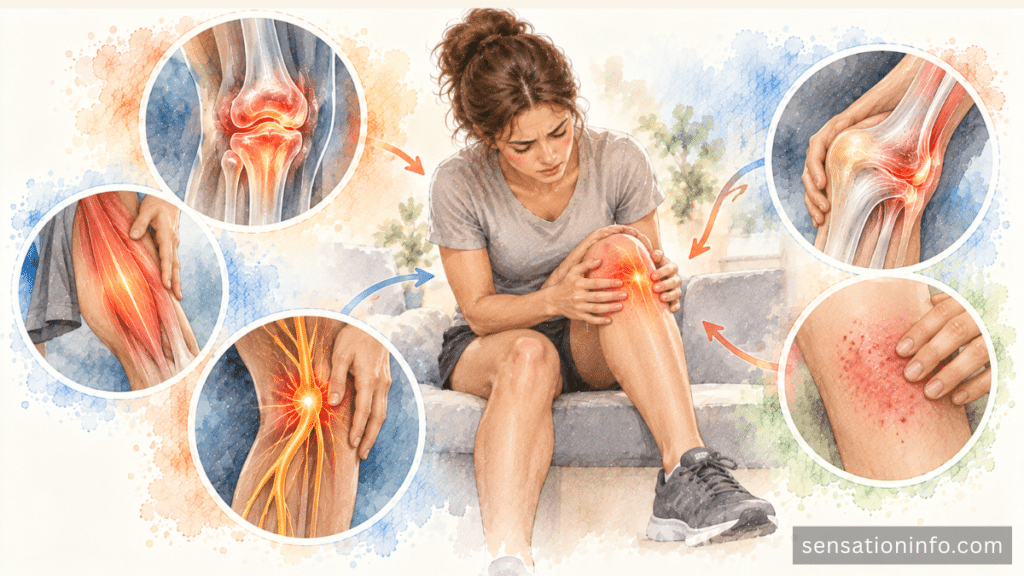
Is the burning coming from the joint or the nearby tissues?
People often use “joint burning” to describe pain around a joint rather than pain from the joint itself. The sensation may be deep inside the knee, hip, shoulder, ankle, wrist, or elbow, or it may be felt in the surrounding muscle, tendon, skin, or nerve.
| Location of the sensation | Associated clue | Possible source |
| Deep inside a moving joint | Stiffness, grinding, reduced range of motion | Joint or cartilage problem |
| Along the outside of a joint | Pain with a specific movement or pressure | Tendon, ligament, or bursa |
| Burning with tingling or numbness | Electric or shooting quality | Nerve irritation |
| Burning with redness, itching, or a rash | Surface sensitivity or blisters | Skin inflammation or shingles |
| Burning with heat, swelling, and fever | Severe tenderness or feeling unwell | Infection or acute inflammation |
| Burning with coldness or colour change | Weakness or reduced pulses | Circulation problem |
A clinician can examine the joint and nearby structures to determine where the pain is coming from.
Which warning signs need urgent care?
•A hot, red, very swollen joint and fever or chills.
•An obvious deformity, severe injury, or inability to use the joint.
•Sudden severe pain with a cold, pale, blue, or weak limb.
•Chest pressure, breathlessness, fainting, sweating, or pain spreading to the arm or jaw.
•Sudden facial drooping, weakness, speech trouble, confusion, or severe dizziness.
•Rapidly spreading redness, severe illness, or drainage from a wound.
•New loss of bladder or bowel control with back, hip, or leg symptoms.
Do not try to diagnose infection, a fracture, or a circulation emergency at home. A hot swollen joint can require immediate treatment.
What does movement do to the burning?
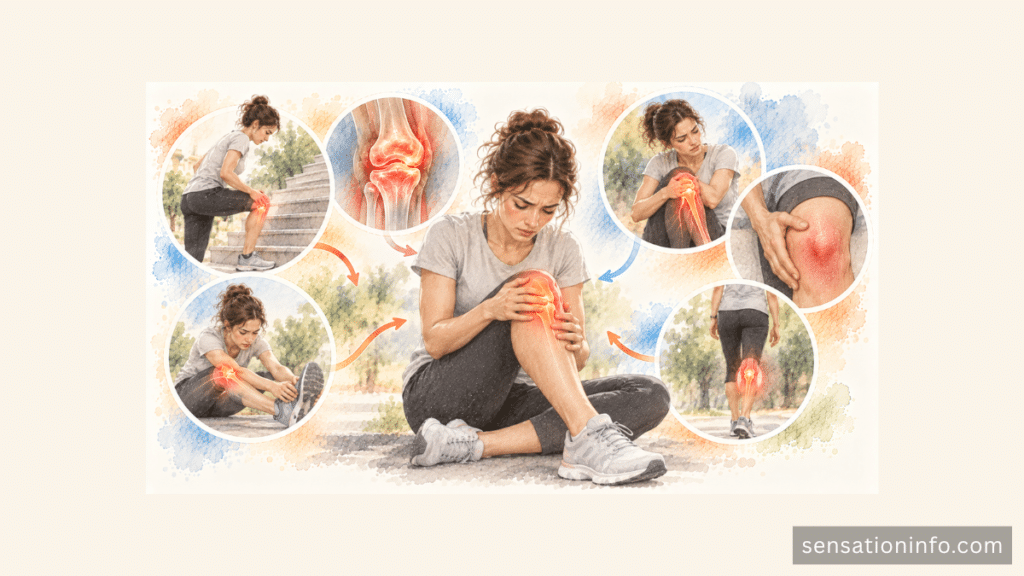
The relationship with movement can provide useful information.
| Movement pattern | What it may suggest | Next step |
| Pain with repeated loading or gripping | Overuse, tendon irritation, or arthritis | Reduce the trigger and arrange care if persistent |
| Stiffness after rest that improves gradually | Arthritis or joint inflammation | Discuss with a clinician if recurrent |
| Sharp burning with a specific twist or impact | Injury to a ligament, tendon, or joint | Seek assessment if severe or function is limited |
| Burning with tingling along the limb | Nerve irritation or compression | Arrange a clinical evaluation |
| Pain with a visibly hot swollen joint | Infection or acute inflammation | Prompt or emergency assessment |
| Pain only at the skin over the joint | Skin irritation or nerve sensitivity | Check for rash, redness, or external triggers |
Movement clues are not enough to confirm a diagnosis. Stop an activity that causes severe or escalating pain.
How can arthritis cause a burning joint sensation?
Arthritis includes many conditions that can inflame or damage joints. Osteoarthritis may cause pain with use, stiffness, grinding, and reduced movement. Rheumatoid arthritis and psoriatic arthritis can cause inflammatory pain, swelling, stiffness, and symptoms in more than one joint.
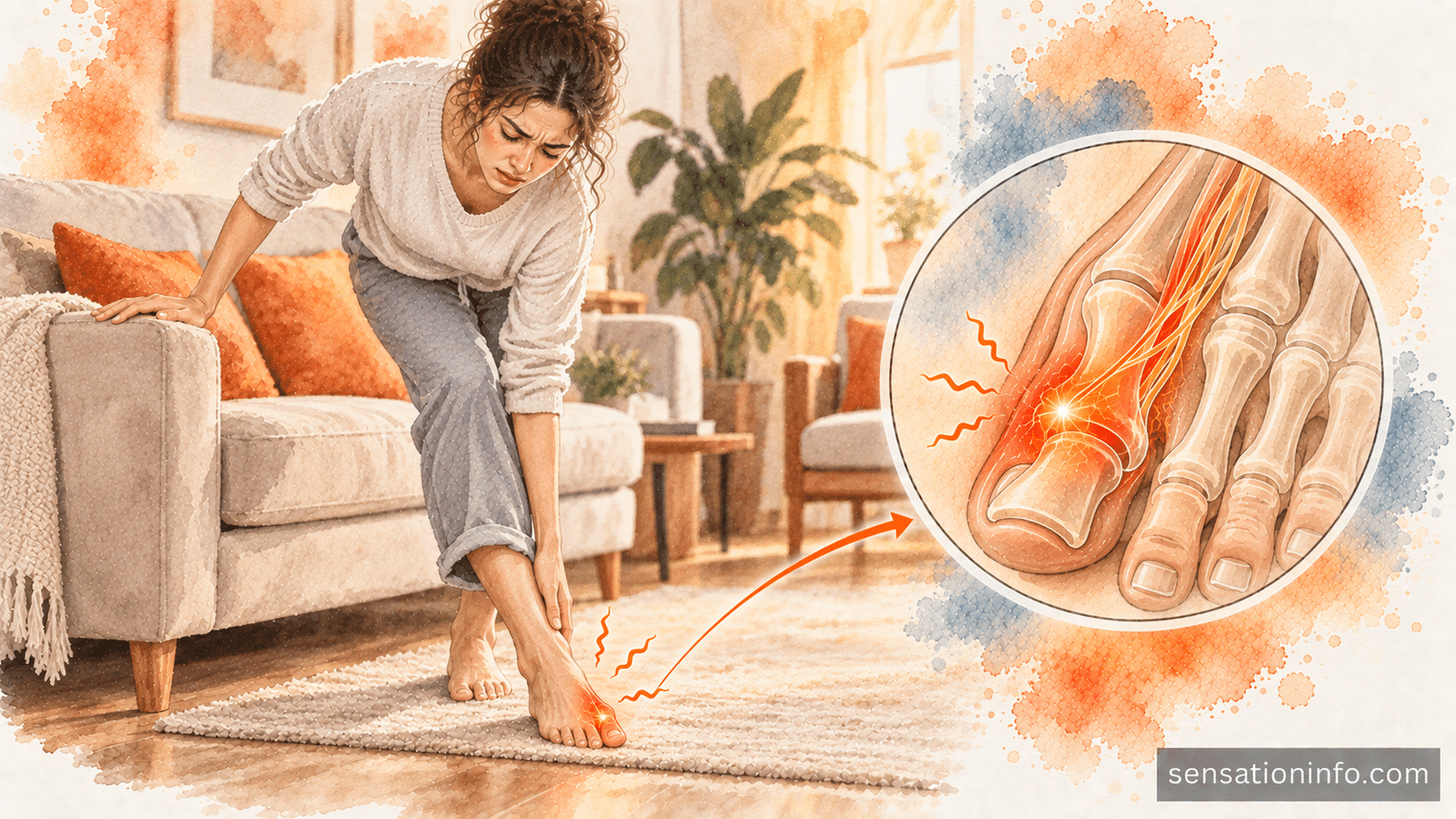
Gout can cause sudden severe pain, swelling, warmth, and redness in a joint. The big toe is common, but other joints can be affected. A first severe attack or a hot swollen joint should be evaluated because infection can look similar.
A burning quality does not identify which type of arthritis is present. Medical history, examination, and sometimes blood tests or joint fluid testing are needed.
Could an injury make a joint feel as if it is burning?
A sprain, strain, bruise, fracture, dislocation, tendon injury, or cartilage injury may cause burning, aching, swelling, bruising, stiffness, or reduced movement. For instance, experiencing numbness after an injury
is a common sign that requires looking beyond surface bruises. Pain after an impact or twist should be judged by function as well as intensity.
Seek prompt care if the joint looks deformed, cannot bear weight, becomes rapidly swollen, or cannot be moved normally. Do not force a joint back into position.
Can a nerve create burning near a joint?
Nerve pain may feel burning, electric, shooting, prickling, or unusually sensitive to touch. A nerve in the neck, back, shoulder, elbow, wrist, hip, or leg can refer symptoms toward a joint without the joint being the primary problem.
Burning with numbness, tingling, weakness, or a narrow path along the limb is more suggestive of nerve involvement. If you frequently experience numbness and tingling in the hands and feet, it can heavily point toward a systemic or localized nerve origin.
Peripheral neuropathy can cause burning in the feet or hands and may occur with diabetes, vitamin deficiency, alcohol, medicine effects, kidney disease, thyroid disease, or other conditions. For a broader overview of these signs, you can read this complete neuropathy guide.
What about tendons, bursae, and ligaments?
Tendons connect muscle to bone, ligaments stabilize joints, and bursae reduce friction around moving structures. Irritation in these tissues may cause localized burning or pain with particular movements, pressure, or activity.
Shoulder, elbow, knee, hip, and ankle symptoms—such as those linked to issues like tarsal tunnel syndrome—can arise from these surrounding tissues. Rest from the provoking activity, gradual rehabilitation, and clinician-guided treatment may help, but persistent pain needs a clear diagnosis.
Can a skin condition feel like joint burning?
Contact irritation, insect bites, heat exposure, dermatitis, and shingles can cause burning in the skin over or near a joint. Look for redness, itching, sensitivity to touch, blisters, or a clear external trigger.
Shingles often affects one side and may cause burning or tingling before a grouped rash. Contact a clinician promptly if a one sided rash appears, especially near the eye or ear.
Facial swelling, breathing difficulty, rapidly spreading redness, pus, fever, or severe pain requires urgent care.
Which joint patterns deserve closer attention?
A single joint that becomes hot, red, and swollen may need urgent evaluation. Several joints with morning stiffness, fatigue, skin changes, or recurring swelling may suggest an inflammatory condition.
A knee that locks or gives way, a shoulder that loses strength, an ankle that cannot bear weight, or a hip that causes severe walking difficulty needs assessment. Burning in a joint with numbness or weakness may require a nerve examination as well as a joint examination.
How is a burning joint evaluated?
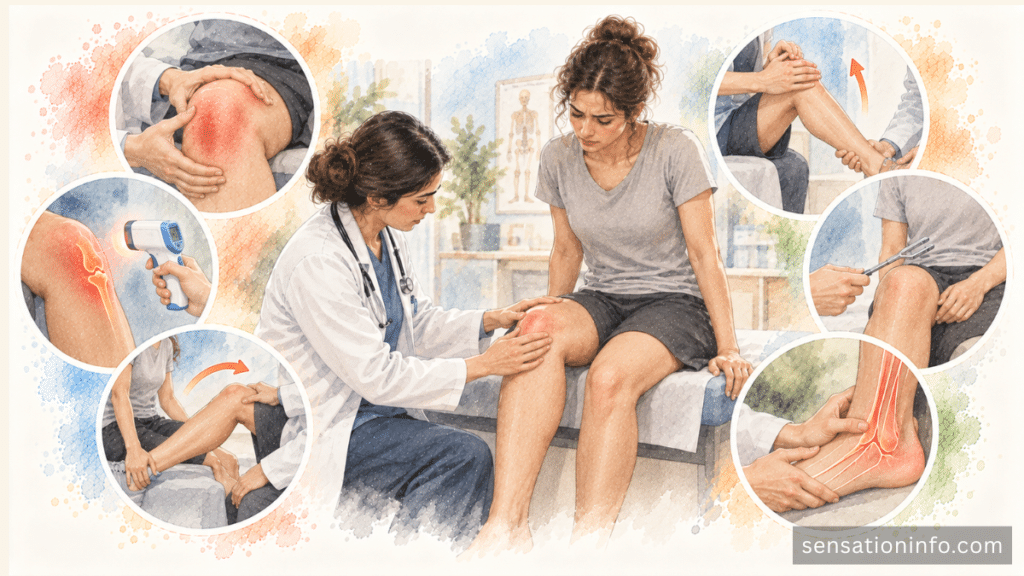
A clinician will ask when the burning began, whether there was an injury, which movements worsen it, whether the joint is swollen or hot, and whether there are fever, rash, numbness, weakness, or symptoms in other joints.
The examination may assess swelling, warmth, tenderness, range of motion, strength, stability, skin, sensation, pulses, and gait. Depending on the pattern, testing may include X rays, ultrasound, magnetic resonance imaging, blood tests, or analysis of fluid from a swollen joint.
A hot swollen joint may need rapid testing and treatment. Do not delay care while waiting for a routine appointment.
What can you do safely before an appointment?
Reduce the activity that clearly worsens the pain and protect the joint from further injury. Keep the limb in a comfortable position and avoid forceful stretching or manipulation.
If there is swelling after a minor injury, a wrapped cold pack may provide temporary comfort. Do not apply ice directly to skin, and avoid home treatment if the area is numb or circulation is poor.
Do not start leftover antibiotics, steroids, or high dose supplements. Ask a clinician or pharmacist about pain medicines, especially if you have kidney disease, ulcers, are pregnant, take blood thinners, or have other medical conditions.
How is the cause treated?
Treatment depends on the diagnosis. Osteoarthritis may be managed with activity changes, strengthening, weight management when appropriate, physical therapy, and clinician selected medicines. Inflammatory arthritis needs condition specific treatment and monitoring.
Gout, infection, tendon injury, nerve compression, fracture, and circulation problems each require different care. A hot infected joint may need urgent antibiotics and drainage. Severe structural problems may require a procedure or surgery.
Avoid treating every burning joint sensation as arthritis. The correct treatment depends on identifying the source.
When should you arrange a medical visit?
Arrange care if burning persists, returns often, limits work or walking, interferes with sleep, follows an injury, affects several joints, or occurs with numbness, weakness, swelling, stiffness, or a rash.
Seek prompt care for fever, unexplained weight loss, a hot swollen joint, severe pain, or difficulty using the limb. Call 112 in India or 911 internationally for major trauma, sudden weakness, chest or breathing symptoms, a cold or discolored limb, or rapidly worsening pain.
Key Takeaways
1.Burning in a joint may come from arthritis, injury, tendons, bursae, nerves, skin, infection, or circulation.
2.A hot swollen joint with fever needs urgent medical assessment.
3.Burning with numbness or tingling may involve a nerve rather than the joint itself.
4.Call 112 in India or 911 internationally for severe injury, sudden neurologic symptoms, chest or breathing symptoms, or a cold or discolored limb.
5.Persistent, recurrent, or function limiting burning needs evaluation by a qualified clinician.
Frequently Asked Questions
A hot, red, very swollen, or severely tender joint, especially with fever or chills, needs urgent medical assessment because infection and acute inflammation can damage the joint.
Yes. Osteoarthritis and inflammatory arthritis can cause pain, stiffness, swelling, and sometimes a burning quality. Gout can cause sudden severe burning pain and swelling, but infection can look similar.
Skin burning is more likely to involve itching, redness, sensitivity to touch, peeling, or a rash. Joint pain is more likely to involve deep discomfort, stiffness, swelling, painful movement, or reduced range of motion. Both can occur together.
A wrapped cold pack may temporarily help swelling after a minor injury if the skin and circulation are normal. Do not apply ice directly to the skin or use home treatment instead of urgent care for a hot swollen joint, numb area, or severe injury.
Doctor’s Recommendation
The most useful first distinction is whether the burning is deep in the joint, triggered by movement, present in the skin, or following a nerve pathway. The existing neuropathy guide is relevant when burning affects several hands or feet, while a hot swollen joint needs direct medical assessment rather than self diagnosis.
Conclusion
A burning sensation in a joint can result from inflammation, arthritis, injury, nerve irritation, skin disease, infection, or reduced blood flow. Look at the timing, movement pattern, swelling, warmth, skin changes, and associated numbness or weakness. Call 112 in India or 911 internationally for emergency signs and arrange medical care when symptoms persist or return.
References
Cleveland Clinic. Joint Pain: Causes and Treatment.
Mayo Clinic. Joint Pain: Causes and Definition.
Cleveland Clinic. Osteoarthritis: What It Is, Symptoms and Treatment.
Cleveland Clinic. Allodynia: What It Is, Causes, Treatment and Types.
National Library of Medicine. Numbness and Tingling. MedlinePlus Medical Encyclopedia.