

Tarsal tunnel syndrome occurs when the tibial nerve or one of its branches is compressed as it passes through a narrow space on the inside of the ankle. It may cause burning, tingling, pins and needles, numbness, or pain in the sole and toes. Symptoms often worsen during or after walking, standing, or exercise.
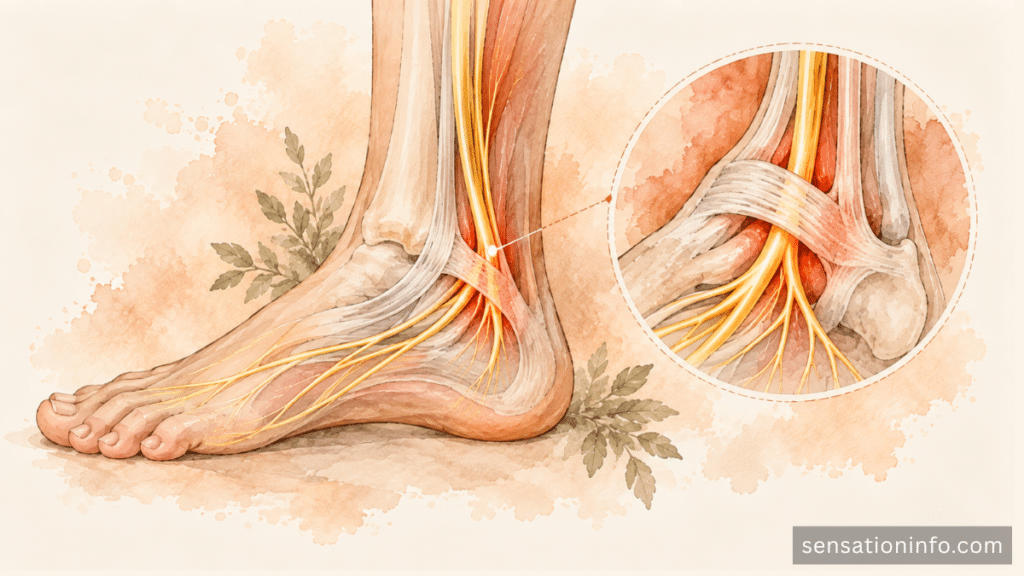
Where does the tibial nerve travel?
The tarsal tunnel is a passage behind the inner ankle made by bone and strong connective tissue. The tibial nerve travels through it before dividing into branches that supply sensation and movement in the foot.
Compression can affect the nerve itself or one of its branches. The sensation may be felt behind the inner ankle, along the sole, in the heel, or in the toes. Symptoms can occur in one foot or, less commonly, both feet.
The location helps distinguish tarsal tunnel syndrome from general foot numbness, a lower back nerve problem, plantar foot conditions, or another peripheral neuropathy.
What symptoms suggest tarsal tunnel syndrome?
Common symptoms include:
•Burning or tingling in the sole or toes.
•Pins and needles or numbness in the foot.
•Pain behind the inner ankle or along the bottom of the foot.
•Electric or shooting sensations that travel into the arch or toes.
•Foot discomfort that increases during or after physical activity.
•Weakness in muscles that control the foot.
•Symptoms that become persistent when compression is severe or long lasting.
A sensation limited to the sole and worsened by walking may suggest a local nerve problem, but a clinician must compare it with other causes.
When does foot tingling need urgent care?
Tarsal tunnel syndrome itself is usually not an emergency, but urgent symptoms should not be attributed to it automatically. Call 112 in India or 911 internationally, or go to the nearest emergency department, for:
•Sudden weakness or numbness in the face, arm, or leg.
•A foot or leg that becomes cold, pale, blue, severely swollen, or difficult to move.
•Severe pain after a fracture, dislocation, crush injury, or other trauma.
•New loss of bladder or bowel control or numbness around the groin.
•Chest pressure, severe breathlessness, fainting, or confusion.
•Rapidly spreading weakness, inability to walk, or loss of consciousness.
•Fever with severe redness, swelling, drainage, or a rapidly worsening wound.
Gradual foot burning or tingling should still be assessed if it persists, interferes with walking, or causes weakness.
What causes pressure on the tibial nerve?
Foot shape and flat feet
A flattened arch or excessive inward rolling of the foot can increase tension and pressure around the tarsal tunnel. Symptoms may become more noticeable during standing or walking.
Ankle injury
An ankle sprain, fracture, dislocation, swelling, or scar tissue can narrow the tunnel or irritate the nerve. Symptoms after injury should be assessed when pain, swelling, weakness, or numbness persists.
Cysts, masses, or varicose veins
A ganglion cyst, lipoma, bone spur, swollen tendon, or enlarged vein can occupy space near the nerve. Imaging may help identify a structural cause.
Inflammatory disease
Arthritis, tendon inflammation, and other inflammatory conditions may cause swelling around the ankle. Persistent swelling with pain or nerve symptoms needs evaluation.
Diabetes and thyroid disease
Diabetes and thyroid disease can affect nerves and may increase the risk of compression symptoms. Numbness or burning in both feet may also suggest a broader neuropathy rather than an isolated tarsal tunnel problem.
Repetitive standing or activity
Walking, running, prolonged standing, or repeated ankle movement may increase symptoms when the nerve is already sensitive. Activity related symptoms that recur at a predictable point deserve medical assessment.
How is tarsal tunnel different from other foot problems?
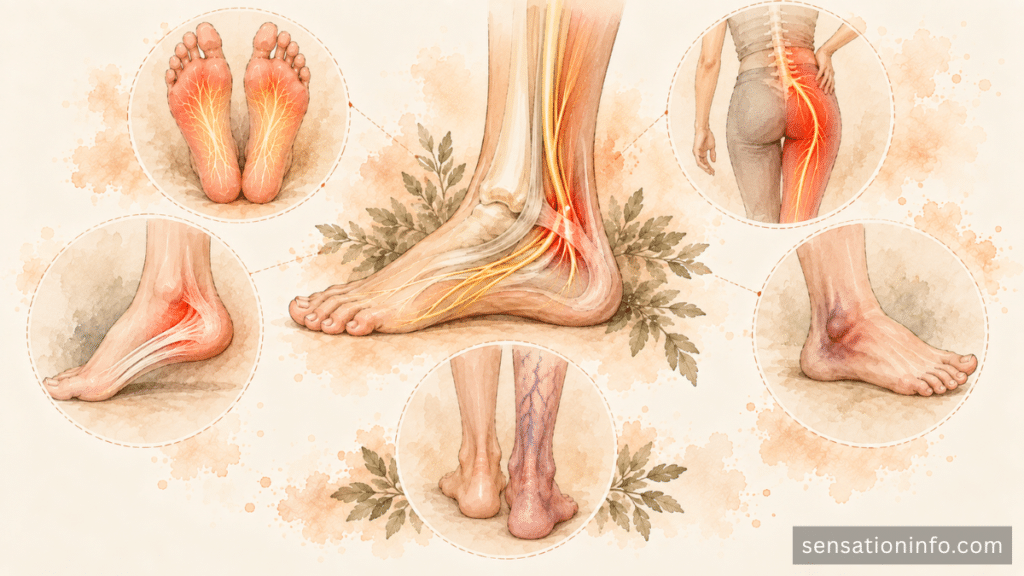
| Condition | Typical distribution or clue | Difference from tarsal tunnel |
| Tarsal tunnel syndrome | Burning, tingling, or numbness in the sole and toes, often near the inner ankle | Tibial nerve compression at the ankle |
| Peripheral neuropathy | Often affects both feet in a more symmetrical pattern | May involve several nerves or body areas |
| Sciatica or lumbar nerve irritation | Symptoms may travel from the back or buttock down the leg | Source is higher in the spine or pelvis |
| Plantar fasciitis | Heel pain, often worse with first steps | Usually mechanical heel pain rather than nerve symptoms |
| Ankle injury | Pain, bruising, swelling, and restricted movement | Trauma and tissue injury are central clues |
| Circulation problem | Coldness, colour change, swelling, pain, or weak pulses | Blood flow rather than the tibial nerve is the primary concern |
More than one problem can occur at the same time. A foot examination helps identify which pattern is most likely.
What makes the symptoms worse?
Symptoms may increase with standing, walking, running, climbing stairs, or other activity that loads the ankle and foot. Tight footwear, swelling, or positions that place pressure on the inner ankle may also aggravate the nerve.
Record the activity, duration, footwear, foot position, pain location, and time needed for recovery. Do not repeatedly provoke the symptom to test yourself.
How is tarsal tunnel syndrome diagnosed?
A clinician will ask about the exact location, timing, activity relationship, injuries, footwear, swelling, medical conditions, and symptoms in the other foot or body areas. The examination may assess the arch, ankle movement, tenderness, sensation, strength, reflexes, gait, pulses, swelling, and skin.
A clinician may tap gently over the tibial nerve to see whether it reproduces symptoms. This is part of a professional examination and is not a reliable home diagnostic test.
Testing may include nerve conduction studies, electromyography, X-rays, ultrasound, magnetic resonance imaging, or blood tests. Imaging may help identify an injury, cyst, mass, bone spur, or other structural cause.
What can you do while waiting for assessment?
Reduce activities that reliably worsen the symptoms and avoid prolonged standing when possible. Wear comfortable footwear that does not compress the ankle. Elevate the foot if swelling is present and protect numb areas from heat, cold, and injury.
Do not begin aggressive stretching, tight compression, or unsupervised nerve exercises. Ask a clinician or physiotherapist which movements and supports are appropriate for your foot shape and diagnosis.
People with diabetes or reduced sensation should inspect the skin regularly and avoid walking barefoot on hot or rough surfaces.
What nonsurgical treatments may help?

Treatment is directed at reducing pressure and addressing the underlying cause. Depending on the examination, a clinician may recommend rest from aggravating activity, ice for short periods after minor swelling, footwear changes, orthotics, an ankle support, physical therapy, or clinician selected pain treatment.
Managing diabetes, thyroid disease, arthritis, or another contributing condition may help nerve health. A cyst, bone spur, severe deformity, or other structural problem may require a different approach.
Medication decisions should consider kidney disease, stomach problems, blood thinners, pregnancy, allergies, and other health conditions. Ask a clinician or pharmacist before using anti inflammatory medicines.
When is surgery considered?
Surgery may be considered when symptoms remain severe despite suitable nonsurgical care, a structural mass is compressing the nerve, or nerve damage is significant. The procedure may release the tunnel or remove a structure that is creating pressure.
The outcome depends on the cause, the severity and duration of nerve compression, and the presence of other nerve problems. Recovery may take time, and surgery does not guarantee that every symptom will disappear.
What is the outlook?
Some people improve after activity changes, foot support, physical therapy, and treatment of swelling or the underlying condition. Long standing or severe compression may cause persistent numbness, weakness, or muscle changes.
Early evaluation is useful when symptoms recur, limit walking, or continue at rest. Nerve recovery can be gradual, so follow the rehabilitation plan and attend recommended reviews.
When should you see a clinician?
Arrange an appointment if burning, tingling, pins and needles, or numbness persists, returns during activity, affects sleep, changes your walking, or occurs with weakness. Seek prompt care after an injury or when the foot is swollen, red, or increasingly painful.
Call 112 in India or 911 internationally for sudden neurologic symptoms, a cold or discolored limb, severe trauma, chest or breathing symptoms, loss of consciousness, or rapidly worsening weakness.
Key Takeaways
1.Tarsal tunnel syndrome involves compression of the tibial nerve or its branches at the inner ankle.
2.Symptoms may include burning, tingling, pins and needles, numbness, pain, or weakness in the sole and toes.
3.Flat feet, injury, swelling, cysts, bone spurs, varicose veins, diabetes, thyroid disease, and repetitive activity can contribute.
4.Diagnosis may include examination, nerve studies, electromyography, imaging, and selected blood tests.
5.Call 112 in India or 911 internationally for sudden weakness, severe trauma, a cold or discolored limb, or major breathing or neurologic symptoms.
Frequently Asked Questions
Tarsal tunnel syndrome occurs when the tibial nerve or one of its branches is compressed at the inside of the ankle. It may cause burning, tingling, pins and needles, numbness, pain, or weakness in the sole and toes
Pain or altered sensation may occur behind the inner ankle, along the sole, in the heel, arch, or toes. Symptoms may travel along the tibial nerve branches.
Symptoms often worsen during or after walking, standing, running, or other physical activity. Recurrent activity related symptoms should be assessed rather than repeatedly provoked at home.
Peripheral neuropathy, sciatica, lumbar nerve irritation, plantar fasciitis, ankle injury, and circulation problems can produce overlapping symptoms. The distribution, examination, and testing help distinguish them.
Doctor’s Recommendation
The key question is whether the symptoms are limited to the tibial nerve distribution at the ankle or reflect a broader problem affecting both feet or several nerves. The existing guide to peripheral neuropathy is relevant when symptoms are widespread, while persistent sole or toe symptoms should be examined for local ankle compression.
Conclusion
Tarsal tunnel syndrome can cause burning, tingling, pins and needles, numbness, and weakness in the sole and toes when the tibial nerve is compressed at the inner ankle. Symptoms may worsen with walking or standing and can follow injury, swelling, foot shape, or another medical condition. Arrange evaluation for persistent or function limiting symptoms and call 112 in India or 911 internationally for emergency warning signs.
References
Cleveland Clinic. Tarsal Tunnel Syndrome: Symptoms, Causes and Treatment.
American College of Foot and Ankle Surgeons. Tarsal Tunnel Syndrome.
Merck Manual Professional Edition. Tarsal Tunnel Syndrome.
National Library of Medicine. Numbness and Tingling. MedlinePlus Medical Encyclopedia.
National Institute of Neurological Disorders and Stroke. Peripheral Neuropathy.