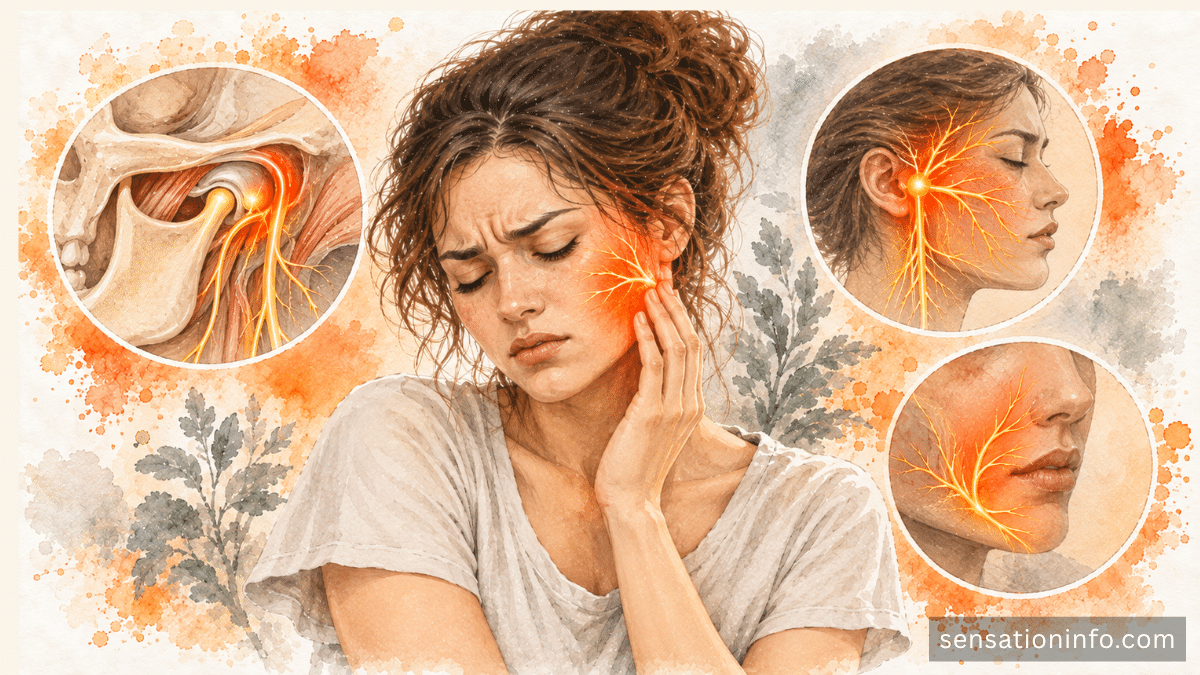

Pins and needles around the jaw usually happen when inflammation in the temporomandibular joint irritates the nearby auriculotemporal nerve. This specific nerve runs directly behind the jaw hinge, making it highly vulnerable to pressure from swelling, muscle spasms, or a misaligned bite. While sudden facial tingling can feel frightening, correcting the joint position and reducing local inflammation almost always relieves the pressure and stops the nerve irritation.
When to Seek Immediate Medical Care
Facial tingling is a common symptom of nerve compression, but sudden changes in facial sensation can also signal a medical emergency. You must rule out serious neurological conditions before assuming your jaw is the problem.
Call your local emergency number or go to the nearest emergency department if you experience any of the following warning signs:
- Sudden numbness or weakness on one side of the face or body.
- Facial drooping or an uneven smile.
- Sudden difficulty speaking, slurred speech, or confusion.
- Severe dizziness, loss of balance, or trouble walking.
- A sudden and unusually severe headache.
If your symptoms appear gradually and change when you move your mouth, the cause is much more likely related to a localized nerve or joint issue.
The Anatomy Behind Pins and Needles Around the Jaw
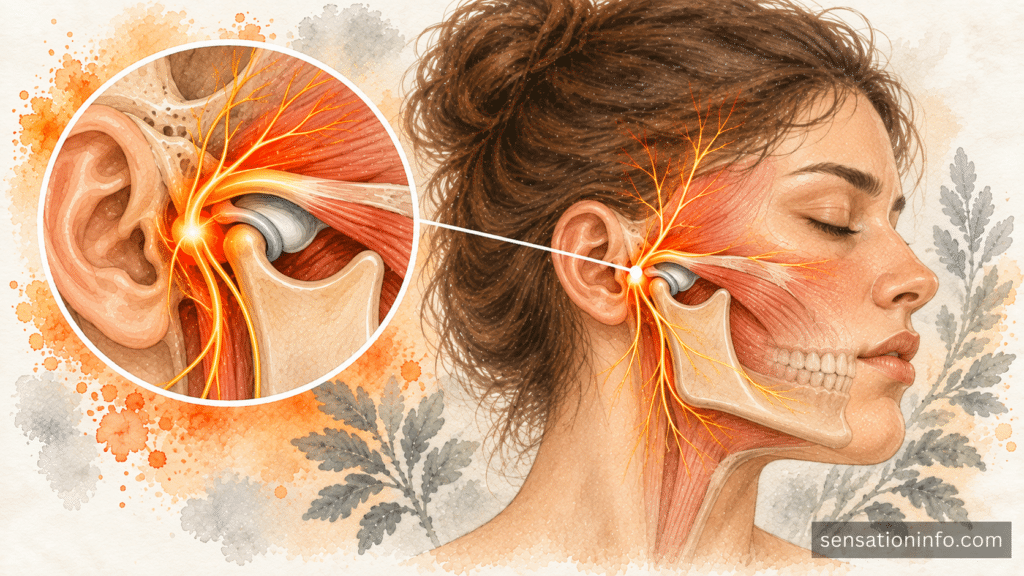
To understand why your jaw feels tingly, you have to look at the nerves that surround it. The trigeminal nerve is the massive cranial nerve responsible for sending feeling from your face to your brain. This nerve splits into three main branches. The bottom branch is called the mandibular nerve, which supplies sensation to your lower face.
One of the most important offshoots of this mandibular branch is the auriculotemporal nerve.
According to the National Library of Medicine, the auriculotemporal nerve travels just millimeters behind the temporomandibular joint and up toward the ear and temple. This incredibly tight anatomical space means that any problem inside the jaw joint can directly affect the nerve. When the nerve gets squashed or inflamed, it cannot send clear signals to the brain. The brain interprets this interrupted signal as paresthesia, which is the medical term for a tingling or pins and needles sensation.
How TMJ Disorders Irritate the Auriculotemporal Nerve
The temporomandibular joint works like a sliding hinge connecting your jawbone to your skull. The National Institute of Dental and Craniofacial Research notes that temporomandibular joint disorders affect up to 12 percent of the population. When this joint malfunctions, it creates a domino effect that impacts the surrounding nerves.
Here is exactly how a jaw problem turns into nerve irritation:
- Joint Swelling: Grinding your teeth or clenching your jaw causes the joint capsule to become inflamed. This swelling physically pushes against the auriculotemporal nerve.
- Disc Displacement: A small cartilage disc acts as a cushion inside the jaw joint. If this disc slips out of place, the jawbone moves too far back and crushes the nerve fibers behind it.
- Muscle Spasms: The lateral pterygoid muscle controls your chewing motions. When this muscle becomes overworked, it can spasm and clamp down on the nerve.
Constant pressure on the nerve strips away its protective coating. Early nerve irritation feels like light tingling, but chronic pressure can lead to complete facial numbness. If you also experience tingling and muscle twitching in your cheek, the motor nerves controlling your facial muscles may also be under stress.
Differentiating TMJ Nerve Pain From Other Conditions
Because the trigeminal nerve network is so vast, pain and tingling in the jaw can easily be confused with other issues. Sometimes a burning sensation in a joint feels identical to nerve pain.
Here is how TMJ related nerve irritation compares to other common facial nerve problems.
| Symptom Feature | TMJ Nerve Irritation | Trigeminal Neuralgia |
| Type of Sensation | Aching, pressure, tingling, or crawling | Sharp, electric, or shock like pain |
| Pain Duration | Constant dull ache or prolonged tingling | Sudden brief episodic attacks |
| Common Triggers | Chewing, yawning, or pressing the joint | A light breeze, touching the face, or brushing teeth |
| Accompanying Signs | Jaw clicking, ear fullness, or restricted opening | Usually no joint sounds or movement restrictions |
If your tingling spreads downwards, you should also consider your posture. Poor neck alignment can compress cervical nerves, causing pins and needles in the neck that radiate upward toward the jaw line.
Other Symptoms of Auriculotemporal Nerve Compression
When the auriculotemporal nerve is irritated, the symptoms rarely stop at just tingling. Because this nerve branches out to supply several areas of the head, you might experience a strange mix of sensations.
- Ear Fullness and Pain: The nerve supplies sensation to the ear canal and eardrum. Irritation here often feels like an ear infection or water trapped in the ear.
- Temple Headaches: The nerve travels up the side of the head. Inflammation can trigger severe throbbing headaches in the temples that mimic migraines.
- Altered Skin Sensation: You may notice that the skin over your cheekbone or in front of your ear feels numb or overly sensitive to a light touch.
Safe Home Care to Relieve Jaw Nerve Pressure
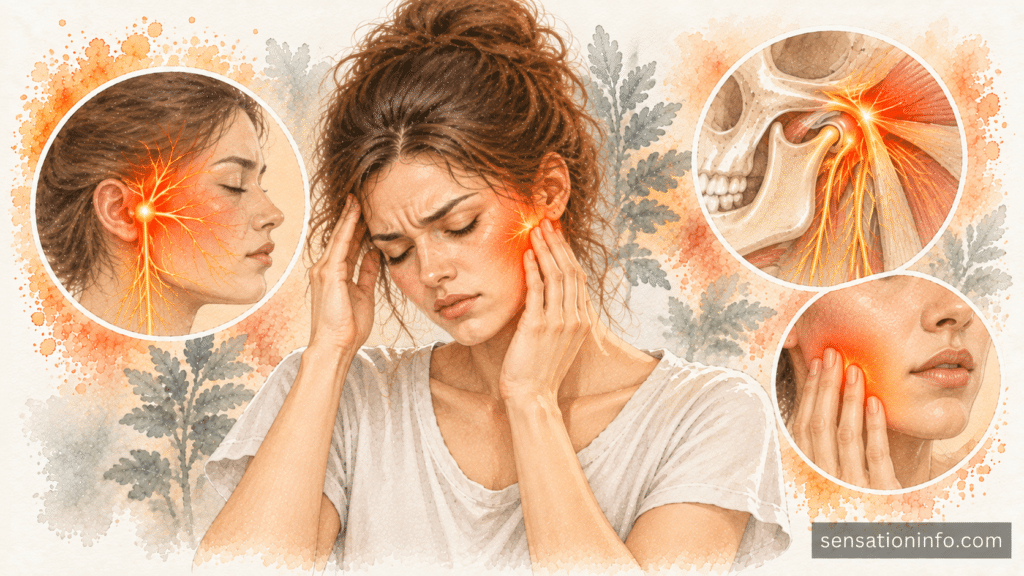
You can often stop the tingling by giving the jaw joint enough rest to let the swelling subside. Taking pressure off the joint allows the nerve to heal.
Eat only soft foods for a few days to minimize chewing force. Avoid chewing gum, biting your nails, or eating tough meats and crusty breads. Apply an ice pack wrapped in a cloth to the side of your face for ten minutes to numb the nerve and reduce acute swelling. Later, you can switch to moist heat to relax tight chewing muscles.
Keep your teeth apart and your lips together when you are not eating or speaking. Your upper and lower teeth should never touch while resting. This simple posture change creates space in the jaw joint and takes immediate pressure off the auriculotemporal nerve.
When to See a Doctor
Mild tingling that goes away after you rest your jaw is usually not a cause for alarm. However, nerves are delicate structures that do not tolerate long term compression.
You should schedule an evaluation with a doctor or a temporomandibular joint specialist if your symptoms persist. Seek professional care if the tingling turns into complete numbness, if you experience severe electric shock pains in your face, or if you cannot open your mouth wide enough to eat normally. A specialist can provide custom splints to correct your bite and physical therapy to release the trapped nerve.
Key Takeaways
- Pins and needles around the jaw usually occur when a swollen temporomandibular joint compresses the auriculotemporal nerve.
- The auriculotemporal nerve runs directly behind the jaw hinge, making it highly sensitive to joint inflammation and displaced cartilage discs.
- Sudden facial numbness accompanied by weakness, confusion, or speech difficulty is a medical emergency that requires immediate evaluation for a stroke.
- Early nerve compression feels like tingling, but chronic untreated pressure can cause permanent facial numbness or severe burning pain.
- Resting the jaw, eating soft foods, and keeping your upper and lower teeth slightly apart can reduce joint swelling and relieve pressure on the nerve.
Frequently Asked Questions
Yes, severe inflammation in the temporomandibular joint can irritate the mandibular nerve, which provides sensation to the lower lip. This irritation can cause a tingling or numb sensation in the lips and chin.
Tingling from a jaw joint issue usually changes when you chew or open your mouth and develops gradually. Tingling from a stroke happens suddenly and is almost always accompanied by weakness, speech trouble, dizziness, or facial drooping.
A properly fitted night guard prevents you from grinding your teeth while you sleep. This reduces the inflammation in the joint capsule, which in turn takes the physical pressure off the nearby nerves and often stops the tingling.
Doctor’s Recommendation
If you are experiencing unusual sensations in your jaw, it is very common to also notice symptoms in nearby areas due to the interconnected nerve pathways of the head and neck. I highly recommend reading our guide on Pins and Needles in the Neck: Causes, Nerve Irritation, and Red Flags to understand how cervical spine posture and muscle tension can contribute to overlapping facial and jaw symptoms.
References
National Library of Medicine. Anatomy, Head and Neck: Auriculotemporal Nerve. 2023.
National Institute of Neurological Disorders and Stroke. Trigeminal Neuralgia Fact Sheet. 2024.