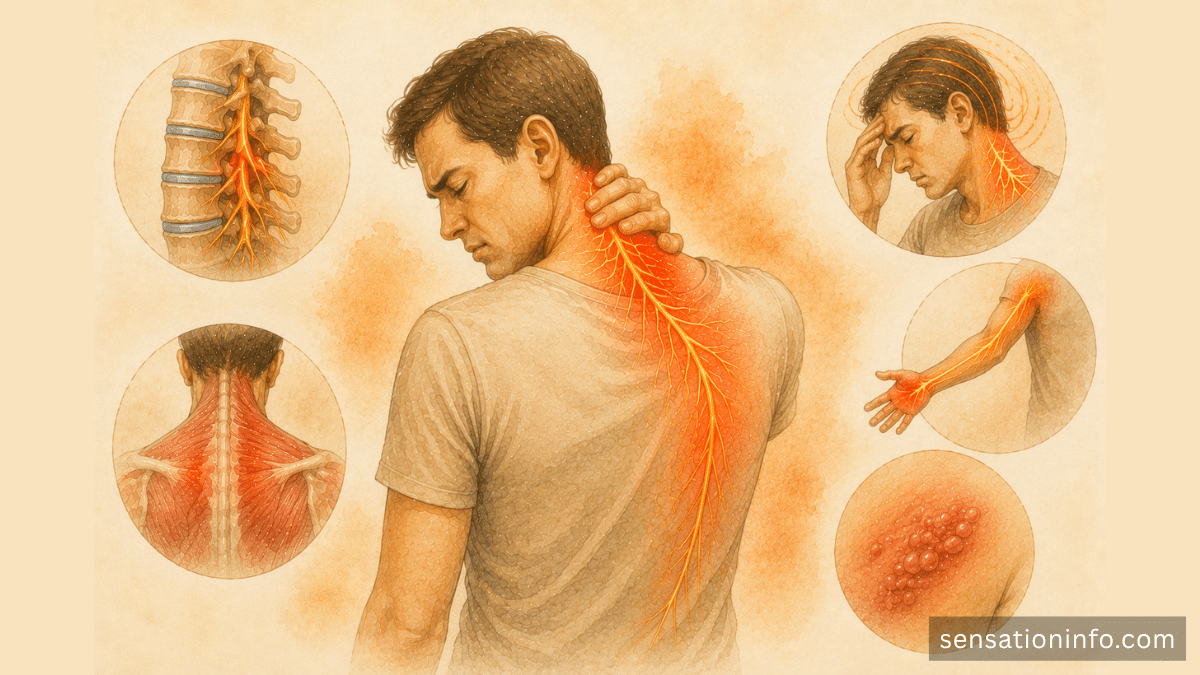

A burning sensation in the neck can come from tight muscles, irritated skin, a pinched nerve, shingles, arthritis, or an injury. It may also occur with a serious spinal, blood vessel, or neurologic problem. The most useful clues are whether the burning stays on the skin, travels into an arm, changes with neck movement, follows an injury, or appears with weakness, severe headache, fever, or trouble walking.
What does the burning feel like and where does it travel?
Neck burning may feel hot, raw, prickly, electric, stinging, or like a deep ache. You may feel it in the front, back, or side of the neck, near the collarbone, along the shoulder, or down one arm.
A surface burning sensation in neck with redness, itching, peeling, or a rash is more suggestive of a skin problem. A deep burning line that travels from the neck into the shoulder, arm, or hand may involve a nerve root. Burning with stiffness and tenderness after prolonged posture may involve muscles or joints.
The exact location does not diagnose the cause. Neck nerves, blood vessels, muscles, joints, skin, and the spinal cord are close together, so symptoms can overlap.
Which warning signs make neck burning urgent?
Seek emergency care or call 112 in India or 911 internationally if neck burning occurs with any of the following:
•Sudden weakness or numbness in the face, arm, or leg.
•A drooping face, slurred speech, confusion, new vision changes, or severe loss of balance.
•A sudden severe headache, fainting, seizure, or inability to stay awake.
•New trouble walking, loss of coordination, or loss of bladder or bowel control.
•Severe neck pain after a crash, fall, sports injury, or other trauma.
•Fever with a severe headache, marked neck stiffness, confusion, or a new rash.
•Chest pressure, shortness of breath, sweating, nausea, or discomfort spreading to the shoulder or arm.
•A rapidly enlarging swelling, trouble swallowing, or trouble breathing.
Sudden neck symptoms with weakness, speech trouble, vision changes, or severe imbalance may indicate a stroke. Neck burning after trauma may involve the spinal cord or a major blood vessel. Do not drive yourself if these warning signs are present.
Does neck movement change the sensation?
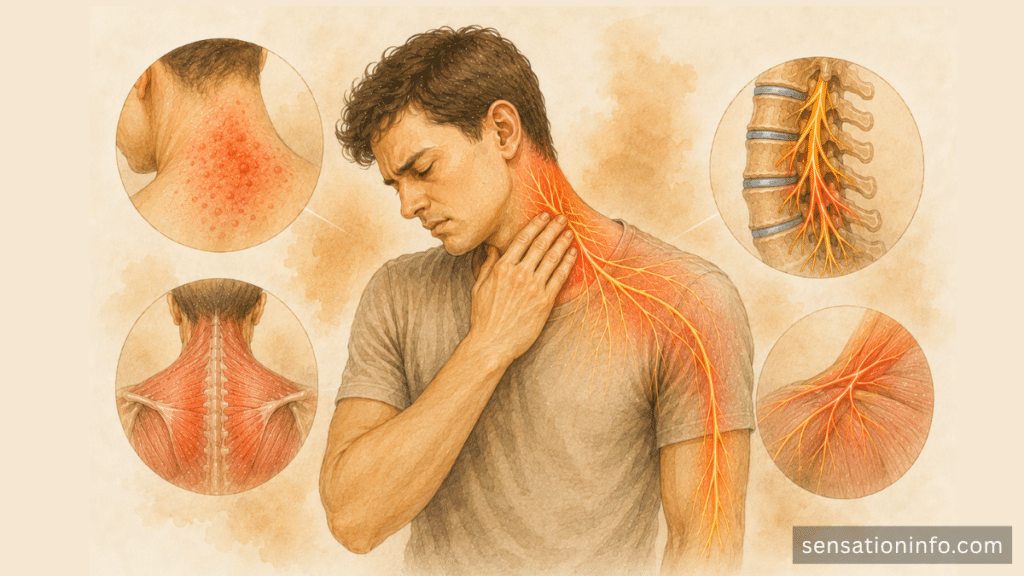
Symptoms that become stronger when you turn, extend, or bend your neck may be related to a nerve, muscle, joint, or disc. This pattern is useful information for a clinician, but it does not rule out a serious condition.
Burning that worsens after looking down at a phone, working at a computer, driving, or sleeping in an unusual position may follow muscle tension or irritation of a neck nerve. Burning that appears after a sudden movement or injury needs closer attention, especially if weakness or loss of feeling develops.
If moving your neck causes severe pain, weakness, dizziness, or a shock like feeling down the spine or limbs, stop the activity and seek medical advice.
What causes a burning sensation in the neck?
1. Cervical Radiculopathy
Cervical radiculopathy occurs when a spinal nerve root in the cervical spine (C1–C8) becomes irritated or compressed by a herniated intervertebral disc, degenerative bone spurs (osteophytes), or foraminal stenosis. It typically manifests as a sharp, burning, or aching pain originating in the neck and radiating along a specific dermatome into the shoulder blade, shoulder, arm, or fingers.
When a compressed cervical nerve root sends sharp irritation or numbness in the left arm, it is important to identify whether the source is spinal disc compression or a circulatory issue. Symptoms often worsen with neck extension, coughing, sneezing, or straining.
2. Muscle Strain, Tension, and Postural Fatigue
Overworking the postural stabilizers of the upper spine (including the trapezius, levator scapulae, and splenius capitis) causes lactic acid accumulation, micro-tears, and localized ischemia. Prolonged forward-head posture places continuous mechanical loading on cervical muscles, producing an intense, persistent burning sensation paired with stiffness, muscle spasms, and tender myofascial trigger points.
3. Cervical Spondylosis and Degenerative Disc Disease
Age-related wear and tear of the cervical spine leads to disc dehydration, facet joint arthrosis, and ligamentous thickening. This degenerative cascade causes chronic burning, grating sensations (crepitus), and stiffness in the neck. If degenerative bone spurs encroach upon the central spinal canal, cervical spondylotic myelopathy can develop, presenting with clumsy hands, gait imbalance, and sensory loss.
4. Entrapment Neuropathies Outside the Spine
Nerves can become mechanically compressed downstream after exiting the spinal column:
- Thoracic Outlet Syndrome (TOS): Thoracic Outlet Syndrome is one condition that can compress nerves or blood vessels between the lower neck and upper chest, leading to heaviness, color changes, and burning down the limb.
- Occipital Neuralgia: Irritation of the greater or lesser occipital nerves produces throbbing, burning, and jabbing pain originating at the base of the skull and radiating up the scalp.
5. Herpes Zoster (Shingles)
Shingles is caused by the reactivation of the latent varicella-zoster virus within sensory nerve ganglia. In the prodromal phase (2 to 5 days before a visible rash appears), it causes localized burning, tingling, itching, and extreme skin hyperesthesia across a single cervical dermatome. If you develop a localized blistering stripe following early neck irritation, learning how to reduce shingles nerve pain and burning can help prevent lasting postherpetic neuralgia.
6. Acute Whiplash and Soft Tissue Trauma
Rapid acceleration-deceleration forces on the cervical spine—frequently seen in motor vehicle accidents or contact sports—strain muscles and sprain interspinous ligaments. Acute whiplash produces a diffuse burning neck ache, tension headaches, dizziness, shoulder pain, and reduced cervical range of motion.
7. Contact Dermatitis and Skin Irritation
The skin of the neck is thin and sensitive. Allergens or irritants such as soaps, synthetic fabrics, nickel jewelry, fragrances, cosmetic peels, and sunburn can trigger inflammatory contact dermatitis, presenting with superficial burning, erythema, pruritus, and localized peeling.
8. Serious Infections and Inflammatory Conditions
Infections involving deep neck spaces, lymph nodes, or the central nervous system cause inflammatory burning pain. Bacterial or viral meningitis is a critical medical emergency characterized by acute neck stiffness, high fever, light sensitivity, and severe headache.
9. Vascular and Cardiac Emergencies
- Cervical Artery Dissection: A tear in the inner lining of the carotid or vertebral artery can cause acute, severe unilateral neck pain or burning, often accompanied by a partial Horner’s syndrome (drooping eyelid, constricted pupil) and stroke symptoms.
- Coronary Ischemia / Angina: Atypical presentations of myocardial ischemia can cause angina that radiates up through the neck, jaw, and left shoulder, frequently accompanied by diaphoresis, nausea, and dyspnea.
How can you separate nerve, muscle, and skin patterns?
| Pattern | Clues that may fit | What to do |
| Nerve related burning | Travels from the neck into the shoulder or arm and may include tingling, numbness, or weakness | Arrange a clinical evaluation, sooner if weakness appears |
| Muscle related burning | Follows prolonged posture, lifting, stress, or repetitive activity and includes stiffness or tenderness | Reduce the trigger and seek care if it persists or worsens |
| Skin related burning | Stays near an irritated area and includes redness, itching, peeling, or a rash | Remove the irritant and seek care for severe or spreading symptoms |
| Shingles pattern | Burning or tingling on one side followed by grouped blisters | Contact a clinician promptly |
| Spinal cord warning pattern | Burning with trouble walking, clumsiness, weakness, or bladder or bowel changes | Seek urgent medical care |
| Heart or stroke warning pattern | Neck symptoms with chest discomfort, breathing trouble, faintness, sudden weakness, or speech or vision changes | Call 112 in India or 911 internationally |
These patterns are guides for describing symptoms, not a way to make a diagnosis at home.
What should you do at home while waiting for care?
Avoid the movement or position that clearly makes the burning worse. Use a neutral neck position, take regular breaks from screens, and avoid heavy lifting until the cause is clearer.
Protect areas that feel numb from heat, cold, cuts, and pressure. Do not forcefully stretch or manipulate the neck after an injury. Do not use a neck brace unless a clinician has advised you to do so.
Keep a record of when the burning started, how long it lasts, what triggers it, whether it travels, and whether you notice weakness, numbness, rash, fever, headache, or balance changes.
Do not stop a prescription medicine or take high dose vitamins without medical guidance. Seek urgent care rather than relying on home treatment when red flags appear.
How is a burning neck sensation diagnosed?
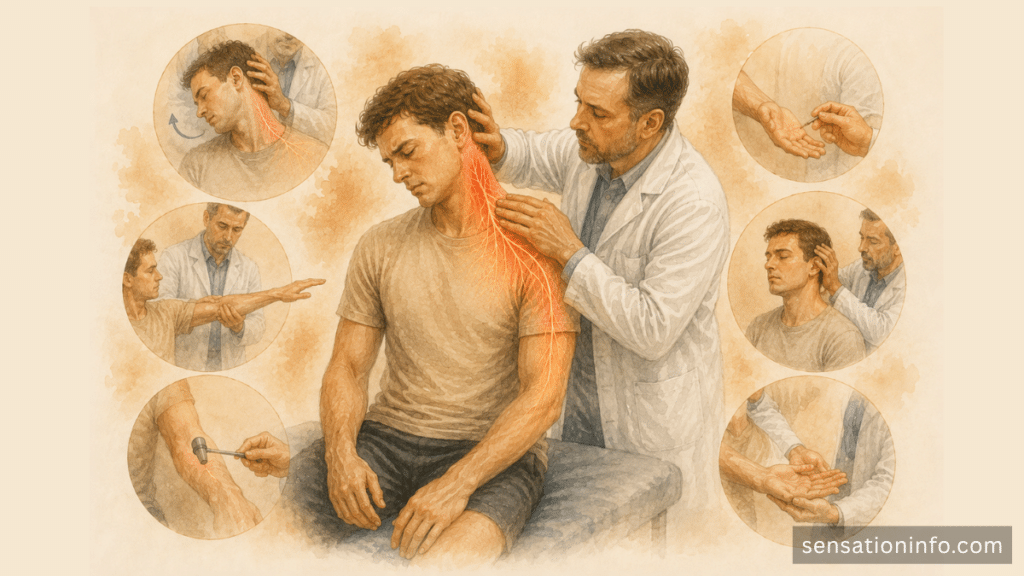
A clinician will ask about the exact location, duration, severity, triggers, recent injury, posture, work activities, skin changes, and symptoms in the arms or legs. The examination may include neck movement, muscle strength, sensation, reflexes, coordination, walking, skin inspection, and pulse checks.
Testing depends on the pattern. It may include blood tests, X rays, magnetic resonance imaging, computed tomography, nerve conduction studies, electromyography, or other tests. Sudden neurologic symptoms require emergency assessment rather than a routine appointment.
The purpose of testing is to determine whether the source is the skin, muscles, joints, spinal nerves, spinal cord, blood vessels, or another condition.
How is neck burning treated?
Treatment depends on the cause. Muscle strain may improve with guided activity changes, physical therapy, and clinician recommended pain treatment. Cervical radiculopathy may be treated with physical therapy, posture changes, or other treatment based on the examination.
Shingles may require prescription antiviral treatment. Skin irritation needs removal of the trigger and appropriate skin care. Infection, spinal cord pressure, a blood vessel problem, stroke, or heart condition requires condition specific medical treatment.
Do not rely on a pain reliever to hide symptoms that are worsening, spreading, or occurring with weakness or fever.
When should you make a medical appointment?
Arrange an appointment if the burning lasts more than a short period, keeps returning, interferes with sleep, limits neck movement, or travels into an arm. Make an appointment after an injury, new medicine, illness, or persistent posture related symptoms.
Seek prompt care for weakness, numbness, worsening pain, fever, rash, severe headache, swollen glands, trouble swallowing, or symptoms that affect walking or coordination. Call 112 in India or 911 internationally for sudden neurologic changes, chest symptoms, severe breathing trouble, or major trauma.
Key Takeaways
1.A burning sensation in the neck can come from muscles, skin, cervical nerves, shingles, injury, blood vessels, or a heart related problem.
2.Burning that travels into an arm with tingling, numbness, or weakness often needs evaluation for nerve irritation.
3.Fever, severe stiffness, a rapidly spreading rash, or symptoms after major trauma require prompt medical attention.
4.Call 112 in India or 911 internationally for sudden weakness, facial drooping, speech trouble, vision changes, severe imbalance, chest pressure, faintness, or breathing difficulty.
5.Persistent, recurrent, worsening, or unexplained neck burning should be assessed by a qualified clinician.
Frequently Asked Questions
Common causes include muscle strain, poor posture, an irritated nerve, cervical radiculopathy, arthritis, skin irritation, shingles, and injury. Blood vessel, spinal cord, heart, and infection related causes are less common but need urgent attention when warning symptoms appear.
Neck burning is urgent when it occurs with sudden weakness, facial drooping, speech trouble, vision changes, severe imbalance, chest pressure, faintness, serious breathing difficulty, fever with severe stiffness, or a major injury. Call 112 in India or 911 internationally for these symptoms
Poor posture can strain neck muscles and may irritate nearby joints or nerves. Symptoms related to posture should improve with position changes and appropriate movement, but persistent or worsening burning needs assessment.
Avoid the position or movement that worsens symptoms, use a neutral neck position, take screen breaks, and avoid heavy lifting until the cause is clearer. Do not forcefully manipulate the neck, especially after an injury. Seek urgent care for red flags.
Doctor’s Recommendation
If burning starts in the neck and travels into an arm, a clinician may need to distinguish a cervical nerve root problem from muscle strain or compression near the shoulder. Thoracic Outlet Syndrome: Causes, Symptoms, Diagnosis, and Treatment explains one related nerve and blood vessel compression pattern. For symptoms that persist or affect several body areas, What Is Neuropathy? A Complete Guide to Types, Causes, Symptoms, and Treatment may provide useful background, but neither article can establish a diagnosis.
Conclusion
Neck burning is often linked to muscle tension, skin irritation, or an irritated nerve, but the symptom can also follow shingles, injury, infection, or a more serious neurologic or vascular problem. Notice whether it changes with movement, travels into an arm, follows a rash, or appears with weakness, fever, severe headache, or trouble walking. Call 112 in India or 911 internationally for emergency warning signs and arrange medical care when the burning is persistent, recurrent, worsening, or unexplained.
References
- Centers for Disease Control and Prevention. Signs and Symptoms of Stroke. CDC.
- Centers for Disease Control and Prevention. Shingles Symptoms and Complications. CDC.
- Cleveland Clinic. Cervical Radiculopathy: Symptoms and Treatment.
- Mayo Clinic. Neck Pain: Symptoms and Causes. Mayo Clinic.
- National Library of Medicine. Numbness and Tingling. MedlinePlus Medical Encyclopedia.