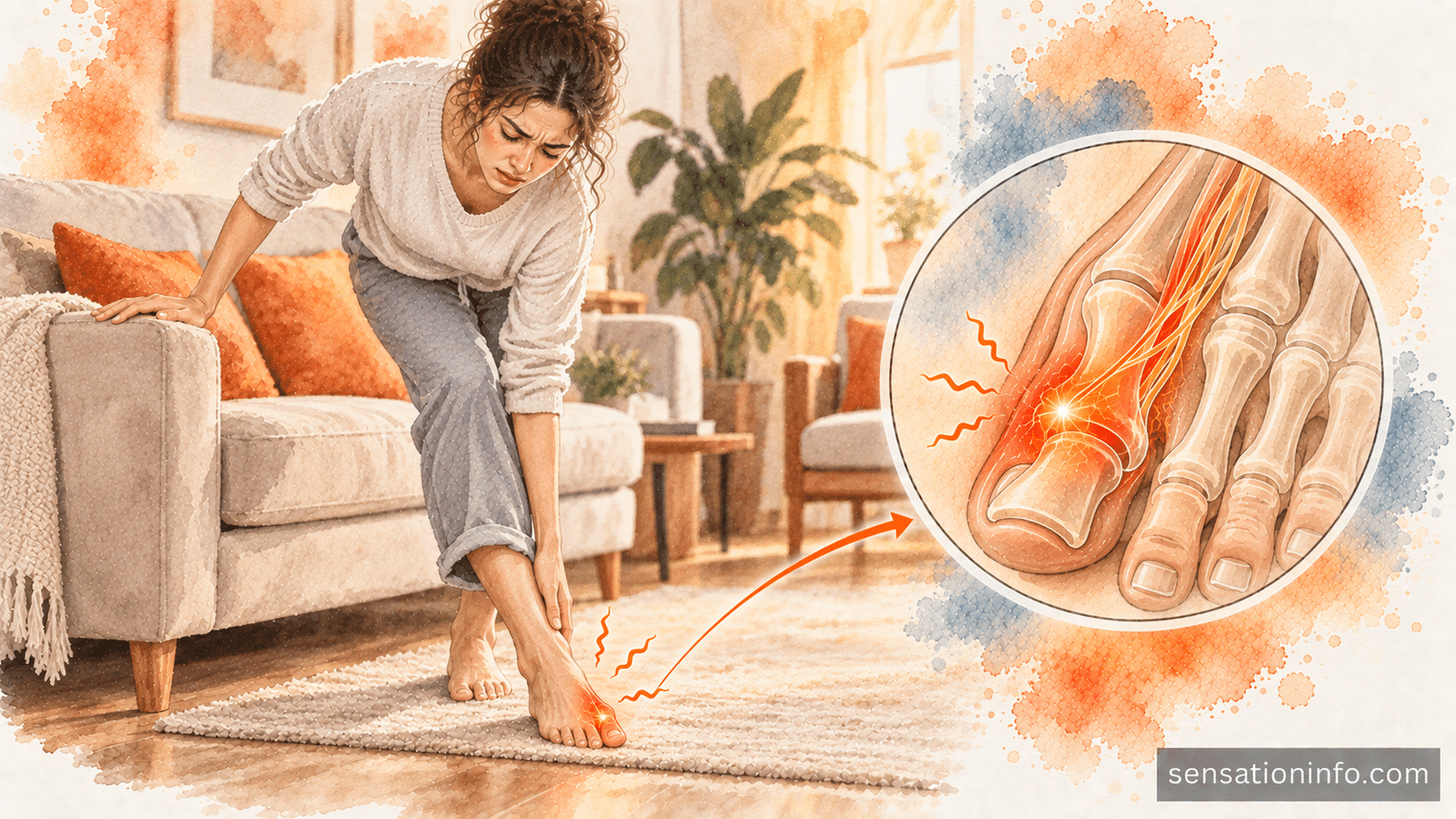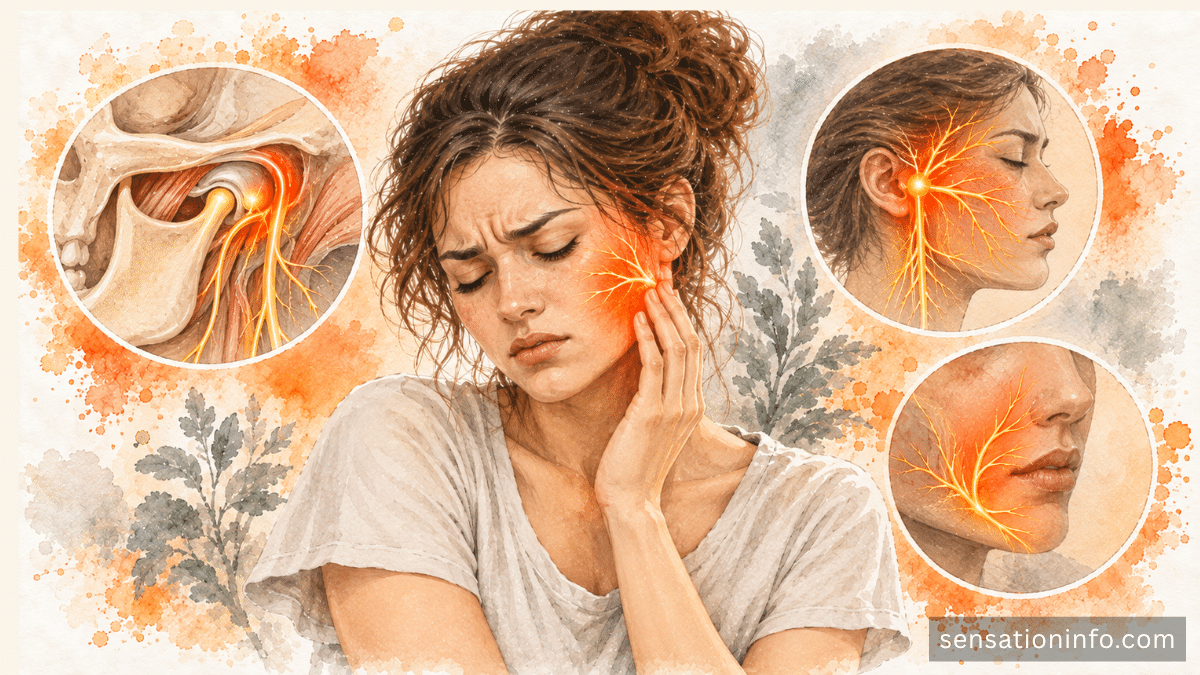

The first time I felt my entire arm go numb, I was sitting on the couch watching a movie. I had been leaning on it for almost forty minutes without realising it. When I finally moved, the arm felt like it belonged to someone else. That weird, foreign sensation is something almost everyone has experienced at least once. But here is the catch: not all numbness is harmless.
In this guide, I am going to walk you through what numbness actually is, why it happens, when it is just a passing nuisance, and when it should genuinely worry you. I have spent a fair amount of time reading from trusted medical sources like the Mayo Clinic, Cleveland Clinic, and the National Institute of Neurological Disorders and Stroke (NINDS), and I will share what I have learned in plain, human language.
What Does Numbness in Body Parts Mean?
Numbness, in simple words, is a partial or total loss of sensation in a part of your body. You might feel reduced touch, no temperature awareness, a tingling “pins and needles” feeling, or sometimes just heaviness, as if the limb is asleep.
Doctors often call this paresthesia when it is accompanied by tingling, and hypoesthesia when it is more about reduced feeling. The terms sound intimidating, but the underlying idea is the same. Something is interfering with the signal travelling between your nerves and your brain.
Think of your nerves as long electrical cables. If the cable gets pinched, damaged, or starves of nutrients, the message going to or from the brain gets distorted. That is when numbness shows up.
Temporary Numbness vs Chronic Numbness
This is the part most people miss, and honestly, it is the most important distinction.
Temporary numbness is short-lived. It usually goes away on its own once you change position, warm up, or rest. The classic example is sitting cross-legged for too long, sleeping on your arm, or holding a phone between your shoulder and ear. Cold weather and brief stress responses can also cause it.
Chronic numbness is the kind that does not go away easily. It lingers for hours, returns frequently, or spreads slowly. This is usually a sign that an underlying medical issue is at play, ranging from vitamin deficiencies to nerve damage to more serious neurological conditions.
If I had to give one rule of thumb, it would be this: numbness that fades within a few minutes is rarely something to lose sleep over. Numbness that persists, returns repeatedly, or affects multiple body parts deserves a doctor’s attention.
Common Causes of Numbness
Numbness can be triggered by a long list of conditions. Below, I have grouped the most common and medically recognised causes so you understand the bigger picture.
1. Pressure on Nerves
This is the most ordinary cause. Sitting in one position for too long, leaning on your elbow, or wearing tight footwear can compress a nerve temporarily. The signal pauses, and once you shift, the “pins and needles” return as the nerve wakes up. Cleveland Clinic notes that this is usually harmless if it resolves quickly.
2. Carpal Tunnel Syndrome
If your fingers, especially the thumb and index finger, go numb after long hours of typing or scrolling, this could be the culprit. Carpal tunnel happens when the median nerve in your wrist is squeezed. People who use computers all day, gamers, and even guitarists are common sufferers. I have a friend who is a graphic designer, and she once described the feeling as “my fingers slowly checking out of work.” Funny, but accurate.
3. Diabetes and Diabetic Neuropathy
High blood sugar over time damages nerves, especially in the hands and feet. According to the American Diabetes Association, this is one of the most common complications of long-term diabetes. The numbness usually starts in the toes and slowly creeps upward. If you have diabetes and notice persistent numbness, please do not ignore it.
4. Vitamin Deficiencies
Vitamin B12 is the big one. A deficiency can cause tingling, numbness, balance issues, and fatigue. Vegetarians, vegans, older adults, and people with absorption issues are most at risk. Low levels of vitamin B6, vitamin E, and folate can also affect nerve function.
5. Pinched Nerves in the Spine
A herniated disc, a bone spur, or even bad posture can compress nerves in the neck or lower back. The numbness then radiates down the arm or leg. Sciatica is the most well-known example, where pain and numbness travel from the lower back down the leg.
6. Multiple Sclerosis (MS)
MS is an autoimmune condition where the immune system attacks the protective covering of nerves. Numbness is often one of the earliest symptoms, sometimes long before diagnosis. The National Multiple Sclerosis Society lists facial numbness, limb numbness, and tingling as common early signs.
7. Stroke or Mini-Stroke (TIA)
This is the cause everyone fears, and rightly so. Sudden numbness, especially on one side of the body, accompanied by drooping face, slurred speech, or arm weakness, is a medical emergency. The acronym F.A.S.T (Face, Arm, Speech, Time) is what every adult should remember. Time saves the brain.
8. Poor Circulation
Blood is what keeps nerves nourished. Conditions like peripheral artery disease, Raynaud’s phenomenon, or even just sitting too long can reduce circulation to your limbs. Cold fingers and toes that go numb often point to circulation issues.
9. Anxiety and Panic Attacks
Yes, anxiety can cause real, physical numbness. During a panic attack, breathing changes can lower carbon dioxide levels, which affects nerve signalling. The face, hands, and feet are usually the first to feel it. I have seen this happen to a colleague during a stressful presentation, and she genuinely thought she was having a stroke. She was not. But she did need help calming down.
10. Infections and Autoimmune Diseases
Conditions like Lyme disease, shingles, HIV, lupus, and Guillain-Barré syndrome can all cause numbness. These are less common, but they are well-documented causes that doctors actively investigate when basic explanations are ruled out.
11. Medications and Toxins
Some chemotherapy drugs, certain antibiotics, and excessive alcohol use can damage peripheral nerves. If your numbness started after a new medication, that is worth mentioning to your doctor.
12. Injury or Trauma
A sports injury, car accident, or even a hard fall can damage nerves directly. Sometimes the numbness is immediate, and sometimes it shows up days later as swelling settles in.
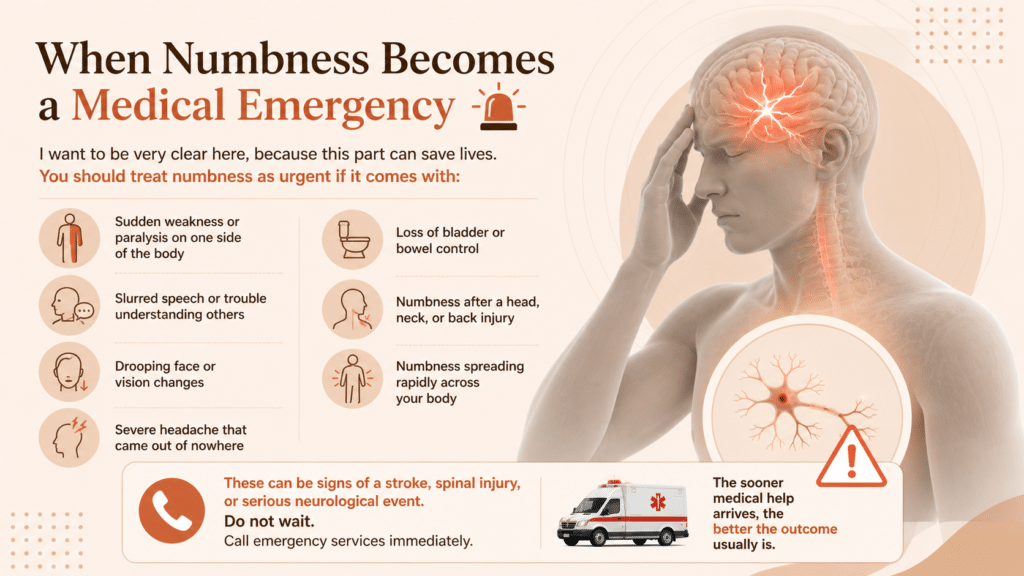
When Numbness Becomes a Medical Emergency
I want to be very clear here, because this part can save lives.
You should treat numbness as urgent if it comes with:
- Sudden weakness or paralysis on one side of the body
- Slurred speech or trouble understanding others
- Drooping face or vision changes
- Severe headache that came out of nowhere
- Loss of bladder or bowel control
- Numbness after a head, neck, or back injury
- Numbness spreading rapidly across your body
These can be signs of a stroke, spinal injury, or serious neurological event. Do not wait. Call emergency services immediately. The sooner medical help arrives, the better the outcome usually is.
How Doctors Diagnose Numbness
When I went to a neurologist for a friend a few years back, I was surprised how thorough the process was. Doctors do not just look at the numb area. They build a full picture.
A typical diagnostic workup may include:
A detailed medical history is the starting point. Your doctor will ask when the numbness started, where it is, how often it happens, and what makes it better or worse. Honesty here matters, even about lifestyle habits.
A physical and neurological exam tests reflexes, muscle strength, balance, and sensation. This often reveals a lot before any test is ordered.
Blood tests check for diabetes, vitamin deficiencies, thyroid problems, kidney function, and signs of infection or inflammation.
Imaging tests such as MRI or CT scans help identify herniated discs, tumours, strokes, or signs of MS.
Nerve conduction studies and electromyography (EMG) measure how well your nerves and muscles are communicating. These are very useful for diagnosing carpal tunnel and peripheral neuropathy.
A lumbar puncture, also called a spinal tap, is sometimes done if MS or certain infections are suspected.
The combination of these tools usually narrows down the cause quickly.
Treatment Options for Numbness
Treatment depends entirely on the cause. There is no one-size-fits-all answer, and anyone selling you a universal cure is selling you nonsense.
For pressure-related numbness, simply changing position or improving ergonomics is enough. A better office chair or wrist rest can do wonders.
For carpal tunnel, wrist splints, physiotherapy, and in stubborn cases, a minor surgical release procedure usually help.
For diabetic neuropathy, blood sugar control is the foundation. Medications like gabapentin or pregabalin may be prescribed for symptom relief.
For vitamin B12 deficiency, oral or injected supplements typically resolve the issue, though nerve repair can take time.
For pinched nerves, physical therapy, anti-inflammatory medications, and posture correction are first-line approaches. Surgery is reserved for severe cases.
For MS, disease-modifying therapies have improved dramatically over the last decade. Early diagnosis matters a lot.
For stroke, rehabilitation, blood thinners, and lifestyle changes are part of long-term recovery.
For anxiety-related numbness, therapy, breathing techniques, and sometimes medication address the root cause.
The point is, treatment works best when the actual cause is correctly identified. Self-medicating with random supplements rarely solves a real nerve problem.
How to Prevent Numbness in Daily Life
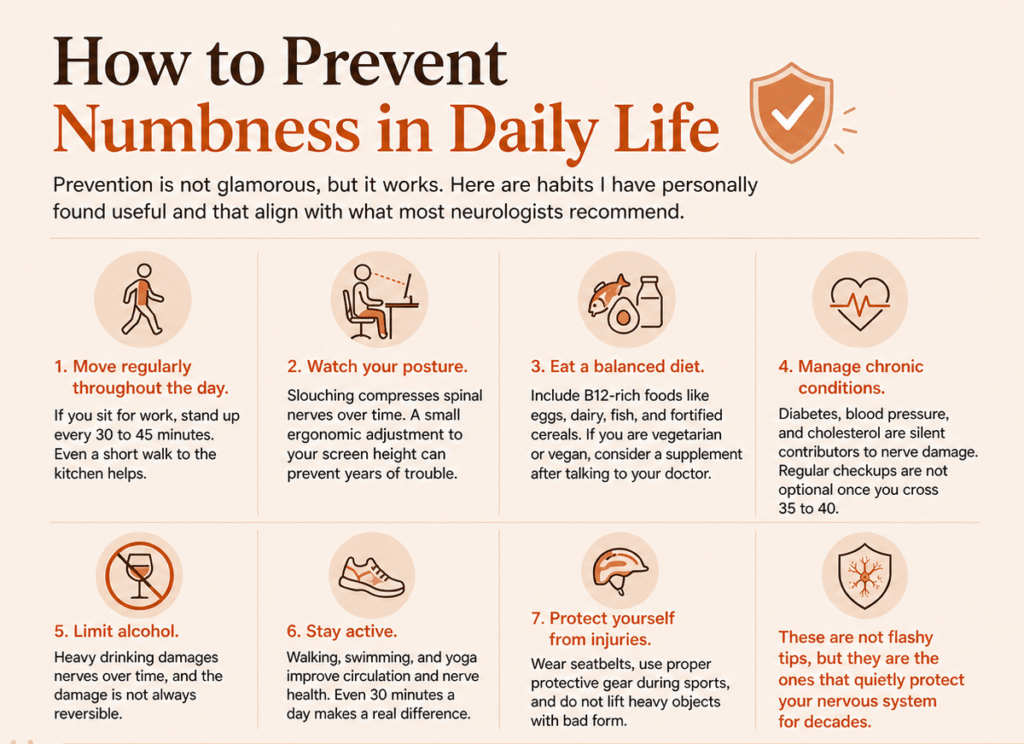
Prevention is not glamorous, but it works. Here are habits I have personally found useful and that align with what most neurologists recommend.
Move regularly throughout the day. If you sit for work, stand up every 30 to 45 minutes. Even a short walk to the kitchen helps.
Watch your posture. Slouching compresses spinal nerves over time. A small ergonomic adjustment to your screen height can prevent years of trouble.
Eat a balanced diet. Include B12-rich foods like eggs, dairy, fish, and fortified cereals. If you are vegetarian or vegan, consider a supplement after talking to your doctor.
Manage chronic conditions. Diabetes, blood pressure, and cholesterol are silent contributors to nerve damage. Regular checkups are not optional once you cross 35 to 40.
Limit alcohol. Heavy drinking damages nerves over time, and the damage is not always reversible.
Stay active. Walking, swimming, and yoga improve circulation and nerve health. Even 30 minutes a day makes a real difference.
Protect yourself from injuries. Wear seatbelts, use proper protective gear during sports, and do not lift heavy objects with bad form.
These are not flashy tips, but they are the ones that quietly protect your nervous system for decades.
Frequently Asked Questions
Is numbness always a sign of something serious? No. Most numbness is temporary and harmless, caused by pressure or posture. The serious kinds are usually persistent, recurring, or come with other neurological symptoms.
Can stress and anxiety cause numbness? Yes. Anxiety and panic attacks can cause real numbness, especially in the face, hands, and feet. It is not imaginary, but it is also not dangerous in itself.
How long is too long for numbness to last? If numbness lasts more than a few hours, returns frequently, or spreads, it is worth a medical opinion. Sudden numbness with weakness or speech changes is an emergency.
Can vitamin deficiency really cause numbness? Absolutely. Vitamin B12 deficiency is one of the most documented nutritional causes of nerve symptoms, and it is easily tested and treated.
Should I see a general doctor or a neurologist first? Start with your general physician. They can run initial tests and refer you to a neurologist if needed. Going straight to a specialist is rarely necessary unless symptoms are severe.
Final Thoughts
Numbness is one of those symptoms that sits in a strange space between annoying and alarming. Most of the time, it is your body politely asking you to move, hydrate, or fix your posture. But sometimes, it is a genuine signal from your nervous system that something deeper needs attention.
The smartest thing you can do is pay attention to patterns. Occasional numbness after sleeping awkwardly is normal. Numbness that visits often, lingers, or comes with other symptoms deserves a real conversation with a doctor.
I am not a medical professional, and this article is not a substitute for medical advice. But I do believe that being informed is the first step toward staying healthy. If something feels off in your body, trust that instinct. Get it checked. Your future self will thank you for it.