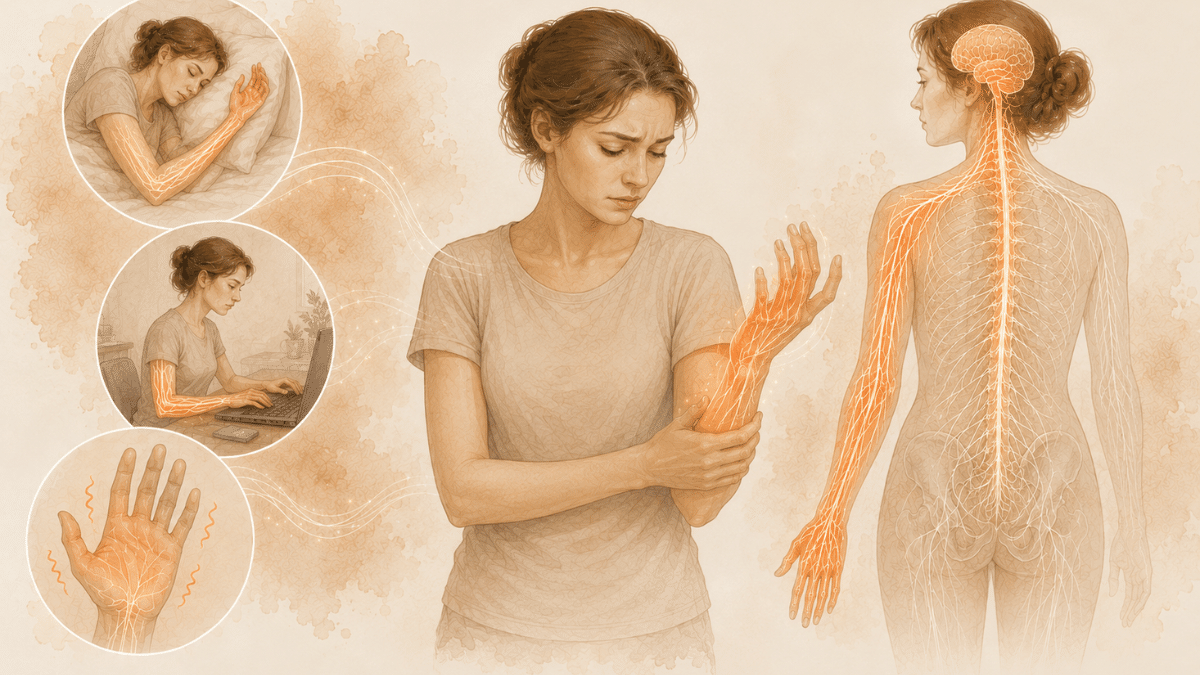

Numbness in your left arm means you have lost some or all feeling between your shoulder and your fingertips. Most cases happen because a nerve was briefly compressed while you slept or sat in one position too long, and the feeling comes back within minutes. However, sudden left arm numbness that appears alongside chest pain, facial drooping, or trouble speaking can be a sign of a heart attack or stroke and requires emergency care right away.
When to Call 911 Right Now
Left arm numbness becomes an emergency when it arrives with other warning signs. Call 911 or go to the nearest emergency room immediately if your left arm goes numb and you also notice any of the following:
- Chest pain, pressure, or a squeezing feeling that lasts more than a few minutes
- Pain spreading into your jaw, neck, back, or stomach
- Sudden weakness or numbness on one side of your face or body
- Slurred speech or difficulty understanding words
- Sudden severe headache with no clear cause
- Shortness of breath, cold sweats, or sudden nausea
- Loss of coordination or trouble walking
These are signs of a heart attack or stroke. Every minute without treatment increases the risk of permanent damage. Do not drive yourself. Do not wait to see if symptoms improve.
Numbness in the left arm without any of these additional symptoms is rarely an emergency, but it still deserves medical attention if it keeps coming back or does not go away on its own.
What Does Left Arm Numbness Feel Like

The sensation varies from person to person. You might feel a complete loss of feeling, as though your arm belongs to someone else. Some people describe a heavy, “dead” arm that will not respond normally when they try to move it. Others feel a milder version, with patches of reduced sensation mixed with tingling or pins and needles.
Left arm numbness can affect the entire arm from shoulder to fingertips, or it can stay in one area like the hand, fingers, or forearm. The location and pattern of the numbness give your doctor important clues about which nerve or blood vessel is involved.
Common Causes That Are Usually Not Dangerous
Most people who experience left arm numbness have one of these causes, and the numbness resolves on its own or with simple changes.
Sleeping on your arm. Lying with your arm pinned under your body or your head compresses the nerves running through the arm. This temporarily blocks nerve signals and causes numbness. The feeling returns within a few minutes once you shift position and blood flow is restored.
Prolonged pressure on a nerve. Leaning on your elbow for a long time can compress the ulnar nerve, which runs along the inner side of your elbow. This causes numbness in your ring finger and pinky. Resting your arm on a hard surface or holding a phone to your ear for an extended period can do the same thing.
Poor posture. Sitting hunched over a desk for hours tightens the muscles in your neck and shoulders. Over time, this puts pressure on the nerves that travel from your cervical spine (the neck portion of your backbone) down into your arm. If you also experience numbness in your hands along with neck stiffness, posture is a likely contributor.
Anxiety and panic attacks. When your body enters fight or flight mode during a panic attack, rapid breathing changes the balance of carbon dioxide in your blood. This can trigger numbness and tingling in your arms, hands, and face. The numbness is temporary and stops once your breathing returns to normal.
Vitamin B12 deficiency. Your nerves need vitamin B12 to maintain the protective coating (called the myelin sheath) that surrounds them. When B12 levels drop too low, nerve signals slow down, causing numbness that often starts in the hands and feet and can spread into the arms. Vegans, vegetarians, adults over 50, and people taking certain acid reflux medications are at higher risk for B12 deficiency. About 6% of Americans under age 60 and nearly 20% of those over 60 are B12 deficient, according to the National Institutes of Health.
Nerve Compression Conditions That Cause Left Arm Numbness
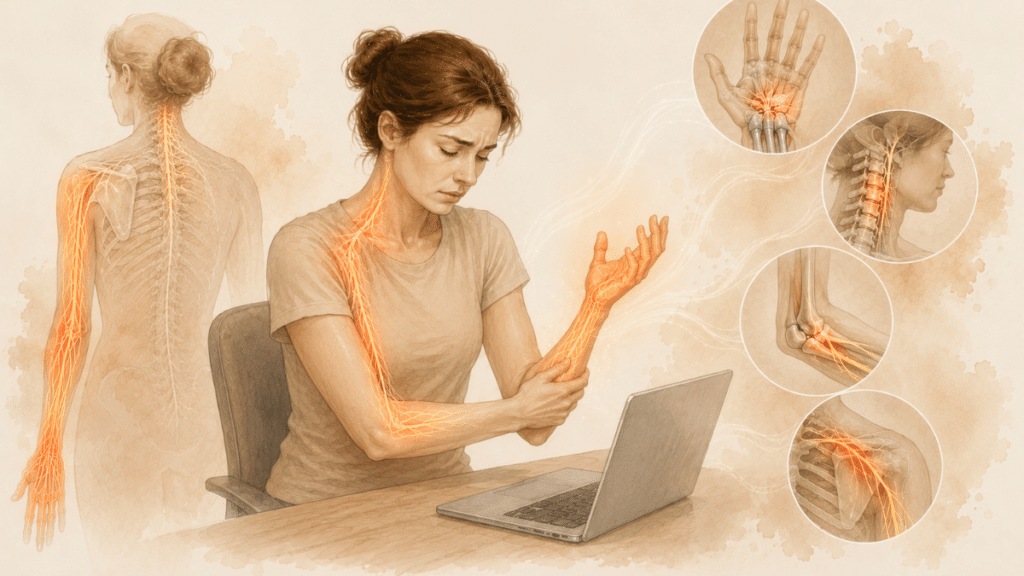
Several specific conditions involve a nerve being squeezed at a particular point. These are not emergencies, but they do need medical treatment to prevent lasting nerve damage.
Cervical radiculopathy (pinched nerve in the neck). A herniated disc or bone spur in the cervical spine can press on a nerve root where it exits the spinal column. This sends numbness, tingling, or weakness down the arm, following the path of that specific nerve. The C6 and C7 nerve roots are most commonly affected, producing numbness in the thumb, index finger, or middle finger.
Thoracic outlet syndrome. The thoracic outlet is the narrow space between your collarbone and first rib. Nerves and blood vessels pass through this gap on their way to your arm. When this space narrows due to an extra rib, tight muscles, or repetitive overhead motions, the nerves get compressed. This causes numbness, tingling, and sometimes a cold or pale arm. Thoracic outlet syndrome affects women more often than men.
Cubital tunnel syndrome. The ulnar nerve travels through a bony channel on the inner side of your elbow called the cubital tunnel. Bending your elbow for long periods, such as during sleep or while talking on the phone, compresses this nerve. The result is numbness in the ring finger and pinky, sometimes with a weakened grip. If you also notice numbness in your fingers that worsens at night, cubital tunnel syndrome is worth evaluating.
Carpal tunnel syndrome. The median nerve passes through a narrow tunnel in your wrist. Repetitive hand movements, fluid retention, or wrist injuries can swell the tissues inside this tunnel and compress the nerve. This causes numbness and tingling in the thumb, index, middle, and part of the ring finger. Carpal tunnel syndrome affects roughly 3% to 6% of the general adult population, according to the American Academy of Orthopaedic Surgeons.
Serious Causes That Need Prompt Medical Attention
These conditions are less common but carry significant health risks. They require diagnosis and treatment from a doctor.
Heart attack. A blockage in a coronary artery reduces blood flow to part of your heart muscle. Left arm numbness during a heart attack happens because the heart and the left arm share nerve pathways through the spinal cord, so the brain sometimes interprets cardiac distress as arm symptoms. Heart attack numbness typically comes on suddenly and is almost always accompanied by chest pain or pressure, shortness of breath, or other symptoms listed in the emergency section above.
Stroke or transient ischemic attack (TIA). When blood flow to part of the brain is cut off, numbness can appear suddenly in the arm, face, or leg on one side of the body. A TIA produces the same symptoms but resolves within minutes to hours. A TIA is a warning that a full stroke may follow. Stroke is the fifth leading cause of death in the United States, according to the Centers for Disease Control and Prevention.
Peripheral neuropathy. Damage to the peripheral nerves, the nerves outside your brain and spinal cord, can cause numbness that starts in the hands and feet and gradually moves toward the center of the body. Diabetes is the most common cause. About 60% to 70% of people with diabetes develop some form of neuropathy during their lifetime, according to the National Institute of Neurological Disorders and Stroke.
Multiple sclerosis (MS). The immune system attacks the myelin sheath that insulates nerve fibers in the brain and spinal cord. Numbness is one of the most common early symptoms of MS and can appear in any limb. It often comes and goes in episodes. If left arm numbness recurs alongside vision changes, fatigue, or balance problems, your doctor may evaluate for MS.
Cervical spinal stenosis. The spinal canal in the neck narrows over time due to arthritis or disc degeneration. This puts pressure on the spinal cord itself, not just individual nerve roots. Symptoms include numbness in one or both arms, difficulty with hand coordination, and an unsteady gait.
How to Tell the Difference: Heart Attack vs. Nerve Problem
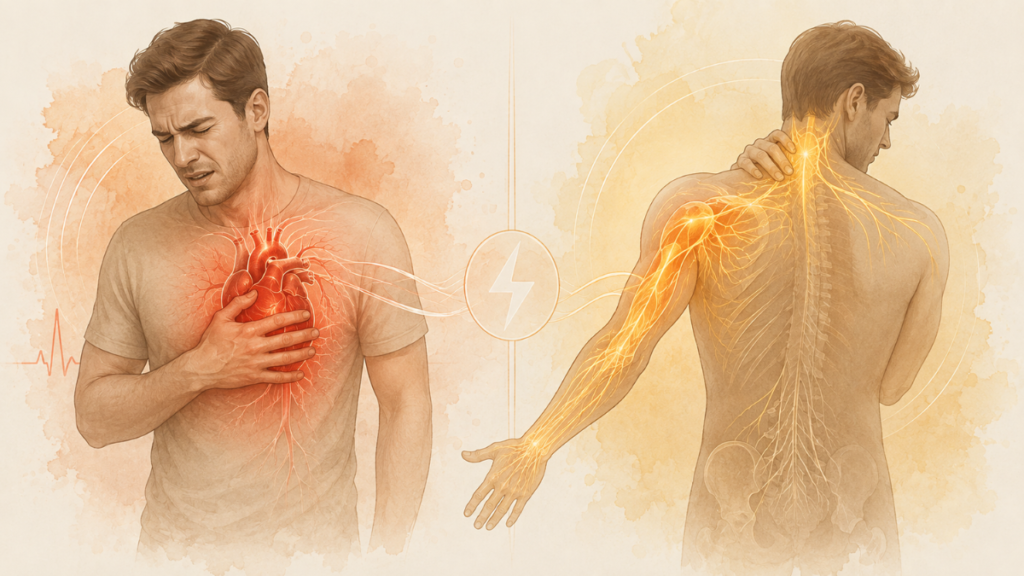
Because left arm numbness triggers fear of a heart attack, this comparison can help you understand the difference.
| Feature | Heart Attack | Nerve Compression |
|---|---|---|
| Onset | Sudden, often during exertion or stress | Gradual, or after holding a position |
| Numbness pattern | Entire arm, often with chest symptoms | Follows a specific nerve path (certain fingers) |
| Other symptoms | Chest pain, jaw pain, shortness of breath, sweating | Neck pain, tingling, weakness in specific muscles |
| Duration | Does not improve with position changes | Improves when you move or stretch |
| Risk factors | High blood pressure, diabetes, smoking, family history | Repetitive motions, poor posture, desk work |
This table is a guide, not a diagnosis tool. If you have any doubt, get emergency care immediately. A missed heart attack is far more dangerous than a cautious ER visit.
How Is Left Arm Numbness Diagnosed
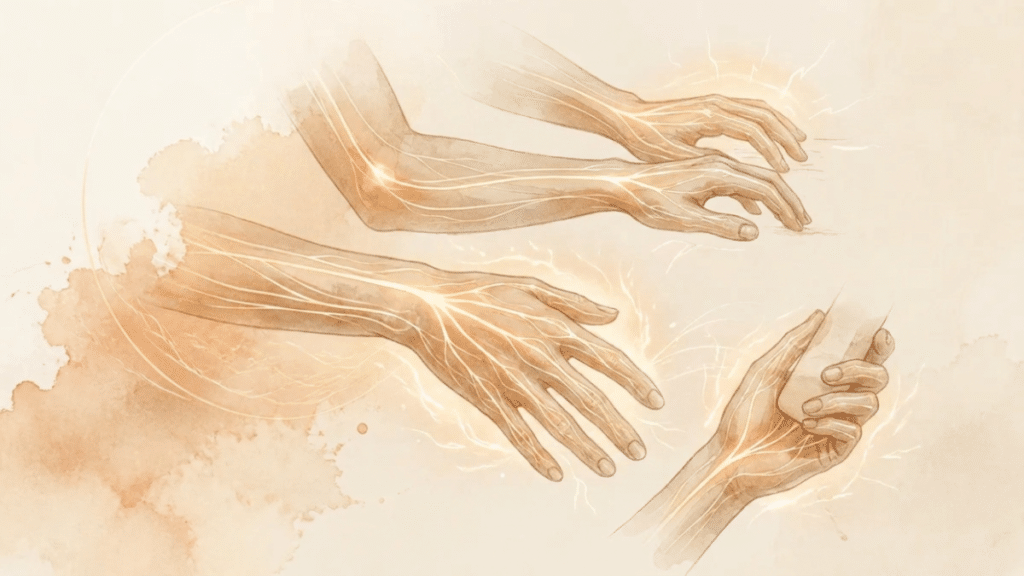
Your doctor will start with a physical exam and detailed questions about when the numbness started, what makes it better or worse, and any other symptoms you have noticed. Depending on the findings, your doctor may order one or more of the following tests.
Blood tests. These check for conditions like diabetes, B12 deficiency, thyroid disorders, or inflammatory markers that may point to an autoimmune condition.
Nerve conduction study (NCS) and electromyography (EMG). These tests measure how fast electrical signals travel along your nerves and how well your muscles respond. They are the standard tests for confirming carpal tunnel syndrome, cubital tunnel syndrome, and peripheral neuropathy. You can learn more about what to expect during a nerve conduction study and how results are interpreted.
MRI of the cervical spine. If a pinched nerve or spinal stenosis is suspected, an MRI shows detailed images of the discs, bones, and nerve roots in your neck.
CT angiography or cardiac tests. If your doctor suspects a vascular or cardiac cause, you may undergo an ECG (electrocardiogram), cardiac enzyme blood tests, or imaging of your blood vessels.
Brain MRI. If stroke or MS is a concern, a brain MRI can reveal areas of damage or inflammation.
Treatment Options Based on the Cause
Treatment depends entirely on what is causing the numbness. There is no single treatment for “left arm numbness” because the causes are so different.
For nerve compression (pinched nerve, carpal tunnel, cubital tunnel): Initial treatment usually includes rest, activity modification, physical therapy, and wearing a splint or brace, especially at night. Nonsteroidal anti inflammatory drugs (NSAIDs) like ibuprofen (Advil) or naproxen (Aleve) can reduce inflammation around the nerve. If conservative treatment fails after 6 to 12 weeks, corticosteroid injections or surgery may be recommended.
For thoracic outlet syndrome: Physical therapy focused on stretching and strengthening the muscles around the collarbone and shoulder is the first approach. If symptoms persist, surgical decompression of the thoracic outlet may be needed.
For B12 deficiency: B12 supplementation, either oral tablets (1,000 to 2,000 mcg daily) or intramuscular injections, corrects the deficiency. Nerve symptoms may take several months to improve, and some damage may be permanent if the deficiency was prolonged.
For peripheral neuropathy: Managing the underlying condition (most often blood sugar control in diabetes) is the foundation. Medications like gabapentin (Neurontin) or pregabalin (Lyrica) help relieve nerve pain and numbness. Duloxetine (Cymbalta) is another option, especially when neuropathy occurs alongside depression.
For MS: Disease modifying therapies prescribed by a neurologist slow the progression of MS and reduce the frequency of flare ups. Acute numbness episodes may be treated with short courses of high dose corticosteroids.
For heart attack or stroke: Emergency treatment includes clot dissolving medications, surgical procedures to restore blood flow, and intensive cardiac or neurological care. Long term recovery involves cardiac rehabilitation, medication management, and lifestyle changes.
What You Can Do at Home Right Now
If your left arm numbness comes and goes and is not accompanied by any emergency symptoms, these steps can help while you wait to see your doctor.
Change your sleeping position. Avoid sleeping with your arm under your pillow or your body. Try sleeping on your back with your arms at your sides, or use a body pillow to keep your arm supported.
Fix your workstation. Keep your elbows at a 90 degree angle while typing. Support your forearms on the desk surface. Position your screen at eye level so you are not looking down and compressing your neck.
Stretch your neck and shoulders. Gently tilt your head toward each shoulder and hold for 15 to 20 seconds. Roll your shoulders backward 10 times. These stretches relieve tension on the nerves traveling from your neck into your arms.
Check your B12 intake. If you eat little or no meat, dairy, or eggs, consider a B12 supplement or fortified foods. Talk to your doctor about testing your B12 level.
Manage stress and breathing. If anxiety triggers your numbness, slow your breathing to 4 counts in and 6 counts out. This reverses the carbon dioxide shift that causes tingling during panic episodes.
Who Is Most at Risk
Certain groups of people are more likely to experience left arm numbness or face greater danger from its causes.
People with diabetes. High blood sugar damages peripheral nerves over time. Diabetic neuropathy is the single most common cause of chronic numbness in the extremities.
Adults over 50. Age related wear on the cervical spine increases the risk of pinched nerves and spinal stenosis. B12 absorption also decreases with age.
People with heart disease risk factors. High blood pressure, high cholesterol, smoking, obesity, and a family history of heart disease all increase the chance that left arm numbness could be cardiac in origin.
Pregnant women. Fluid retention during pregnancy swells the carpal tunnel and can cause numbness in the hands and arms. If you are experiencing tingling in your left hand during pregnancy, carpal tunnel related changes are the most likely explanation.
People who do repetitive arm work. Assembly line workers, musicians, and anyone who performs the same arm or wrist motion for hours each day are at increased risk for nerve compression injuries.
How Long Does the Numbness Typically Last
Positional numbness (from sleeping on your arm): resolves in 1 to 5 minutes once you move.
Carpal tunnel or cubital tunnel syndrome: numbness may come and go for weeks or months. With treatment, most people see improvement within 4 to 6 weeks. Without treatment, the numbness can become constant and muscle weakness may develop.
Pinched nerve in the neck: mild cases improve within 4 to 6 weeks with rest and physical therapy. Severe cases may take 3 to 6 months or require surgery.
Peripheral neuropathy: numbness may stabilize or slowly improve with treatment of the underlying cause, but full recovery is not always possible, especially if nerve damage was advanced before treatment started.
B12 deficiency: nerve symptoms begin improving within a few weeks of supplementation, but complete recovery can take 6 to 12 months. Some damage is permanent if the deficiency lasted more than a year.
Frequently Asked Questions
Yes. During a panic attack or period of intense anxiety, rapid shallow breathing lowers carbon dioxide levels in your blood. This changes the way nerves fire, producing numbness and tingling in the arms, hands, and face. The numbness stops when your breathing returns to normal and does not cause any lasting nerve damage.
No. Left arm numbness is a possible heart attack symptom, but the vast majority of cases are caused by nerve compression, poor posture, or other non cardiac conditions. A heart attack almost always produces additional symptoms, especially chest pain or pressure.
Go to the ER if the numbness is sudden and comes with chest pain, facial drooping, slurred speech, sudden severe headache, or weakness on one side of your body. If the numbness is isolated and has been happening gradually, schedule an appointment with your primary care doctor instead.
Yes. The nerves that supply feeling to your arm originate in your cervical spine. A herniated disc or bone spur pressing on a nerve root at C5, C6, or C7 can send numbness from your neck through your shoulder and all the way into specific fingers.
Vitamin B12 deficiency is the most common nutritional cause of arm numbness. Vitamin B6 deficiency and folate deficiency can also contribute, though less frequently. A simple blood test can check all three levels.
Most causes of left arm numbness do not require surgery. Conservative treatments like physical therapy, splinting, medication, and lifestyle changes resolve the majority of cases. Surgery is considered only when conservative treatment fails or when there is evidence of progressive nerve damage.
Dehydration itself does not directly cause arm numbness, but it can worsen muscle cramps and reduce blood flow, which may contribute to temporary numbness or tingling. Staying well hydrated supports healthy nerve and muscle function.
Nerve related numbness usually follows a specific pattern, affecting certain fingers or a defined area of the arm. It often worsens with certain positions and improves with movement. Cardiac numbness tends to be more diffuse, affects the whole arm, arrives suddenly, and comes with symptoms like chest pain, shortness of breath, or sweating.
If you are reading this because your left arm feels numb right now, take a moment to check for any emergency symptoms listed at the top of this article. If none are present, schedule an appointment with your doctor to find the cause. Most left arm numbness is treatable, and getting it checked early gives you the best chance of a full recovery.
Doctor’s Recommendation
If your left arm numbness includes tingling, or if you have noticed that the sensation differs depending on which arm is affected, understanding the differences between left arm and right arm tingling can help you have a more productive conversation with your doctor about what testing may be appropriate.
References
- National Institute of Neurological Disorders and Stroke. Peripheral Neuropathy. NIH. 2025.
- Cleveland Clinic. Left Arm Numb. Cleveland Clinic. 2025.
- Centers for Disease Control and Prevention. Stroke Facts. CDC. 2025.
- National Institutes of Health, Office of Dietary Supplements. Vitamin B12 Fact Sheet for Health Professionals. NIH. 2025.