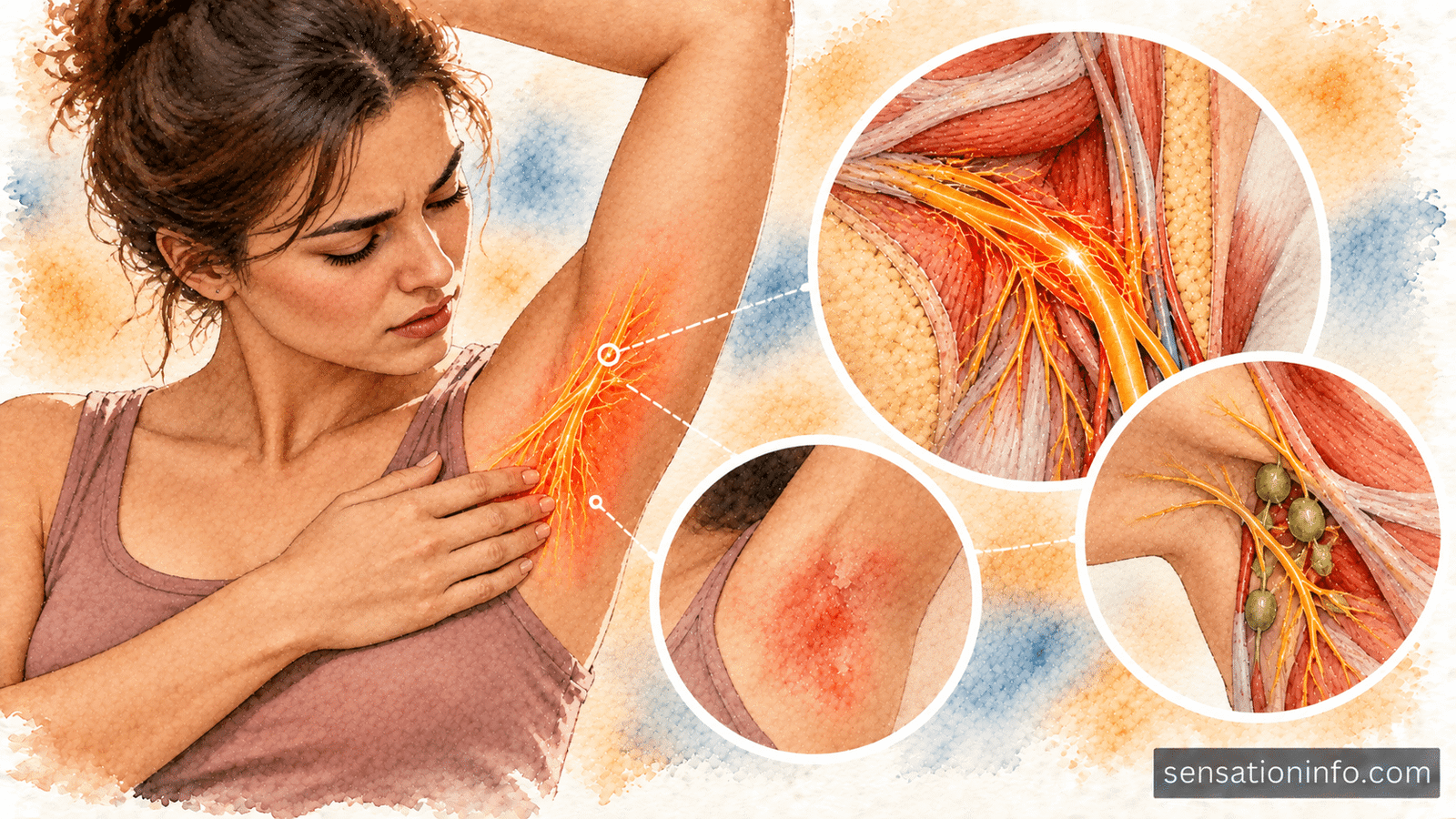

If you feel a sudden or persistent fiery deep burning in the armpit, it is usually because the delicate skin and dense nerve network in this region have become highly sensitized.
Experiencing an unexplained burning sensation on your skin can easily trigger anxiety, but the most common culprits in the armpit are localized nerve irritation after a recent surgery, a structural condition called axillary web syndrome, or a simple case of severe contact dermatitis. Below, we break down each possibility, highlight the red-flag symptoms you should never ignore, and show you exactly how to get relief.
What Does the Burning Feels Like
Burning in the armpit can feel different depending on what is causing it. Some people describe it as surface-level irritation, while others experience a deeper sensation that seems to come from underneath the skin.
Common sensations include:
- A steady or intermittent feeling of heat or burning.
- Tingling, prickling, itching, or pins-and-needles sensations.
- Sharp, shooting, or electric-like pain.
- Tenderness or increased sensitivity when clothing touches the area.
- Burning that spreads toward the chest, inner upper arm, shoulder, or upper back.
The timing of the symptoms can also provide useful clues. Burning that develops after using a new deodorant, shaving product, detergent, or other skin product may suggest contact irritation or dermatitis. Burning that develops after breast or underarm surgery may be related to nerve irritation or axillary web syndrome.
When burning is accompanied by significant swelling, spreading redness, fever, itching, or a faint prickling sensation, medical evaluation is important.
Most Common Causes
| Cause | Why It Burns | Typical Triggers | Key Clues |
|---|---|---|---|
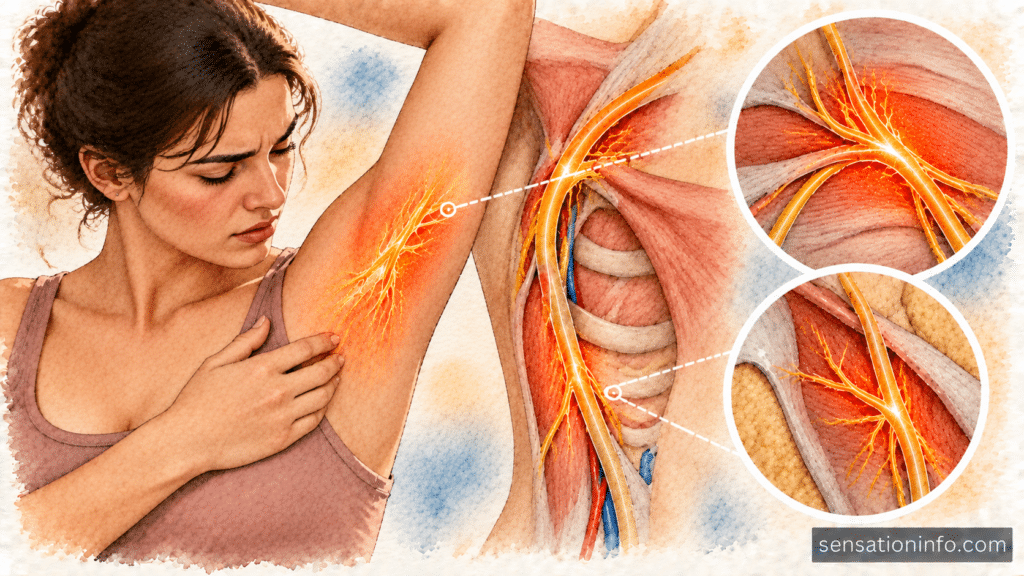
| Intercostobrachial nerve irritation | The intercostobrachial nerve supplies sensation to part of the armpit and inner upper arm. Surgery or scar tissue can irritate or injure the nerve, producing burning, tingling, or shooting pain. | Breast surgery, lymph-node surgery, trauma, or scar formation. | Burning or altered sensation, often on one side, sometimes aggravated by arm movement or contact. |
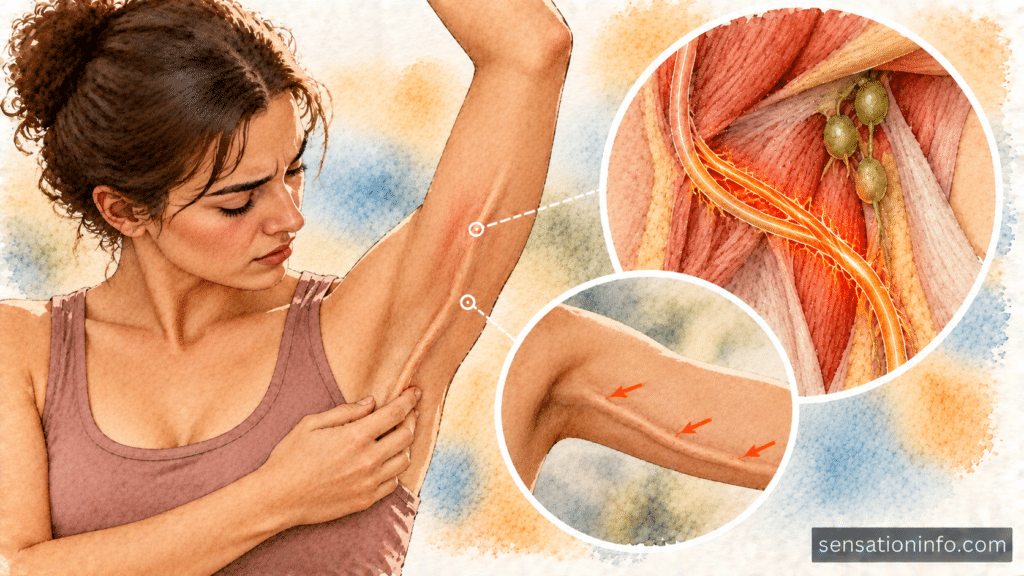
| Axillary web syndrome (cording) | Tight bands of tissue can develop beneath the skin after lymph-node surgery and may create tension or discomfort around the armpit and arm. | Mastectomy, sentinel-node biopsy, or axillary lymph-node dissection. | A tight, cord-like structure extending from the armpit toward the arm, with restricted shoulder movement. |
| Contact dermatitis | Irritation or an allergic reaction damages the skin barrier and causes inflammation, producing burning, itching, or stinging. | New deodorant, antiperspirant, soap, shaving products, detergent, or tight clothing. | Redness, itching, scaling, dryness, or a rash, often improving after the trigger is removed. |
| Hidradenitis suppurativa | Inflammation around hair follicles can cause painful, deep lesions in areas such as the armpits. | Recurrent inflammation, friction, hormonal factors, genetics, and other individual risk factors. | Painful nodules, abscesses, drainage, recurrent lesions, or scarring. |
| Cervical radiculopathy | A compressed or irritated nerve root in the neck can cause burning or abnormal sensations that radiate into the shoulder or arm. | Disc problems, arthritis, or other causes of nerve-root compression. | Neck pain accompanied by radiating pain, tingling, numbness, or weakness in the arm. |
| Lymphatic changes | Lymphatic swelling can create pressure, tightness, heaviness, or discomfort around the armpit and arm. | Lymph-node removal, radiation therapy, or other causes of impaired lymph drainage. | Persistent swelling, heaviness, tightness, or changes in skin texture. |
Quick Red-Flag List
- Sudden loss of movement or strength in the arm: This can indicate severe nerve compression or a significant neurological block that requires immediate medical imaging.
- Rapidly spreading redness, swelling, or warmth: These are classic warning signs of a spreading bacterial skin infection, such as cellulitis, which requires antibiotics.
- Fever, chills, or night sweats: When combined with localized burning, systemic symptoms suggest an active infection or an inflammatory disease flare-up rather than simple nerve pain.
- A visible cord that limits arm motion: This points directly to axillary web syndrome; ignoring it can lead to permanent restrictions in your shoulder’s range of motion.
- Sudden sensory deficits: A sudden loss of sensation entirely in the armpit or surrounding skin indicates a nerve may be fully entrapped or damaged.
- Persistent pain: Burning that does not improve after a week of removing suspected irritants (like deodorants) means the issue is likely rooted deeper beneath the skin.
If any of these appear, see a health-care provider right away.
How Doctors Diagnose the Problem
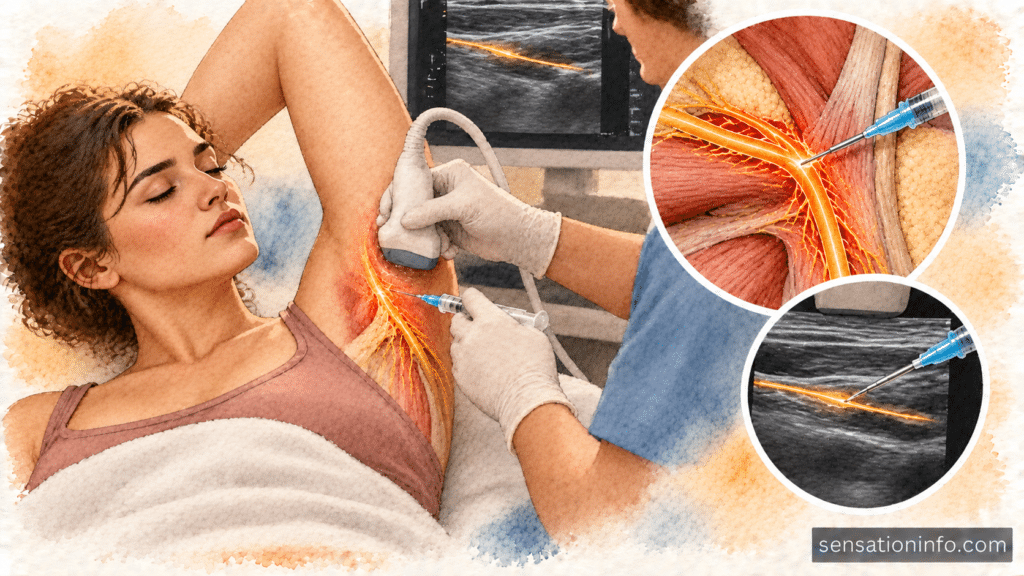
Diagnosing the root cause of armpit burning begins with a thorough patient history. The clinician will ask when the burning started, review recent surgeries or new skin products, and check whether the pain changes with specific arm movements. Next, during the physical exam, the doctor will use light touch, pinprick, and temperature testing to map the exact area of altered sensation. They will also palpate the underarm for hidden cords, skin changes, or lymphatic swelling.
If deeper structural issues are suspected, targeted imaging may be ordered. An ultrasound of the axilla can visually confirm the fibrous cords of axillary web syndrome and fluid collections, while an MRI of the cervical spine checks for nerve-root compression. Finally, if contact dermatitis is suspected but the cause remains unknown, allergy patch testing can identify the specific chemical allergens, such as fragrances or preservatives, responsible for the skin reaction.
Targeted Treatment Options
Treatment depends on the underlying cause. Persistent or unexplained burning should be evaluated rather than treated solely based on symptoms.
Nerve-Related Causes
- Physical therapy – A therapist can use gentle range-of-motion and stretching exercises to improve mobility and reduce tension after surgery or injury.
- Scar management – Once a surgical wound has completely healed, appropriately performed scar-management techniques may help improve tissue mobility.
- Topical treatments – Certain topical medications may provide temporary relief from localized neuropathic pain. A clinician or pharmacist can advise whether a particular product is appropriate.
- Oral neuropathic pain medicines – Medications such as gabapentin or pregabalin may be prescribed for persistent nerve-related pain when appropriate.
- Nerve blocks – In selected cases, a pain specialist may consider a targeted nerve block for diagnostic or therapeutic purposes.
Treatment should be individualized because nerve pain can have different causes, and not every treatment is appropriate for every patient.
Skin-Related Causes
- Identify and remove the irritant – Stop using recently introduced deodorants, antiperspirants, soaps, shaving products, or other potential triggers.
- Use gentle skin care – Fragrance-free cleansers and moisturizers can help protect the skin barrier.
- Avoid friction – Loose, breathable clothing can reduce rubbing while the skin heals.
- Topical corticosteroids – A clinician may recommend a low-potency corticosteroid for certain inflammatory skin conditions. These should not be applied indiscriminately, especially if an infection is possible.
Hidradenitis Suppurativa
Treatment for hidradenitis suppurativa depends on severity and frequency of flares and may include:
- Warm compresses – These may provide temporary comfort during painful flares.
- Prescription medications – Topical or oral antibiotics may be used in selected cases.
- Anti-inflammatory treatment – Dermatologists may recommend medications aimed at reducing inflammation.
- Biologic therapy – Treatments such as adalimumab may be considered for some people with moderate-to-severe disease.
- Procedures – Persistent tunnels, abscesses, or extensive disease may require specialist procedures or surgery.
Because hidradenitis suppurativa is a chronic condition, recurrent painful armpit nodules should be evaluated by a dermatologist rather than repeatedly treated as simple skin irritation.
Cervical Radiculopathy
Management may include:
- Physical therapy – Targeted exercises can improve neck and shoulder movement and reduce mechanical stress on affected nerves.
- Posture and ergonomic changes – Adjusting workstation setup and avoiding prolonged positions that aggravate symptoms may help.
- Pain-relieving medication – Depending on your medical history, a clinician may recommend an appropriate anti-inflammatory or pain-relieving medicine.
- Further intervention – Persistent or severe symptoms may require additional imaging, specialist evaluation, or procedures such as an epidural steroid injection.
Lymphatic Management
When burning occurs alongside lymphatic swelling, treatment may include:
- Compression garments – Appropriate compression can help manage lymphatic swelling when recommended by a healthcare professional.
- Manual lymphatic drainage – A trained therapist can perform specialized techniques for selected patients.
- Movement and exercise – Appropriate movement can support normal lymphatic circulation.
- Skin care – Keeping the skin clean, moisturized, and protected helps reduce the risk of skin breakdown and infection.
Practical Home Care Strategies
Managing armpit burning at home involves a combination of soothing techniques and avoiding further irritation. If the symptoms are mild and there are no warning signs, several simple measures may help:
- Warm, moist compress: Apply a warm, damp cloth for 10-15 minutes twice a day. The moist heat helps loosen any forming cords, relaxes surrounding muscles, and improves local blood circulation.
- Gentle arm elevation: Raise the affected arm above heart level while resting. Gravity assists in draining excess lymphatic fluid, which reduces structural pressure on sensitized tissues.
- Avoid harsh chemicals: Stick to fragrance-free soaps and completely avoid shaving or waxing the armpit until the skin barrier has fully healed and the irritation resolves.
- Stay hydrated: Drinking adequate water naturally thins lymphatic fluid, supporting better internal drainage and preventing painful fluid buildup in the axilla.
- Breathing exercises: Deep diaphragmatic breathing reduces overall body tension and calms the central nervous system, which can help gently downregulate how intensely you perceive the nerve pain.
If the burning persists despite these measures, becomes more severe, or keeps returning, arrange an evaluation rather than continuing to self-treat indefinitely.
Recovery Timeline
Recovery varies considerably depending on the underlying cause, the severity of the condition, and whether an underlying nerve or lymphatic problem is present.
| Condition | Typical Course |
|---|---|
| Intercostobrachial nerve irritation | Symptoms may gradually improve over weeks or longer, although persistent postoperative nerve pain can sometimes last considerably longer. |
| Axillary web syndrome | Many cases improve over several weeks with appropriate movement and rehabilitation, although recovery varies. |
| Contact dermatitis | Mild cases often begin improving within days after the trigger is removed, although complete resolution can take longer. |
| Hidradenitis suppurativa | A chronic condition with recurring flares; long-term treatment may be needed to reduce recurrence. |
| Cervical radiculopathy | Many cases improve over several weeks to months, although persistent or severe symptoms require further assessment. |
| Post-radiation lymphatic changes | Lymphatic swelling can be long-lasting and usually requires ongoing management rather than a fixed recovery period. |
These timeframes are general estimates rather than guarantees. A healthcare professional can provide a more useful prognosis after identifying the underlying cause.
How to Differentiate Between Causes
| Feature | Nerve Irritation | Contact Dermatitis | Hidradenitis Suppurativa |
|---|---|---|---|
| Burning quality | Deep, tingling, shooting, or electric-like | Surface-level burning or stinging, often itchy | Burning or tenderness associated with painful nodules |
| Visual skin changes | Skin may look normal | Redness, scaling, dryness, or rash | Deep inflamed lumps, drainage, or scarring |
| Timing | May follow surgery, injury, or nerve compression | Often follows exposure to a new or irritating product | Recurrent episodes over time |
| Sensation | Numbness, tingling, hypersensitivity, or altered sensation may occur | Itching and surface irritation are common | Tenderness and deep pain are more prominent |
| Response to removing triggers | May persist despite removing skin irritants | Often improves after the trigger is removed | Usually requires condition-specific treatment |
Symptoms can overlap, so this comparison should not be used as a substitute for a medical diagnosis.
Key Takeaways
- Burning in the armpit can originate from the skin, nerves, lymphatic tissues, or structures in the neck and shoulder.
- Common causes include nerve irritation after surgery, axillary web syndrome, contact dermatitis, hidradenitis suppurativa, and cervical radiculopathy.
- New deodorants, shaving products, tight clothing, and friction can trigger or worsen superficial skin irritation.
- Burning accompanied by significant swelling, fever, spreading redness, weakness, or loss of sensation requires prompt medical assessment.
- Treatment depends on the underlying cause and may involve skin care, physical therapy, prescription medication, or specialist treatment.
- Persistent or recurrent armpit burning should be evaluated rather than repeatedly treated at home without identifying the cause.
Frequently Asked Questions
Intense arm movement can stretch the intercostobrachial nerve and increase sweat‑gland irritation, creating a temporary burning feeling that usually fades with rest and a cool compress.
Burning alone is not usually an infection. If you notice swelling, warmth, redness, or fever together with burning, seek medical care as these are signs of possible cellulitis or abscess.
Consult a neurologist if the burning persists beyond four weeks, is accompanied by numbness or weakness, or if you have a history of breast surgery and the pain interferes with daily activities.
Doctor’s Recommendation
If your armpit burning persists after you have tried removing potential irritants, applying gentle compresses, and limiting arm movements, a specialist who focuses on peripheral nerve pain can provide advanced evaluation. A board‑certified pain‑management physician or a physiatrist can perform an ultrasound‑guided nerve block, order imaging, and design a personalised rehabilitation plan. To locate qualified experts, explore our directory of best pain‑management doctors for nerve pain USA.
References
Mayo Clinic. Axillary web syndrome. Mayo Foundation for Medical Education and Research. 2024.
American Academy of Dermatology. Hidradenitis suppurativa clinical overview. 2024.
National Multiple Sclerosis Society. Sensory symptoms in MS. National MS Society. 2024.