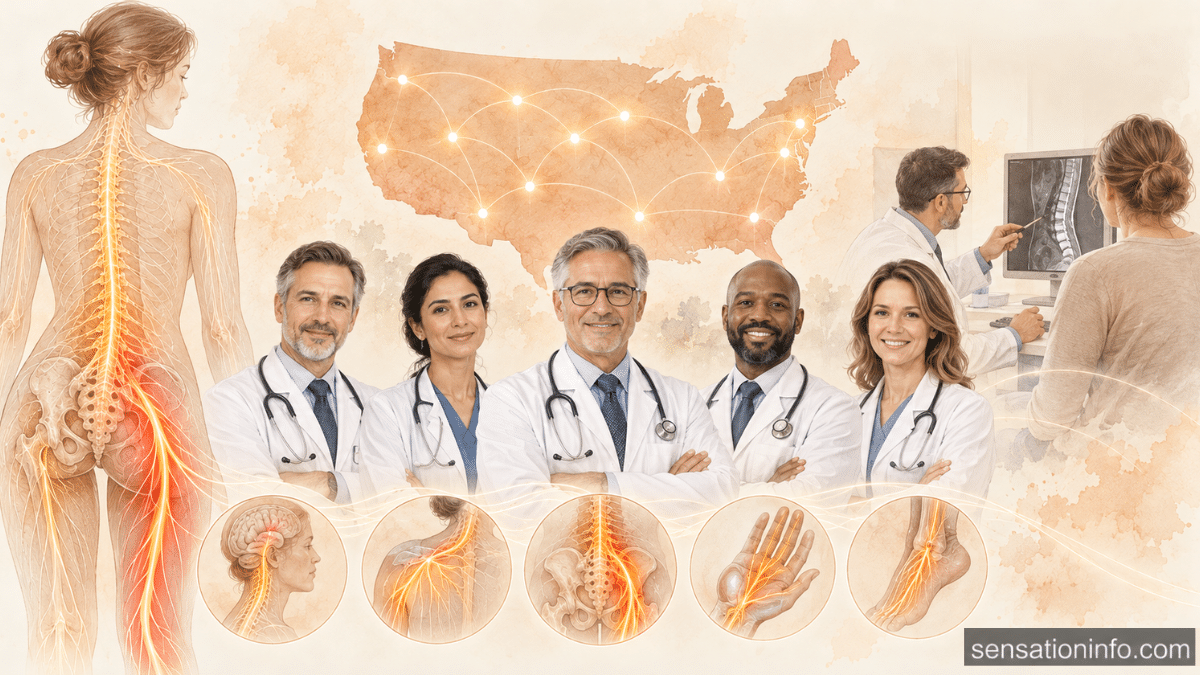

Finding the right pain management doctor for nerve pain can mean the difference between years of frustration and genuine relief. Understanding what neuropathy is and how it damages your nerves is the first step, but choosing the right specialist to treat it is what actually changes outcomes. The specialists listed below are board certified pain medicine physicians with verified credentials, published research in neuropathic pain treatment, and recognition from national medical organizations. Each doctor was selected based on specialty training, peer reviewed publications, professional leadership roles, and patient care focus in treating conditions such as peripheral neuropathy, diabetic nerve pain, complex regional pain syndrome, and post surgical nerve damage.
Specialists are listed for reference and are not ranked by preference.
How This List Was Compiled
Every specialist on this list was selected through a verification process that included confirming active practice status, reviewing board certifications through official hospital or practice profiles, and cross referencing professional recognitions such as Castle Connolly Top Doctor designations and leadership roles in national pain medicine organizations. Priority was given to physicians who have published peer reviewed research on neuropathic pain, hold fellowship training in interventional pain medicine, and demonstrate subspecialty expertise in nerve related conditions beyond general pain management.
Top Verified Nerve Pain Specialists Across the United States
1. Dr. Timothy Deer, MD
Hospital/Clinic: The Spine and Nerve Center of the Virginias
Specialty Focus: Neuromodulation for chronic neuropathic pain, spinal cord stimulation, dorsal root ganglion stimulation, intrathecal drug delivery for refractory nerve pain
Why Listed: Chairman and co-founder of the American Society of Pain and Neuroscience (ASPN). Past President of the International Neuromodulation Society. Recipient of the inaugural Presidential Merit Award from the North American Neuromodulation Society (2023). Principal investigator on more than 20 clinical trials including the landmark ACCURATE randomized trial. Lead editor of Deer’s Treatment of Pain. Has trained more than 1,000 interventional pain specialists worldwide over a 30 year career.
Address: 400 Court Street, Suite 100, Charleston, WV 25301
Contact: 304-347-6120
Profile: Dr. Timothy Deer at The Spine and Nerve Center of the Virginias
What Sets Him Apart: Dr. Deer pioneered algorithmic approaches to interventional nerve care that prioritize less invasive methods first, and his practice draws patients nationally and internationally for complex neuropathic pain cases that have not responded to standard treatments.
2. Dr. Neel Mehta, MD
Hospital/Clinic: NewYork-Presbyterian / Weill Cornell Medical Center
Specialty Focus: Neuropathic pain disorders, spinal cord stimulation, musculoskeletal pain of the spine, cancer pain, minimally invasive interventional procedures
Why Listed: Castle Connolly Top Doctor (2026). Division Chief of Pain Management at NewYork-Presbyterian/Weill Cornell Medical Center. Co-Director of Och Spine at NewYork-Presbyterian. Associate Professor of Clinical Anesthesiology at Weill Cornell Medicine. Published numerous textbook chapters on spinal cord stimulation and neuropathic pain. Named a Super Doctor in New York.
Address: 240 East 59th Street, 2nd Floor, New York, NY 10022
Contact: 646-962-7246
Profile: Dr. Neel Mehta at NewYork-Presbyterian
What Sets Him Apart: As the division chief at one of the nation’s top ranked hospitals, Dr. Mehta leads a multidisciplinary pain team that integrates nerve blocks, neuromodulation, and medication management to create individualized nerve pain treatment plans.
3. Dr. John Prunskis, MD, FIPP
Hospital/Clinic: Illinois Pain and Spine Institute
Specialty Focus: Interventional pain management for neuropathic conditions, nerve blocks, spinal cord stimulation, regenerative therapies for nerve damage
Why Listed: 13 time Castle Connolly Top Pain Doctor. US News and World Report Top Physician. Presidential appointee to the Department of Health and Human Services Best Practices Pain Task Force. Fellow in Interventional Pain Practice (FIPP), the highest distinction for interventional pain physicians. Clinical Professor at Chicago Medical School.
Address: 600 Hart Road, Suite 300, Barrington, IL 60010
Contact: 800-340-7246
Profile: Dr. John Prunskis at Illinois Pain and Spine Institute
What Sets Him Apart: With 13 consecutive Castle Connolly recognitions and a federal appointment shaping national pain treatment policy, Dr. Prunskis brings both clinical expertise and policy level influence to nerve pain management.
4. Dr. Krishnan Chakravarthy, MD, PhD
Hospital/Clinic: Coastal Pain and Spinal Diagnostics Medical Group / Innovative Pain Treatment Solutions
Specialty Focus: Neuromodulation, restorative neurostimulation, peripheral nerve stimulation, emerging technology integration for chronic neuropathic pain
Why Listed: President of the American Society of Pain and Neuroscience (2025 to 2027). Ranked in the top 0.1% of scholars publishing on pain management over the past decade by Expertscape. Recipient of ASPN Young Innovator Award. Author of more than 100 peer reviewed publications in journals including Anesthesiology, Pain, and Proceedings of the National Academy of Sciences. Affiliate faculty at UC San Diego Health in Anesthesiology and NanoEngineering.
Address: 7625 Mesa College Drive, Suite 325A, San Diego, CA 92111
Contact: 858-326-5044
Profile: Dr. Krishnan Chakravarthy at Innovative Pain Treatment Solutions
What Sets Him Apart: Dr. Chakravarthy’s dual MD/PhD background in nanoengineering and pain medicine positions him at the intersection of technology and nerve pain treatment, and his research focuses specifically on bringing next generation neurostimulation devices to clinical practice.
5. Dr. Salim Hayek, MD, PhD
Hospital/Clinic: University Hospitals Cleveland Medical Center
Specialty Focus: Peripheral nerve stimulation, spinal cord stimulation, intrathecal drug delivery, facial nerve pain, neuromodulation for complex neuropathic conditions
Why Listed: Chief of the Division of Pain Medicine at University Hospitals. Professor at Case Western Reserve University School of Medicine. Treasurer of the Executive Board of Directors for the North American Neuromodulation Society (NANS). Board certified in both Pain Medicine and Anesthesiology. Published researcher in neuromodulation and peripheral nerve stimulation.
Address: 11100 Euclid Avenue, Mather Suite B270, Cleveland, OH 44106
Contact: 216-844-3771
Profile: Dr. Salim Hayek at University Hospitals
What Sets Him Apart: Dr. Hayek’s dual MD/PhD credentials and his leadership at both a major academic medical center and a national neuromodulation society give him access to the latest clinical research and treatment protocols for difficult to treat nerve pain syndromes.
6. Dr. Ioannis Skaribas, MD, DABA, FASA
Hospital/Clinic: Expert Pain Care
Specialty Focus: Advanced neuromodulation, spinal cord stimulation, dorsal root ganglion stimulation, peripheral nerve stimulation, occipital nerve stimulation for chronic neuropathic pain
Why Listed: Double board certified in Anesthesiology and Pain Medicine by the American Board of Anesthesiology. Fellowship trained in Interventional Pain Medicine at Baylor College of Medicine. Clinical Assistant Professor at the University of Texas Health Science Center at Houston. Prolific author with peer reviewed publications on spinal cord, dorsal root ganglion, and peripheral nerve stimulation techniques.
Address: 11451 Katy Freeway, Suite 340, Houston, TX 77079
Contact: 832-862-7246
Profile: Dr. Ioannis Skaribas at Expert Pain Care
What Sets Him Apart: Recognized as a national expert in neuromodulation, Dr. Skaribas offers the full spectrum of neurostimulation therapies and has published specifically on dorsal root ganglion and peripheral nerve stimulation, two of the most targeted treatments for localized nerve pain.
7. Dr. Leonardo Kapural, MD, PhD
Hospital/Clinic: Carolinas Pain Institute
Specialty Focus: Interventional pain management, neuromodulation, clinical trial research for novel nerve pain treatments
Why Listed: Author of more than 250 journal articles, over 350 abstracts, three books, and 50 book chapters. Recipient of two Innovator Awards. Regularly listed in Best Doctors in America. Professor of Anesthesiology at Florida Atlantic University. Director at Large for the International Neuromodulation Society and American Society of Pain and Neuroscience. Founder of the Chronic Pain Research Institute.
Address: 145 Kimel Park Drive, Suite 330, Winston-Salem, NC 27103
Contact: 336-283-2273
Profile: Dr. Leonardo Kapural at Carolinas Pain Institute
What Sets Him Apart: With more than 250 published journal articles, Dr. Kapural has one of the most extensive research portfolios in pain medicine, and his clinical trial leadership means patients at his practice often have access to investigational nerve pain treatments before they become widely available.
8. Dr. Samer Narouze, MD, PhD, DABPM, FIPP
Hospital/Clinic: Center for Pain Medicine, Western Reserve Hospital
Specialty Focus: Ultrasound guided nerve blocks, interventional headache and facial nerve pain management, cervicogenic pain, chronic neuropathic pain
Why Listed: Board certified in Pain Medicine, Anesthesiology, Interventional Pain Management, and Headache Medicine (quadruple board certified). PhD from Maastricht University in cervicogenic headaches. Author of more than 200 peer reviewed articles and book chapters. Authored the first textbook on interventional management of headache and facial pain. Springer best selling author. Founder of the American Interventional Headache Society. Cleveland Clinic Master Educator and Innovator Award recipient.
Address: 1900 23rd Street, Cuyahoga Falls, OH 44223
Contact: 330-971-7246
Profile: Dr. Samer Narouze at Western Reserve Hospital Physicians
What Sets Him Apart: Dr. Narouze is a global pioneer in ultrasound guided nerve blocks, a technique that improves precision and safety for patients with chronic nerve pain, and his quadruple board certification makes him uniquely qualified to treat complex cases where headache, facial, and cervical nerve pain overlap.
9. Dr. Jason Pope, MD, DABPM, FIPP
Hospital/Clinic: Evolve Restorative Center
Specialty Focus: Neuromodulation, restorative pain medicine, spinal cord stimulation, advanced interventional pain procedures for chronic neuropathic conditions
Why Listed: Triple board certified in Pain Medicine and Anesthesiology. Fellowship trained in Pain Management at Cleveland Clinic Foundation. Author of more than 100 peer reviewed publications. Recognized as one of the most influential key opinion leaders in neuromodulation. Consults with medical device companies on advancing neurostimulation technology.
Address: 220 Concourse Boulevard, Santa Rosa, CA 95403
Contact: 844-527-7369
Profile: Dr. Jason Pope at Providence
What Sets Him Apart: Dr. Pope’s concept of “restorative” pain medicine goes beyond symptom control, focusing instead on restoring function and quality of life through targeted neuromodulation, and his clinical study leadership gives patients access to cutting edge nerve pain therapies.
10. Dr. Ajay Wasan, MD, MSc, MA
Hospital/Clinic: UPMC Pain Management
Specialty Focus: Neuropathic pain medications, interventional procedures for nerve pain, psychiatric comorbidities of chronic pain, mechanism based pain management
Why Listed: Vice Chair for Pain Medicine in the Department of Anesthesiology and Perioperative Medicine at the University of Pittsburgh. Tenured Professor of Anesthesiology, Perioperative Medicine, and Psychiatry. Director of the Chronic Pain Research Program and Center for Innovation in Pain Care. Board certified in Pain Medicine and Psychiatry. Published researcher on neuropathic pain assessment and the psychological dimensions of chronic nerve pain.
Address: 5750 Centre Avenue, Suite 260, Pittsburgh, PA 15206
Contact: 412-665-8030
Profile: Dr. Ajay Wasan at UPMC
What Sets Him Apart: Dr. Wasan’s dual expertise in pain medicine and psychiatry allows him to address both the physical and psychological components of chronic nerve pain, an approach that research consistently shows produces better long term outcomes for neuropathic pain patients.
Specialist Comparison
| Specialist | Location | Specialty Focus | Key Recognition |
|---|---|---|---|
| Dr. Timothy Deer, MD | Charleston, WV | Neuromodulation, spinal cord stimulation, DRG stimulation | ASPN Chairman, INS Past President, Presidential Merit Award |
| Dr. Neel Mehta, MD | New York, NY | Neuropathic disorders, spinal cord stimulation | Castle Connolly Top Doctor 2026, NYP Division Chief |
| Dr. John Prunskis, MD, FIPP | Barrington, IL | Interventional pain, nerve blocks | 13x Castle Connolly Top Doctor, HHS appointee |
| Dr. Krishnan Chakravarthy, MD, PhD | San Diego, CA | Neuromodulation, restorative neurostimulation | ASPN President, top 0.1% Expertscape |
| Dr. Salim Hayek, MD, PhD | Cleveland, OH | Peripheral nerve stimulation, intrathecal delivery | UH Division Chief, NANS Board Treasurer |
| Dr. Ioannis Skaribas, MD, DABA, FASA | Houston, TX | Neuromodulation, DRG stimulation | Double board certified, Baylor faculty |
| Dr. Leonardo Kapural, MD, PhD | Winston-Salem, NC | Neuromodulation, clinical trials | 250+ publications, Best Doctors in America |
| Dr. Samer Narouze, MD, PhD | Cuyahoga Falls, OH | Ultrasound guided nerve blocks, headache pain | Quadruple board certified, 200+ publications |
| Dr. Jason Pope, MD, DABPM, FIPP | Santa Rosa, CA | Restorative pain medicine, neuromodulation | Triple board certified, 100+ publications |
| Dr. Ajay Wasan, MD, MSc, MA | Pittsburgh, PA | Neuropathic pain, psychiatric comorbidities | UPMC Vice Chair, dual Pain/Psychiatry boards |
How to Choose the Right Specialist
A pain management doctor who treats nerve pain effectively needs more than a general pain medicine background. The most important credential to look for is board certification in pain medicine through the American Board of Anesthesiology, the American Board of Physical Medicine and Rehabilitation, or the American Board of Psychiatry and Neurology. Fellowship training in interventional pain medicine adds the procedural skills needed for treatments like nerve blocks, spinal cord stimulation, and peripheral nerve stimulation.
Consider whether your nerve pain requires a doctor with specific subspecialty expertise. Peripheral neuropathy, trigeminal neuralgia, complex regional pain syndrome, and post surgical nerve damage each respond to different treatment approaches. A specialist who has published research or led clinical trials in your specific condition is more likely to offer the most current and evidence based care.
Geographic accessibility matters for ongoing pain management. Many interventional procedures require follow up visits for programming adjustments, especially with spinal cord stimulators and peripheral nerve stimulators. If no nerve pain specialist practices near you, several of the doctors on this list offer second opinion consultations.
When to seek a second opinion: if your current treatment has not improved your nerve pain within three to six months, if you have been told your pain cannot be treated, or if you are being managed with medications alone without being offered interventional options, consulting one of the specialists above can open new treatment pathways. Patients dealing specifically with peripheral neuropathy may also want to explore neurologists and neuropathy doctors who focus on diagnosis and long term nerve care as a complement to pain management.
Questions to Ask at Your First Appointment
- What specific type of nerve pain do I have, and what is causing it?
- What diagnostic tests will you order to confirm the source of my nerve pain?
- What are the nonsurgical treatment options you recommend before considering procedures?
- Do you offer neuromodulation therapies such as spinal cord stimulation or peripheral nerve stimulation, and am I a candidate?
- What is your experience treating patients with my specific nerve pain condition?
- Are there any clinical trials for new nerve pain treatments that I might qualify for?
- How will you coordinate care with my other doctors, including my neurologist or primary care physician?
What to Expect During Your First Visit
Your first appointment with a nerve pain specialist typically lasts 45 to 60 minutes. The doctor will review your complete medical history, current medications, previous imaging, and any prior treatments you have tried. Expect a focused neurological exam that tests sensation, reflexes, and muscle strength in the affected areas.
Most specialists order diagnostic tests after the first visit. Common tests include electromyography (EMG) and nerve conduction studies to measure how well your nerves transmit signals, blood work to rule out metabolic causes like diabetes or vitamin deficiencies, and sometimes advanced imaging such as MRI to identify structural nerve compression. For patients with suspected small fiber neuropathy, a skin punch biopsy may be recommended to confirm whether the small sensory nerves in the skin are damaged.
Before your appointment, bring a list of all medications and supplements, copies of any previous nerve studies or imaging, and a written description of your pain including when it started, what makes it worse, and what provides relief. If your insurance requires prior authorization for specialist visits, confirm this with your insurance company before scheduling.
Most pain management doctors accept major insurance plans, though coverage for advanced procedures like spinal cord stimulation often requires pre authorization. Ask the office staff about accepted insurance plans and out of pocket costs during scheduling.
Frequently Asked Questions
A neurologist diagnoses nerve conditions and manages them primarily with medications and monitoring. A pain management doctor trained in interventional techniques can perform procedures such as nerve blocks, epidural injections, radiofrequency ablation, and spinal cord stimulation. For nerve pain that has not responded to medication alone, a pain management specialist with interventional training offers treatment options that a neurologist typically does not perform.
You should consider seeing a pain management specialist if your nerve pain has lasted more than three months, if over the counter and prescription medications have not provided adequate relief, or if your primary care doctor or neurologist has recommended an interventional evaluation. Burning pain, electric shock sensations, numbness that interferes with daily activities, and pain that wakes you at night are all signs that specialist pain management may help.
Pain management doctors specializing in nerve pain treat conditions including diabetic neuropathy, post herpetic neuralgia (pain after shingles), complex regional pain syndrome (CRPS), sciatica, cervical and lumbar radiculopathy, trigeminal neuralgia, pudendal neuralgia, peripheral nerve injuries, and chemotherapy induced neuropathy. Many also treat failed back surgery syndrome when nerve pain persists after spinal procedures.
Most major insurance plans, including Medicare and Medicaid, cover pain management consultations and many common procedures. However, advanced treatments such as spinal cord stimulation typically require prior authorization and a documented history of failed conservative treatments. Contact your insurance provider before your appointment to confirm coverage and any referral requirements.
Spinal cord stimulation (SCS) is a treatment that uses mild electrical signals delivered through a small implanted device to interrupt pain signals traveling along the nerves to the brain. Clinical trials have shown SCS to be effective for many types of chronic neuropathic pain, including failed back surgery syndrome, complex regional pain syndrome, and diabetic neuropathy. A trial period with a temporary device allows patients to test whether the treatment works before permanent implantation.
Treatment timelines vary by approach. Nerve blocks and injections can provide relief within days, though multiple sessions may be needed. Medications for nerve pain, such as gabapentin or duloxetine, typically require four to six weeks to reach full effectiveness. Neuromodulation devices like spinal cord stimulators can show results during the trial period, usually within one to two weeks. A comprehensive treatment plan that combines multiple approaches often provides the best long term outcome.
Key Takeaways
- Board certification in pain medicine and fellowship training in interventional techniques are the minimum credentials to look for when choosing a nerve pain specialist.
- Neuromodulation therapies, including spinal cord stimulation and peripheral nerve stimulation, represent the most significant advances in treating chronic nerve pain that does not respond to medication.
- The best outcomes for neuropathic pain often come from doctors who combine interventional procedures with medication management and address both physical and psychological components of chronic pain.
- A trial stimulator period lets you test whether neuromodulation works for your specific nerve pain before committing to a permanent implant.
- Every specialist on this list holds verified credentials, published research in nerve pain treatment, and national leadership roles in pain medicine organizations.
Doctor’s Recommendation
Nerve pain is a complex condition that benefits from early specialist evaluation. If you are experiencing persistent burning, tingling, or shooting pain, understanding how neuropathy develops and what causes nerve damage can help you have more productive conversations with your pain management doctor and ask the right questions from your very first appointment.
References
- Dr. Salim Hayek at University Hospitals Provider Profile
- Dr. Timothy Deer at American Society of Pain and Neuroscience Leadership
- Dr. Neel Mehta at NewYork-Presbyterian Provider Profile
- Dr. John Prunskis at Illinois Pain and Spine Institute
- Dr. Krishnan Chakravarthy at American Society of Pain and Neuroscience Leadership