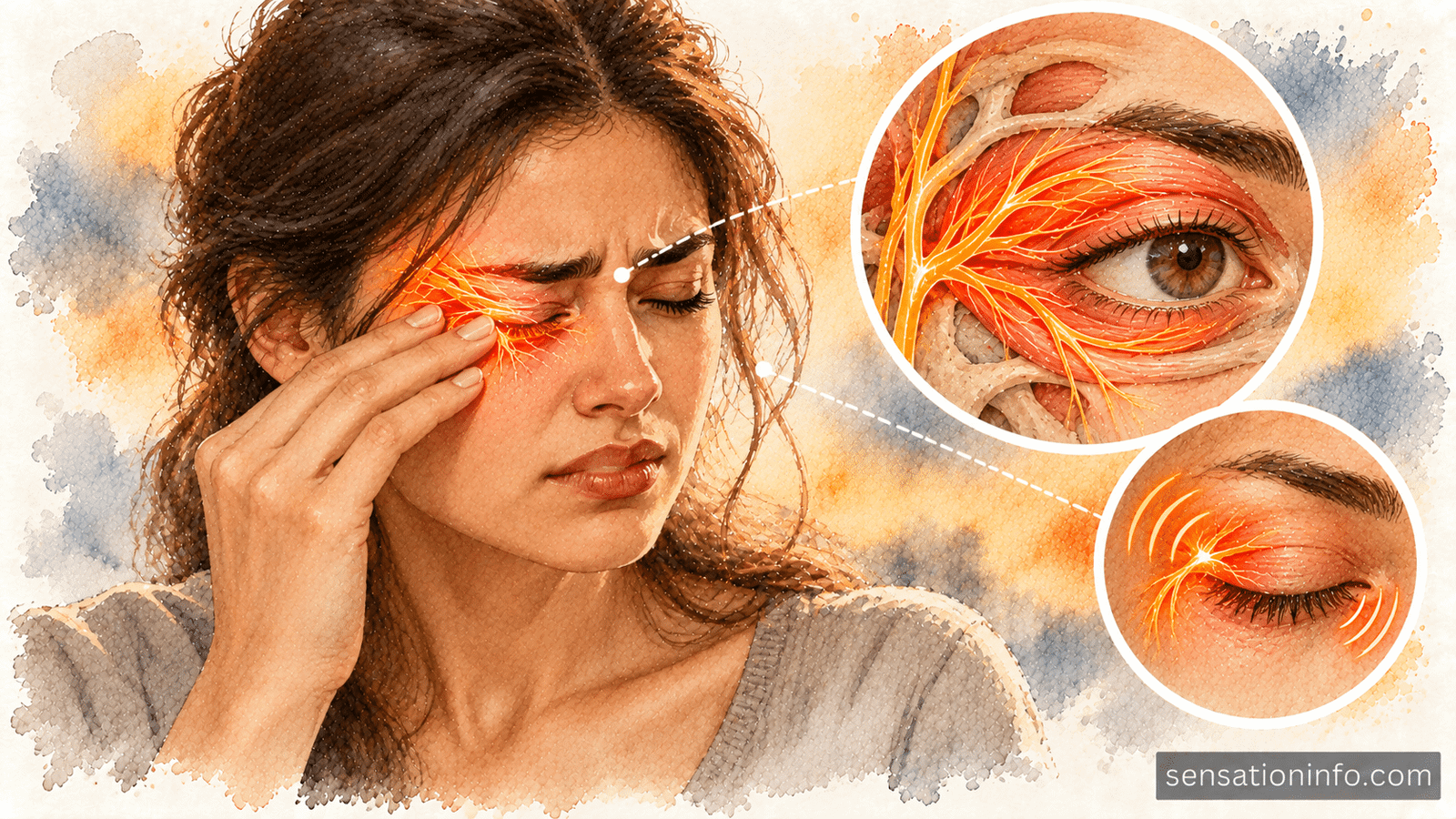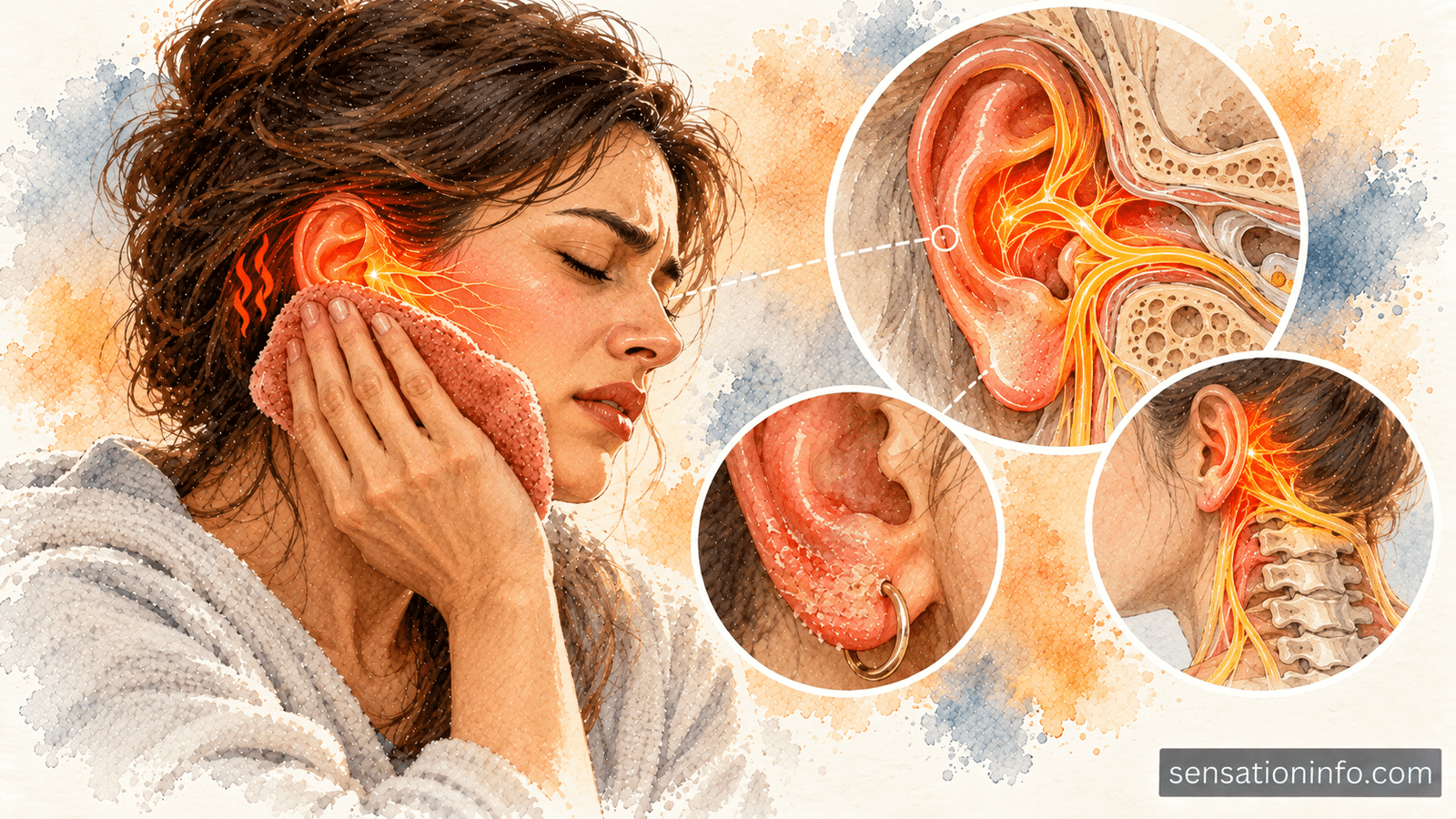

A burning earlobe happens when the superficial blood vessels in your skin rapidly widen or when the sensory nerves supplying your outer ear become irritated. This sudden warmth and redness usually results from simple, localized skin triggers like a contact allergy, sunburn, or a rapid shift in temperature.
However, if this surface redness is accompanied by a rash or severe nerve pain inside and around your ear, it may point to a more complex neurological issue like Ramsay Hunt syndrome, red ear syndrome, or a pinched nerve in your neck. Identifying whether your discomfort is a harmless skin reaction or true nerve irritation is the most critical step toward finding lasting relief.
Red Flag Symptoms That Require Immediate Medical Attention
While many episodes of earlobe warmth resolve on their own, certain accompanying symptoms point to severe bacterial infections, cartilage inflammation, or acute neurological conditions.
Seek prompt medical evaluation if you notice any of the following warning signs:
- Rapidly spreading redness, extreme tenderness, and swelling that extends beyond the earlobe into the cartilage or surrounding facial skin
- High fever, chills, confusion, or severe nausea occurring alongside intense ear burning
- Thick yellow or green pus draining from the earlobe, piercing site, or ear canal
- Sudden drooping on one side of your face, slurred speech, or changes in your vision
- Severe, localized blistering and pain that follows the path of a specific nerve branch, which may signal a viral nerve reactivation like shingles
If your burning is isolated to the soft earlobe without fever, rapid spreading, or facial weakness, you can safely monitor your symptoms while scheduling a visit with your physician or dermatologist.
What Causes a Burning Earlobe?
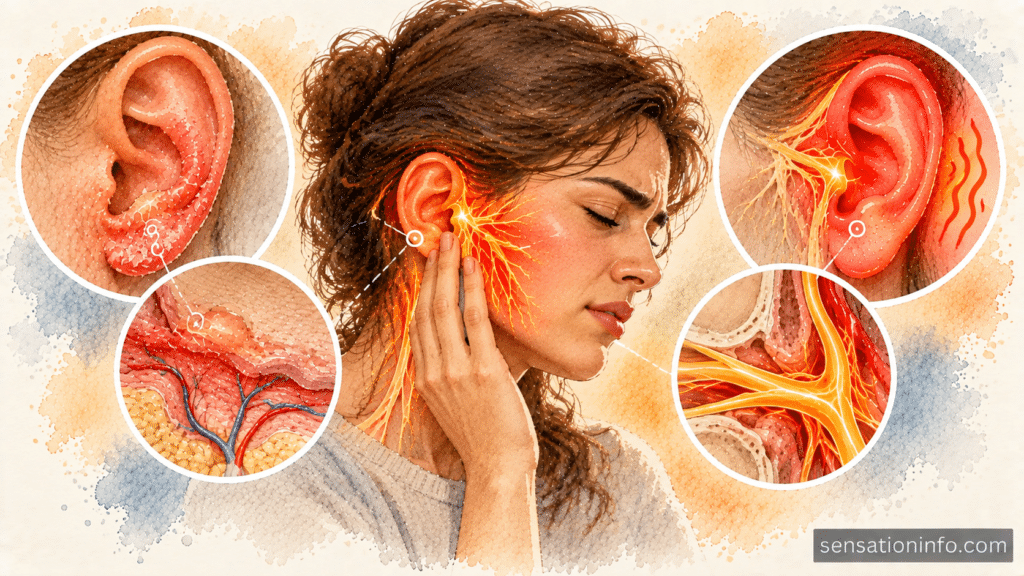
Your outer ear, particularly the fleshy earlobe, contains an extensive network of microscopic blood vessels and sensitive sensory nerve endings. Two primary nerve pathways supply this delicate region: the great auricular nerve, which emerges from the C2 and C3 spinal roots in your upper neck, and the auriculotemporal nerve, a branch of the fifth cranial nerve. Disruption to these blood vessels or nerve fibers can trigger intense burning sensations.
Red Ear Syndrome
Red ear syndrome is a rare neurological disorder characterized by episodic, burning pain and pronounced redness affecting one or both ears. According to systematic clinical reviews indexed by the National Institutes of Health, approximately fifty percent of individuals diagnosed with red ear syndrome have a personal history of migraine headaches, while another thirty to forty percent show upper cervical spine disorders. Episodes can last anywhere from several minutes to several hours and are often provoked by gentle touch, heat, physical exertion, or stress.
Cervical Spine Irritation
Because the great auricular nerve originates in your upper neck, degenerative disc disease, arthritis, or muscle spasms in the cervical spine can send referred burning sensations straight up to your earlobe. When upper neck nerves are compressed, you might also experience a burning sensation in the neck that radiates into the head without any actual rash or visible skin redness on your ear.
Contact Dermatitis and Allergic Reactions
Your earlobes come into frequent contact with various metals, personal care products, and accessories. Nickel found in costume jewelry, preservatives in hair dyes, fragrances in shampoos, and materials in mobile phone cases can provoke allergic contact dermatitis. This reaction causes the earlobe to become bright red, itchy, swollen, and hot to the touch, often followed by microscopic blistering and dry flaking skin.
Bacterial Infections and Erysipelas
Bacterial pathogens, most commonly Streptococcus or Staphylococcus species, can enter through tiny breaks in the skin, such as a recent earring piercing, bug bite, or scratch. Erysipelas is a specific bacterial skin infection that produces a fiery, well-defined, bright red, and intensely burning earlobe accompanied by warmth and systemic fever.
Relapsing Polychondritis
This uncommon autoimmune condition causes recurrent, painful inflammation of the cartilage throughout the body. While relapsing polychondritis severely inflames the upper cartilaginous portion of the outer ear, making it swollen and bright purple, it characteristically spares the soft, non-cartilaginous earlobe. If only your earlobe burns while the rest of your ear feels normal, relapsing polychondritis is unlikely.
Migraine and Trigeminal Autonomic Cephalalgias
Migraine headaches involve complex neurovascular pathways that regulate blood flow to the head and face. During a migraine attack, parasympathetic nerve activation can trigger sudden localized vasodilation in the blood vessels of the ear, leading to a sensation commonly called a migraine ear flush. People dealing with broad cranial nerve inflammation may also notice a tingling sensation in the head and scalp or experience facial warmth.
| Condition | Burning Intensity | Visible Skin Changes | Common Triggers | Key Identifying Feature |
| Red Ear Syndrome | Intense, sharp, burning | Bright red flush, hot to touch | Light touch, heat, neck movement | Episodes last minutes to hours |
| Contact Dermatitis | Prickly burn with itching | Redness, tiny blisters, scaling | Nickel jewelry, hair products | Directly follows allergen contact |
| Cervical Nerve Compression | Deep, radiant nerve burn | None, skin looks normal | Turning neck, poor posture | Accompanied by upper neck stiffness |
| Erysipelas (Infection) | Severe, throbbing heat | Deep red, glossy, raised swelling | Piercings, skin scratches | Accompanied by fever and chills |
| Migraine Ear Flush | Moderate warmth and burn | Mild to moderate ear flush | Stress, bright light, lack of sleep | Occurs alongside throbbing headache |
What Does a Burning Earlobe Feel Like?
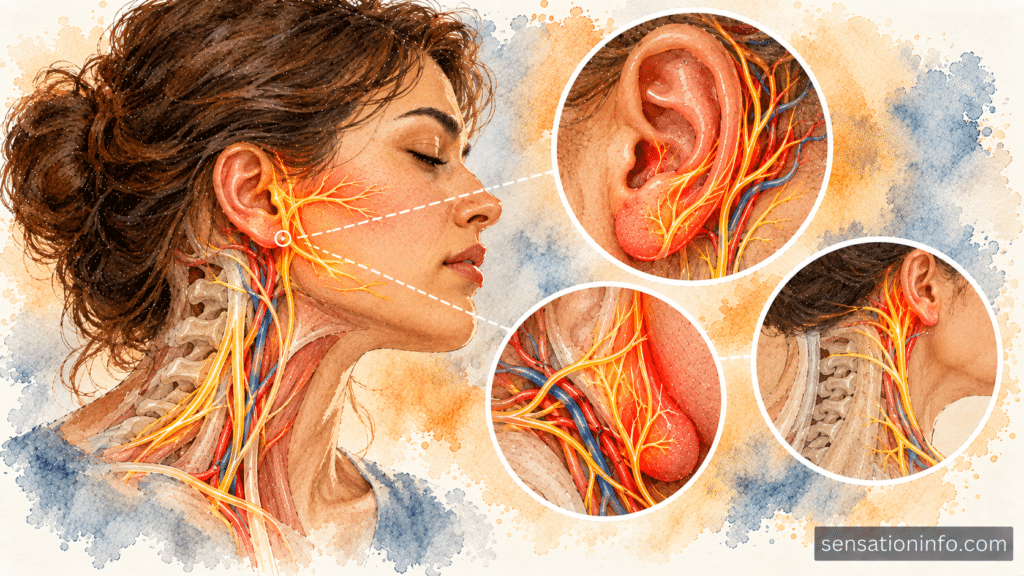
The physical sensation of an earlobe burn varies considerably based on the underlying biological mechanism.
When caused by an allergic reaction or sunburn, the skin feels tightly stretched, intensely itchy, and tender when brushing against clothing or pillows. You may feel a persistent, surface-level sting that worsens when touching warm water.
In contrast, neurological conditions like red ear syndrome create a sensation that feels as though a hot iron is resting against the side of your head. The earlobe turns crimson red and radiates heat so intensely that holding a cool cloth against the ear becomes an immediate necessity. If temporomandibular joint issues are also present, you may feel pins and needles around the jaw and ear area whenever you chew or open your mouth widely.
When viral nerve conditions affect the cranial network, the sensation can be even more complex. For instance, individuals developing ear pain and facial nerve inflammation from Ramsay Hunt syndrome often experience deep, stabbing burning before blisters appear. In wider neurological conditions, patients may also report unexplained facial numbness and sensory loss that spreads across the cheek.
How Doctors Diagnose the Cause of Earlobe Burning
Because earlobe burning bridges the fields of dermatology, neurology, and otolaryngology, your healthcare provider will conduct a structured physical and medical history assessment to determine the source.
Your diagnostic workup may include:
- Visual and dermatological examination: Your physician will examine the exact boundaries of the redness, inspecting whether inflammation involves the cartilage, the earlobe, or the ear canal, while checking for tiny puncture marks or weeping eczema.
- Allergy patch testing: If contact dermatitis is suspected, a dermatologist can apply specialized adhesive patches containing common allergens like nickel, cobalt, and fragrances to your back to identify chemical triggers.
- Cervical spine physical evaluation: Your doctor will palpate the C2 and C3 vertebrae in your upper neck, checking for muscle tension, restricted range of motion, or nerve tenderness that reproduces your ear burning.
- Cervical spine or brain MRI: If symptoms point toward cervical radiculopathy, spinal disc disease, or central neurological triggers, a magnetic resonance imaging scan will evaluate nerve root compression in the neck.
- Diagnostic nerve blocks: In suspected cases of red ear syndrome related to neck pathology, an injection of local anesthetic around the great auricular nerve can temporarily eliminate the pain, confirming the diagnosis.
Treatment Options for Earlobe Burning
Relieving a burning earlobe requires targeted medical therapy matched to the root cause of the vascular or neurological irritation.
Dermatological and Anti-Inflammatory Treatments
For allergic contact dermatitis, over-the-counter or prescription topical corticosteroids such as hydrocortisone (Cortaid) or triamcinolone (Kenalog) help calm localized immune inflammation. If a bacterial skin infection is diagnosed, oral antibiotics such as cephalexin (Keflex) or amoxicillin (Amoxil) will be prescribed to eliminate the infection.
Neurological and Vasomotor Medications
Managing red ear syndrome and neuropathic ear pain often requires medications that stabilize overactive nerve firing or regulate blood vessel constriction. Physicians may recommend:
- Nerve pain stabilizers such as gabapentin (Neurontin) or pregabalin (Lyrica) to reduce great auricular nerve hypersensitivity
- Beta blockers like propranolol (Inderal) to prevent episodic blood vessel dilation in patients with comorbid migraine
- Nonsteroidal anti-inflammatory agents, particularly indomethacin (Tivorbex), which exhibits high efficacy for certain autonomic facial flush disorders
- Tricyclic antidepressants such as amitriptyline (Elavil) to moderate central pain transmission
Physical Therapy and Cervical Interventions
When ear burning stems from upper cervical spine compression, physical therapy focusing on posture correction, gentle cervical traction, and neck mobility exercises can relieve pressure on the C2 and C3 nerve roots. In persistent cases, cervical facet injections or pulsed radiofrequency treatment of the great auricular nerve can offer extended relief.
Practical Home Care and Soothing Remedies
While working with your doctor to establish an accurate diagnosis, you can use several safe home care strategies to ease burning discomfort:
- Apply a cool, damp compress: Place a clean washcloth soaked in cool water against the burning earlobe for ten to fifteen minutes at a time. Avoid applying frozen ice packs directly to bare skin, as extreme cold can cause rebound blood vessel dilation and skin injury.
- Switch to hypoallergenic earrings: Remove all costume jewelry and wear only high-grade medical titanium, solid 14-karat gold, or sterling silver to eliminate nickel sensitivity.
- Use gentle, fragrance-free skincare: Wash your ears with mild, soap-free cleansers and apply pure petroleum jelly or ceramide creams to restore damaged skin barriers.
- Avoid hot showers and intense heat: Take lukewarm baths and keep your bedroom cool, as elevated ambient temperature is a common trigger for red ear episodes.
- Keep a symptom journal: Record the exact time, duration, and potential triggers of every burning episode, including what you ate, physical exertion, jewelry worn, or neck strain.
Common Myths About Burning Earlobes
- Myth: A burning earlobe is just an old wives’ tale meaning someone is talking about you. Fact: Sudden burning in the ear is a genuine physiological event caused by localized blood vessel dilation, histamine release, or sensory nerve misfiring.
- Myth: If your ear is red and hot, you always need antibiotics. Fact: Red ear syndrome, contact allergies, and cervical nerve issues do not involve bacteria and will not improve with antibiotics. Using antibiotics without an active bacterial infection can lead to unnecessary side effects.
- Myth: Piercing your ears with gold guarantees you will never have an allergic reaction. Fact: Low-karat gold alloys often contain trace amounts of nickel or copper that can still trigger contact dermatitis in sensitive individuals.
Prevention Guidelines for Sensitive Ears
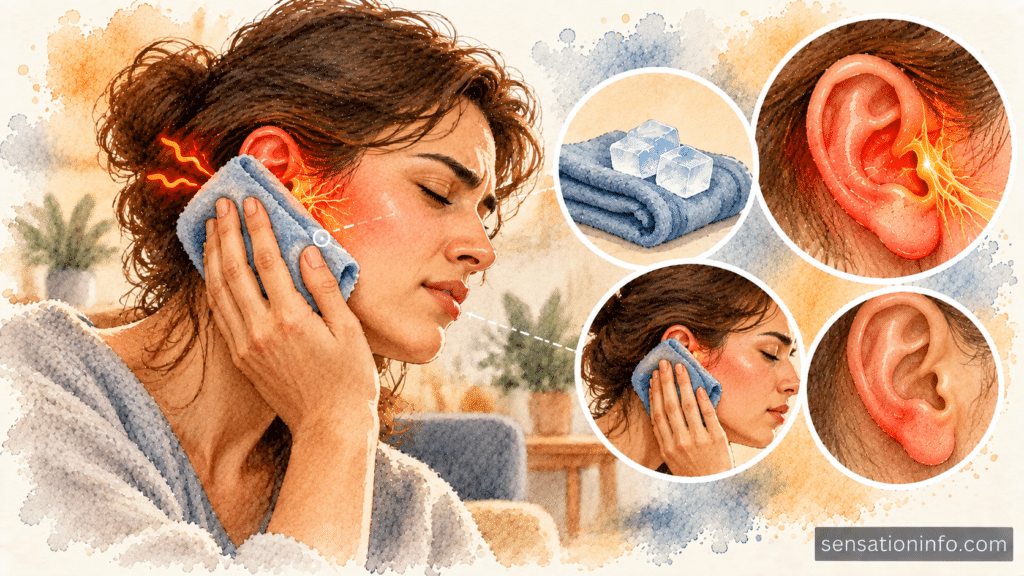
Protecting your ears from sudden heat, irritation, and nerve compression involves simple everyday adjustments:
- Apply broad-spectrum mineral sunscreen containing zinc oxide to your earlobes and outer ears before going outdoors to prevent ultraviolet damage.
- Clean your mobile phone, headphones, and pillowcases regularly with gentle cleansers to prevent chemical and bacterial buildup against your ears.
- Maintain ergonomic neck support while working on computers or looking at mobile devices to prevent upper cervical nerve compression.
- Choose certified nickel-free jewelry and avoid wearing heavy hanging earrings that stretch and irritate the delicate earlobe tissue.
- Manage migraine triggers through consistent sleep schedules, balanced hydration, and stress reduction techniques.
Recovery Outlook and Prognosis
The long-term outlook for earlobe burning depends entirely on the underlying condition, but the majority of causes are highly manageable.
When the burning is caused by contact dermatitis, sunburn, or superficial bacterial infection, symptoms typically clear completely within seven to fourteen days once the irritant is removed or antibiotics are finished.
For chronic neurological conditions such as red ear syndrome or cervical nerve irritation, symptoms can persist episodically over months or years. However, clinical studies from the Mayo Clinic show that combining nerve-stabilizing medications, migraine management strategies, and cervical physical therapy significantly reduces the frequency, duration, and severity of flare-ups for most individuals.
Key Takeaways
- A burning earlobe can stem from localized skin reactions, bacterial infections, or neurological conditions like red ear syndrome and cervical nerve compression.
- The earlobe receives sensory input from the great auricular nerve (C2-C3) and the auriculotemporal cranial nerve, making it vulnerable to referred neck and migraine pain.
- Severe swelling extending into the cartilage, high fever, or facial weakness requires urgent medical evaluation to rule out serious infections or nerve damage.
- Contact dermatitis from nickel jewelry is one of the most common causes of itchy, burning earlobes with visible peeling or redness.
- Management ranges from topical corticosteroids and allergen removal to nerve-stabilizing medications and cervical spine physical therapy.
Frequently Asked Questions
Red ear syndrome is a rare neurovascular disorder characterized by recurring episodes of intense burning pain and visible redness in one or both ears, often triggered by touch, temperature changes, neck movement, or associated with migraine headaches.
Yes, the great auricular nerve that provides sensation to the earlobe originates from the C2 and C3 nerve roots in the upper cervical spine, meaning disc compression, arthritis, or muscle spasms in the neck can cause referred burning in the ear.
An infected earlobe typically exhibits rapidly spreading redness, warm swelling, severe throbbing pain, pus or crusting discharge around piercing sites, and can be accompanied by a fever.
Doctor’s Recommendation
If you experience recurring episodes of intense earlobe burning that occur without any obvious skin rash or jewelry irritation, consulting a nerve and pain specialist is an important next step. A dedicated specialist can perform a detailed neurological examination of your upper cervical spine and cranial nerve pathways, ensuring that conditions like red ear syndrome or nerve root compression receive targeted, effective medical care.
To find medical experts who evaluate complex nerve pain, autonomic symptoms, and referred facial discomfort, explore the pain management doctors directory for nerve pain specialists to connect with leading providers across the country.
References
- National Institutes of Health. Red Ear Syndrome: A Review of Clinical Presentations and Management Strategies. National Library of Medicine PubMed Central. 2021.
- Mayo Clinic. Contact Dermatitis: Causes, Symptoms, and Allergen Avoidance. Mayo Foundation for Medical Education and Research. 2023.
- Cleveland Clinic. Cervical Radiculopathy: Symptoms, Causes, Diagnosis, and Treatment. Cleveland Clinic Health Library. 2024.
- American Academy of Dermatology. Allergic Contact Dermatitis from Metals and Cosmetic Products. AAD Clinical Education Resources. 2023.