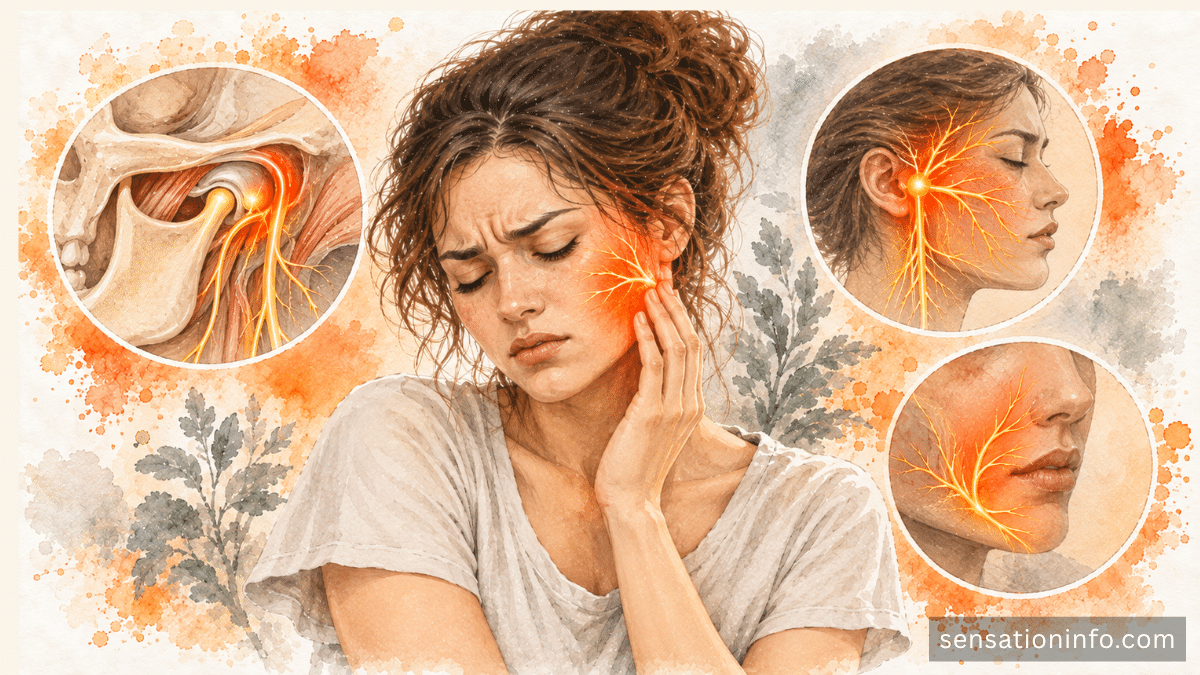

Have you ever felt one side of your face go strangely numb, like your dentist had just given you an invisible injection out of nowhere? I have, and the first time it happened, I genuinely paused and patted my own cheek to check if it was really mine. Spoiler, it was. Just not behaving normally.
Numbness in the face is one of those symptoms that catches people off guard because the face is so closely tied to identity. In this article, I’ll walk you through what causes facial numbness, what each pattern usually means, and when you must seek help immediately. Everything I’m sharing here is based on credible medical sources like the Mayo Clinic, Cleveland Clinic, the American Stroke Association, and the NHS.
What Numbness in the Face Really Means
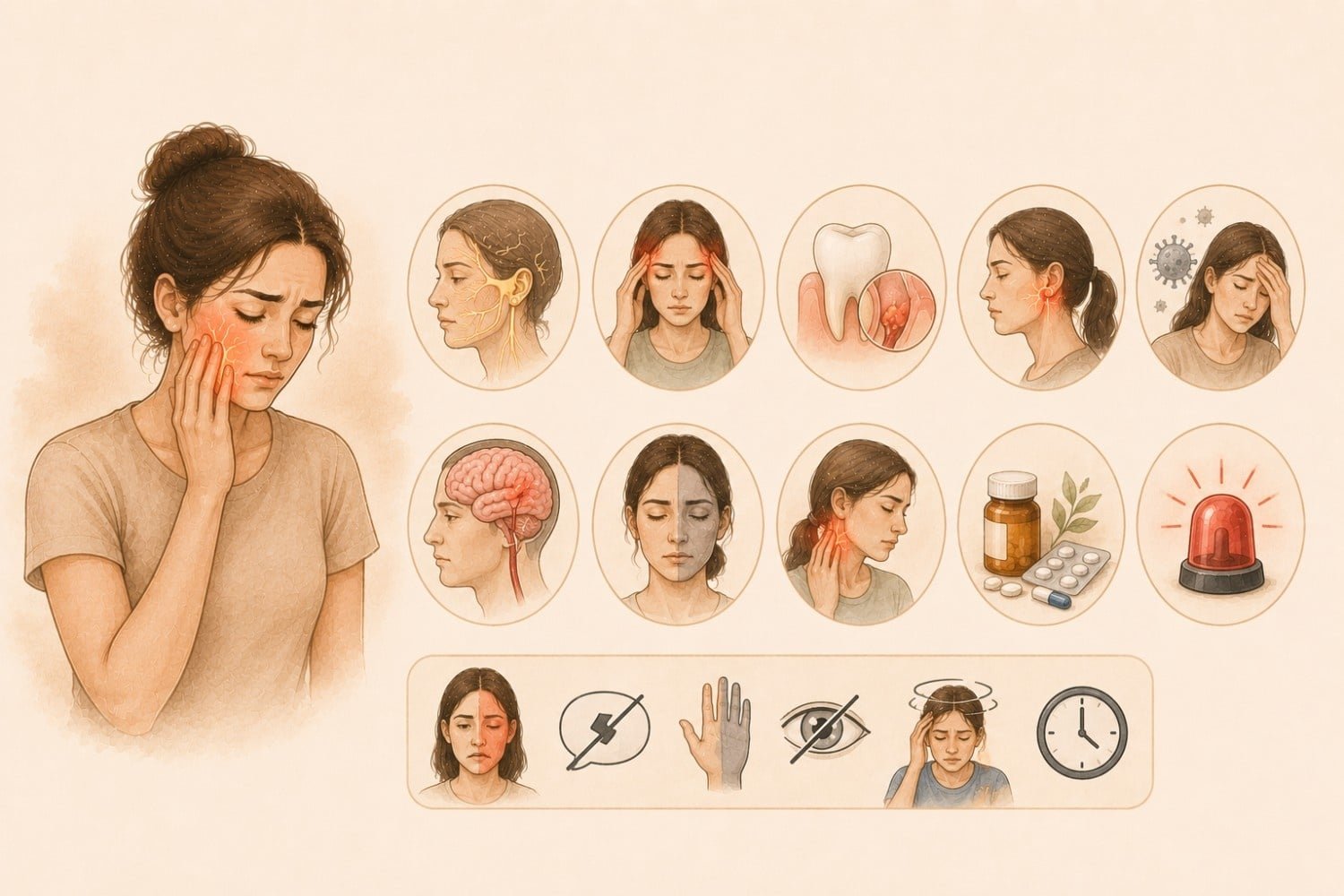
Numbness in the face is a loss of sensation in one or more areas, like the cheek, lips, jaw, forehead, or scalp. It happens when the nerves supplying the face get compressed, irritated, inflamed, or damaged.
The face is controlled mainly by the trigeminal nerve, the largest cranial nerve in the body. When this nerve or any branch of it gets affected, the body responds with numbness, tingling, weakness, or strange sensations.
Most cases are harmless, but some are serious. Knowing the difference makes a real difference.
Why Facial Numbness Should Always Be Taken Seriously
Unlike numbness in a finger or toe, facial numbness can sometimes signal something time-sensitive. Conditions like stroke, Bell’s palsy, or MS often present with face symptoms first.
I’ve personally learned to take face-related symptoms more seriously than other body sensations, simply because the face is connected to so many neurological systems. Better safe than sorry, especially when seconds count.
Common Causes of Numbness in the Face
Let me walk you through the most common causes of facial numbness, both from real-world experience and trusted medical sources.
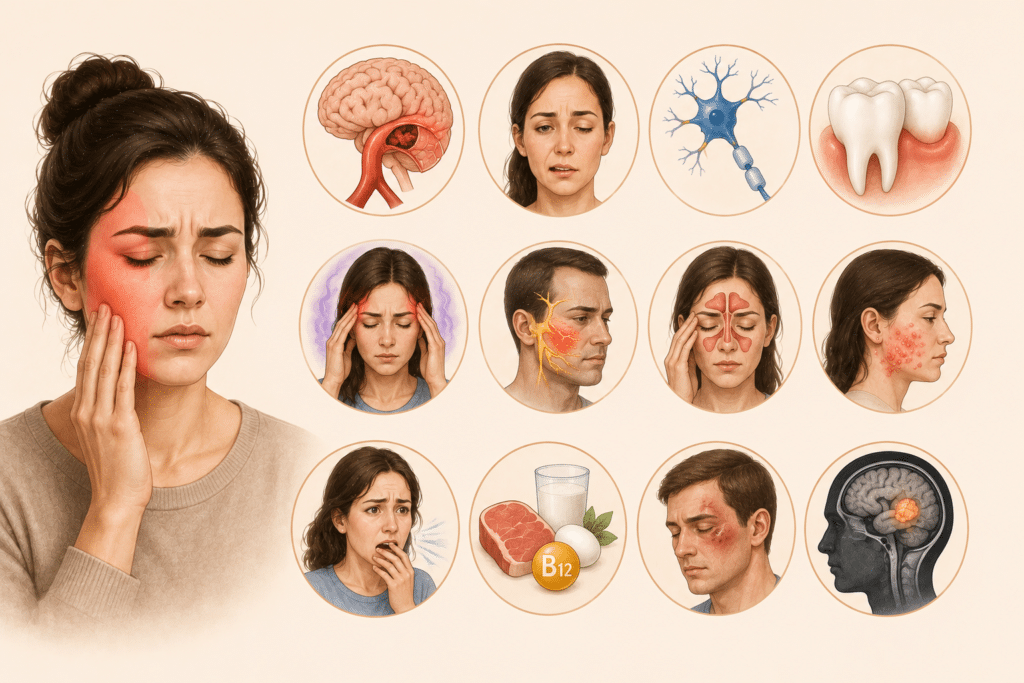
Stroke or Transient Ischemic Attack (TIA)
This is the most urgent cause and the one you can’t afford to miss. Sudden numbness on one side of the face, especially with drooping, slurred speech, weakness, or vision changes, is a major red flag.
The American Stroke Association uses the acronym FAST to help recognise stroke symptoms: Face drooping, Arm weakness, Speech difficulty, Time to call emergency services. Time matters more than anything here.
Bell’s Palsy
Bell’s palsy is a temporary weakness or paralysis of the facial muscles caused by inflammation of the facial nerve. It often appears suddenly and affects one side of the face.
The Mayo Clinic confirms that most cases improve within weeks to months. Symptoms can include numbness, drooping, drooling, and trouble closing one eye. While dramatic, it’s usually not dangerous and is treatable.
Multiple Sclerosis (MS)
MS happens when the immune system damages the protective coating of nerves. Facial numbness can be one of the earliest symptoms.
According to the National MS Society, sensory issues like numbness, tingling, or burning are common. If your facial numbness comes with vision changes, fatigue, or balance issues, see a neurologist.
Dental and Jaw Issues
This is one of the most overlooked causes. Dental infections, abscesses, impacted wisdom teeth, or jaw nerve injuries during dental procedures can all cause numbness on one side of the face.
I had a friend who blamed her recurring cheek numbness on stress for months. Turned out it was a deep dental infection pressing on the trigeminal nerve.
Migraines and Auras
Migraines can cause sensory auras, including face numbness, before or during an attack. The Mayo Clinic recognises sensory auras as a real type of migraine pattern.
If your numbness shows up with light sensitivity, nausea, or visual disturbances, migraines may be the trigger.
Trigeminal Neuralgia
This is a nerve disorder that causes sudden, sharp facial pain or numbness, often triggered by simple actions like brushing teeth or chewing.
It usually affects one side of the face and can be confused with dental pain at first. A neurologist can confirm it through clinical evaluation and imaging.
Sinus Infections and Inflammation
Severe sinus pressure can affect the nerves around the cheeks, forehead, and upper teeth. This often causes numbness, tingling, or a heavy facial sensation.
If your numbness comes with congestion, headache, or facial pressure, sinus inflammation might be the culprit.
Shingles (Herpes Zoster)
Shingles can affect the facial nerves, causing numbness, burning, and a painful rash on one side of the face. It’s especially serious when it affects the area near the eye.
This needs immediate medical care to prevent complications like nerve damage or vision issues.
Anxiety and Hyperventilation
Anxiety can cause real facial numbness, particularly around the lips or cheeks. Hyperventilation lowers carbon dioxide levels, which causes temporary nerve changes.
I’ve personally experienced this during stressful situations. The numbness fades within minutes of slowing my breathing.
Vitamin B12 Deficiency
Low B12 affects nerve health and can lead to numbness, tingling, or burning sensations anywhere on the body, including the face. A simple blood test confirms it, and supplementation usually fixes it quickly.
Head or Facial Injuries
Even minor injuries to the head or face can damage nerves and cause temporary numbness. This is especially common after falls, sports injuries, or impacts to the cheek or jaw.
Brain Tumours (Rare)
Tumours that press on the trigeminal nerve or surrounding areas can cause facial numbness. This is uncommon but worth ruling out if symptoms persist and other causes are eliminated.
One Side vs Both Sides: What the Pattern Tells You
This is where most articles skip, but it genuinely matters.
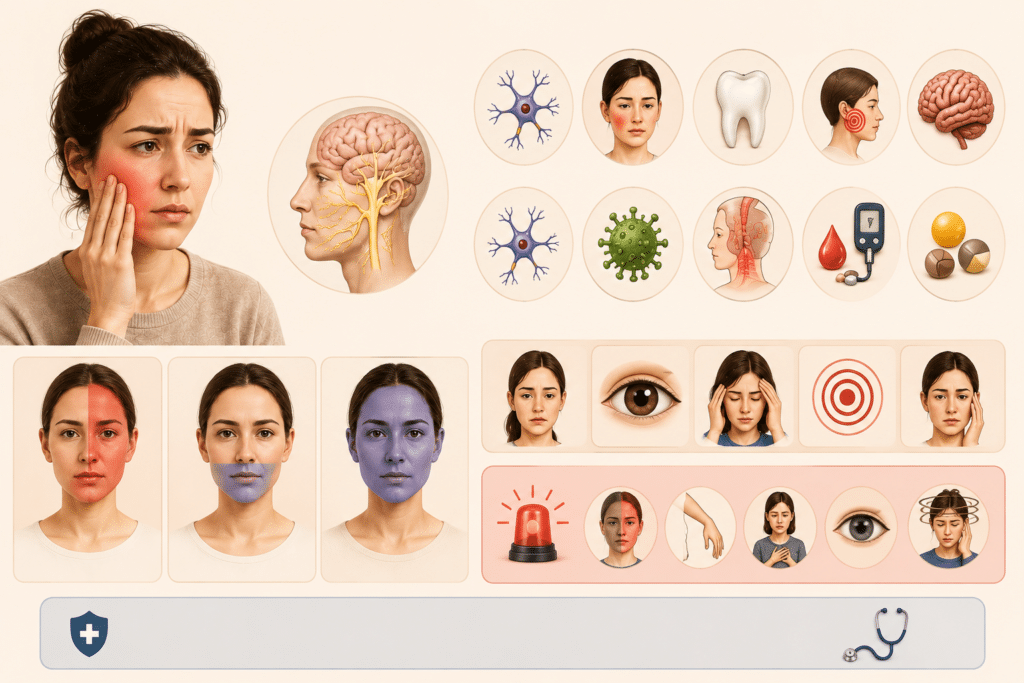
If your numbness affects only one side of the face, conditions like stroke, Bell’s palsy, MS, trigeminal neuralgia, or dental issues are common.
If your numbness affects both sides, anxiety, hyperventilation, B12 deficiency, or systemic conditions are more likely.
If your numbness comes with weakness, drooping, or slurred speech, treat it as an emergency.
If your numbness comes with a rash, shingles is the likely cause.
If your numbness is temporary and stress-related, it’s usually anxiety or hyperventilation.
This pattern-based approach is exactly how neurologists narrow down causes during a clinical exam.
Emergency Signs You Should Never Ignore
Most cases of facial numbness are mild and treatable, but some need urgent care. Please call emergency services or go to the ER immediately if you experience:
- Sudden numbness on one side of the face
- Facial drooping
- Slurred speech
- Weakness in the arm or leg
- Vision changes
- Severe headache
- Difficulty walking or balancing
- Confusion or trouble understanding speech
These can be signs of stroke or a serious neurological event. Time is the most important factor in stroke care.
How Doctors Diagnose Numbness in the Face
When I finally had mine evaluated, the process was thorough. Diagnosing facial numbness isn’t a guessing game, especially when nerves and the brain are involved.
A standard workup usually includes a detailed history, physical exam, and neurological assessment. Doctors may check facial muscle strength, sensation, and reflexes.
If a serious cause is suspected, MRI or CT scans of the brain may be ordered. Blood tests check for B12, blood sugar, thyroid function, and inflammation. For dental causes, X-rays and dental exams help confirm the issue.
For migraines or trigeminal neuralgia, specialists often perform additional sensory evaluations. The right diagnosis saves time, money, and sometimes lives.
Treatment Options That Truly Help
Treatment depends entirely on the cause, but here’s what generally works in real-world cases.
Address the Underlying Condition
If a dental issue is the cause, treating the infection or extraction resolves the numbness. For Bell’s palsy, doctors often prescribe corticosteroids and antiviral medications. MS requires disease-modifying therapies, while migraines and trigeminal neuralgia have targeted treatments.
In most cases, fixing the root cause clears the numbness completely.
Medications
Doctors may prescribe gabapentin, pregabalin, carbamazepine, or duloxetine for nerve-related numbness. Corticosteroids reduce inflammation in conditions like Bell’s palsy. Antivirals are used for shingles.
Always use medications under proper medical supervision.
Stress and Anxiety Management
If anxiety is the trigger, slow breathing, mindfulness, and reducing caffeine help reduce nerve sensitivity. CBT is highly effective for chronic anxiety-related symptoms.
I personally found that even 10 minutes of slow breathing daily reduced my random facial numbness episodes.
Physical Therapy
For Bell’s palsy or nerve recovery, facial exercises and physical therapy speed up healing. A trained physiotherapist can guide you with the right movements.
Treating Sinus Issues
Decongestants, steam inhalation, and saline rinses can ease sinus-related numbness. Persistent sinus issues may need antibiotics or referral to an ENT specialist.
Surgery for Severe Cases
In some cases, surgical procedures like microvascular decompression help with trigeminal neuralgia or other nerve compression issues. These are not first-line treatments but offer real relief when needed.

Living With Facial Numbness: Real-Life Tips
If you’re dealing with chronic or recurring numbness, a few small habits help. Staying hydrated, eating balanced meals, sleeping well, and managing stress all reduce nerve sensitivity.
Avoiding triggers like extreme cold, harsh skincare products, or facial strain helps too. Keeping a journal of when and how the numbness appears can give your doctor strong clues to work with.
I’ve personally noticed that the more I take care of my overall health, the less likely my body throws random sensations my way.
Frequently Asked Questions
It can be caused by stroke, Bell’s palsy, MS, trigeminal neuralgia, dental issues, or sinus inflammation. One-sided numbness always deserves medical attention.
Yes. Anxiety often causes numbness around the lips, cheeks, or scalp due to hyperventilation and stress-driven nerve sensitivity.
Yes, if it appears suddenly, especially with drooping, slurred speech, weakness, vision changes, or severe headache. These are stroke warning signs.
It depends on the cause. Stress-related numbness lasts minutes. Bell’s palsy resolves over weeks to months. Other causes vary depending on diagnosis.
Final Thoughts
Numbness in the face can range from a minor stress response to a serious neurological warning. From stroke and Bell’s palsy to dental infections and migraines, the causes are varied, and the urgency depends on the pattern.
If your face starts acting strangely, don’t ignore it and don’t panic either. Track the symptoms, note the side, and act fast when in doubt. Your face is closely tied to your nervous system, your senses, and your identity. The kindest thing you can do is take it seriously when it speaks up.