

Tingling in the eyelid is almost always a harmless muscle contraction medically known as eyelid myokymia. This rapid fluttering or buzzing sensation happens when the tiny muscles surrounding your eye misfire due to fatigue, stress, or too much caffeine. If this localized eye fluttering suddenly triggers uncomfortable tingling creeping into your face and jaw, you might be experiencing a broader facial nerve irritation. However an isolated twitch in just the upper or lower eyelid is usually temporary and resolves completely once you rest your eyes and hydrate your body.
What Causes That Buzzing Sensation in Your Eyelid?
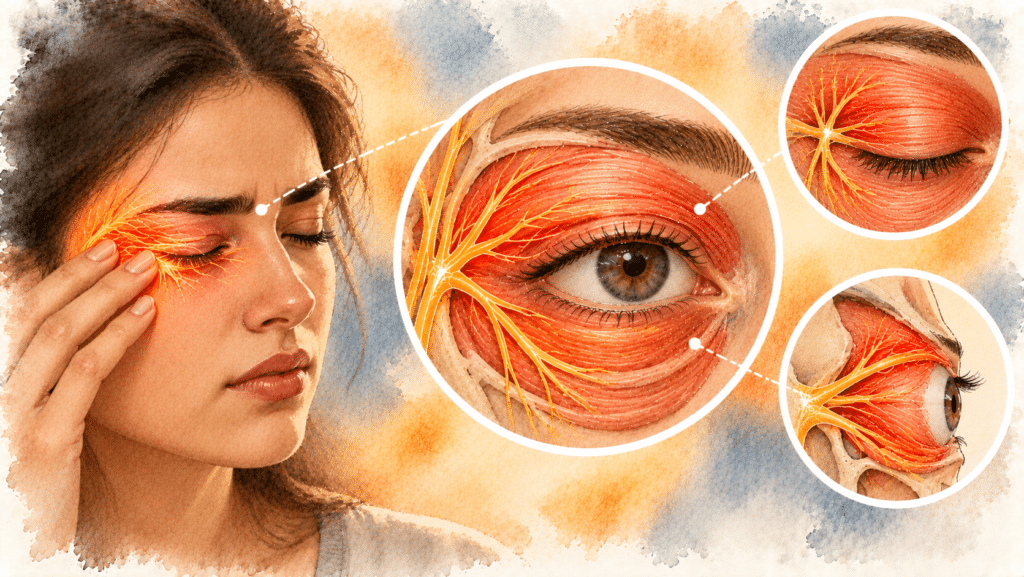
The vibrating or buzzing feeling is caused by microscopic uncontrollable muscle spasms in the orbicularis oculi muscle.
The orbicularis oculi is the primary circular muscle responsible for opening and closing your eyelids. Because the skin on your eyelid is the thinnest skin on your entire body, you can feel every single microscopic movement of this underlying muscle. When the motor nerves that control the eyelid become overstimulated, they send a rapid series of tiny electrical impulses to the muscle fibers.
These electrical impulses are not strong enough to force your eye to blink completely shut. Instead they cause individual muscle fibers to rapidly twitch and release. Your brain registers this high frequency micro trembling as a distinct tingling sensation, a strange buzzing, or a feeling of a bug crawling just beneath your skin.
The Big Three Triggers: Stress, Sleep, and Caffeine
Most cases of eyelid myokymia are entirely self inflicted by our daily habits. The Cleveland Clinic states that lifestyle factors are the undisputed primary triggers for isolated eyelid tingling.
1. High Stress Levels
Your nervous system becomes highly reactive when you are under severe psychological or physical stress. Chronic stress elevates your cortisol levels and forces your central nervous system into a state of hyperarousal. This overexcitement causes the delicate motor nerves in your face to randomly misfire resulting in an annoying eyelid flutter.
2. Sleep Deprivation
Your eye muscles work continuously from the moment you wake up until you fall asleep. When you do not get adequate rest, these muscles become physically exhausted. Sleep deprivation also disrupts the delicate balance of neurotransmitters in your brain which makes your facial nerves much more prone to sudden twitching.
3. Excessive Caffeine Intake
Caffeine is a powerful central nervous system stimulant. Drinking too much coffee or consuming high energy drinks dramatically increases the electrical activity within your nerve pathways. This stimulant effect easily pushes the sensitive nerves around your eyes into overdrive and triggers a persistent buzzing sensation.
4. Digital Eye Strain
Staring intently at computer monitors or smartphone screens dramatically reduces your natural blink rate. This dries out the surface of your eye and severely strains the orbicularis oculi muscle. The exhausted muscle will often begin to twitch in protest after several hours of uninterrupted screen time.
Normal Eyelid Twitching vs Concerning Spasms

It is perfectly normal to experience a temporary vibrating sensation in one eyelid. Understanding the difference between a simple twitch and a complex muscle spasm can help ease your anxiety.
| Symptom Feature | Eyelid Myokymia | Benign Essential Blepharospasm | Hemifacial Spasm |
| What It Feels Like | Light tingling or buzzing | Forceful blinking and squeezing | Severe twitching pulling the face |
| Which Eyes Are Affected | Only one eye at a time | Both eyes simultaneously | One side of the entire face |
| Does The Eye Close? | No it stays fully open | Yes it forces the eye shut | Yes it forces the eye shut |
| Underlying Cause | Stress fatigue and caffeine | Neurological movement disorder | Compressed facial nerve |
| Level of Danger | Completely harmless | Requires medical management | Requires neurological evaluation |
Could the Tingling Be a Neurological Symptom?
Many people panic and assume a buzzing eyelid is an early sign of a brain tumor or a severe neurological disease. A simple eyelid twitch is rarely the first or only symptom of a serious medical problem.
Multiple sclerosis is a disease that damages the protective coating of your nerves. While it can cause facial tingling, it rarely presents as just an isolated eye twitch. If the buzzing in your eye is accompanied by strange sensory warning signs like tingling and weakness in your arms or legs, a neurological evaluation is highly recommended.
Similarly a condition called Bell’s palsy affects the primary facial nerve and can cause sensory changes. However Bell’s palsy causes distinct facial drooping and paralysis. If the tingling in your eye is followed by a sudden numb feeling spreading across your cheek, you should seek emergency medical care to rule out a stroke or viral nerve paralysis.
If your eyelid is the only thing vibrating and the rest of your face feels completely normal, you are almost certainly just dealing with benign myokymia.
5 Fast Ways to Stop Eyelid Tingling at Home
You do not need a prescription to stop the vast majority of eyelid twitches. You can usually calm the irritated motor nerves using simple conservative home remedies.

- Apply a warm compress: Soak a clean washcloth in warm water and hold it gently against your closed eyelid for ten minutes. The gentle heat relaxes the overworked orbicularis oculi muscle and dramatically increases local blood flow to flush out cellular waste.
- Use lubricating eye drops: Dry eyes force your eyelid muscles to work much harder to spread tears. Applying nonprescription artificial tears instantly hydrates the eye surface and stops the reflexive muscle spasms.
- Increase your magnesium intake: Magnesium is a crucial mineral responsible for regulating normal muscle contractions. A magnesium deficiency frequently causes muscle cramps and eye twitches. Eating spinach or taking a high quality magnesium supplement can quickly stabilize the overactive nerves.
- Cut your caffeine consumption: Immediately stop drinking coffee and energy drinks for a few days. Removing the central nervous system stimulant gives your facial nerves the necessary time to calm down and reset.
- Take frequent screen breaks: Look away from your computer screen every twenty minutes and focus on an object in the distance for twenty seconds. This breaks the cycle of intense eye strain and gives your eyelid muscles a necessary micro break.
When to See a Doctor for Eye Twitching
An isolated twitching eyelid will usually completely disappear within a few days or weeks once you manage your stress and sleep better. You should seek a professional medical opinion if the tingling stubbornly persists or changes in nature.
Schedule an appointment with an ophthalmologist or a neurologist if you experience any of the following clinical warning signs.
- The twitching lasts for more than two consecutive weeks without any improvement.
- The spasm is strong enough to completely force your eyelid shut and obstruct your vision.
- The twitching spreads from your eyelid down into your cheeks or the corner of your mouth.
- Your eye becomes visibly red, swollen, or produces a thick discharge.
- You notice your upper eyelid is permanently drooping down over your pupil.
These specific red flags suggest that the issue is no longer simple fatigue and may involve a compressed facial nerve or an underlying inflammatory eye condition.
Key Takeaways
- Tingling in the eyelid is most commonly caused by eyelid myokymia, which is a benign and temporary muscle spasm.
- The buzzing sensation happens when the orbicularis oculi muscle misfires due to extreme fatigue or nervous system overstimulation.
- The absolute most common triggers for eye twitching are high stress, sleep deprivation, and consuming too much caffeine.
- A simple eye twitch is completely harmless and does not force the eye to close.
- You can stop the tingling quickly at home by applying a warm compress, using artificial tears, and getting a full night of sleep.
- You should see a doctor immediately if the twitching forces your eye completely shut or if the spasms spread to other parts of your face.
Frequently Asked Questions
Yes it is very common. Eyelid myokymia can be surprisingly persistent. If you are experiencing a period of intense chronic stress or severe sleep deprivation the twitching can easily last for several days or even a few weeks until your body fully recovers.
Yes. Staring at a bright screen in a dark room causes severe eye strain. Your eyes have to work incredibly hard to focus on the harsh light contrast which quickly exhausts the orbicularis oculi muscle and triggers reflexive twitching.
There is no strong clinical evidence linking standard artificial sweeteners to eyelid twitching. Caffeine remains the primary dietary culprit because it directly stimulates the central nervous system and makes the facial nerves highly reactive.
Doctor’s Recommendation
If your eyelid tingling lasts for more than two weeks or spreads to other muscles in your face, a clinical evaluation is the safest next step. Finding a qualified neurologist or neuro-ophthalmologist can help you identify underlying nerve compressions and rule out conditions like hemifacial spasm. For guidance on locating an experienced physician, review our directory of top rated neuropathy specialists in the USA to find the right care provider near you.
References
- Mayo Clinic. Eye twitching: Causes. Mayo Clinic Patient Care and Health Information. 2023.
- National Institutes of Health. Eyelid Myokymia. StatPearls Publishing. 2023.
- Cleveland Clinic. Eyelid Twitch (Myokymia). Cleveland Clinic Health Library. 2022.
- Johns Hopkins Medicine. Eye Twitching. Johns Hopkins Health Health Library. 2022.