

That unmistakable feeling of walking on a marble under your toes is the classic hallmark of a condition called Morton’s neuroma. This painful issue occurs when the protective tissue surrounding a sensory nerve in the ball of your foot thickens and swells.
If this localized swelling triggers worrying numbness spreading to your outer foot and little toe, you are experiencing direct nerve compression every time you take a step. Fortunately this condition is completely benign and you can usually relieve the painful marble sensation entirely through simple footwear changes and at home care.
What Exactly is Morton’s Neuroma?

Despite the frightening name, a neuroma is not a cancerous tumor. It is simply a benign enlargement of nerve tissue.
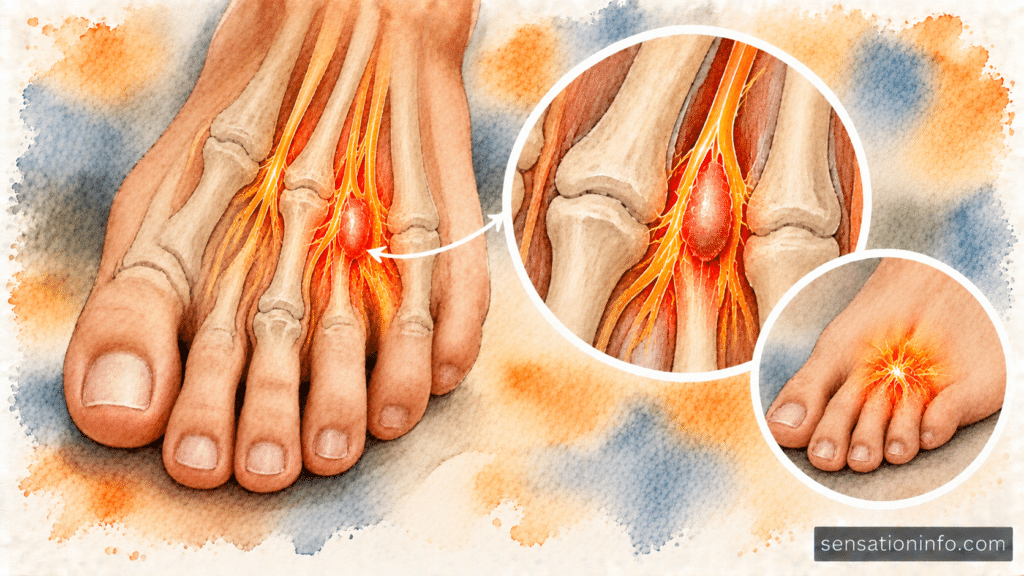
Your foot contains multiple interdigital nerves that run between your long foot bones and provide sensation to your toes. When one of these nerves experiences repeated physical compression or irritation, the body responds by building up thick fibrous tissue around the nerve to protect it. This buildup creates a physical mass inside your foot.
According to the American Academy of Orthopaedic Surgeons, this nerve thickening occurs most frequently between the third and fourth toes. However it can occasionally develop between the second and third toes. As the nerve casing grows thicker it takes up more space inside the already cramped ball of your foot resulting in chronic pain.
Why Does It Feel Like a Marble?
The sensation of having a small pebble or a marble trapped inside your shoe is purely mechanical.
The long bones in your foot are called metatarsal bones. The rounded ends of these bones sit right at the ball of your foot. The irritated interdigital nerve runs exactly between these bony metatarsal heads. When you stand up and bear weight on your foot, the thickened nerve mass gets physically crushed beneath the bones and the hard floor.
Because the mass is round and fibrous, your brain registers the physical pressure as stepping directly on a small hard spherical object. Taking your shoe off and massaging the foot temporarily separates the bones and gives the swollen nerve more room, which is why the marble sensation often vanishes the moment you sit down and rub your feet.
The Classic Symptoms You Will Feel
Aside from the physical sensation of stepping on a pebble, Morton’s neuroma produces several distinct neurological symptoms.
- Sharp burning pain: You will likely feel a sudden intense burning sensation in the ball of your foot that occasionally radiates forward into your toes.
- Sensory loss: The compressed nerve may cause your middle toes to go completely numb or feel painfully asleep during long walks.
- Invisible discomfort: There is rarely any outward sign of the condition. You will not see a visible lump, swelling, or redness on the bottom of your foot.
- Pain that mimics other issues: The swelling can sometimes irritate surrounding nerves. If you also feel sharp tingling shooting into your big toe, the inflammation might be affecting the broader nerve network in your forefoot.
What Causes the Nerve to Thicken?
Nerve thickening is the direct result of repetitive physical trauma and unnatural foot compression.
Wearing shoes with tight toe boxes is the leading cause of this painful nerve condition. High heeled shoes are especially problematic because they force your body weight forward and violently squeeze your toes together into a narrow space. This pinches the interdigital nerve tightly between the metatarsal bones with every single step you take.
High impact athletic activities also play a major role. Jogging, playing tennis, or engaging in court sports subject the ball of your foot to immense repetitive pounding. This constant trauma causes the nerve tissue to inflame and swell over time.
Finally your natural foot anatomy can predispose you to nerve compression. People born with flat feet, high arches, or bunions often have unstable toe joints. This instability causes the foot bones to shift abnormally during walking and aggressively rub against the interdigital nerves.
Morton’s Neuroma vs Other Foot Conditions
It is very easy to confuse the feeling of a neuroma with other common foot injuries. Understanding the subtle differences can help you seek the correct treatment faster.
| Symptom Feature | Morton’s Neuroma | Metatarsalgia | Tarsal Tunnel Syndrome |
| Primary Sensation | Walking on a marble or pebble | Generalized deep aching and bruising | Burning and sharp electrical shocks |
| Location of Pain | Between the third and fourth toes | Across the entire ball of the foot | Ankle heel and entire bottom of foot |
| What Makes It Worse | Wearing tight shoes and walking | Standing barefoot on hard floors | Prolonged standing or nighttime resting |
| Accompanying Symptoms | Toe numbness and sharp clicking | Calluses forming under the foot bones | Tingling radiating up the inner calf |
If your pain feels less like a localized marble and more like burning nerve pain radiating from your ankle, you are likely dealing with a compressed tibial nerve rather than a localized toe neuroma.
5 Proven Ways to Relieve the Pain Without Surgery
The vast majority of people can completely eliminate the marble sensation using conservative non surgical treatments.
1. Switch to a Wide Toe Box
You must immediately stop wearing narrow shoes and high heels. Choose footwear with a naturally wide toe box that allows your toes to splay out completely flat. Giving your metatarsal bones room to spread apart instantly relieves the crushing pressure on the swollen nerve.
2. Insert Metatarsal Pads
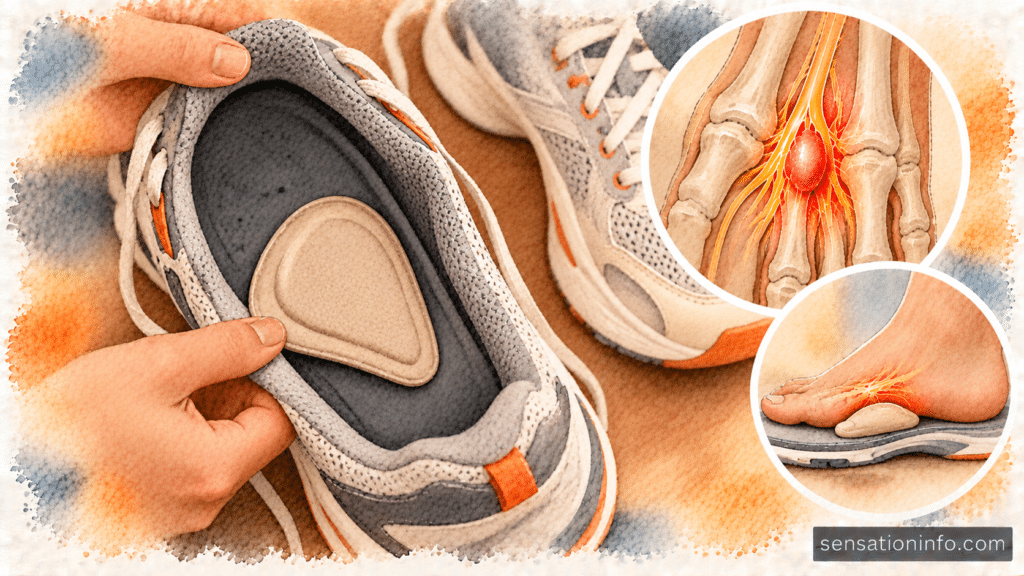
A metatarsal pad is a small teardrop shaped cushion that you place inside your shoe just behind the ball of your foot. This specific placement lifts and separates the metatarsal bones while you walk. Elevating the bones takes the direct physical pressure off the neuroma and removes the feeling that you are stepping on a marble.
3. Use Ice Massage Daily
Rolling your foot over a frozen water bottle combines the benefits of physical massage with powerful cold therapy. The ice constricts the local blood vessels and significantly reduces the swelling inside the nerve casing. Do this for fifteen minutes every evening to calm the inflamed tissue.
4. Wear Toe Spacers at Home
Wearing silicone toe spacers while you relax at home helps stretch out the tight ligaments in your forefoot. Realigning your toes into their natural anatomical position prevents the bones from pinching the nerve network.
5. Take Oral Medications
Short term use of over the counter pain relievers like ibuprofen or naproxen sodium can temporarily reduce the deep tissue inflammation. However these medications will not provide long lasting relief if you continue wearing tight and restrictive shoes.
When to See a Podiatrist
You should schedule an appointment with a podiatrist if changing your shoes and using metatarsal pads does not eliminate the pain after a few weeks. You should also seek professional care if the swelling leads to persistent loss of feeling across the bottom of your feet because severe nerve compression can eventually cause permanent sensory damage.
A podiatrist can officially diagnose the mass using an ultrasound or an imaging scan. If the mass is severely inflamed they may recommend a corticosteroid injection. Injecting steroids directly into the neuroma provides massive anti inflammatory relief that can last for several months.
In very rare cases where the nerve is permanently damaged and conservative treatments completely fail, a surgeon can perform a minor procedure to physically remove the thickened nerve tissue. This surgery eliminates the pain but will leave your affected toes permanently numb.
Key Takeaways
- The sensation of walking on a marble under your toes is the primary symptom of Morton’s neuroma.
- This condition is a benign thickening of the interdigital nerve caused by repetitive physical compression and trauma.
- The swollen nerve gets pinched between your metatarsal bones which causes sharp burning pain and toe numbness.
- Wearing high heels or athletic shoes with a narrow toe box is the most common cause of this nerve irritation.
- You can relieve the pain without surgery by wearing wide shoes and using supportive metatarsal pads.
- A podiatrist can provide a corticosteroid injection to reduce severe swelling if home care fails to resolve the marble sensation.
Frequently Asked Questions
he physical sensation will usually stop when you take your shoes off and rest your feet. However the underlying nerve thickening will not heal or disappear unless you permanently change your footwear to remove the daily physical pressure.
Most people achieve excellent pain relief using simple over the counter metatarsal pads. You typically only need an expensive custom orthotic if you have severe structural foot deformities that standard supportive pads cannot accommodate.
Yes. The traditional surgical treatment involves completely cutting out the thickened nerve tissue. Because the sensory nerve is entirely removed you will permanently lose all physical feeling in the two toes previously connected to that specific nerve.
Doctor’s Recommendation
If the sensation of walking on a marble persists despite changing your footwear or if you develop permanent numbness in your toes, a clinical evaluation is the safest next step. Finding a qualified foot specialist or neurologist can help you accurately diagnose the mass and explore advanced non surgical relief options like targeted injections. For guidance on locating an experienced physician, review our directory of top rated neuropathy specialists in the USA to find the right care provider near you.
References
- Mayo Clinic. Morton’s neuroma: Symptoms and causes. Mayo Clinic Patient Care and Health Information. 2023.
- American Academy of Orthopaedic Surgeons. Morton’s Neuroma. OrthoInfo. 2021.
- Cleveland Clinic. Morton’s Neuroma. Cleveland Clinic Health Library. 2022.
- National Institutes of Health. Morton Neuroma. StatPearls Publishing. 2023.