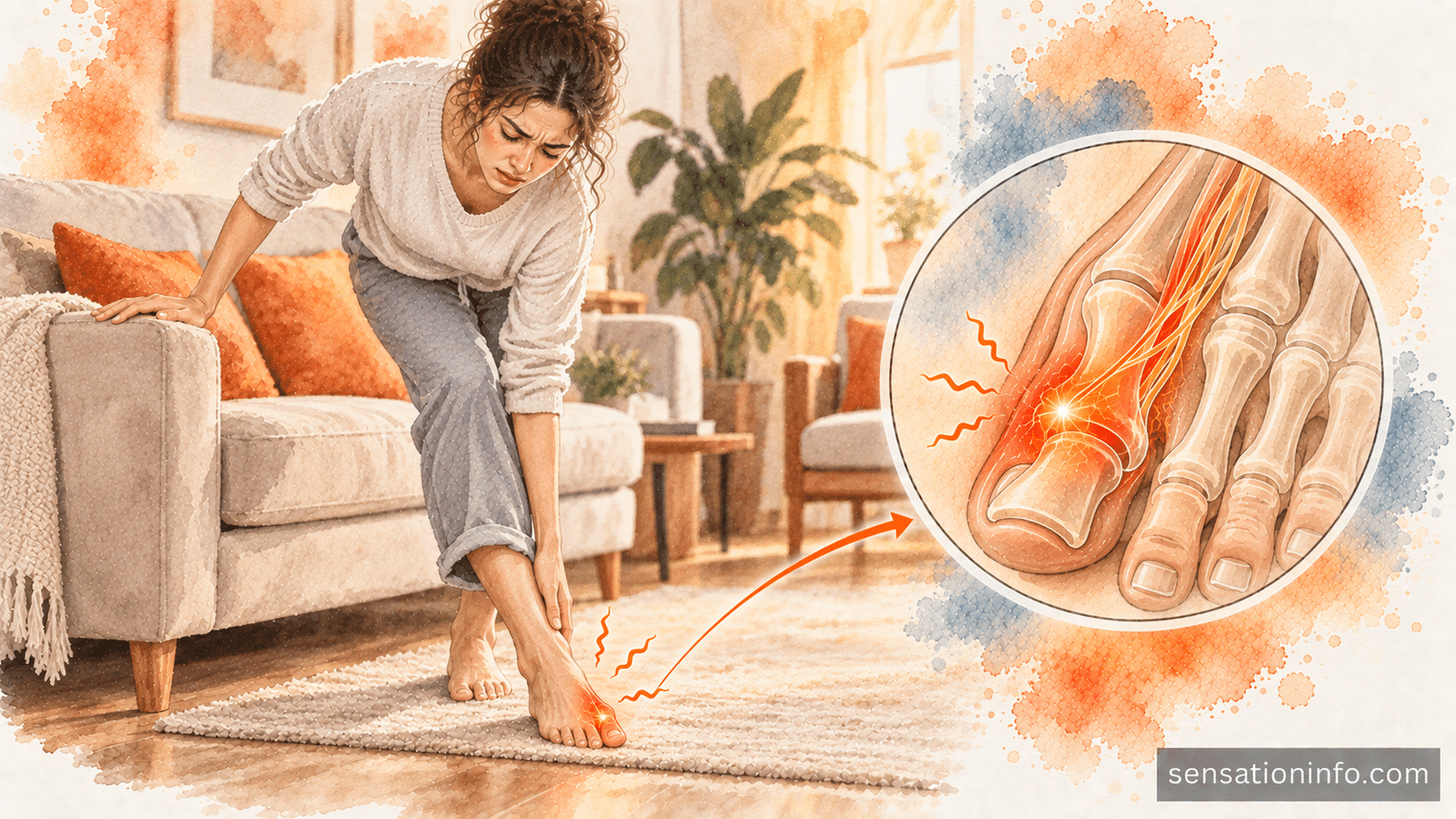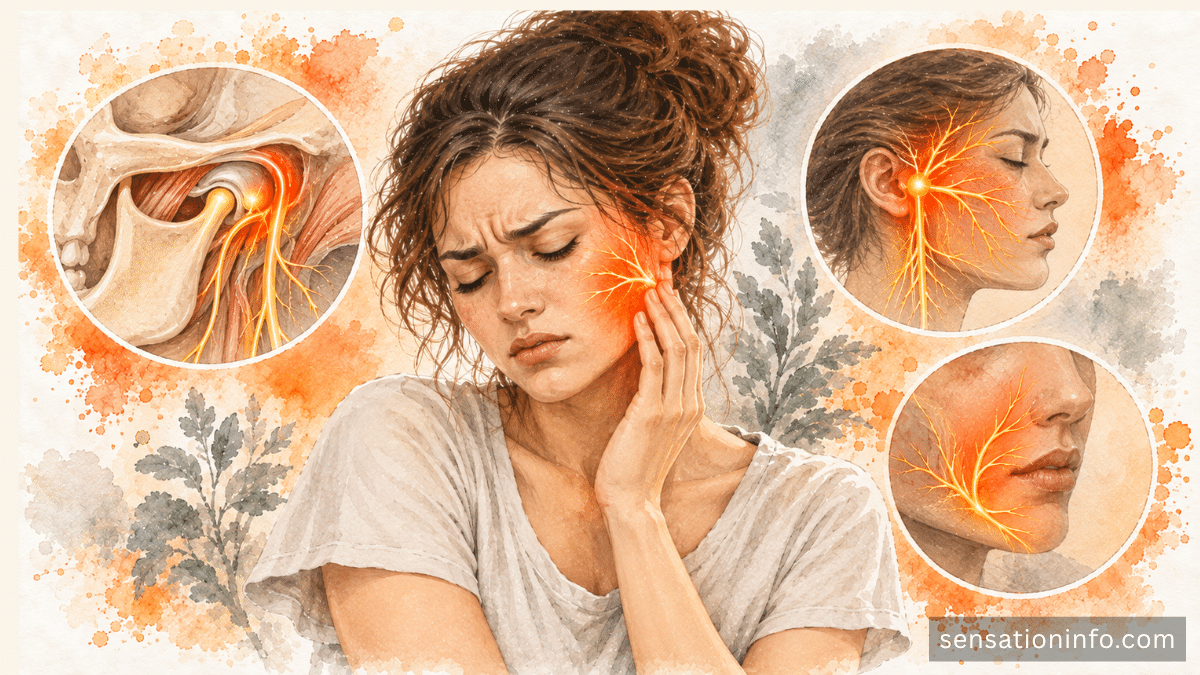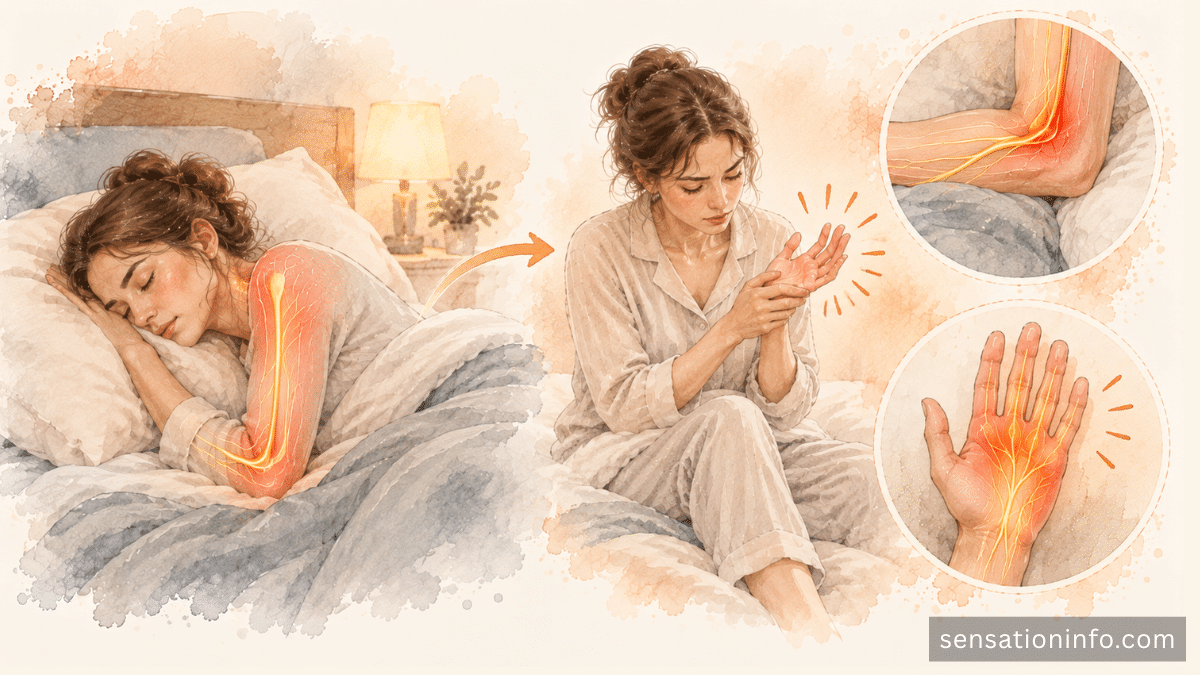

Pins and needles when waking up are often caused by pressure on a nerve during sleep. The sensation may fade after you change position and move the limb. Recurrent symptoms, symptoms that last, or pins and needles with weakness, severe pain, colour change, dizziness, or speech trouble need medical assessment. Call 112 in India or 911 internationally for emergency signs.
What happens after you change position?
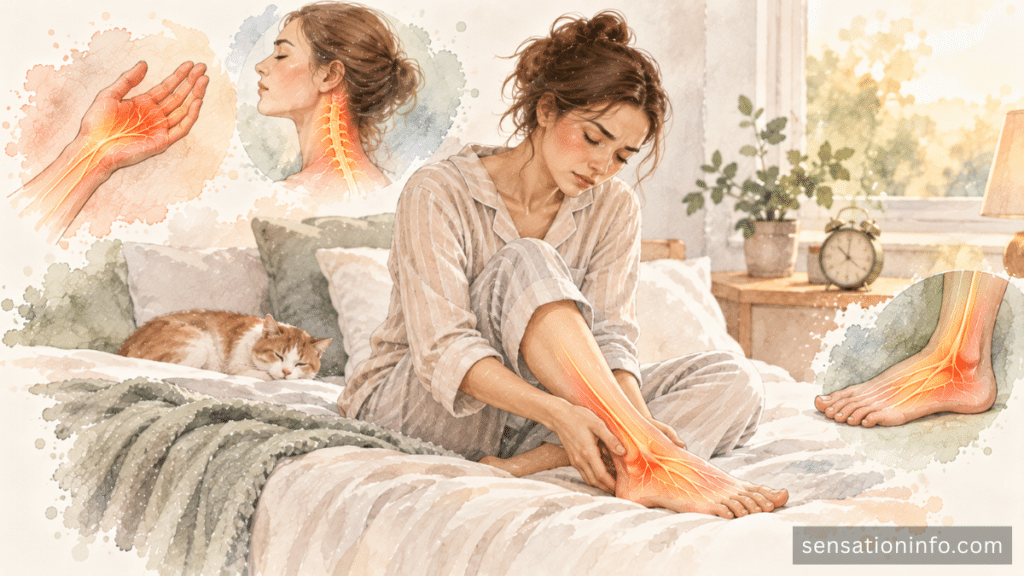
A limb can “fall asleep” when body weight or a bent joint puts pressure on a nerve for a prolonged period. When the pressure is removed, the recovering nerve may send prickling, buzzing, burning, or electric sensations for a short time.
This pattern is usually less concerning when the feeling resolves fully after movement and does not return often. It deserves more attention when the sensation lasts, becomes more frequent, affects the same area every morning, or is accompanied by weakness or loss of function.
Do not assume that every waking symptom is caused by poor circulation. Nerve pressure, joint position, a neck or back problem, and peripheral neuropathy can also be involved.
Which waking symptoms need emergency help?
Call 112 in India or 911 internationally, or go to the nearest emergency department, if pins and needles on waking occur with:
•Sudden weakness or numbness in the face, arm, or leg.
•Facial drooping, confusion, trouble speaking, new vision changes, or severe dizziness.
•A sudden severe headache, seizure, loss of consciousness, or inability to stay awake.
•New numbness around the groin with loss of bladder or bowel control.
•A limb that becomes cold, pale, blue, severely swollen, or difficult to move.
•Severe symptoms after a fall, head injury, neck injury, or back injury.
•Chest pressure, severe breathlessness, fainting, or a very fast or irregular heartbeat.
•Rapidly worsening weakness or inability to walk.
If symptoms improve after movement but recur every day, arrange an appointment. Temporary improvement does not explain why the symptoms keep returning.
Which body part is affected?
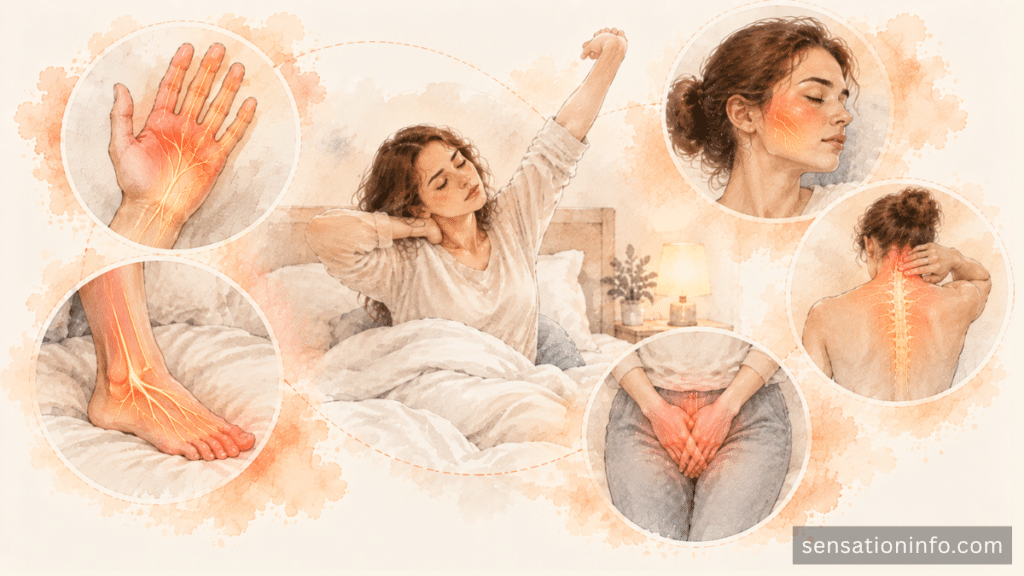
The area involved can suggest where pressure occurred during sleep, but it can also point to a nerve problem.
| Area noticed on waking | Common sleep related trigger | Other possibility to consider |
| One hand or several fingers | Bent wrist, elbow, or pressure on the arm | Carpal tunnel, cubital tunnel, neck nerve irritation |
| One foot | Pressure from the leg or ankle position | Local nerve compression, back nerve irritation, circulation problem |
| Both hands or both feet | Sleep position or prolonged pressure | Peripheral neuropathy or metabolic condition |
| One side of the face or body | Head and neck position | Brain or central nervous system problem, especially if sudden |
| Groin or saddle area | Pressure from position | Spinal nerve compression, especially with bladder or bowel changes |
| Whole limb with weakness | Prolonged pressure or injury | Urgent nerve, spinal, brain, or circulation problem |
The location should be described along with duration, recurrence, weakness, pain, swelling, and any symptoms elsewhere.
Is the sensation in the hand or fingers?
Hand pins and needles on waking may follow a bent wrist, sleeping on an arm, or prolonged elbow flexion. The thumb, index finger, and middle finger may suggest median nerve pressure at the wrist. The little finger and part of the ring finger may suggest ulnar nerve pressure near the elbow.
Symptoms that travel from the neck into the shoulder or hand may involve a cervical nerve root.
A hand that remains numb, becomes weak, drops objects, or develops a colour or temperature change should not be explained only by sleeping position.
Is the sensation in the foot or leg?
Foot pins and needles may occur when the ankle, knee, or leg is compressed during sleep. Tight bedding, a bent knee, or pressure near the hip can irritate a nerve temporarily.
Repeated symptoms in the sole or toes may involve the ankle or tibial nerve. Symptoms in both feet that gradually spread may suggest peripheral neuropathy, diabetes, vitamin deficiency, thyroid disease, or another systemic condition.
A cold, pale, blue, severely swollen, or weak foot needs urgent assessment. Do not massage a suddenly painful or discoloured limb while waiting for help.
What causes pins and needles on waking?
Sleep position and temporary nerve pressure
Sleeping on an arm, crossing the legs, bending the wrist, or keeping an elbow or hip pressed against a surface can compress a nerve. The sensation typically improves after changing position and moving gently.
Avoid repeatedly placing pressure on the same area. A pillow, mattress, or sleeping position may need adjustment if symptoms recur.
Wrist or elbow nerve compression
Carpal tunnel syndrome can cause nighttime and early morning tingling or numbness in the thumb side of the hand. Cubital tunnel syndrome can affect the little finger side when the elbow remains bent or compressed.
Persistent symptoms, weak grip, clumsiness, or visible muscle loss needs assessment. Do not wear a tight splint without professional guidance.
Neck or back nerve irritation
A nerve root in the neck or lower back may be irritated by spinal changes, a disc problem, posture, or an injury. The symptoms may travel along an arm or leg and may change with the spine position.
Neck pain with arm symptoms or back pain with leg symptoms should be described to a clinician. Weakness, walking difficulty, or bladder and bowel changes increases urgency.
Peripheral neuropathy
Peripheral neuropathy may cause tingling, burning, numbness, sensitivity, cramps, weakness, or balance problems. It often affects the feet or hands and may be associated with diabetes, vitamin deficiency, alcohol, medicines, toxins, kidney or thyroid disease, infection, autoimmune disease, or inherited conditions.
Diabetes or blood sugar changes
Diabetes can affect peripheral nerves and may cause symptoms in the feet or hands. Recurrent waking symptoms with thirst, frequent urination, unexplained weight change, weakness, or slow wound healing deserve medical review.
Do not change diabetes medicines or assume that every morning sensation is caused by blood sugar without professional guidance.
Vitamin or metabolic problems
Vitamin B12 deficiency, thyroid disease, kidney problems, and abnormal calcium, sodium, potassium, or magnesium levels can affect nerves and muscles. Testing is needed because the sensation cannot show which problem is present.
Circulation problems
A sleep position can temporarily reduce blood flow, but persistent or severe circulation symptoms are different. Coldness, colour change, swelling, pain, weakness, or reduced pulses require assessment.
A sudden cold, pale, blue, very painful, or weak limb is an emergency.
Anxiety or rapid breathing
Stress and rapid breathing can cause tingling, particularly around the mouth or in the hands. It may occur with lightheadedness or a racing heartbeat.
Anxiety should not be used to explain new weakness, persistent one sided symptoms, speech trouble, severe dizziness, chest pressure, or loss of consciousness.
Medicines, alcohol, or toxins
Some medicines, alcohol, recreational substances, and toxins can affect nerves. Mention a new medicine, dose change, supplement, or exposure to a clinician.
Do not stop prescribed treatment without guidance.
Does the symptom resolve within minutes?
| Recovery pattern | How to interpret it | Recommended action |
| Fully resolves after moving once in a while | Temporary position related pressure is possible | Monitor and reduce pressure |
| Takes longer each morning to resolve | Recurrent nerve compression or another condition | Arrange an appointment |
| Returns in the same fingers or toes | Local nerve or joint position may be involved | Seek evaluation if persistent |
| Affects both hands or feet repeatedly | Broader nerve or metabolic pattern is possible | Arrange medical review |
| Remains with weakness or loss of function | More than temporary pressure may be involved | Seek prompt or emergency care |
| Begins suddenly with speech, vision, or balance changes | Possible neurologic emergency | Call 112 in India or 911 internationally |
The duration and recovery pattern should be recorded rather than guessed.
How can you reduce sleep related nerve pressure?
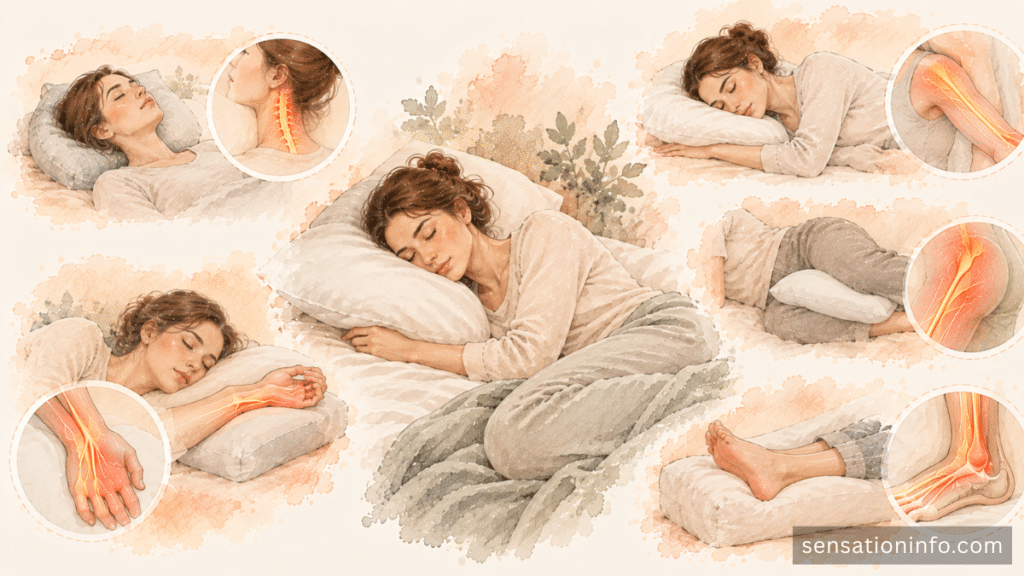
Change position when the sensation begins and move the limb gently without forcing a joint. Avoid sleeping directly on an arm, keeping the wrist sharply bent, or resting the elbow on a hard surface.
Use a comfortable pillow that supports the neck without forcing it into an extreme angle. Keep bedding from compressing the feet and avoid tight clothing or straps during sleep.
Do not apply extreme heat to a numb limb, perform forceful stretching, or use a sharp object to test sensation. If symptoms occur after an injury, avoid manipulating the neck or back.
How is recurrent waking tingling evaluated?
A clinician will ask which body parts are affected, how long the symptoms last, whether they resolve after movement, and whether they occur every night. They may ask about sleep position, work, exercise, diabetes, diet, alcohol, medicines, injuries, neck or back pain, weakness, balance, and bladder or bowel function.
The examination may assess strength, sensation, reflexes, coordination, walking, pulses, skin, joints, neck movement, and nerve distribution. Testing may include glucose, vitamin levels, thyroid function, electrolytes, kidney function, nerve studies, electromyography, or imaging when appropriate.
Sudden neurologic symptoms require immediate assessment rather than a routine outpatient test.
When should you see a doctor?
Arrange care if pins and needles occur most mornings, persist after movement, become more frequent, affect sleep, spread, or occur with numbness, pain, weakness, falls, or loss of grip. Seek prompt care after an injury or when a limb is swollen, cold, pale, blue, or difficult to move.
Call 112 in India or 911 internationally for sudden weakness, facial drooping, speech trouble, severe dizziness, a sudden severe headache, breathing difficulty, a seizure, loss of consciousness, major trauma, or new groin numbness with bladder or bowel changes.
Key Takeaways
1.Pins and needles on waking often follow temporary pressure on a nerve during sleep.
2.Symptoms that resolve after movement are less concerning when they are occasional and do not cause weakness.
3.Recurrent, persistent, spreading, or function limiting symptoms may involve nerve compression, neuropathy, diabetes, vitamin problems, or circulation.
4.Call 112 in India or 911 internationally for sudden neurologic symptoms, severe breathing or chest symptoms, major trauma, or a cold or discolored limb.
5.Keep a symptom record and arrange evaluation when the pattern continues.
Frequently Asked Questions
A sleep position can place pressure on a nerve in the arm, wrist, elbow, leg, ankle, or hip. The sensation often improves after changing position and moving. Recurrent, persistent, or function limiting symptoms need evaluation.
Occasional symptoms that resolve fully after movement are often less concerning. If the sensation lasts longer than usual, becomes more frequent, remains after movement, or occurs with weakness, arrange medical care
Yes. Body weight or a bent elbow, wrist, or shoulder can temporarily compress a nerve. Avoid placing pressure on the same area and seek care if symptoms persist or hand function changes
Carpal tunnel syndrome can cause tingling or numbness in the thumb, index, middle, and part of the ring finger, often at night or on waking. Persistent symptoms or weak grip need assessment.
Doctor’s Recommendation
The key distinction is whether the sensation resolves completely after changing position or is becoming a recurring neurologic symptom. Readers can compare hand and foot patterns using the foot numbness article, but recurrent symptoms in several areas should be assessed for a broader nerve or metabolic cause.
Conclusion
Pins and needles when waking up are often related to sleep position and temporary nerve pressure. Recurrent or persistent symptoms may involve wrist or elbow compression, the neck or back, peripheral neuropathy, diabetes, vitamin or metabolic problems, or circulation. Change positions safely, protect numb skin, and arrange medical care when the pattern continues. Call 112 in India or 911 internationally for emergency warning signs.
References
Mayo Clinic. Numbness: Causes and Definition.
Mayo Clinic News Network. When to Worry About Numbness and Tingling.
Cleveland Clinic. Numbness and Tingling: Causes and Treatment.
National Library of Medicine. Numbness and Tingling. MedlinePlus Medical Encyclopedia.
National Institute of Neurological Disorders and Stroke. Peripheral Neuropathy.