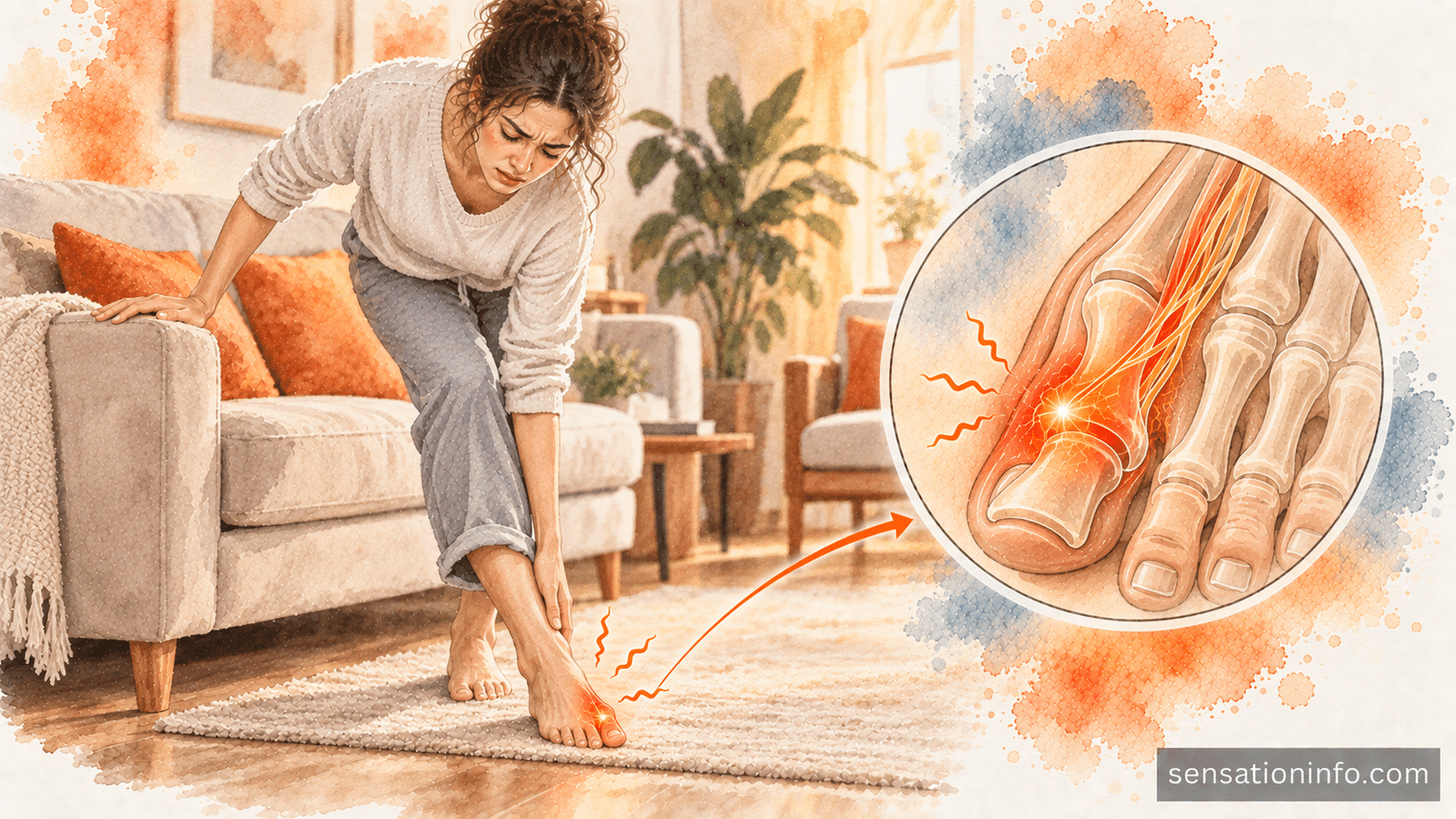

Cubital tunnel syndrome occurs when the ulnar nerve is irritated or compressed at the inside of the elbow. It commonly causes tingling or numbness in the little finger and half of the ring finger, aching near the elbow, hand weakness, or clumsiness. Repeated elbow bending, leaning on the elbow, injury, arthritis, diabetes, and thyroid disease can contribute.
Which fingers does the ulnar nerve affect?
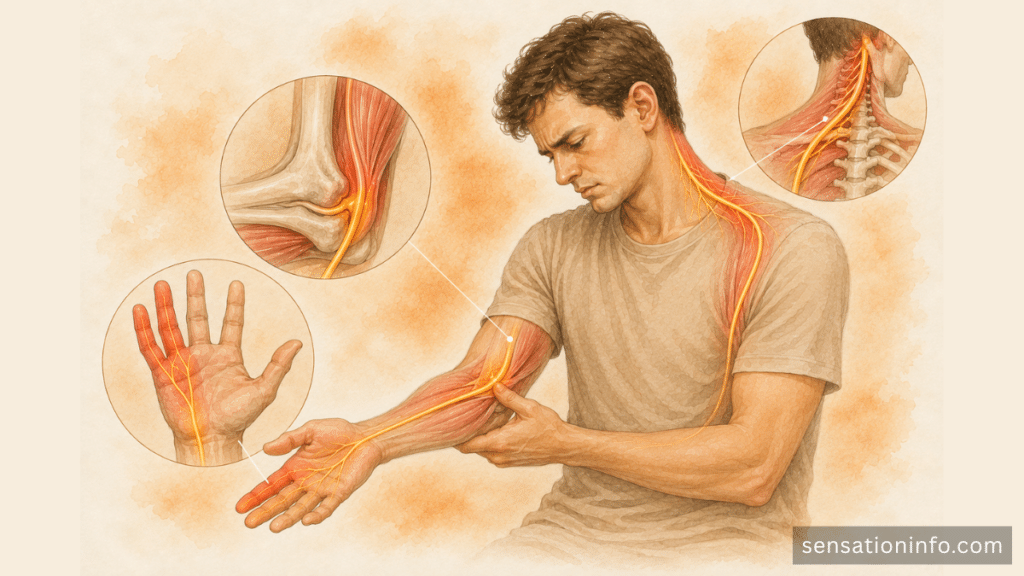
The ulnar nerve travels behind the inside of the elbow and continues into the forearm and hand. It helps control some hand muscles and carries sensation from the little finger and part of the ring finger.
Cubital tunnel syndrome may cause:
•Tingling or pins and needles in the little finger and ring finger.
•Numbness on the little finger side of the hand.
•Aching or burning pain at the inside of the elbow or forearm.
•Symptoms that worsen when the elbow stays bent.
•A weaker grip or difficulty with fine hand movements.
•Dropping objects or clumsiness with buttons, writing, tools, or mobile phone use.
•Muscle wasting in the hand when nerve compression is advanced.
The symptom pattern may overlap with a pinched nerve in the neck or another hand condition. A clinician can identify the likely site through examination and testing.
What symptoms should prompt earlier care?
Arrange prompt medical care if tingling or numbness and weakness occur together, become persistent, or begin affecting hand grip and motor control. Do not wait if the hand is becoming visibly weaker or the muscles look smaller.
Call 112 in India or 911 internationally, or go to the nearest emergency department, for sudden arm or hand weakness with facial drooping, trouble speaking, confusion, severe dizziness, chest pressure, breathing difficulty, or symptoms after major trauma.
A gradually worsening cubital tunnel problem is usually not an emergency, but prolonged nerve compression can lead to lasting weakness and muscle wasting. Early assessment supports better treatment decisions.
Why does bending the elbow make it worse?
The space around the ulnar nerve becomes tighter when the elbow is bent. Keeping the elbow flexed during sleep, holding a phone, driving, reading, or working at a desk can increase pressure or stretch on the nerve.
Leaning on the inner elbow against a desk, chair arm, or vehicle window can also irritate the nerve. Many individuals specifically experience numbness and tingling in hands at night because the elbow remains fully bent for hours during sleep.
Reducing pressure and avoiding prolonged bending can help, but persistent symptoms still need evaluation.
What causes cubital tunnel syndrome?
Repeated elbow bending
Frequent bending during work, phone use, driving, exercise, or sleep can repeatedly stress the ulnar nerve. Jobs involving prolonged elbow flexion or pressure may increase the risk.
Use position changes and regular breaks. If symptoms continue despite these changes, arrange a clinical evaluation.
Pressure on the inside of the elbow
Leaning on the elbow can compress the nerve. Armrests, hard desks, narrow surfaces, and sleeping positions may create repeated pressure.
A padded surface may reduce contact, but padding should not force the elbow into a more bent position. Avoid resting the inner elbow on hard surfaces.
Previous injury or altered elbow shape
A fracture, dislocation, arthritis, bone spur, or swelling can narrow the tunnel or change the path of the nerve. A history of elbow injury is important even if the injury happened years earlier.
New symptoms after a fall or direct impact need assessment, especially when movement is limited or the hand is weak.
Nerve instability
In some people, the ulnar nerve moves out of its usual groove when the elbow bends. This can create snapping, irritation, or repeated friction.
A clinician may assess the nerve while the elbow moves. Do not repeatedly bend the elbow to reproduce the snapping sensation.
Diabetes and thyroid disease
Systemic conditions such as diabetes and thyroid disease make nerves significantly more susceptible to compression damage. Unmanaged blood sugar can lead to diabetic neuropathy symptoms, which frequently compounds focal entrapment at the elbow. Tell your clinician about blood sugar problems, thyroid treatment, numbness in the feet, or symptoms in both arms.
Cysts, swelling, and other structural causes
A cyst, fluid collection, scar tissue, or other change near the elbow can place pressure on the ulnar nerve. Swelling after injury or repetitive use may temporarily narrow the available space.
Imaging may be considered when the examination suggests a structural problem.
How is cubital tunnel different from other nerve conditions?
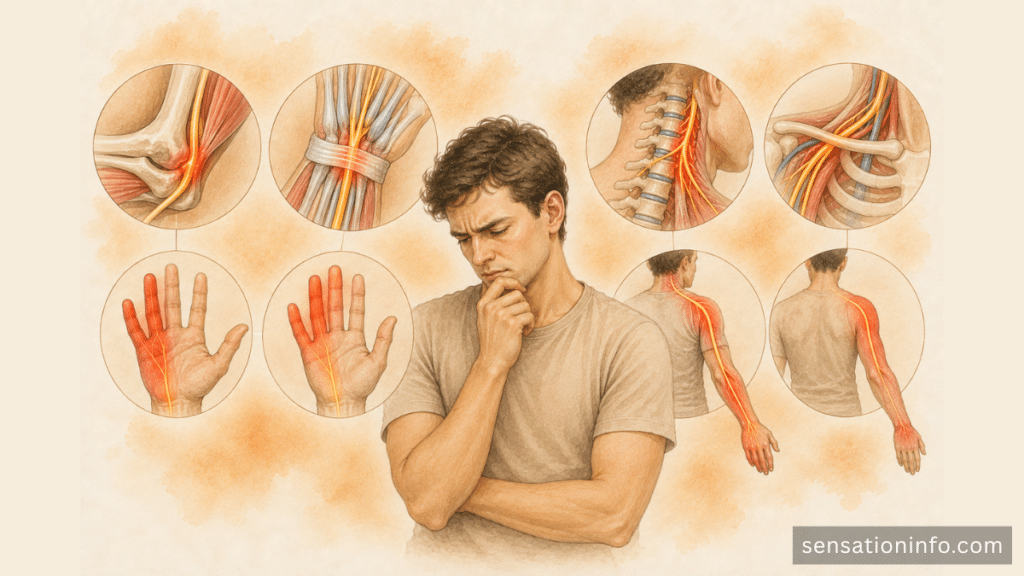
| Condition | Main symptom distribution | Common clue |
| Cubital tunnel syndrome | Little finger and ring finger, inner forearm, and inside of the elbow | Worse with elbow bending or pressure |
| Carpal tunnel syndrome | Thumb, index finger, middle finger, and part of the ring finger | Symptoms centered at the wrist or hand |
| Cervical radiculopathy | Neck, shoulder, arm, or hand in a nerve root pattern | Neck movement may change symptoms |
| Thoracic outlet syndrome | Neck, shoulder, arm, or hand with possible swelling or color change | Symptoms may change when the arm is raised |
| General peripheral neuropathy | Often both feet or hands, though patterns vary | More than one nerve or body region is involved |
These conditions can occur together. The location of numbness alone does not confirm which nerve is affected.
What happens if cubital tunnel syndrome is ignored?
Mild intermittent symptoms may improve when pressure and elbow bending are reduced. Persistent compression can lead to ongoing numbness, weaker grip, reduced coordination, and wasting of hand muscles.
Nerves recover slowly. Treatment may be less effective after severe or prolonged nerve damage. Make an appointment when symptoms interfere with sleep, work, driving, hand use, or daily tasks.
How is cubital tunnel syndrome diagnosed?
A clinician will ask about the fingers involved, timing, elbow position, night symptoms, work activities, injuries, hand function, diabetes, thyroid disease, and other neurologic symptoms.
The examination may check sensation, grip, finger spreading, pinch strength, hand muscles, reflexes, neck movement, and the stability of the ulnar nerve during elbow movement. The clinician may gently tap near the nerve to look for symptom reproduction, but a home tapping test cannot diagnose the condition.
Diagnostic testing often utilizes electromyography and a nerve conduction study to confirm the exact location of ulnar entrapment, alongside X-rays, ultrasound, MRI, or blood tests for metabolic issues.
What can you do before treatment?
Avoid leaning on the inner elbow and reduce long periods with the elbow sharply bent. Change positions during phone use, reading, driving, and desk work. Keep the elbow more open during sleep if a clinician or therapist recommends it.
Use a comfortable workstation and avoid tight straps or pressure against the elbow. Do not perform repeated nerve testing at home, forcefully stretch the nerve, or continue an activity that causes increasing numbness or weakness.
Protect a numb hand from heat, cuts, and pressure. Arrange medical care if symptoms persist or hand function changes.
What nonsurgical treatments are used?
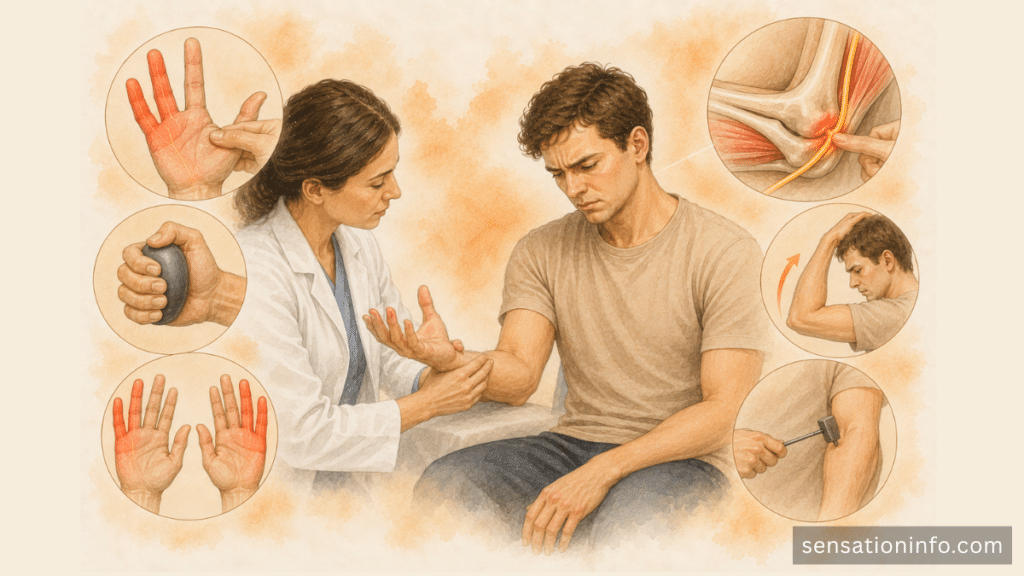
Nonsurgical treatment often begins with reducing nerve pressure and prolonged elbow bending. A clinician may recommend a night splint, a padded support, hand therapy, activity changes, or nerve gliding exercises performed with professional guidance.
Pain treatment may be considered based on your health history. Some anti inflammatory medicines are not suitable for people with kidney disease, stomach ulcers, blood thinners, pregnancy, or other conditions, so ask a clinician or pharmacist before using them.
Nonsurgical treatment is more useful when started before severe weakness or muscle wasting develops.
When is surgery considered?
Surgery may be considered when symptoms do not improve with appropriate nonsurgical care, nerve compression is severe, or weakness and muscle wasting are present. Procedures may release the tunnel, move the nerve to a less pressured position, or change nearby bone depending on the anatomy.
The decision depends on the examination, test results, symptom duration, and functional effect. Surgery does not guarantee that every symptom will disappear, especially when nerve damage is advanced.
Recovery may take months because nerves heal slowly. Hand therapy may be recommended after a procedure.
How can you reduce future elbow nerve pressure?
Avoid resting the inner elbow on hard surfaces. Take breaks from tasks that keep the elbow bent. Adjust armrests, desk height, and phone habits so the elbow is not compressed for long periods.
If nighttime bending triggers symptoms, ask a clinician or therapist about a safe sleep support. Manage diabetes and thyroid disease according to your treatment plan. Do not use a tight brace or splint without professional guidance.
When should you see a clinician?
Make an appointment if tingling or numbness in the ring and little fingers persists, recurs at night, affects grip, causes clumsiness, or does not improve after reducing elbow pressure. Seek prompt care for visible hand muscle loss, worsening weakness, severe pain, or symptoms after an injury.
Call 112 in India or 911 internationally for sudden weakness with facial drooping, speech trouble, confusion, severe dizziness, chest pressure, breathing difficulty, or major trauma.
Key Takeaways
1.Cubital tunnel syndrome is ulnar nerve compression or irritation at the inside of the elbow.
2.Tingling and numbness usually affect the little finger, part of the ring finger, and the little finger side of the hand.
3.Elbow bending, leaning on the elbow, injury, arthritis, diabetes, and thyroid disease can contribute.
4.Persistent compression may cause hand weakness, clumsiness, and muscle wasting.
5.Call 112 in India or 911 internationally for sudden weakness with speech, facial, breathing, chest, or consciousness changes.
Frequently Asked Questions
Cubital tunnel syndrome occurs when the ulnar nerve is irritated or compressed at the inside of the elbow. It may cause tingling, numbness, burning pain, weakness, or clumsiness in the little finger side of the hand.
Symptoms commonly affect the little finger and part of the ring finger, along with the little finger side of the hand. Aching may occur at the inside of the elbow or forearm.
The elbow may remain bent during sleep, which can increase pressure or stretch on the ulnar nerve. A clinician may recommend a safe way to keep the elbow from staying sharply bent.
Call 112 in India or 911 internationally for sudden weakness with facial drooping, speech trouble, confusion, severe dizziness, chest pressure, breathing difficulty, loss of consciousness, or major trauma. Gradual hand weakness still needs prompt clinical evaluation.
Doctor’s Recommendation
Cubital tunnel syndrome should be assessed by the symptom distribution and hand function, not by tingling alone. A clinician may need to distinguish ulnar nerve compression at the elbow from cervical radiculopathy, carpal tunnel syndrome, or a broader neuropathy. When symptoms affect more than one nerve or body area, the existing guide to neuropathy and persistent nerve symptoms is a useful related resource.
Conclusion
Cubital tunnel syndrome can cause tingling, numbness, burning, weakness, and clumsiness in the little finger side of the hand. Prolonged elbow bending and pressure are common triggers, but injury, arthritis, diabetes, thyroid disease, and structural changes can also contribute. Reduce elbow pressure, arrange evaluation for persistent symptoms, and seek prompt care if weakness or muscle wasting develops. Call 112 in India or 911 internationally for sudden emergency symptoms.
References
- Cleveland Clinic. Cubital Tunnel Syndrome: Causes, Symptoms and Treatment.
- Johns Hopkins Medicine. Cubital Tunnel Syndrome.
- American Academy of Orthopaedic Surgeons. Ulnar Nerve Entrapment at the Elbow.
- National Library of Medicine. Numbness and Tingling. MedlinePlus Medical Encyclopedia.
- Mayo Clinic. Peripheral Neuropathy: Symptoms and Causes.