
Numbness in saddle area, clinically known as saddle anesthesia, refers to a loss of sensation in the buttocks, perineum, and inner thighs. This specific symptom requires immediate medical evaluation because it is the primary red flag for Cauda Equina Syndrome, a severe spinal nerve compression that can cause permanent paralysis if left untreated. While temporary nerve compression from cycling or sitting can cause similar sensations, you must rule out a medical emergency first.
If your numbness is accompanied by a tingling in the tailbone area, it is critical to monitor for the five warning signs detailed below.
What is Saddle Anesthesia?
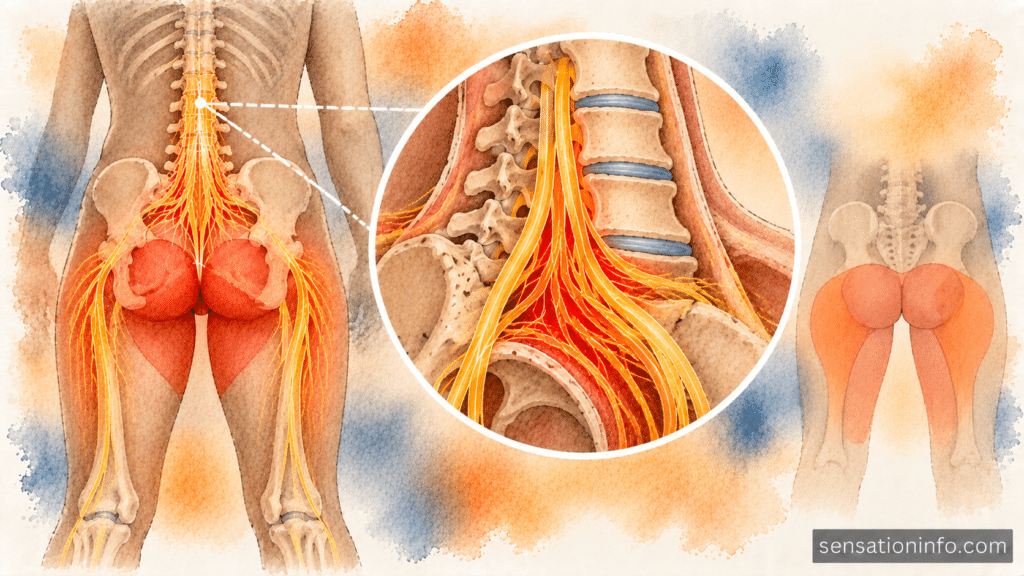
Saddle anesthesia is a neurological symptom characterized by a decreased or complete loss of feeling in the regions of the body that make contact with a saddle. The sensation can range from a slight prickling feeling to absolute numbness where you cannot feel toilet paper when wiping.
This sensory deficit occurs when the nerve roots at the lower end of the spinal cord become severely compressed or damaged.
- Affected Zones: Complete or partial loss of feeling in the groin, buttocks, genitals, perineum, and upper inner thighs.
- The Saddle Test: The numbness maps perfectly to the specific areas of your body that would touch a saddle if you were riding a horse.
- Underlying Cause: Severe compression of the cauda equina, the bundle of nerve roots located at the base of the lumbar spine.
- Sensory Impact: Patients experience a prickling sensation, a heavy dead feeling, or a complete inability to feel temperature and physical touch.
5 Critical Warning Signs of Cauda Equina Syndrome
Cauda Equina Syndrome is a surgical emergency. If the nerve roots remain compressed for too long, the damage becomes irreversible, leaving patients with permanent paralysis and loss of pelvic organ function. Seek emergency medical care if your saddle numbness occurs with any of these five symptoms.
1. Loss of Bowel or Bladder Control
Changes in urinary or bowel function are the most critical red flags. The nerves controlling the sphincter muscles are highly sensitive to compression, and any alteration in how you use the bathroom warrants an immediate trip to the emergency room.
- The Symptom: Sudden inability to urinate (retention) or unexpected leaking of urine or feces (incontinence).
- The Cause: Massive compression severs the motor signals that control your pelvic sphincter muscles.
- The Urgency: This is the absolute most critical warning sign of a spinal emergency requiring immediate hospital admission.
2. Severe Lower Back Pain
While back pain is common, the pain associated with Cauda Equina Syndrome is typically sudden, intensely severe, and localized in the lumbar region. This pain originates from a massive herniated disc, a spinal tumor, or severe trauma compressing the nerve bundle.
- The Symptom: Sudden, agonizing pain localized deep in the lower back.
- The Cause: A mechanical obstruction physically crushing the central nerve bundle in the spinal canal.
- The Urgency: This is mechanical nerve pain that will not respond to rest or over the counter pain medications.
3. Progressive Leg Weakness
Nerve compression in the lower spine disrupts the motor signals traveling to your leg muscles. You might experience sudden stumbling, difficulty lifting from a chair, or foot drop, which causes the front of your foot to drag on the floor.
- The Symptom: Sudden stumbling, difficulty standing up from a seated position, or an inability to lift the foot.
- The Cause: The motor signals traveling from your lower spine to your leg muscles are actively failing.
- The Urgency: If you cannot support your own body weight, the nerve damage is advancing rapidly toward paralysis.
4. Sudden Sexual Dysfunction
The same nerve roots that provide sensation to the perineum and control the bladder also govern sexual function. Because these nerves are located in the exact region affected by saddle anesthesia, sexual dysfunction often develops simultaneously with the numbness.
- The Symptom: An abrupt onset of erectile dysfunction in men or total loss of genital sensation in women.
- The Cause: The sacral nerves that supply sensation to the perineum are the exact same nerves that govern sexual function.
- The Urgency: Sexual dysfunction almost always manifests immediately alongside saddle anesthesia during a spinal compression event.
5. Bilateral Sciatica Symptoms
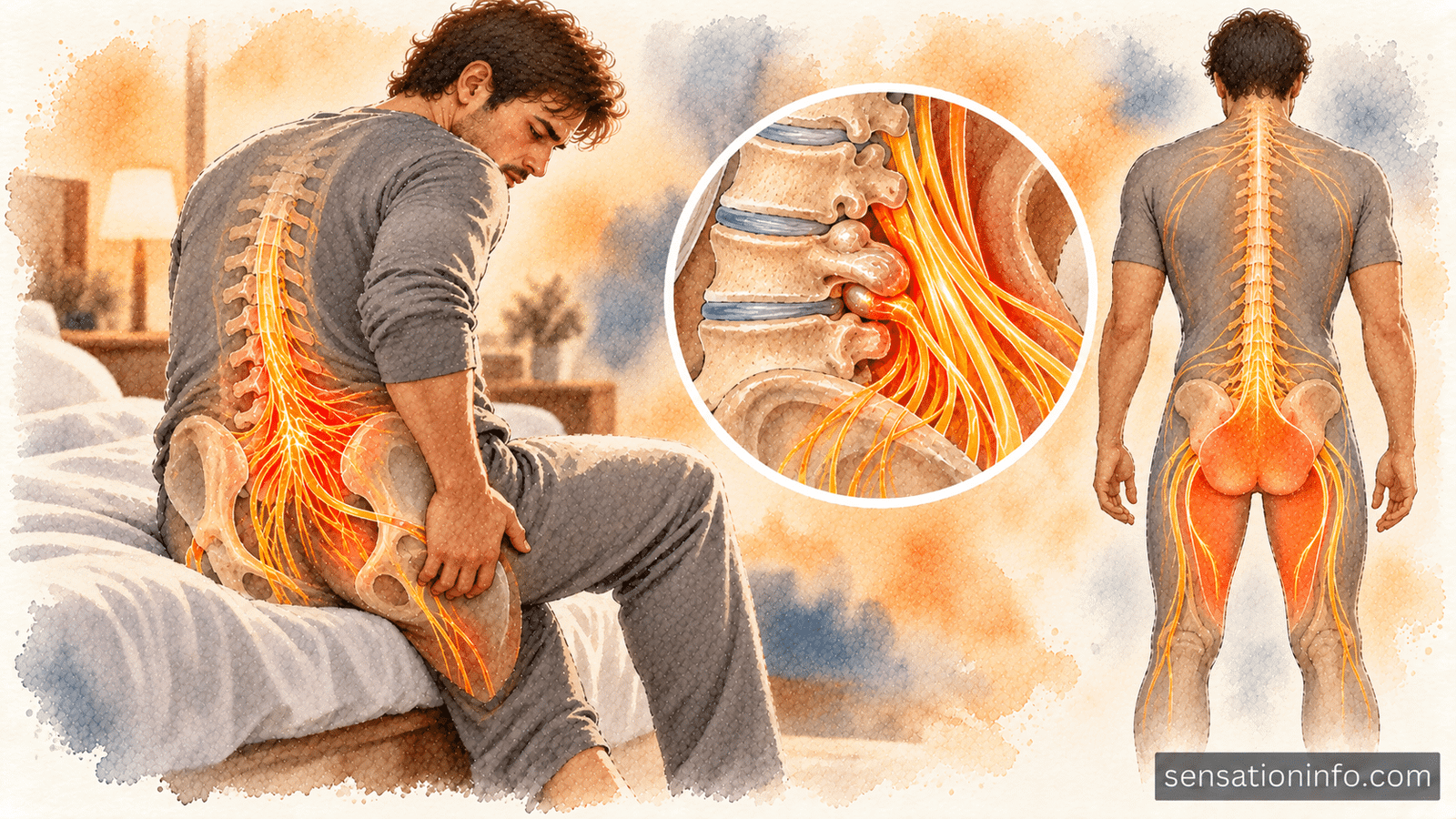
Standard sciatica usually affects only one side of the body. When a central disc herniation compresses the entire cauda equina bundle, symptoms often manifest in both legs simultaneously.
- The Symptom: Sharp, burning pain or severe weakness radiating down the back of both thighs and into both calves.
- The Cause: A central obstruction in the spinal canal compresses the entire nerve bundle at once.
- The Urgency: If you need to relieve sciatica tingling on both sides of your body at the same time, you must be screened for Cauda Equina Syndrome immediately.
Non-Emergency Causes of Saddle Area Numbness
If emergency room physicians rule out spinal cord compression, several lifestyle and structural issues can cause localized nerve irritation in the pelvic region.
Pudendal Nerve Entrapment (Cyclist Syndrome)
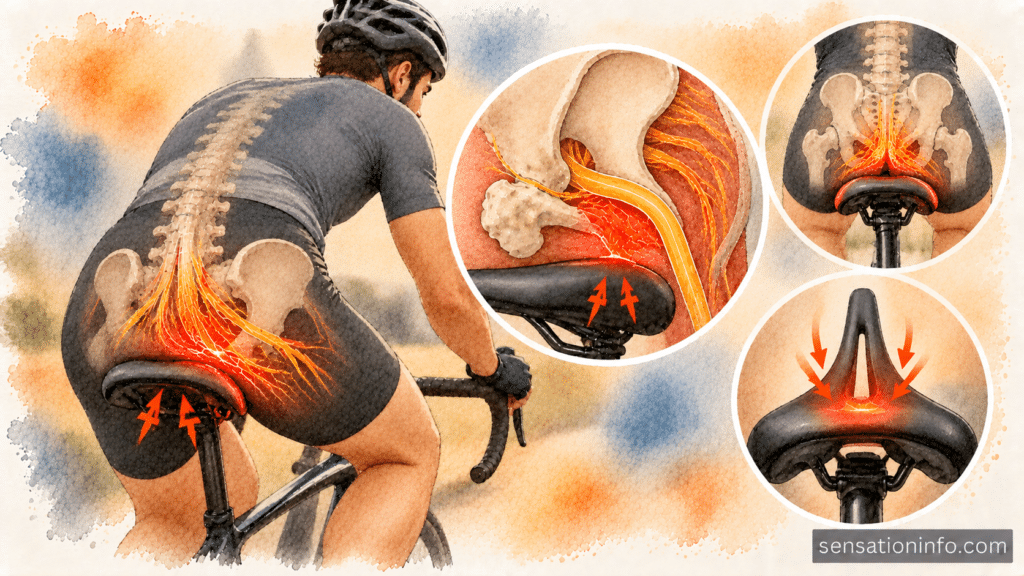
The pudendal nerve runs through the pelvic region and supplies sensation to the genitals and perineum. Prolonged pressure on this nerve can cause severe numbness and intense tingling in the groin.
- The Trigger: Spending hours sitting on narrow, hard bicycle seats.
- The Mechanism: Constant physical pressure crushes the pudendal nerve against the pelvic bone and restricts blood flow.
- The Symptoms: Chronic saddle anesthesia and localized pelvic pain.
- The Fix: Switching to a split nose saddle and taking frequent riding breaks.
Prolonged Sitting and Posture Issues
Sitting on hard surfaces for extended periods without taking breaks can compress the gluteal and pelvic nerves. Poor posture places excess weight on the perineum rather than the sit bones.
- The Trigger: Sitting on hard surfaces for extended periods without ergonomic support.
- The Mechanism: Poor posture places your entire upper body weight directly on the perineum instead of your ischial tuberosities.
- The Symptoms: Transient loss of feeling that resolves shortly after standing up.
- The Fix: Ergonomic seating and standing breaks will quickly resolve numbness in legs from sitting and associated saddle tingling.
Lumbar Spinal Stenosis
Spinal stenosis is the gradual narrowing of the spinal canal, typically caused by osteoarthritis and bone spurs. As the space narrows, it can slowly pinch the nerve roots over months or years.
- The Trigger: Osteoarthritis and bone spurs associated with aging.
- The Mechanism: Gradual degenerative changes slowly narrow the spinal canal, pinching the nerve roots.
- The Symptoms: Numbness that worsens when walking but immediately improves when you sit down or bend forward.
- The Fix: Physical therapy, anti inflammatory medications, and targeted spinal injections.
How Doctors Diagnose Saddle Numbness
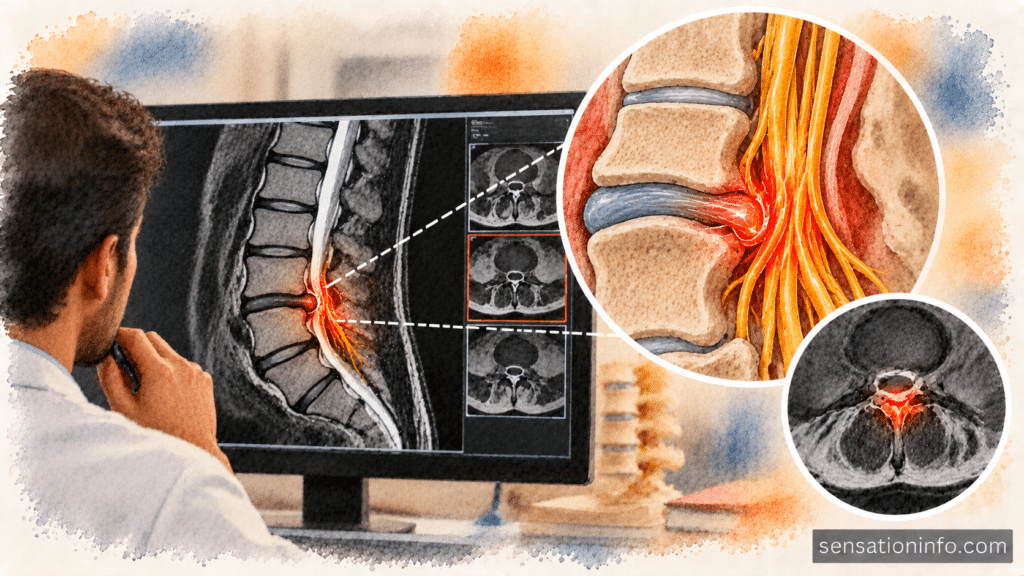
Accurate diagnosis requires immediate clinical evaluation to separate life threatening nerve compression from benign nerve irritation.
- Magnetic Resonance Imaging (MRI): The definitive gold standard test that provides high resolution images of the spinal cord to locate the exact point of compression.
- Digital Rectal Examination (DRE): A mandatory clinical test to check for diminished anal sphincter tone, which proves sacral nerve compromise.
- Sensory Mapping: Using a pinprick test to map the exact geographical borders of the numbness on the skin.
- Reflex Testing: Striking the knees and ankles to check for delayed or absent motor responses in the lower extremities.
Treatment Options and Emergency Surgery
Treatment depends entirely on the underlying cause. If a doctor diagnoses Cauda Equina Syndrome, emergency lumbar decompression surgery is required.
- Emergency Lumbar Decompression: Mandatory for Cauda Equina Syndrome. Surgeons perform a laminectomy or discectomy within 24 to 48 hours to remove the bone or disc crushing the nerves.
- Pelvic Floor Physical Therapy: The primary conservative treatment for pudendal nerve entrapment to relax the surrounding musculature.
- Corticosteroid Injections: Administered directly into the lower spine or pelvic region to rapidly decrease severe nerve inflammation for non emergency cases.
Key Takeaways for Saddle Area Numbness
- It is the primary clinical warning sign of Cauda Equina Syndrome.
- Immediate hospital evaluation is required if you experience any changes in bowel or bladder control.
- The “saddle area” covers the groin, buttocks, genitals, and inner thighs.
- Pudendal nerve entrapment from cycling is the most common non emergency cause.
- An MRI of the lumbar spine is the definitive diagnostic tool.
Frequently Asked Questions
No. A urinary tract infection causes burning and pain during urination, but it does not cause neurological numbness. If you experience actual sensory loss in the saddle area, it is a mechanical nerve compression issue, not an infection.
Numbness caused by cycling usually resolves within a few hours after you stop riding and relieve the physical pressure on the pudendal nerve. If the numbness becomes chronic, consult a physician and adjust your bicycle seat ergonomics.
Anxiety can trigger generalized tingling or a pins and needles sensation due to hyperventilation. It does not cause localized, true saddle anesthesia. Complete numbness in this specific region is a mechanical nerve issue.
Doctor’s Recommendation
If your saddle numbness is accompanied by a broader loss of feeling in your extremities, it is vital to understand all potential neurological triggers. I strongly recommend reading our guide on loss of sensation causes, types, and recovery to help you and your healthcare provider build a complete diagnostic picture.
References
- National Institute of Neurological Disorders and Stroke (NINDS). “Cauda Equina Syndrome Information Page.”
- American Academy of Orthopaedic Surgeons (AAOS). “Cauda Equina Syndrome.”
- National Institutes of Health (NIH) StatPearls. “Cauda Equina Syndrome.”
- Mayo Clinic. “Spinal Stenosis – Symptoms and causes.”