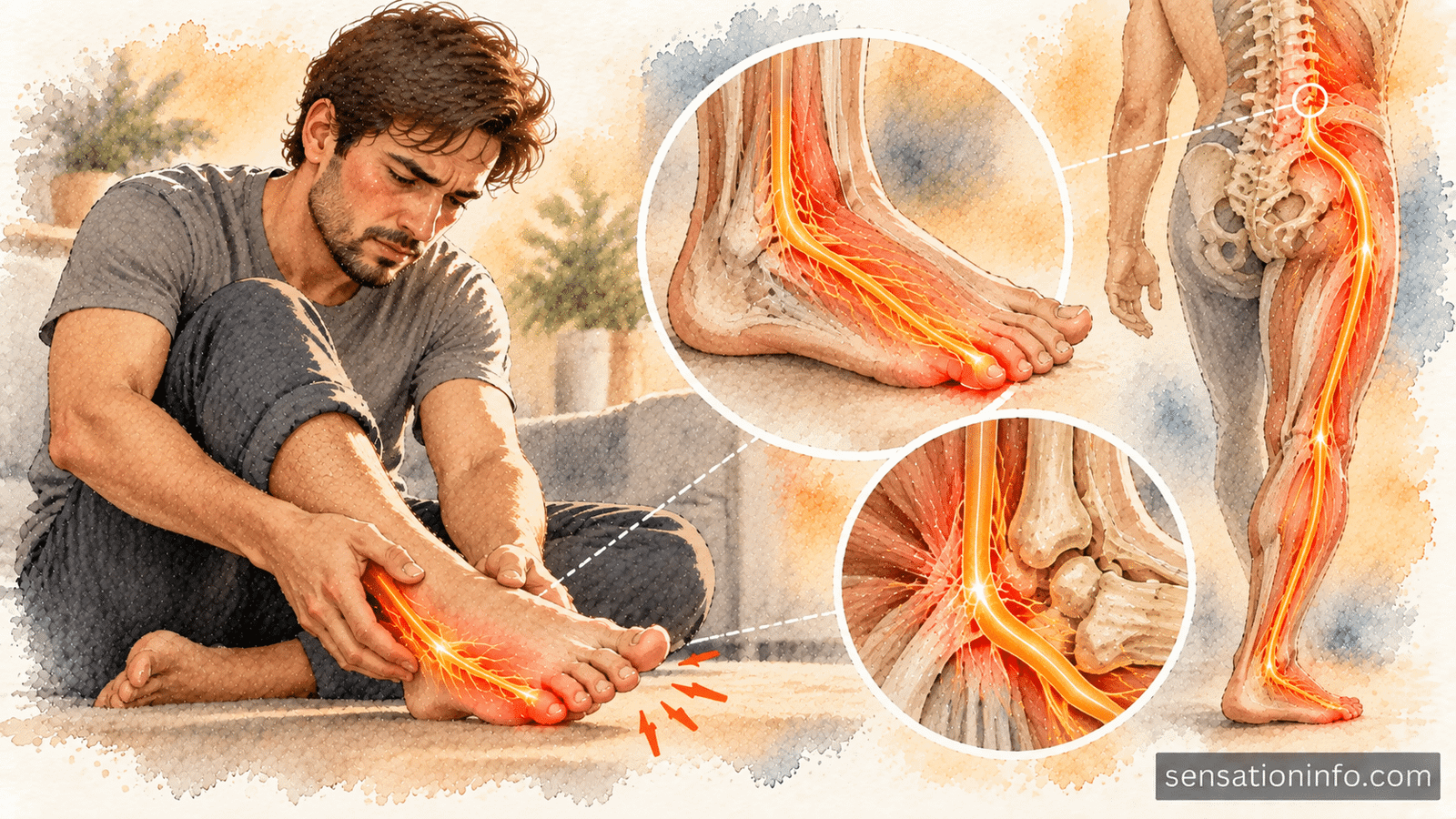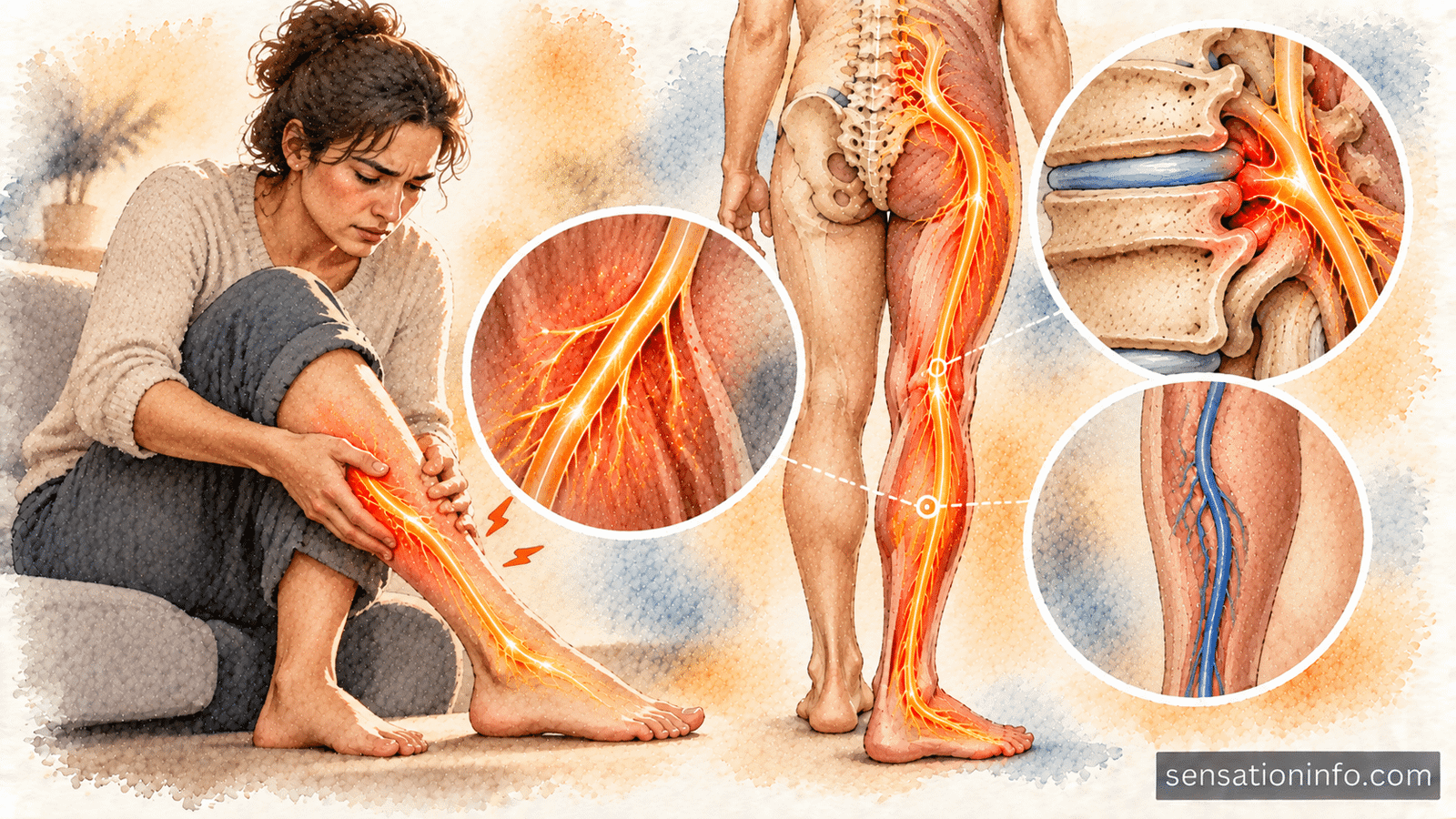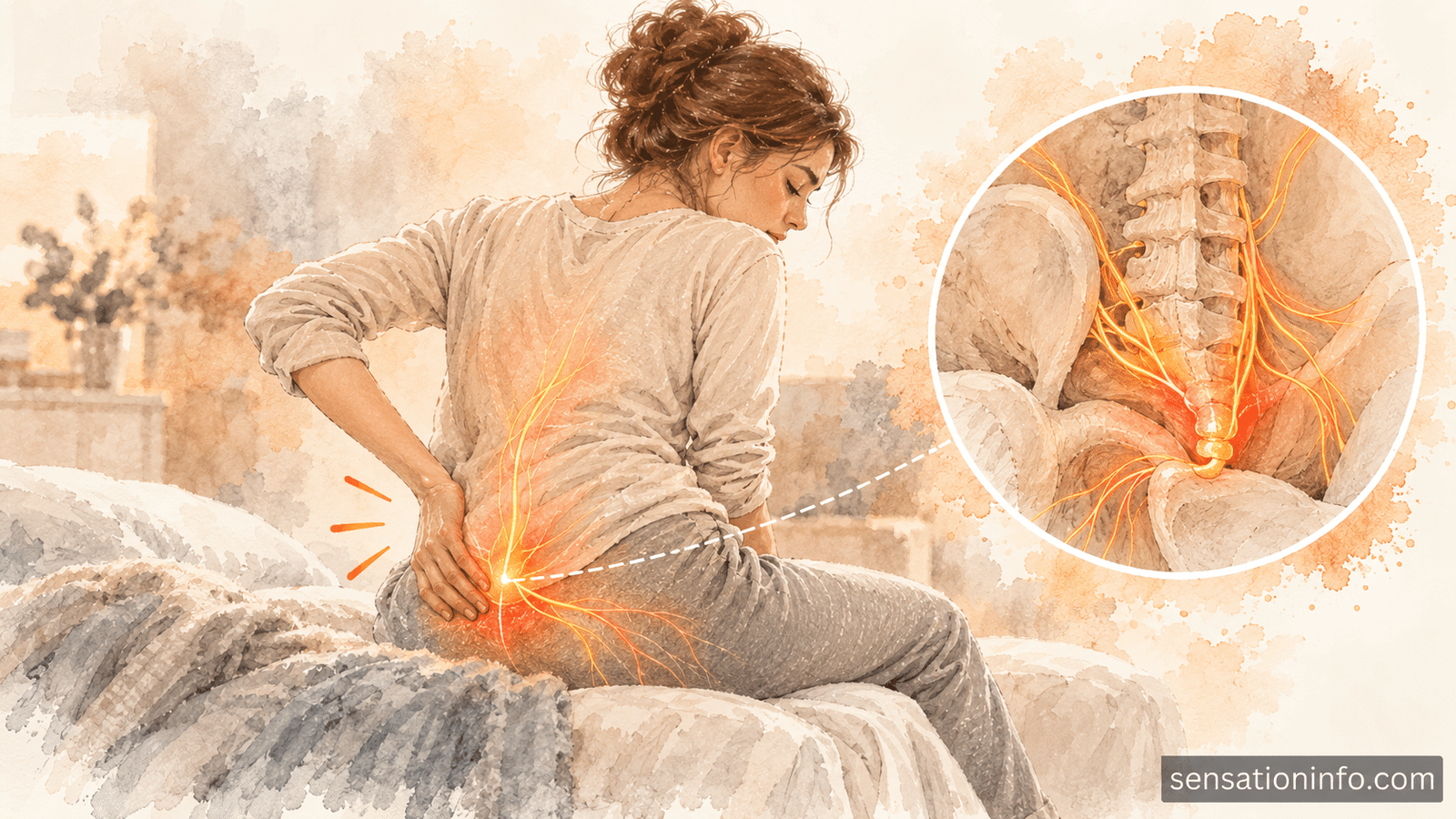

Feeling a sudden buzzing or prickling sensation at the very base of your spine can easily make you worry about your back health. Tingling in the tailbone area is most often a sign that prolonged sitting has compressed the sensitive nerves wrapping around your lower spine.
When you sit with poor posture, you shift your body weight away from your strong pelvic bones and place it directly onto your coccyx, causing localized nerve irritation. While experiencing this kind of uncomfortable tingling in your lower back and spine can feel alarming, simply standing up and walking around usually restores normal blood flow and stops the buzzing sensation within a few minutes.
What Does Tailbone Tingling Feel Like
People describe nerve sensations in the lower spine in many different ways. Because the tailbone area is packed with dense nerve endings a compressed nerve can send confusing and erratic signals to your brain. You might notice a light vibrating feeling similar to a phone buzzing in your pocket. Other people experience a crawling sensation under the skin or a sharp electric prickling feeling.
Tingling in the tailbone usually occurs because sitting for a long time physically squashes the tiny nerves wrapping around the lower spine. When you finally stand up you might feel a sudden rush of warmth or an intense prickling as the blood flow returns and the nerve pressure releases. This medical phenomenon is known as paresthesia and it is the exact same process that happens when your foot falls asleep. While it feels uncomfortable this temporary buzzing is your nervous system waking back up.
When to See a Doctor Immediately
Most tailbone tingling is completely harmless and relates entirely to your daily posture. However the nerves in your lower spine control critical bodily functions including your bladder and bowel. If a major nerve bundle becomes severely compressed it can cause permanent damage without swift medical treatment.
Seek immediate emergency medical care if your tailbone tingling is accompanied by any of these major warning signs:
- Sudden loss of bowel or bladder control
- Inability to urinate or feeling like you cannot empty your bladder
- Numbness in the saddle area which includes your inner thighs groin and genitals
- Severe new weakness in one or both of your legs
- Sudden and severe pain radiating down your legs
These specific symptoms are red flags for cauda equina syndrome. This is a rare medical emergency where the nerve roots at the very bottom of the spinal cord become severely compressed. Immediate hospital evaluation is required to prevent permanent nerve damage and preserve your bodily functions.
The Anatomy of Your Lower Spine
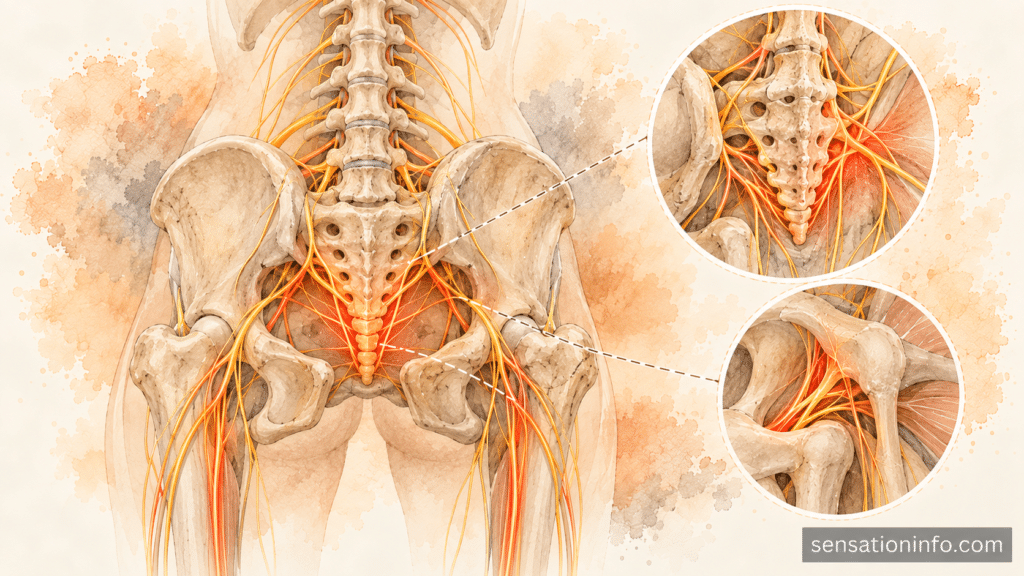
Understanding the basic anatomy of your lower spine helps explain why this specific area is so prone to nerve irritation. Your tailbone or coccyx consists of three to five small fused vertebrae sitting at the very bottom of your sacrum. The sacrum is the large triangular bone located just above the cleft of your buttocks.
A complex network of nerves called the sacral plexus exits the spinal cord through small holes in the sacrum. These nerves travel directly past the coccyx to supply sensation and movement to your pelvic floor genitals and legs. Because there is very little fat or muscle padding directly over the tailbone these nerves are incredibly vulnerable to external physical pressure.
Common Causes of Tingling in the Tailbone
If you are experiencing a buzzing sensation in your lower spine the cause usually involves physical compression of a nearby nerve.
Prolonged Sitting and Poor Posture
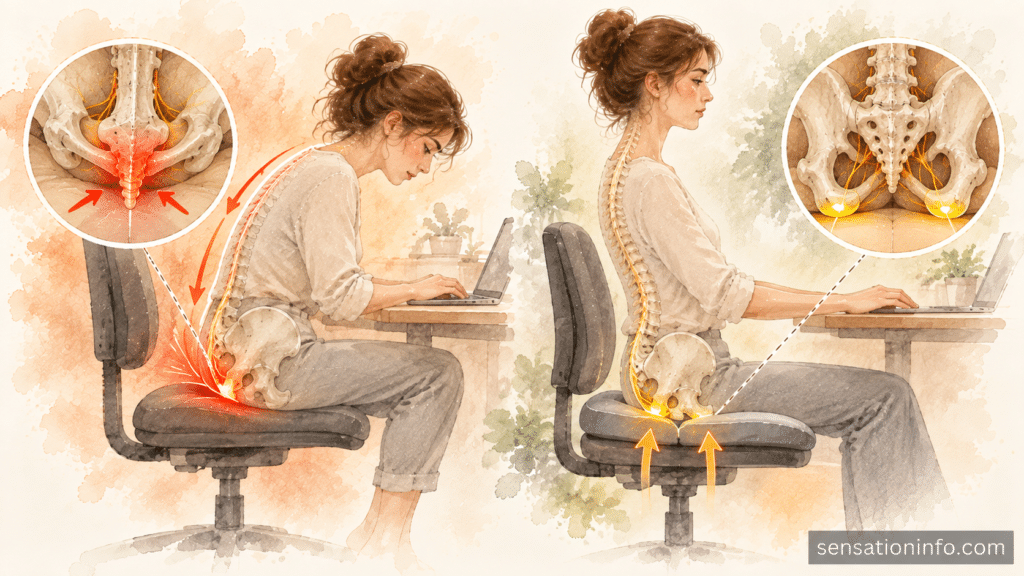
The absolute most frequent cause of a tingling tailbone is the way you sit. Your body is biologically designed to rest on your ischial tuberosities. These are the large and sturdy sit bones located at the bottom of your pelvis. When you slouch backward on a soft couch or lean far back in an office chair your pelvis tilts backward. This tilt transfers the weight of your upper body directly onto your fragile tailbone. Hours of this direct pressure will eventually cut off blood circulation to the surrounding tissue and nerves. This exact mechanism is also a primary reason why people experience feeling numbness in your legs after sitting for prolonged periods.
Pudendal Nerve Irritation
The pudendal nerve is a major nerve pathway that runs from your lower spine directly through your pelvic floor. It supplies essential sensation to your buttocks and genital area. Sitting on hard flat surfaces for a long time or participating in rigorous sports like cycling can easily compress this nerve against your pelvic bones. When the pudendal nerve is irritated you may feel a deep tingling or buzzing around your tailbone. If the irritation continues you might notice a tingling sensation spreading into the groin area.
Sacral Nerve Compression
If you suffer a fall and bruise your tailbone the resulting tissue inflammation can press against the sacral nerve roots exiting your spine. Furthermore spinal issues slightly higher up can refer nerve sensations downward. A herniated disc in the lower lumbar spine can push against descending nerves causing a widespread tingling in your lower back that radiates down toward the coccyx.
Sciatica and Lumbar Radiculopathy
While sciatica is most famous for causing a sharp pain that shoots down the back of the leg the sciatic nerve roots actually begin right in the lower spine. Sometimes lower back issues create a radiating nerve pain similar to sciatica that settles primarily around the buttocks and tailbone area rather than traveling all the way down to your foot.
Tailbone Tingling Versus Tailbone Pain
It is incredibly important to distinguish between nerve tingling and mechanical bone pain. Medical professionals refer to isolated tailbone bone pain as coccygodynia. Research from the Cleveland Clinic states that women are five times more likely to develop tailbone pain than men due to differences in pelvic anatomy and the physical pressures of childbirth.
| Feature | Nerve Tingling | Mechanical Bone Pain |
| Sensation | Buzzing electric crawling or prickling | Deep ache bruised feeling or sharp stab |
| Triggers | Sitting for long periods tight clothing | Leaning back or transitioning to standing |
| Location | May radiate to buttocks groin or thighs | Strictly localized to the exact tip of the tailbone |
| Relief | Changing positions walking nerve glides | Leaning forward to shift weight off the bone |
True tailbone pain feels like a deep bruise deep inside the tissue while nerve irritation feels like an electric buzzing or prickling. If you happen to have both symptoms simultaneously you likely have severe local inflammation that is swelling enough to press on nearby nerves.
Less Common but Possible Causes
If your sitting posture is perfect and you have not suffered any recent falls other underlying medical conditions can sometimes cause abnormal nerve sensations in the coccyx area.
Tarlov Cysts: These are fluid filled sacs that can form directly on the nerve roots of the lower spine. Most people never know they have them. However if a cyst grows large enough over time it can physically compress the sacral nerves and cause localized tingling and numbness in the buttocks.
Pelvic Floor Dysfunction: The muscles of the pelvic floor attach directly to the tailbone. If these muscles become chronically tight or go into spasm they can literally pull on the tailbone and squeeze the pudendal nerve. This often leads to a frustrating combination of tailbone tingling and deep pelvic discomfort.
Shingles: If you have had chickenpox in the past the virus remains dormant in your nerve roots for your entire life. If the virus reactivates in the sacral nerve roots it can cause intense burning and tingling near the tailbone several days before a visible blistering rash appears on the skin.
Spinal Stenosis: As we age the spinal canal can slowly narrow due to osteoarthritis. This wear and tear can pinch the delicate nerves traveling to the lower body leading to a mix of lower back ache and tailbone tingling.
How Doctors Diagnose the Cause
When you visit a healthcare provider for tailbone sensations they will start with a detailed medical history. They will ask exactly when the tingling started what activities make it better or worse and whether you have any bowel or bladder changes.
Your doctor will likely perform a targeted physical exam to check for localized tenderness over the coccyx. They may also test your physical reflexes and sensation levels in your legs to evaluate your spinal nerves. If the tingling is persistent or follows a recent fall they might order an Xray to check for a fractured or dislocated tailbone.
For severe or long lasting nerve sensations a magnetic resonance imaging scan is the best diagnostic tool. An MRI allows doctors to see the soft tissues including the spinal cord nerve roots and any hidden cysts or herniated discs that might be causing the compression. If they suspect widespread nerve damage they might order a nerve conduction study to measure how fast electrical signals move through your nerves.
Home Care and Immediate Relief
If your symptoms do not include any emergency red flags you can often manage tailbone tingling successfully at home. The primary goal of home treatment is to remove the physical pressure from the compressed nerves and reduce local inflammation.
Use a Modified Cushion: A dedicated coccyx cushion with a cutout in the back removes direct physical pressure from the tailbone while you sit. You must not use a traditional donut pillow. Donut pillows place pressure everywhere except the center ring which actually restricts essential blood flow to the tailbone and can make nerve issues much worse. Instead always choose a U shaped or V shaped wedge cushion.
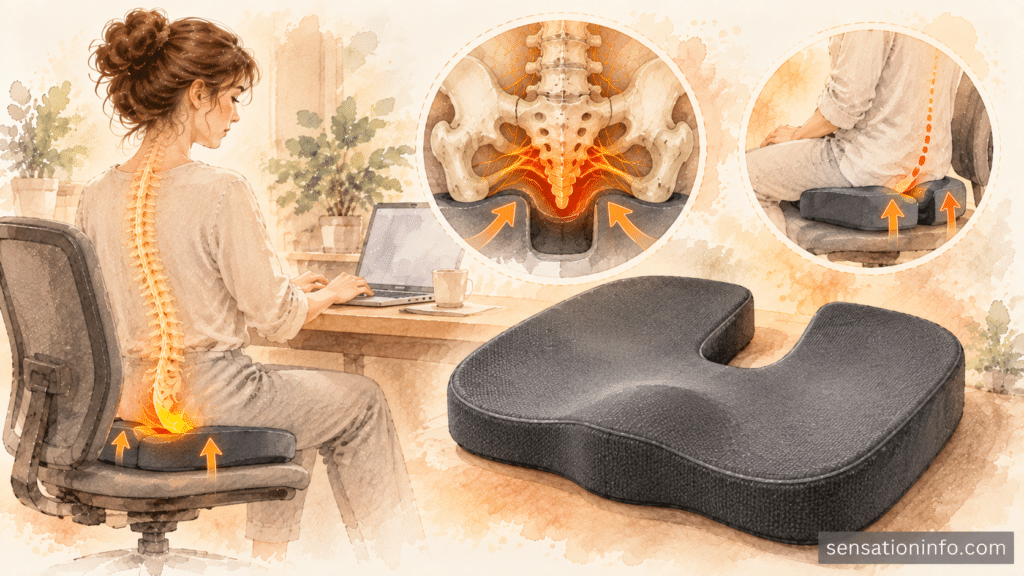
Correct Your Sitting Posture: Keep your feet flat on the floor and sit up perfectly straight. Roll your hips slightly forward so that your body weight rests entirely on your sit bones. Avoid lounging backward on soft sofas that force your delicate tailbone to bear your full body weight.
Apply Ice and Heat: If you recently fell or bumped your tailbone apply ice packs wrapped in a cloth for twenty minutes at a time to reduce acute nerve inflammation. For chronic tension heat therapy works much better. A warm heating pad can relax tight pelvic floor muscles that might be squeezing the local nerves.
Take Frequent Movement Breaks: The human spine is simply not designed for continuous uninterrupted sitting. Set a daily timer to stand up and walk around for two minutes every single hour. This simple physical habit restores normal blood flow to the sacral nerves and prevents cumulative nerve compression.
Medical Treatments for Persistent Tingling
When conservative home care fails to resolve the buzzing sensation professional medical intervention may be necessary. The exact treatment will depend entirely on what is pinching the nerve.
If pelvic floor muscle spasms are the root cause your doctor may refer you to a specialized pelvic floor physical therapist. They can teach you specific internal and external massage techniques to release tight muscles pulling on the tailbone. They will also guide you through nerve glide exercises to help the pudendal nerve slide smoothly through the surrounding tissues.
For significant nerve inflammation doctors often prescribe nonsteroidal anti inflammatory drugs. If over the counter medications like ibuprofen or naproxen are not strong enough a doctor might suggest a short course of oral corticosteroids to aggressively reduce tissue swelling.
When tingling turns into severe electric nerve pain doctors may utilize nerve modifying medications like gabapentin or pregabalin. In rare cases of severe pudendal nerve irritation or inflamed Tarlov cysts an interventional pain specialist can administer a localized steroid injection directly around the affected nerve root to calm the abnormal electrical signals. For extreme coccyx pain they might perform a ganglion impar block which temporarily numbs the nerve cluster directly in front of the tailbone.
Key Takeaways
- Tingling in the tailbone is most commonly caused by prolonged sitting with poor posture which pinches the local sacral nerves.
- Numbness in the saddle area or any loss of bladder control are medical emergencies requiring immediate hospital care to rule out cauda equina syndrome.
- True coccygodynia feels like a deep bruise while nerve irritation feels like an electric buzzing or crawling sensation under the skin.
- Using a U shaped coccyx cushion transfers your body weight safely to your sit bones and allows compressed nerves to heal.
- Persistent tingling that lasts for several weeks should be evaluated by a doctor to rule out hidden cysts or lower lumbar spinal disc issues.
Frequently Asked Questions
Yes walking is excellent for tailbone nerve irritation. Walking completely removes the body weight pressure from your coccyx and increases blood circulation to the lower spine which helps supply essential oxygen to the irritated nerves so they can heal much faster.
A tight piriformis muscle usually compresses the sciatic nerve causing pain down the leg rather than isolated tailbone tingling. However widespread pelvic muscle tension can easily contribute to both piriformis syndrome and pudendal nerve irritation which may result in lower spine tingling.
Sleeping on your back can place pressure on a sensitive tailbone especially on a very firm mattress. To relieve nerve pressure at night it is best to sleep on your side with a supportive pillow placed between your knees. This keeps your pelvis perfectly aligned and takes physical stress off the sacral nerves.
Doctor’s Recommendation
If your tailbone tingling is accompanied by sharp radiating pain or fails to improve after a month of posture corrections and using proper cushions you should consult a specialist. An expert in nerve pain can properly diagnose whether your symptoms stem from local coccyx inflammation or a deeper spinal nerve root issue. To explore professional diagnostic options review our guide to the best pain management doctors for nerve pain across the country.