
Have you ever felt a sudden tingling in your left arm and instantly thought, “Wait, is this serious?” I’ve been there too. The moment something happens to the left arm, our minds tend to jump straight to heart attack territory. And while that’s not always wrong, it’s also not always right.
The meaning of a tingling in the left arm vs the right arm is something most people search for in a state of mild panic. The truth is, the cause depends a lot on which arm is affected, when the tingling happens, and what other symptoms come with it. In this article, I’ll walk you through the differences clearly and calmly, based on credible sources like the Mayo Clinic, Cleveland Clinic, the American Heart Association, and the NHS.
Why Tingling in Arms Happens
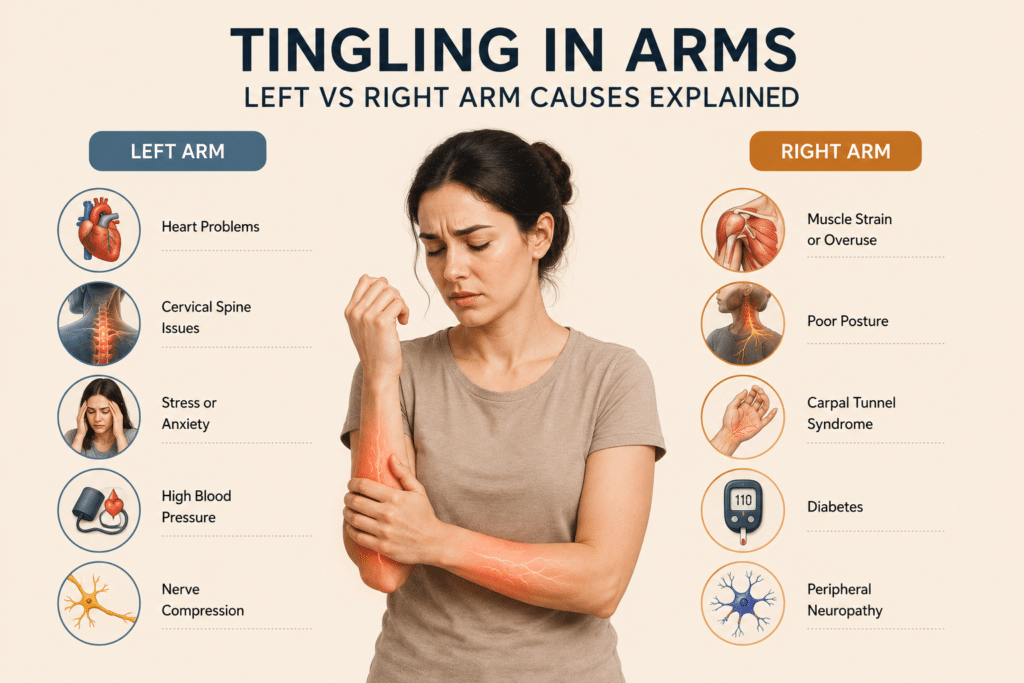
Tingling, medically called ‘paraesthesia’, is that pins-and-needles or buzzing sensation that happens when nerves get compressed, irritated, or misfire. Sometimes it’s harmless, like sitting on your arm too long. Sometimes it’s a sign that something more specific is going on.
The arms are powered by a complex network of nerves coming from the neck and spinal cord, so the source of tingling isn’t always in the arm itself. It can come from the spine, shoulder, elbow, wrist, or even the heart.
The Difference Between Left Arm and Right Arm Tingling
The location of tingling matters more than people realise. Each arm is supplied by similar nerves, but the medical implications differ based on the side.
I’ll break it down clearly so you know when it’s just a posture issue and when it’s something to act on quickly.
Tingling in the Left Arm: What It Could Mean
The left arm tends to attract more attention because of its association with cardiac events. While this concern is valid, it’s not the only cause. Let me walk you through the most common reasons.
Cardiac Issues (Angina or Heart Attack)
The most urgent cause to know about. A left arm tingling, especially with chest pain, shortness of breath, sweating, or jaw discomfort, can be a sign of angina or a heart attack.
The American Heart Association recognises arm symptoms as classic warning signs, particularly in men. Women may experience subtler signs, including arm tingling without chest pain.
If your left arm tingling comes with any of these red flags, treat it as an emergency. Time is everything in cardiac events.
Anxiety and Panic Attacks
This is the most common cause of left arm tingling that people don’t expect. Anxiety triggers hyperventilation, raises adrenaline, and increases nerve sensitivity, which can produce buzzing sensations anywhere, including the arms.
I’ve personally had this happen during stressful work weeks. Once anxiety settled, the tingling vanished.
Cervical Radiculopathy (Pinched Nerve in the Neck)
A pinched nerve in the cervical spine can send tingling down the left arm. The cause is often a herniated disc, bone spur, or poor posture.
If your tingling shows up alongside neck stiffness, shoulder pain, or arm weakness, this is a likely cause.
Carpal Tunnel Syndrome (CTS)
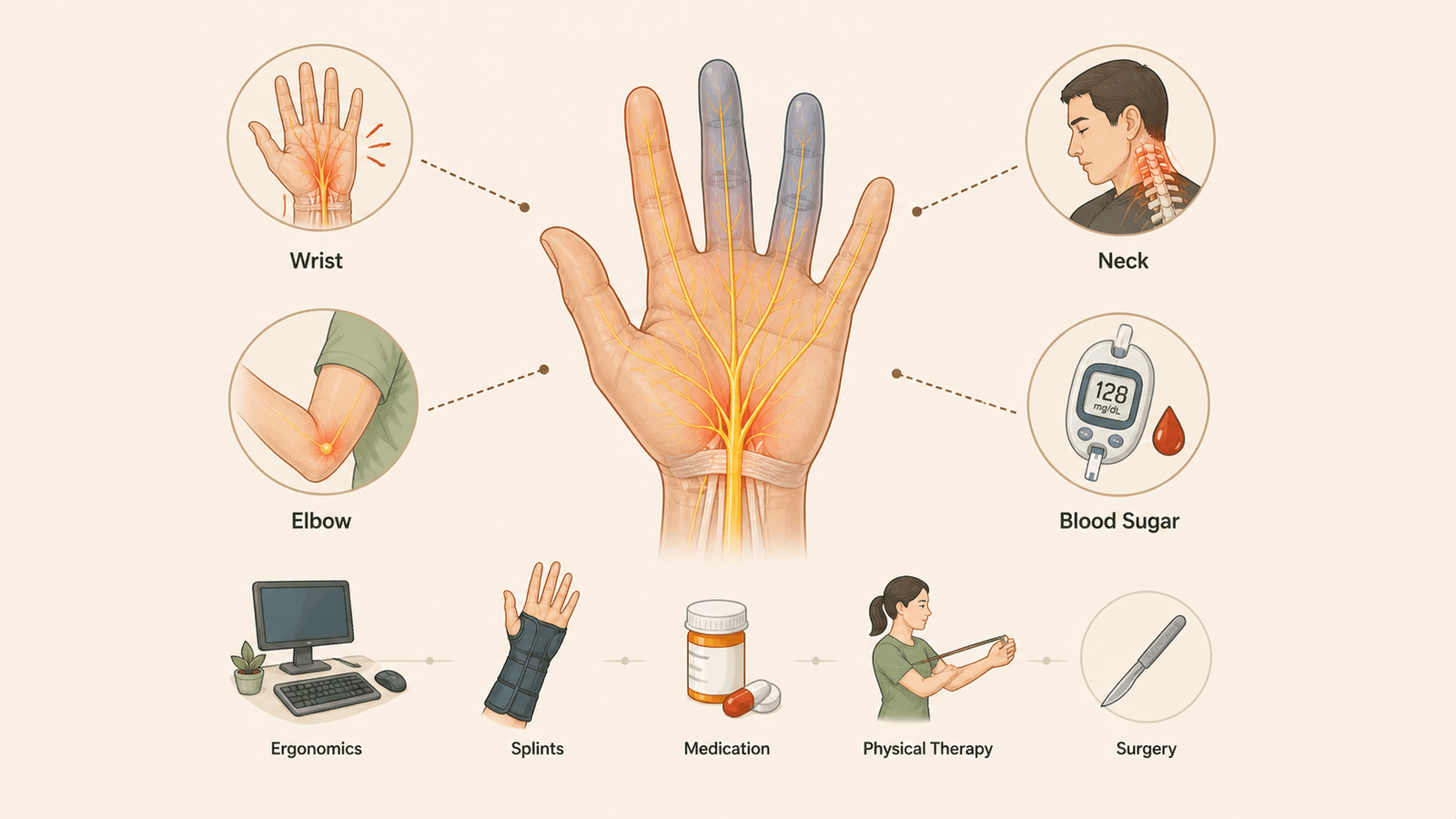
CTS occurs when the median nerve at the wrist gets compressed. It causes tingling in the thumb, index, middle, and half of the ring finger.
The American Academy of Orthopaedic Surgeons confirms it can affect either arm, depending on hand dominance and usage patterns.
Ulnar Nerve Compression
The ulnar nerve runs along the inside of the elbow. When compressed, it causes tingling in the ring and little fingers of the affected arm.
Sleeping with bent elbows, leaning on an elbow at a desk, or repeated movements can trigger this.
Thoracic Outlet Syndrome (TOS)
TOS happens when nerves or blood vessels between the collarbone and the first rib get compressed. The tingling can affect either arm, but it’s frequently reported on the left side in workers who repeatedly raise their arms.
Symptoms include tingling, cold sensations, and weakness in the hand.
Stroke (Less Common but Critical)
Sudden tingling on the left arm paired with weakness, slurred speech, facial drooping, or vision changes can signal a stroke. Treat this as an emergency, even if it lasts only a few moments.
The American Stroke Association uses the FAST acronym to identify warning signs quickly.

Tingling in the Right Arm: What It Could Mean
Right arm tingling is usually less alarming than left arm tingling, but it’s still worth understanding. The causes are mostly nerve-related, posture-related, or activity-driven.
Cervical Radiculopathy
Just like in the left arm, a pinched nerve in the neck can affect the right side. This is especially common in people who sit at desks for long hours, sleep with poor posture, or use phones excessively.
Carpal Tunnel Syndrome (More Common in the Right Arm)
CTS frequently affects the right hand because most people are right-hand dominant. If you spend hours typing, scrolling, or using a mouse, your right arm is statistically more likely to develop median nerve compression.
I’ve personally felt mine acting up during deadline-heavy weeks. A simple wrist splint helped a lot.
Ulnar Nerve Compression
Right-handed people who lean on their right elbow while working may develop ulnar nerve issues. It causes tingling in the ring and pinky fingers.
Sports or Repetitive Strain Injuries
The right arm gets used more often, especially in athletes, gym-goers, gamers, and desk workers. Repetitive strain on the shoulder, elbow, or wrist can lead to nerve irritation.
Cervical Disc Issues
Disc problems often produce one-sided symptoms. The right arm is affected when nerve compression occurs on the right side of the cervical spine.
Anxiety and Hyperventilation
Even though left arm tingling gets more attention during anxiety, the right arm can also be affected. Hyperventilation creates symmetric nerve sensitivity, which can affect either side.
When Both Arms Tingle
This is its own category and deserves attention. When both arms tingle at once, the cause is usually systemic or neurological.
Peripheral Neuropathy
This is one of the most common causes of bilateral tingling. Diabetes, vitamin deficiencies, alcohol use, or chemotherapy drugs can damage small nerves and lead to tingling in both hands or arms.
Vitamin B12 Deficiency
Low B12 affects nerve function throughout the body. It’s especially common in vegetarians, older adults, and people on long-term acid reflux medications.
A simple blood test confirms it, and supplementation usually resolves the symptoms.
Cervical Spine Issues
A central spinal disc problem can affect both arms at once. This is often paired with neck stiffness, posture issues, or pain.
Hyperventilation Due to Anxiety
When anxiety is intense, both arms can tingle at the same time due to changes in carbon dioxide levels.
Multiple Sclerosis (MS)
MS can cause tingling, weakness, and sensory changes in both arms. It’s typically paired with vision issues, fatigue, or balance problems.
Thyroid Issues
Hypothyroidism can cause widespread tingling, including in both arms. It also brings fatigue, weight changes, and cold intolerance.

Patterns That Help You Understand the Cause
This is where things get useful. Knowing the pattern often points to the cause.
If your tingling is on the left arm with chest pain, sweating, or breathlessness, treat it as cardiac until proven otherwise.
If it’s on the right arm and comes with repetitive use, posture issues, or wrist strain, nerve compression is the likely cause.
If both arms tingle, systemic or neurological causes need evaluation.
If your tingling lasts only seconds and stops, it’s usually harmless.
If it lasts for minutes or hours, get it checked.
If it spreads to your fingers, hands, or shoulders, it’s likely nerve-related.
This pattern-based thinking is exactly how neurologists narrow down the diagnosis during clinical exams.
Emergency Signs You Should Never Ignore
Most cases of tingling are harmless, but some require immediate medical attention. Please get emergency care if your tingling comes with:
- Chest pain or pressure
- Shortness of breath
- Sweating, nausea, or dizziness
- Slurred speech
- Facial drooping
- Severe headache
- Loss of consciousness
- Sudden weakness or numbness in arms or legs
These can be signs of stroke or heart attack. Quick action saves lives.
How Doctors Diagnose Arm Tingling
When I finally had mine evaluated, I was surprised at how thorough the process was. Diagnosing arm tingling isn’t a guessing game.
A standard workup usually includes a physical exam, neurological assessment, ECG (especially for the left arm), and blood tests for diabetes, B12, and thyroid function. For nerve-related causes, EMG and nerve conduction studies are used. MRI is recommended for spine issues.
For suspected cardiac involvement, stress tests and echocardiograms help rule out coronary disease. Proper diagnosis prevents months of confusion and sometimes saves lives.
Treatment Options That Work
Treatment depends entirely on the cause, but here’s what generally works in real-life cases.
Lifestyle Adjustments
For mild cases, fixing posture, taking regular breaks, stretching daily, and avoiding repetitive strain often help. I personally felt huge improvements after I started using a vertical mouse and a wrist splint at night.
Address the Underlying Condition
If diabetes, thyroid issues, or B12 deficiency is the cause, treating that condition usually resolves the tingling.
Medications
Doctors may prescribe gabapentin, pregabalin, or duloxetine for nerve-related tingling. NSAIDs help with inflammation. Cardiac causes need targeted medications under a cardiologist’s care.
Physical Therapy
A skilled physiotherapist can teach nerve gliding exercises, posture correction, and shoulder stretches that genuinely reduce tingling.
Wrist Splints and Ergonomic Tools
For CTS, wrist splints help keep the wrist neutral. Brands like Mueller, Futuro, and Vive are widely recommended and easy to find.
Stress and Anxiety Management
If anxiety is the trigger, slow breathing, mindfulness, regular exercise, and reducing caffeine help calm the nervous system. CBT is highly effective for chronic anxiety symptoms.
Surgery in Severe Cases
For severe carpal tunnel syndrome, cervical disc issues, or cubital tunnel syndrome, surgical options provide significant relief when conservative treatments fail.

Frequently Asked Questions
No. Most cases of left arm tingling are due to anxiety, posture, or nerve compression. But sudden tingling with chest pain or breathlessness must be treated as cardiac until proven otherwise.
Right arm tingling during work is usually caused by carpal tunnel, ulnar nerve compression, or posture issues.
Common causes include peripheral neuropathy, B12 deficiency, anxiety, cervical spine issues, and thyroid problems.
If the tingling is persistent, frequent, spreading, or comes with weakness, weakness, slurred speech, or chest discomfort, see a doctor immediately.
Final Thoughts
Tingling in the arms can come from many sources, ranging from harmless posture issues to serious neurological or cardiac causes. The key is paying attention to which arm is affected, what else is happening with the symptoms, and how long it lasts.
If your arm keeps acting weird, don’t ignore it and don’t panic either. Track the patterns, fix the basics, and talk to a qualified doctor when needed. Your nervous system gives clear signals when you know how to listen. The kindest thing you can do is take them seriously without spiralling into worry.