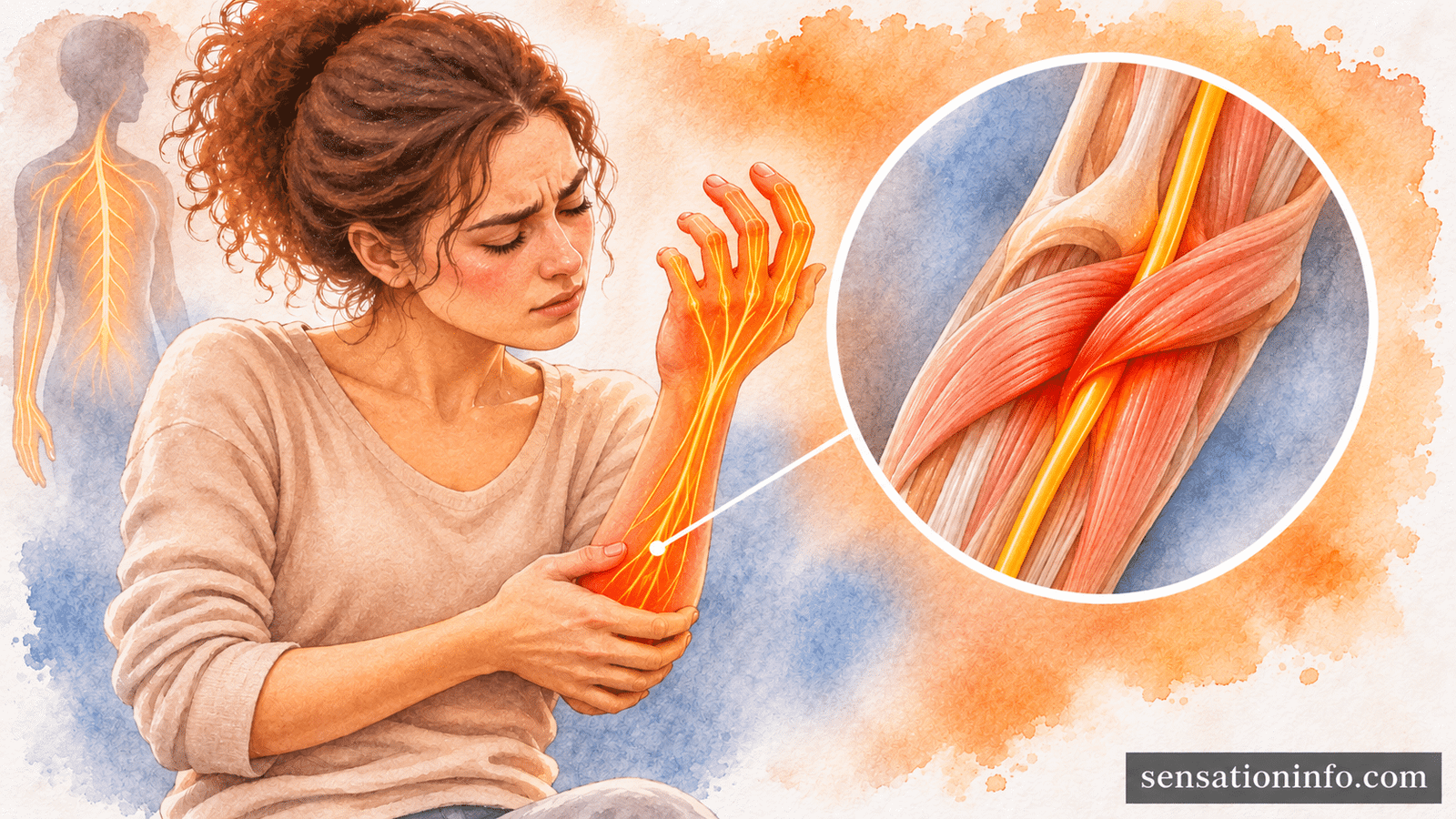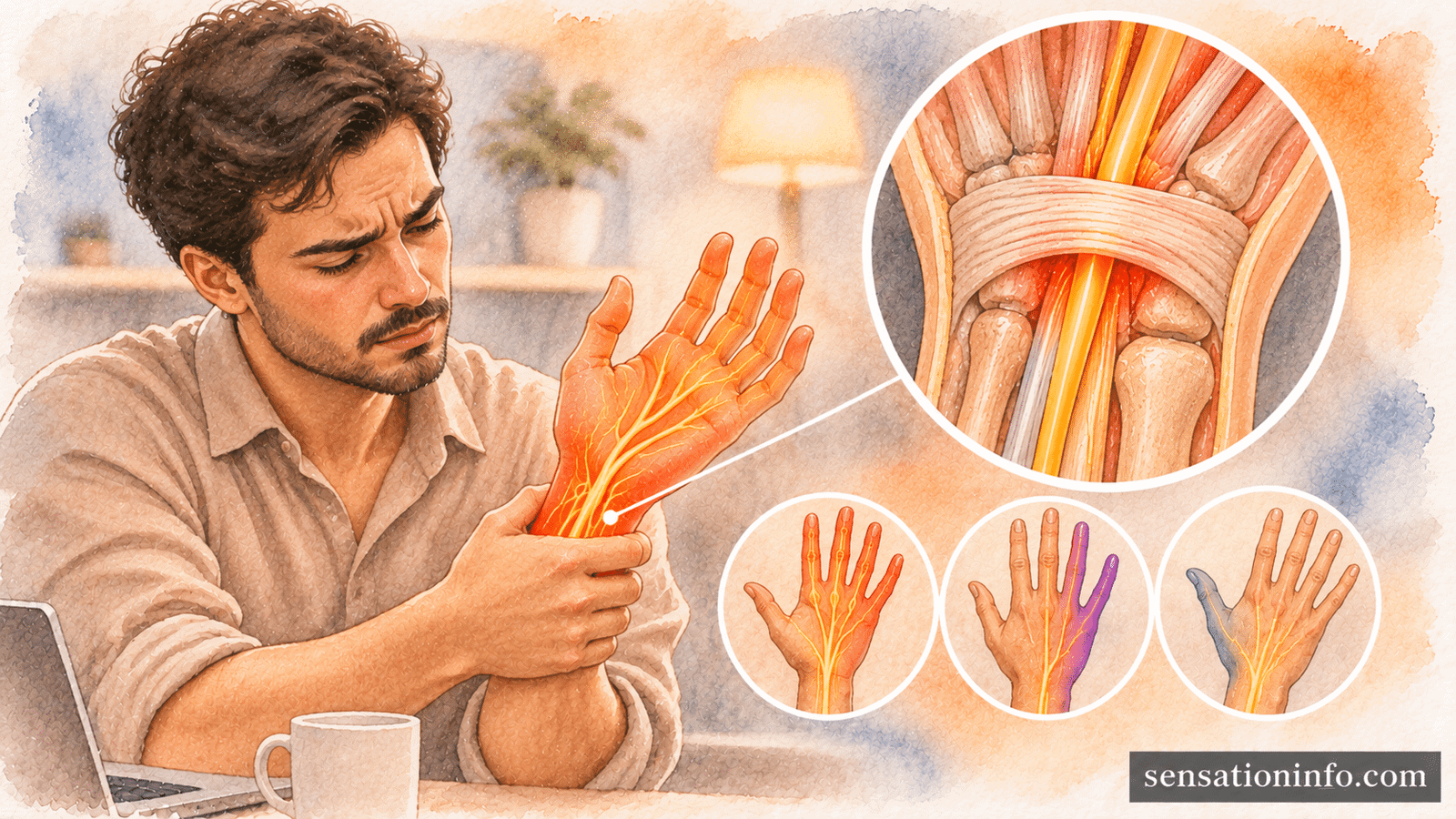

Tingling and numbness in the wrist usually come from a nerve being squeezed, and the exact spot tells you which nerve. Palm side tingling that spreads into the thumb and index finger points to the median nerve and carpal tunnel syndrome. Pinky side tingling points to the ulnar nerve. Burning on the back of the wrist near the thumb points to the superficial radial nerve, often from a tight watch.
Most of these causes are treatable, and many settle once the pressure comes off.
Why Does the Exact Spot on My Wrist Matter?
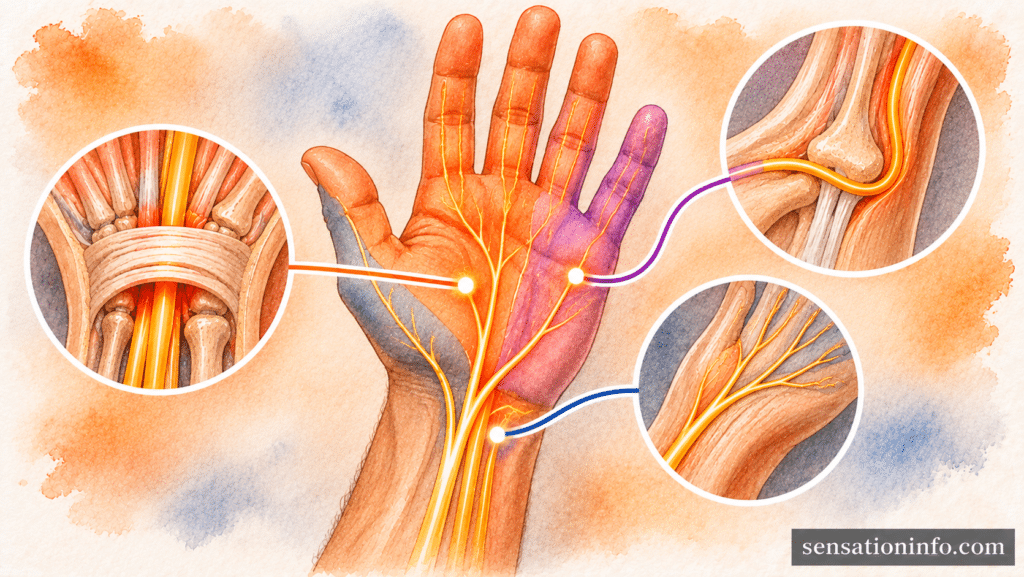
Three nerves cross your wrist, and each one carries feeling from its own patch of skin. When patients point to where the tingling lives, they are often pointing straight at the cause.
The first thing I ask in clinic is, “Show me with one finger where it tingles, and which fingers join in.” The pinky is my most useful clue, because the median nerve never supplies it while the ulnar nerve always does.
This table is the map I use in my own head. Find the row that matches your wrist, then read the matching section below for what it usually means.
| Where it is | What it feels like | What comes with it | Likely cause | How urgent |
|---|---|---|---|---|
| Palm side, spreading to thumb, index, middle finger | Pins and needles, worse at night | Waking up shaking the hand, dropping things | Median nerve compression (carpal tunnel syndrome) | See a doctor within weeks |
| Pinky side, into ring and little finger | Numbness, buzzing | Weak grip, trouble spreading fingers | Ulnar nerve compression at Guyon’s canal | See a doctor within weeks |
| Back of the wrist near the thumb | Burning, tingling, raw skin feeling | Worse with a watch, bracelet or cast | Superficial radial nerve irritation (Wartenberg syndrome) | Often settles; see a doctor if it lasts |
| Over a visible lump | Tingling near the bump | Round swelling that changes size | Ganglion cyst pressing a nerve | See a doctor if numb or weak |
| Whole wrist and hand after a fall | Numbness with pain, swelling | Deformity, bruising | Wrist fracture or nerve injury | Same day care |
| Wrist plus forearm, arm or neck | Tingling that travels | Neck pain, arm weakness | Pinched nerve root in the neck (cervical radiculopathy) | See a doctor soon |
What Does It Mean If the Palm Side of My Wrist Tingles?
Palm side tingling that runs into the thumb, index and middle fingers is the classic pattern of carpal tunnel syndrome. The carpal tunnel is a narrow passage on the palm side of your wrist, and the median nerve runs through it.
Patients tell me their hand goes numb while holding a phone, gripping the steering wheel or reading. Many wake at 3 a.m. and shake the hand until feeling comes back.
The risk climbs with diabetes, rheumatoid arthritis, pregnancy and an old wrist fracture.
One look alike deserves a mention. If the ache starts in your forearm and the tingling barely changes at night, I start thinking about pronator teres syndrome, where the same nerve is squeezed higher up near the elbow.
Why Is the Pinky Side of My Wrist and Hand Going Numb?
Numbness on the pinky side of the wrist usually means the ulnar nerve is under pressure. At the wrist, that nerve travels through a small channel called Guyon’s canal, and trouble there is called ulnar tunnel syndrome.
Ulnar trouble is far more common at the elbow, in a groove called the cubital tunnel, so I always check there too.
Patients with numbness in the pinky and ring finger also notice hand changes they did not connect to a nerve. These are the signs that tell me the nerve is struggling, not just irritated:
- Weak grip, or dropping keys and cups
- Trouble spreading the fingers apart or crossing them
- The ring and little fingers starting to curl like a claw
The usual triggers are steady pressure on the heel of the hand. Long bike rides on drop handlebars, push ups, canes and hand tools that press into the palm all play a part. Ganglion cysts cause up to 2 in 5 cases of Guyon’s canal syndrome.
Why Does the Back of My Wrist Near the Thumb Feel Numb or Burn?
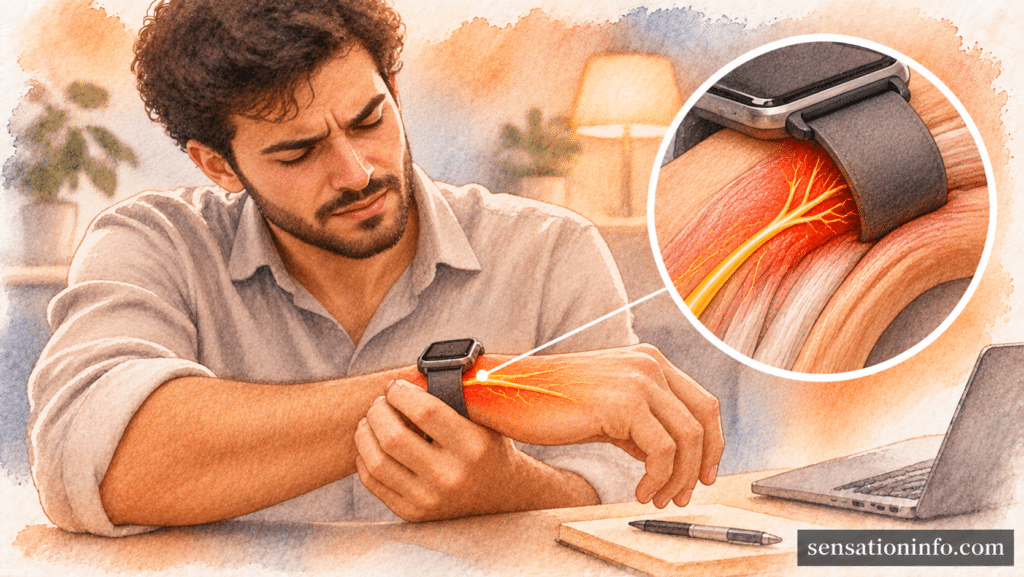
Burning or numbness on the back of the wrist on the thumb side usually comes from the superficial radial nerve. This branch carries feeling only, from the back of the wrist and hand closest to the thumb, and it lies just under the skin.
Because it sits so close to the surface, a tight watch, fitness band, bracelet, cast or handcuffs can press on it. When it gets trapped, we call it Wartenberg syndrome. It feels like a sunburn or electric zing, and it often tracks into the back of the thumb and the web space of the hand.
This nerve carries no muscle power, so your grip stays strong.
Patients often say it started with a new smartwatch. Loosening the band or moving it up the arm is usually the best first treatment.
Could a Lump on My Wrist Be Causing the Tingling?
Yes, a ganglion cyst is one of the most common reasons I find for tingling with a visible bump. A ganglion is a noncancerous sac filled with jellylike fluid that grows from a wrist joint or tendon.
Many cause no symptoms. When one presses on a nearby nerve, it can cause pain, tingling, numbness or weakness, and the location of the lump predicts the pattern.
Many ganglions shrink or vanish on their own. If one is pressing a nerve, I may drain it with a needle or refer you for removal.
Why Did My Wrist Start Tingling After a Fall or Fracture?
New tingling after a fall on an outstretched hand means the bone, the swelling or the nerve itself needs checking. A wrist fracture can narrow the carpal tunnel and press the median nerve, sometimes right away and sometimes as swelling builds.
Tingling can also appear months later as an old fracture heals out of shape or arthritis sets in.
Patients with numbness after an injury from a fall, cut or sports hit need a careful nerve check, because some signs call for prompt imaging.
Can Wrist Tingling Actually Come From My Neck?
Yes, and it fools many people. A pinched nerve root in the neck, called cervical radiculopathy, can send tingling down the arm into the wrist and fingers even when the wrist itself is healthy.
The clues are neck pain, tingling that travels from the shoulder down, and symptoms that change when you turn or tilt your head.
When both wrists and both hands tingle evenly, I look beyond any single trapped nerve. Diabetes, low vitamin B12, thyroid disease and some medicines can cause peripheral neuropathy, which is nerve damage that usually starts in the feet before the hands.
Is Tingling and Numbness in the Wrist Serious, or Usually Harmless?
Most wrist tingling is not dangerous, but nerves that stay squeezed for months can be damaged for good.
This comparison is how I explain the difference to worried patients. Use it to see which column fits you.
| Usually harmless | See a doctor |
|---|---|
| Tingling after leaning on your wrist that fades in minutes | Tingling that lasts more than 2 weeks or keeps returning |
| Pins and needles after a long bike ride that settles the same day | Numbness that wakes you most nights |
| Burning under a tight watch that eases when you loosen it | Weak grip, dropping things or thinning hand muscles |
| Brief tingling after sleeping on a bent wrist | A lump that grows, hurts or causes numbness, or symptoms in both hands |
When Should I Get Help Right Away?
A few patterns mean you should not wait for a routine visit. Act on these the same day:
- Sudden numbness or weakness on one side of the body, face drooping or slurred speech: call 911, because these are stroke signs.
- Numbness with a deformed, very swollen or very painful wrist after a fall: go to urgent care or the emergency room.
- A hand that turns pale, cold or blue: get same day care.
- Sudden weakness that lets your wrist hang limp: get same day care.
What Should I Tell My Doctor About My Wrist Tingling?
The most useful thing you can bring is a clear map of your symptoms. A short note on your phone leads to a sharper diagnosis.
Before the visit, it helps to work through a nerve symptom checker, because it organizes where the tingling sits and what triggers it. Then be ready to tell your doctor these points:
- Exactly which side of the wrist and which fingers are involved, especially whether the pinky joins in.
- When it happens: at night, while driving, cycling, typing or holding a phone.
- Anything tight you wear on that wrist, and any recent fall or fracture.
- Neck pain, or tingling in the other hand or your feet.
- Health conditions such as diabetes, thyroid disease or rheumatoid arthritis, plus any pregnancy.
What Will the Exam and Tests Involve?
In my exam, I tap over each nerve, bend the wrist, test grip and pinch strength, and check the neck and elbow. Often that alone points to the cause.
When I need confirmation, I order a nerve conduction study, which measures how fast signals move through the nerve. It can show whether the squeeze is at the wrist, the elbow or the neck. Ultrasound, an X ray or an MRI helps when I suspect a cyst, fracture or neck problem.
Good questions to ask your doctor include “Which nerve do you think is involved?”, “Is there any sign of nerve damage yet?” and “What should make me come back sooner?”
How Is It Treated, and What Can I Do at Home?
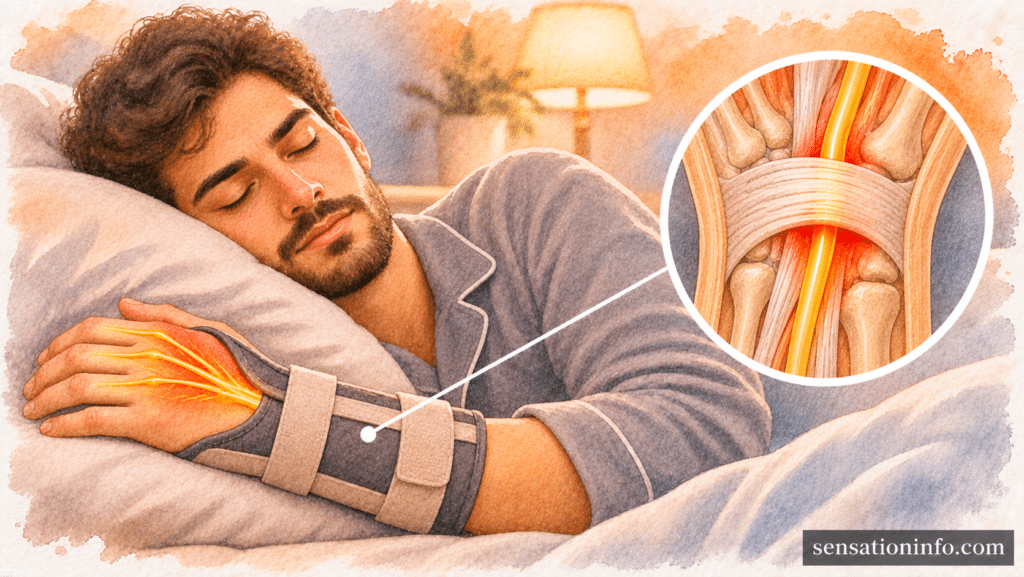
Treatment starts with taking pressure off the nerve, and for many patients that is enough. The next step depends on which nerve is involved.
These are the home steps I give most patients first. Try them for a few weeks and track whether the tingling changes:
- Wear a wrist splint at night that keeps the wrist straight, which helps carpal tunnel symptoms most.
- Loosen or move your watch and bracelets for Wartenberg type burning.
- Use padded cycling gloves, change hand positions often and raise the handlebars for pinky side numbness.
- Use ibuprofen (Advil, Motrin IB) or acetaminophen (Tylenol) for short term pain if your doctor says they are safe for you.
When home care is not enough, a corticosteroid injection can calm swelling around the median nerve. Hand therapy teaches nerve gliding exercises and better hand positions.
Surgery is for nerves that stay squeezed or are already weakening muscles. Carpal tunnel release, opening Guyon’s canal or removing a cyst can free the nerve. About half of people with ulnar nerve entrapment get relief without surgery.
Key Takeaways
The location of your symptoms is the single best clue to their cause. Keep these points in mind as you decide on your next step:
- Tingling and numbness in the wrist usually mean a squeezed nerve, and the spot tells you which one.
- Palm side tingling into the thumb, index and middle fingers points to carpal tunnel syndrome.
- Pinky side numbness points to the ulnar nerve, at the wrist or the elbow.
- Burning on the back of the wrist near the thumb often comes from a tight watch pressing the superficial radial nerve.
- Tingling that lasts beyond 2 weeks, wakes you nightly or comes with weakness deserves a doctor visit.
Frequently Asked Questions
Night tingling in the wrist is most often caused by carpal tunnel syndrome. Many people sleep with their wrists bent, which raises pressure on the median nerve in the carpal tunnel. A splint that keeps the wrist straight overnight often reduces the symptoms within a few weeks.
Yes. A tight watch or fitness band can press on the superficial radial nerve on the back of the wrist near the thumb, causing burning or numbness there. Loosening the band, moving it higher on the arm or switching wrists usually lets the nerve settle.
Long hours of typing with the wrists bent can add pressure to the nerves at the wrist and worsen existing carpal tunnel symptoms. Keeping the wrists straight, taking short breaks and adjusting the keyboard height can reduce that pressure.
Doctor’s Recommendation
If your tingling has lasted for weeks or your grip feels weaker, the next clinical question is which nerve is involved and whether it has been damaged. A nerve conduction study answers that by measuring how well signals travel through each nerve.
References
- Mayo Clinic. Carpal tunnel syndrome: Symptoms and causes. Mayo Clinic. 2026.
- Cleveland Clinic. Carpal Tunnel Syndrome. Cleveland Clinic. 2026.
- Cleveland Clinic. Ulnar Nerve Entrapment: Causes, Symptoms and Treatment. Cleveland Clinic. 2026.
- Cleveland Clinic. Radial Nerve: What It Is, Function, Anatomy and Conditions. Cleveland Clinic. 2024.