
An itching and tingling sensation together, especially on skin that looks normal, can be a sign that a nerve is irritated rather than the skin itself. Doctors call this neuropathic itch. Most everyday itching still starts in the skin, most often from dry skin. But when the itch comes with tingling, burning or numbness, and scratching gives little or no lasting relief, a nerve is a likely source. Nerve itch usually needs a different approach from standard anti-itch creams.
If your skin also feels like something is crawling on it, see our guide to the skin crawling sensation. Below is how to tell a nerve itch from a skin itch, how to soothe it safely at home, and when to see a doctor.
What Causes an Itching and Tingling Sensation?
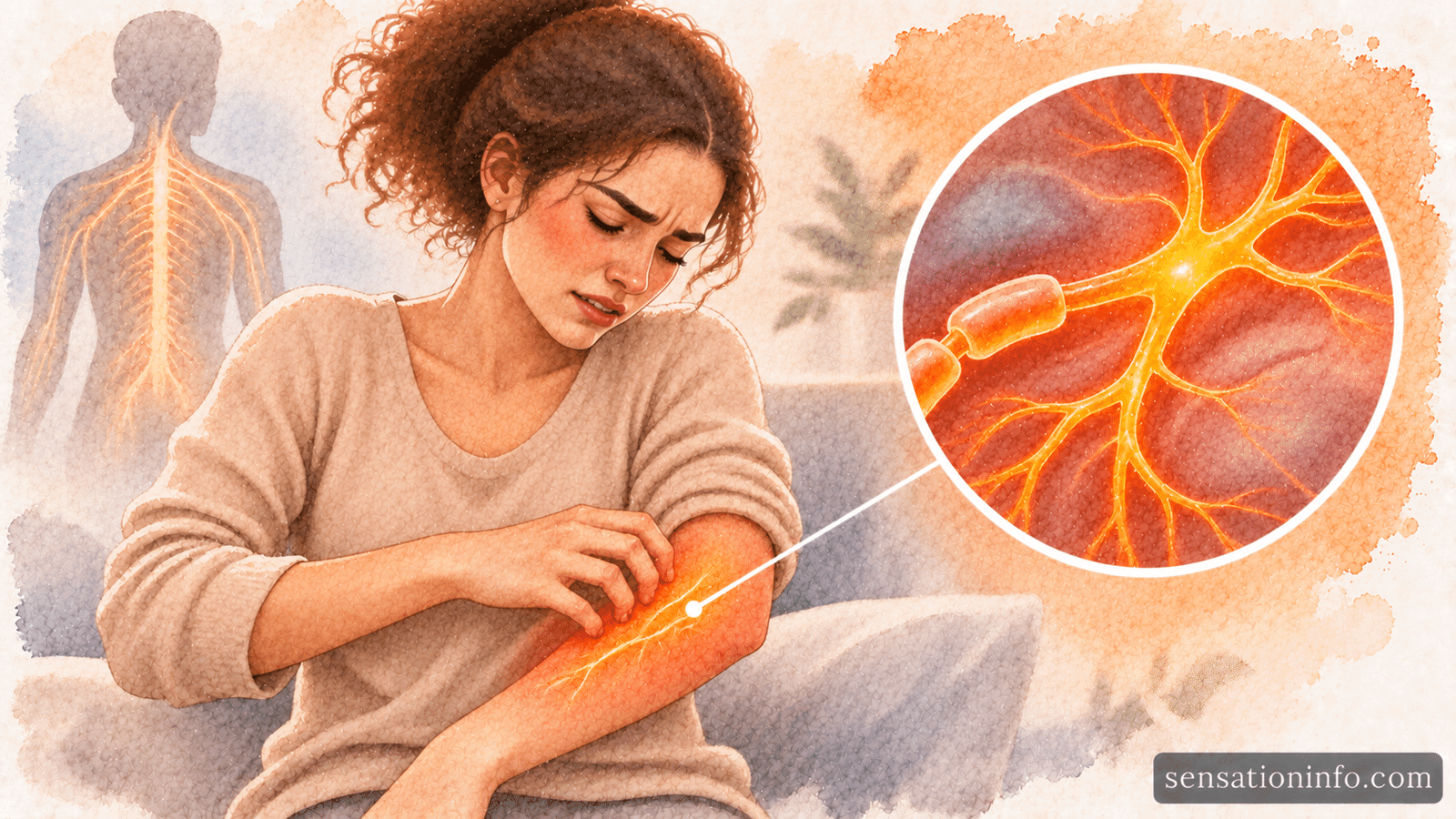
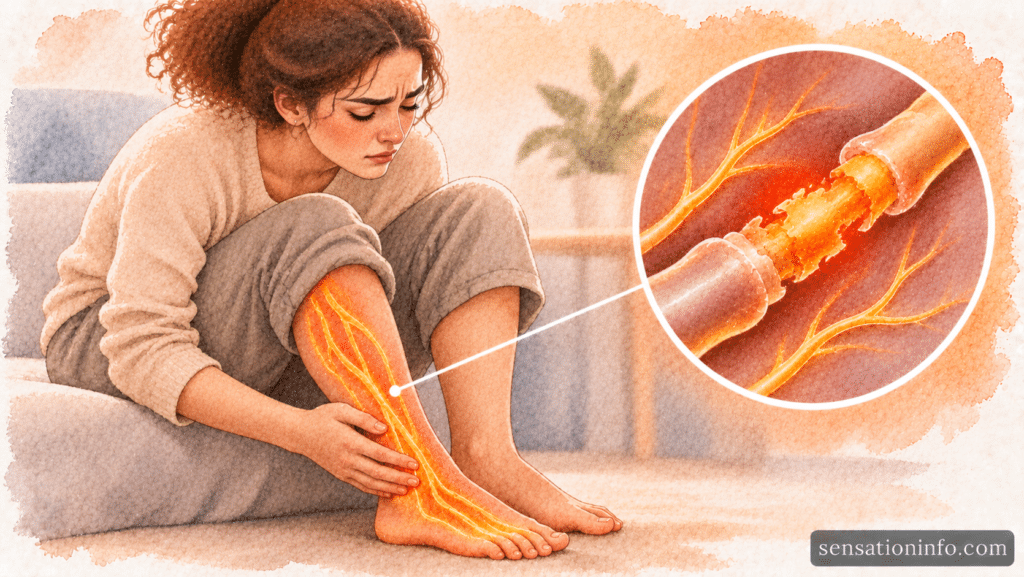
A nerve-related itching and tingling sensation happens when a nerve is compressed, damaged or inflamed and starts sending signals on its own. Itch and pain travel along closely related nerve fibers, so when these fibers are irritated, the brain can read the signal as itching, tingling, burning or a mix of all three.
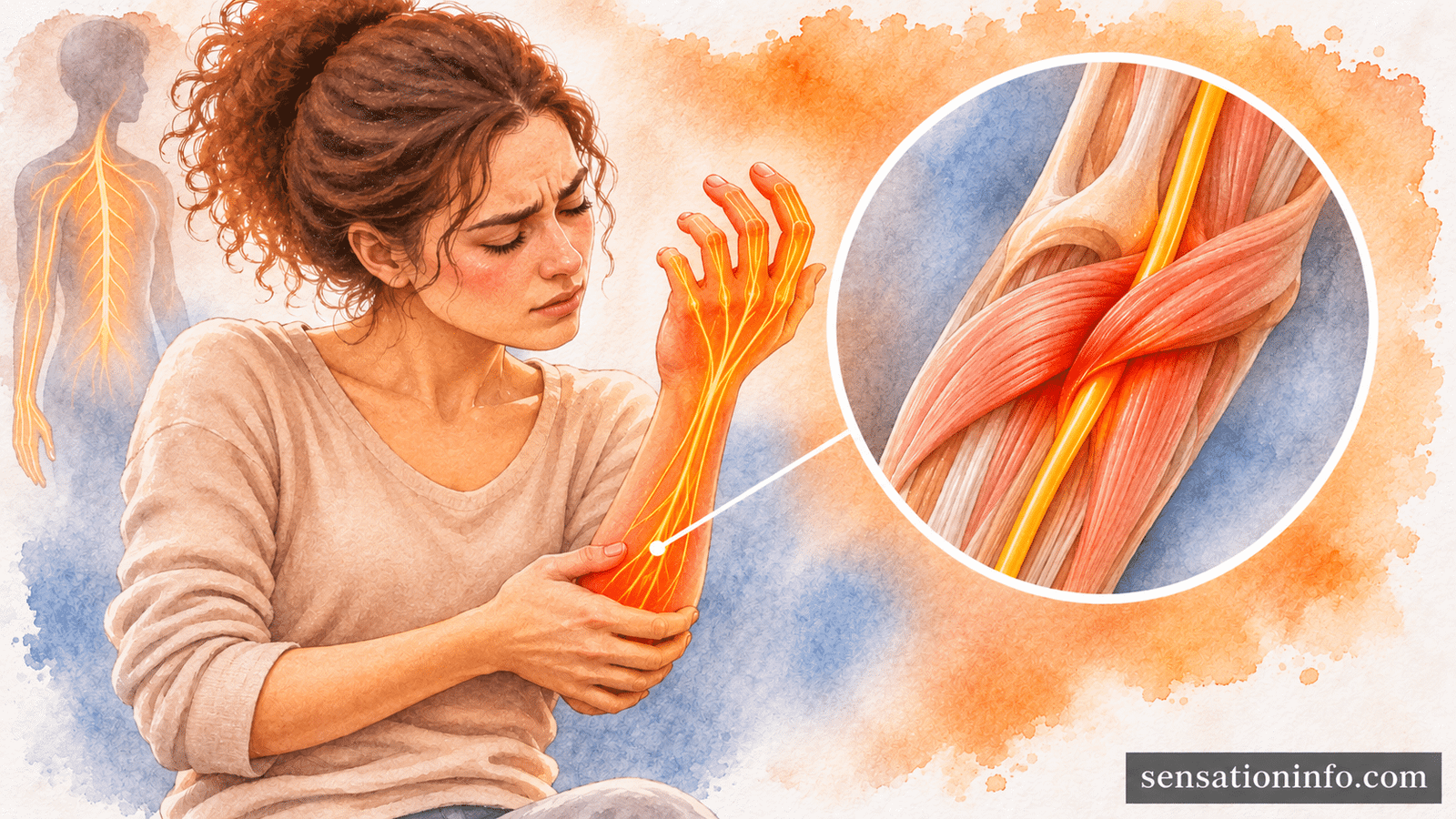
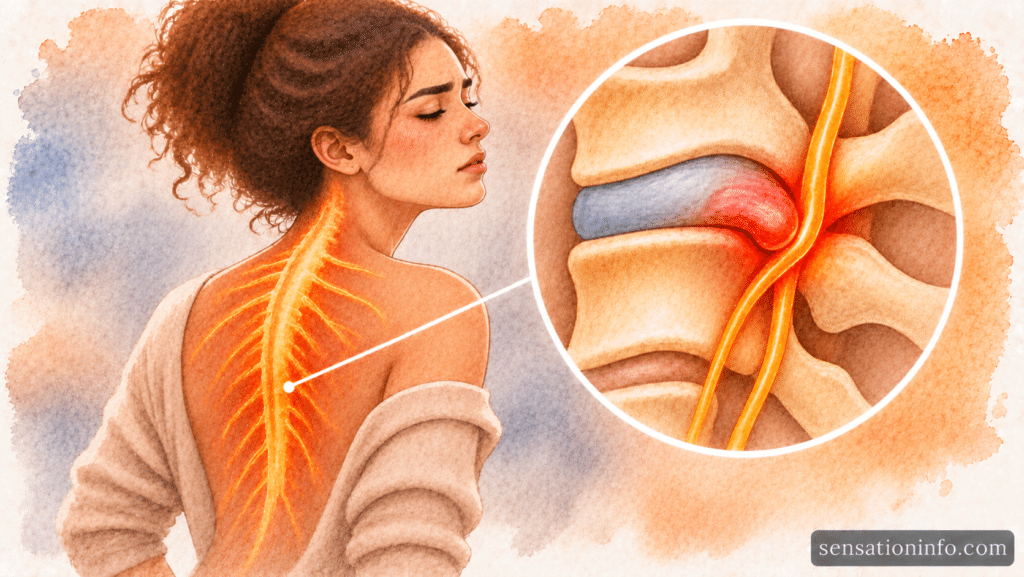
A pinched nerve is one of the most common causes. If a herniated disk in your spine presses against a nerve root, or if swollen tissues compress the median nerve in your wrist, the nerve becomes starved of blood flow. This mechanical pressure triggers a mix of numbness, tingling, and a deep itch that you cannot scratch away.
Peripheral neuropathy is another common cause. Over time, high blood sugar in diabetes can damage the small nerves in the feet and hands. Damaged nerve endings can send abnormal signals, which people feel as burning, tingling, prickling or itching (Mayo Clinic). The medical term for these sensations is paresthesia, and our complete guide to paresthesia explains each type.
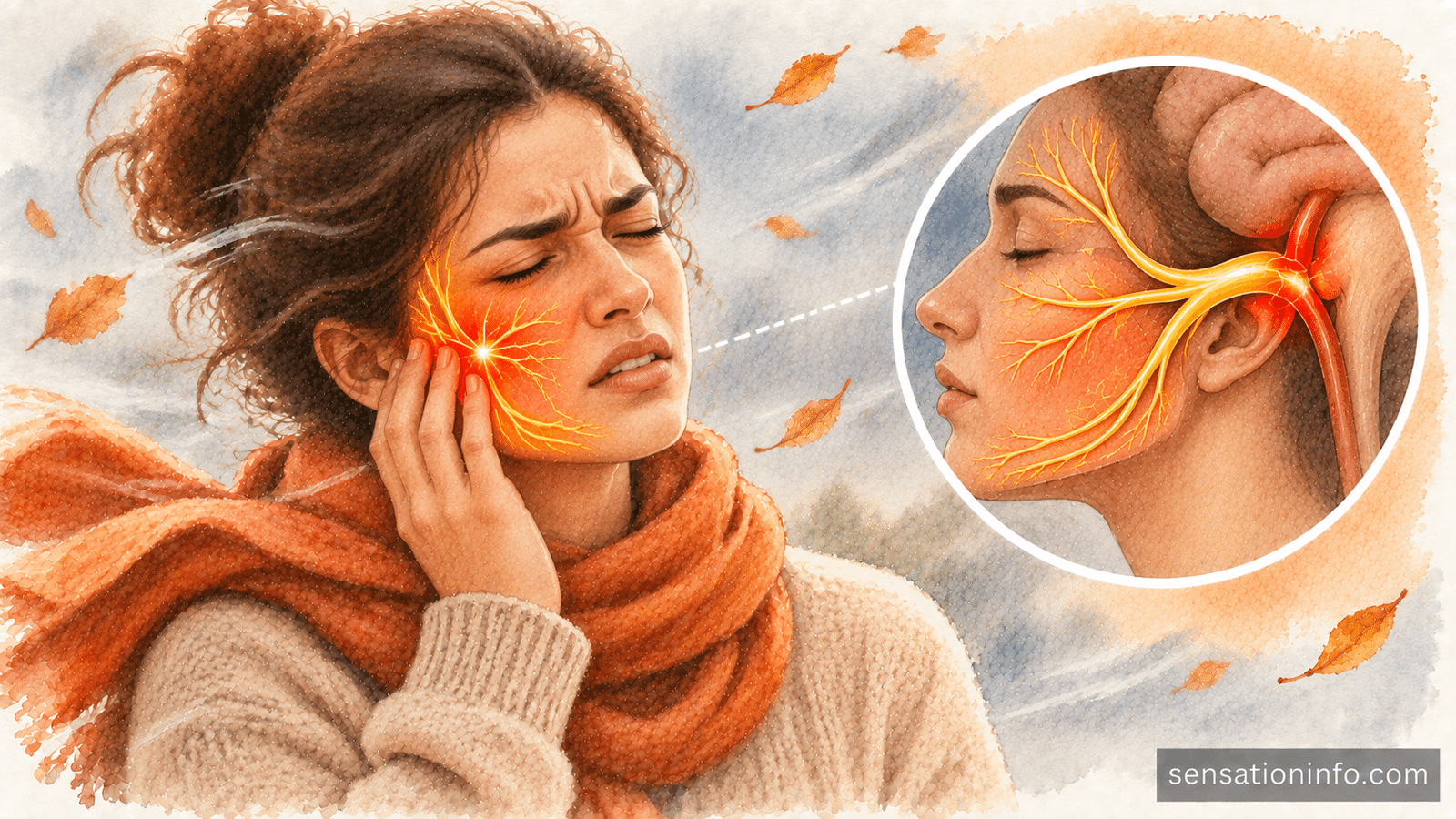
Shingles can also start this way. The chickenpox virus stays in the nerves for life and can reactivate years later as shingles. CDC notes that pain, itching or tingling can appear in the area several days before the rash. The rash usually forms a band on one side of the body or face.
Some nerve itches stay in one small area. Notalgia paresthetica causes a patch of itching, burning or tingling beside one shoulder blade, and rubbing it often leaves a darker patch of skin. Brachioradial pruritus is itching of the arm caused by nerve damage (Cleveland Clinic). Both are harmless but can be stubborn, and a dermatologist can confirm them. Our guide to burning in the back explains notalgia paresthetica in more detail.
Symptoms That Often Come With Nerve Itch
The exact location of the itch and the other symptoms you feel are the best clues for figuring out which nerve is misfiring.
| Where it is | What it feels like | What comes with it | Likely cause | How urgent |
| Feet and lower legs | Prickly burning itch | Numbness in the toes | Diabetic neuropathy | Book a doctor visit |
| One side of torso | Intense deep itching | A painful red rash | Shingles | See a doctor within days. |
| Fingers and thumb | Numb tingling itch | Dropping objects | Carpal tunnel syndrome | Low |
| Hands and arms | Fleeting itchy static | Fades after moving | Sleeping on the arm | Low |
| Beside one shoulder blade | Itchy, burning patch | Darker skin from rubbing | Notalgia paresthetica | Low |
Neuropathic Itch vs Normal Skin Itch
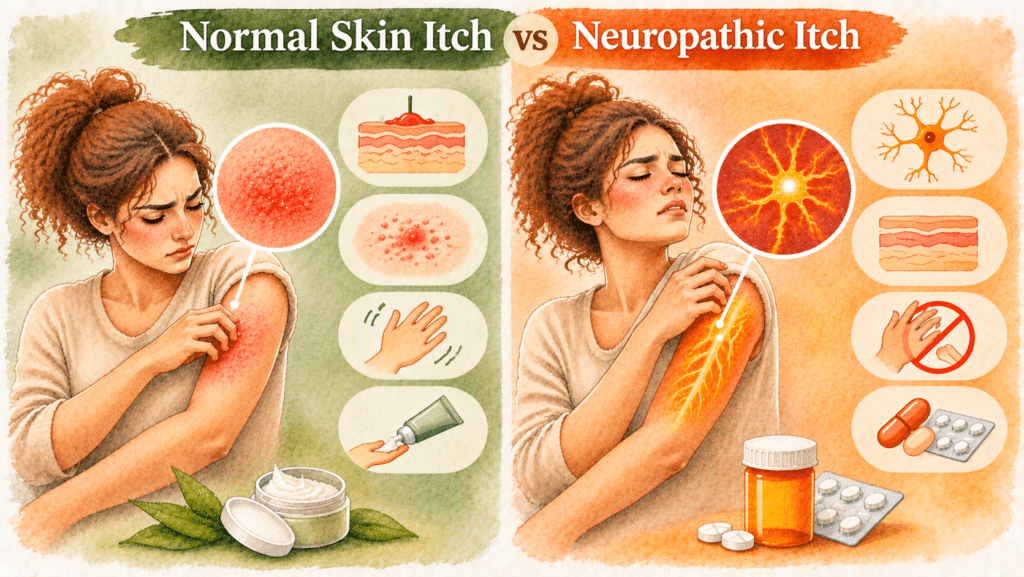
It helps to know the difference between a skin itch and a nerve itch, because they are treated differently.
Normal Skin Itch: Most itching starts in the skin. Common triggers are dry skin, insect bites, allergic reactions and rashes such as eczema. The skin often looks red, bumpy, dry or flaky. Scratching brings short relief, and moisturizers, anti-itch creams or antihistamines often help, depending on the cause.
Neuropathic Itch: This comes from an irritated or damaged nerve. The skin usually looks normal at first, although long scratching can leave marks or thickened skin. Scratching gives little or no lasting relief and can turn the itch into burning or pain. Antihistamines and steroid creams usually do not help much, because the problem is in the nerve, not the skin.
Usually Harmless Causes vs Concerning Signs
It is completely normal to feel an occasional itch or tingle, but you need to know when these sensory blips require medical attention.
Usually Harmless: Waking up with a severely tingling, itchy arm because you slept with it trapped under your body is completely harmless. The nerve was temporarily compressed, and the intense itchy tingling is just the feeling of blood flow returning. It goes away entirely in a few minutes.
Concerning Signs: You should book a doctor appointment if the itching and tingling last for more than two weeks, spread to other parts of your body, or interfere with your ability to sleep. It is also concerning if the itchy area starts to feel entirely numb to the touch. You can use our nerve symptom checker to evaluate your specific symptoms and see which nerve pathways might be involved.
Red Flags: When to See a Doctor Immediately
Rarely, tingling, with or without itch, is part of a stroke or another serious problem in the brain or spinal cord.
Head to the emergency room immediately if the sensation is accompanied by any of these red flags:
- Sudden weakness or paralysis on one side of your face or body.
- Sudden difficulty speaking, slurred speech, or confusion.
- Complete loss of bowel or bladder control.
- Sudden, severe vision changes or blindness in one eye.
- A rapidly spreading rash with high fever, or swelling of the face or throat with trouble breathing.
A painful rash on the face, especially near the eye, is not always an emergency, but see a doctor the same day, because shingles near the eye can affect vision.
How to Stop the Itching and Tingling at Home
The most important rule for a nerve itch is to try not to scratch. Scratching does not fix a nerve itch and can break the skin, which can lead to infection and scarring.
To soothe the sensation at home, cool the itchy area. Cleveland Clinic suggests a cool washcloth or ice wrapped in a towel. Hold it on the skin for up to fifteen minutes. Cooling can quiet itch signals for a while. If the area is numb, check your skin often, because you may not feel cold injury.
You can also try using over the counter capsaicin cream. Capsaicin is the active compound in chili peppers. When applied to the skin, it initially causes a warm burning sensation, but it eventually depletes the nerve endings of substance P, a chemical involved in sending itch and pain signals to the brain. Try it on a small area first, keep it away from your eyes and broken skin, and wash your hands well after applying it.
If the itching and tingling are severe or do not go away, see a doctor. They may prescribe nerve medicines such as gabapentin (Neurontin) or pregabalin (Lyrica), which calm overactive nerve signals. Just as important, they will look for the cause, such as diabetes, a pinched nerve in the neck or shingles.
Key Takeaways
- Itching with tingling, burning or numbness on skin that looks normal can come from an irritated nerve. This is called neuropathic itch.
- Most everyday itching still starts in the skin, most often from dry skin, so a skin cause should be ruled out first.
- Common nerve causes include pinched nerves, diabetic neuropathy, shingles and localized conditions such as notalgia paresthetica.
- Scratching gives little lasting relief for nerve itch and can damage the skin. A cool compress is a safe first step at home.
- Itch or tingling with sudden weakness, face drooping or slurred speech needs emergency care.
Frequently Asked Questions
Dry skin is the most common reason, even when the skin looks normal. Other causes include medicines, liver, kidney or thyroid problems, and nerve irritation. If the itch comes with tingling, burning or numbness and stays in one area, a nerve is a likely source. See a doctor if it lasts more than two weeks.
A doctor first examines the skin to rule out skin causes. They then check sensation and reflexes and may order blood tests for blood sugar, vitamin B12 and thyroid function. A nerve conduction study can show a pinched or damaged nerve, and a small skin biopsy can check for damage to the tiny nerve fibers.
Yes. Stress and anxiety can make the nervous system more sensitive, and fast breathing during anxiety can cause tingling, especially around the mouth and in the hands. These sensations usually ease as the anxiety settles. Itch or tingling that stays in one spot or keeps coming back should still be checked.
Doctor’s Recommendation
If you have an itch that feels deep under the skin and scratching does not help, a nerve is a likely cause. I highly recommend reading our detailed clinical guide on Neuropathic Itch Causes and Treatment to understand the specific prescription medications neurologists use to quiet these misfiring sensory nerves.
References
- Oaklander AL. Neuropathic Itch. Seminars in Cutaneous Medicine and Surgery, 2011.
- Cleveland Clinic. Pruritus (Itchy Skin).
- Mayo Clinic. Peripheral neuropathy: Symptoms and causes.
- Centers for Disease Control and Prevention. Shingles Symptoms and Complications.
- Cleveland Clinic. Notalgia Paresthetica.