
Have you ever felt a strange burning along your back, almost like someone briefly pressed a warm coin against it, even when nothing was actually touching you? I’ve experienced it more times than I’d like to admit. The first time, I genuinely twisted around in front of a mirror just to make sure my back wasn’t doing something dramatic without telling me.
A burning sensation in the back is one of those symptoms people often shrug off, only to have it return later with more intensity. In this article, I’ll walk you through what causes a burning sensation in the middle, upper, and lower back and how to figure out what’s actually behind it. Everything I’m sharing here is based on credible medical sources like the Mayo Clinic, Cleveland Clinic, the NHS, and the National Institute of Neurological Disorders and Stroke.
What a Burning Sensation in the Back Really Means
A burning sensation in the back is a heat-like or scalding feeling that can appear anywhere from the shoulders down to the lower spine. While it sometimes feels like a skin issue, the cause is usually deeper, involving nerves, muscles, or the spine.
Most cases are mild and treatable. Some, especially when paired with other symptoms, point to something more specific. Knowing the exact location often gives the first big clue.
Why Location Matters So Much
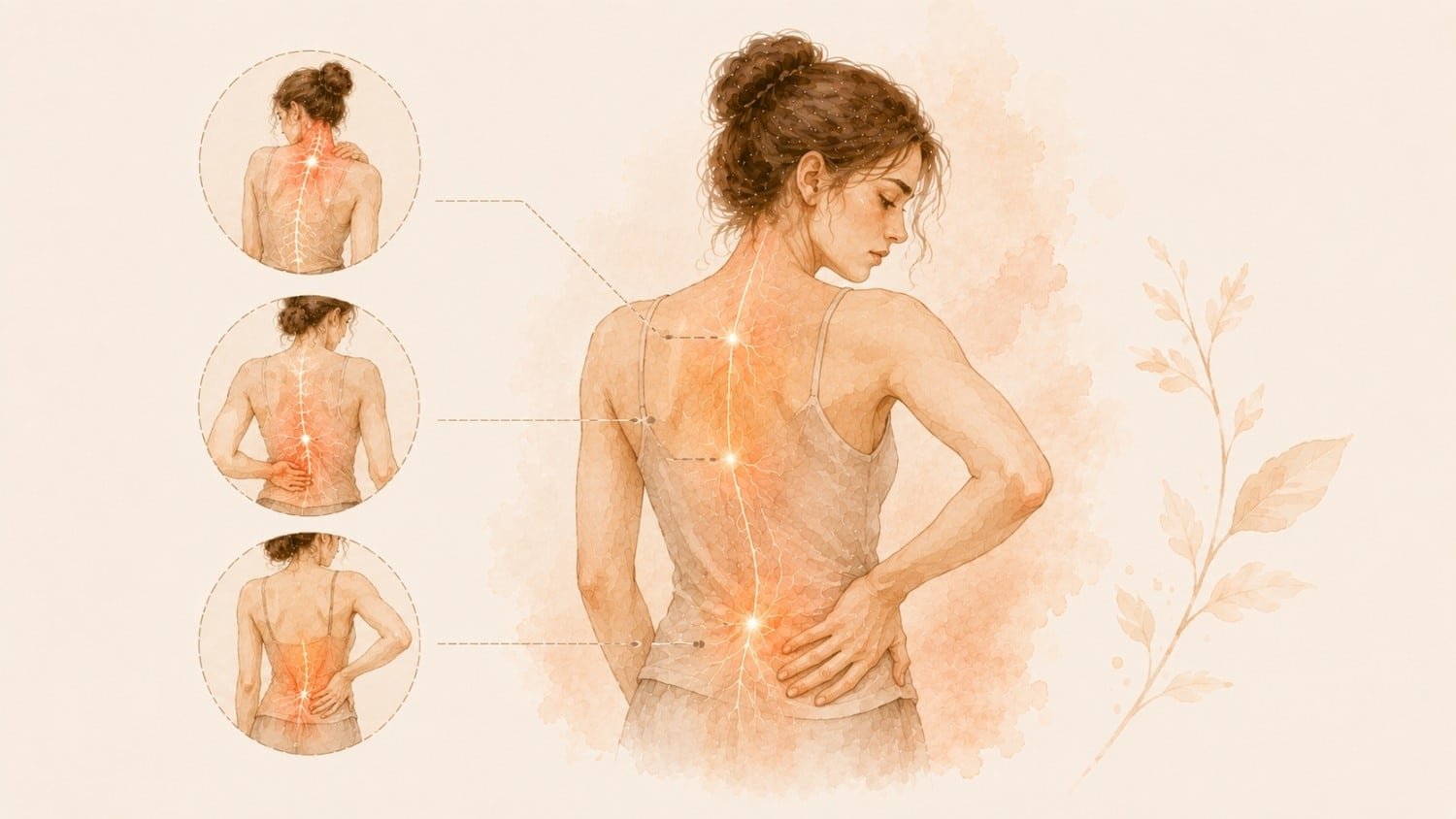
The back is divided into three regions, and each one tells a different story when burning sensations appear. Upper, middle, and lower back issues are usually caused by different muscles, nerves, and conditions.
I’ve personally noticed that my own back burning shifts depending on lifestyle factors. When I sit too long, the middle of my back lights up. When I lift heavy bags, the upper region complains. Pattern matters more than people realise.
Common Causes of Burning Sensation in the Upper Back
Let me walk you through the most common causes, both from real-world observation and trusted medical sources.
Muscle Strain or Tension
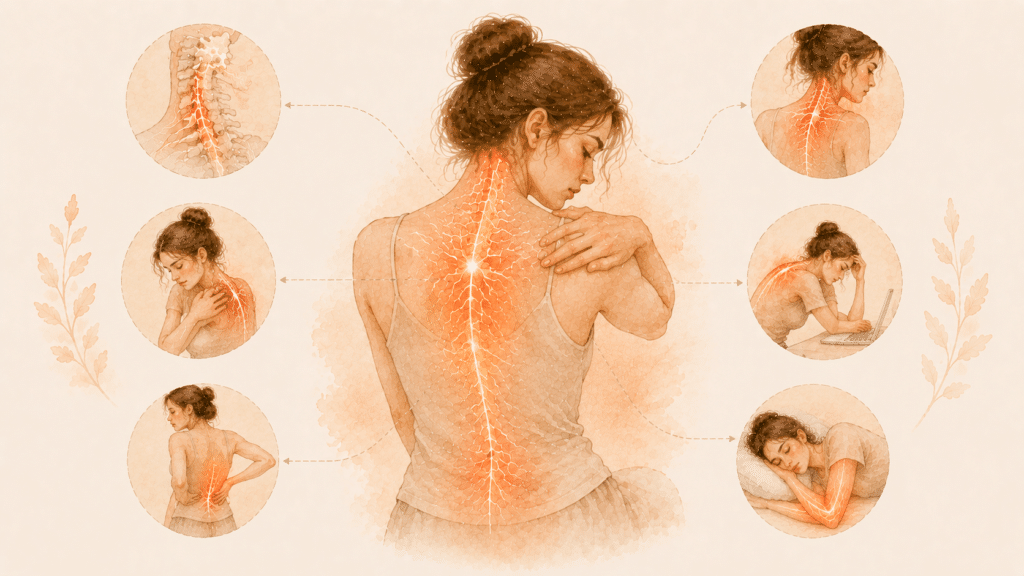
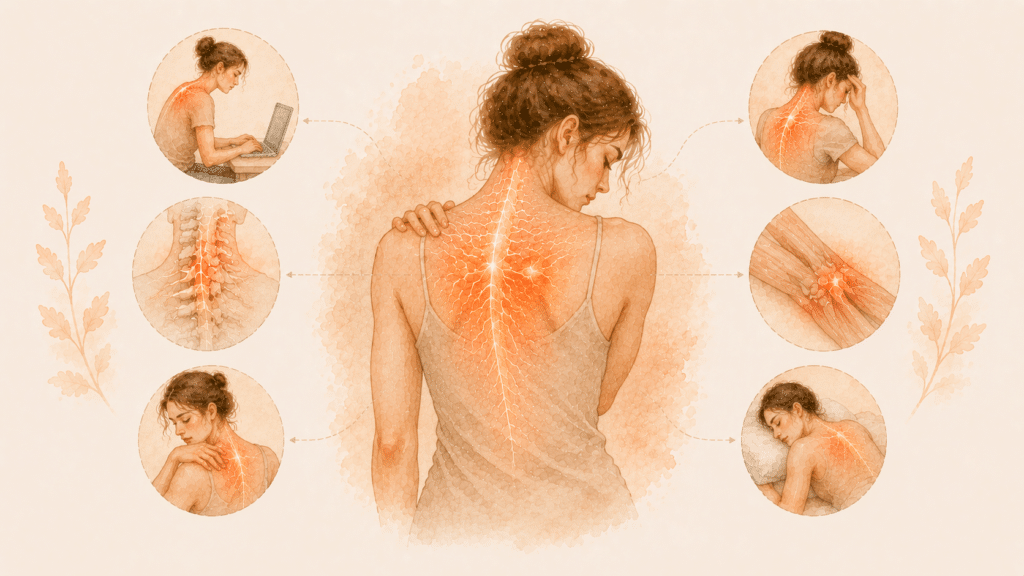
This is the most common cause. Heavy lifting, slouching at a desk, sleeping in awkward positions, or carrying a heavy bag can strain the muscles between the shoulder blades.
The Cleveland Clinic confirms that muscle strain often produces burning sensations rather than typical aching pain.
Poor Posture
Bad posture, especially from long hours at a screen, places stress on the upper back. The result is muscle imbalance, tightness, and burning around the shoulder blades.
I personally felt this for years until I adjusted my workstation. Tiny posture changes lead to surprisingly real results.
Pinched Nerves in the Cervical Spine
Cervical nerve compression can cause burning in the upper back, neck, or shoulders. It often comes with tingling, weakness, or shooting sensations down the arm.
Thoracic Outlet Syndrome (TOS)
TOS happens when nerves or blood vessels between the collarbone and first rib get compressed. Symptoms can include burning, tingling, or coldness in the upper back, arms, or hands.
Shingles (Herpes Zoster)
Shingles often appears on one side of the upper back, causing a burning sensation followed by a painful rash. The Mayo Clinic confirms that shingles symptoms can appear before the rash becomes visible.
Common Causes of Burning Sensation in the Middle of the Back
Mid-back burning is one of the most searched topics because it’s both common and confusing. Here are the most common reasons.
Muscle Fatigue from Prolonged Sitting
Sitting for long periods places constant strain on the mid-back muscles. Over time, this leads to tightness, burning, and stiffness.
People who sit at desks all day are especially prone to this. I noticed mine improve once I started taking short walking breaks every hour.
Spinal Disc Issues
A bulging or herniated disc in the thoracic spine can cause burning sensations in the middle of the back. The Cleveland Clinic notes that disc issues can affect nearby nerves and produce burning rather than sharp pain.
Nerve Irritation (Thoracic Radiculopathy)
This is when nerve roots in the mid-spine get irritated or compressed. It can cause burning that wraps around the chest or sides.
Kidney Issues
Kidney problems can sometimes produce burning sensations in the middle or lower back, depending on the affected area. Conditions like kidney infections or stones may come with burning during urination, fever, or nausea.
If your burning is paired with urinary symptoms or fever, see a doctor promptly.
Anxiety and Muscle Tension
Anxiety can cause real physical symptoms, including burning in the mid-back. Stress often tightens the upper and middle back muscles, which leads to nerve irritation.
I’ve personally felt my own mid-back burn during high-pressure weeks. Once stress eased, the sensation often disappeared.
Common Causes of Burning Sensation in the Lower Back
Lower back burning is one of the most common back complaints overall. Here are the main causes.
Sciatica
Sciatica happens when the sciatic nerve is compressed, often from a herniated disc in the lower back. Symptoms can include burning, tingling, or sharp sensations that travel down the leg.
Lower Back Muscle Strain
Heavy lifting, sudden twisting, or prolonged sitting can strain the lower back muscles. Burning is a common symptom, often paired with stiffness.
Spinal Stenosis
This is the narrowing of spaces in the spine, putting pressure on nerves. It’s a common cause of burning in older adults, especially during prolonged standing or walking.
Kidney Problems
The kidneys sit closer to the lower back, so issues like infections or stones can cause burning sensations. If your lower back burning comes with urinary changes or fever, get it checked.
Peripheral Neuropathy
Long-term diabetes or other systemic conditions can cause burning sensations in the lower back, hips, or legs. The CDC reports that nearly half of people with diabetes develop nerve issues at some point.
Inflammation or Arthritis
Lower back inflammation from arthritis or autoimmune conditions like ankylosing spondylitis can cause burning, stiffness, and limited movement.
When Burning in the Back Becomes a Red Flag
Most cases of backburning are mild, but some need urgent attention. Please see a doctor immediately if your burning sensation is paired with:
- Numbness or weakness in the legs
- Loss of bladder or bowel control
- Severe back pain after an injury
- Fever and chills
- Chest pain or shortness of breath
- Sudden severe burning on one side of the back
These can be signs of serious nerve compression, infection, or even a cardiac issue. Always trust your instincts.
The Posture Connection: Why It Matters More Than People Realise
This is one of the most underrated parts of backburning. Posture affects every muscle, nerve, and spinal disc in the back.
Hunching forward at a desk, slouching while scrolling on a phone, or sleeping on a poor mattress can stress the spine for hours every day. Over time, the muscles compensate by tightening, which produces burning and discomfort.
I noticed huge improvements once I switched to an ergonomic chair, kept my screen at eye level, and stopped leaning forward while typing. Tiny changes, real results.
How Doctors Diagnose Burning Back Sensations
When I finally got mine evaluated, the process was thorough. A diagnosis usually starts with a physical exam, where doctors assess posture, range of motion, reflexes, and tender points.
If muscular causes are suspected, doctors may order X-rays or recommend physical therapy. For nerve-related issues, MRI scans, EMG, or nerve conduction studies help confirm the diagnosis.
Blood tests check for infections, inflammation, B12 deficiency, and blood sugar levels. For shingles, a visible rash or skin testing confirms the diagnosis. The right evaluation prevents months of guesswork.
Treatment Options That Truly Help
Treatment depends entirely on the cause, but here’s what generally works in real-world cases.
Lifestyle Adjustments
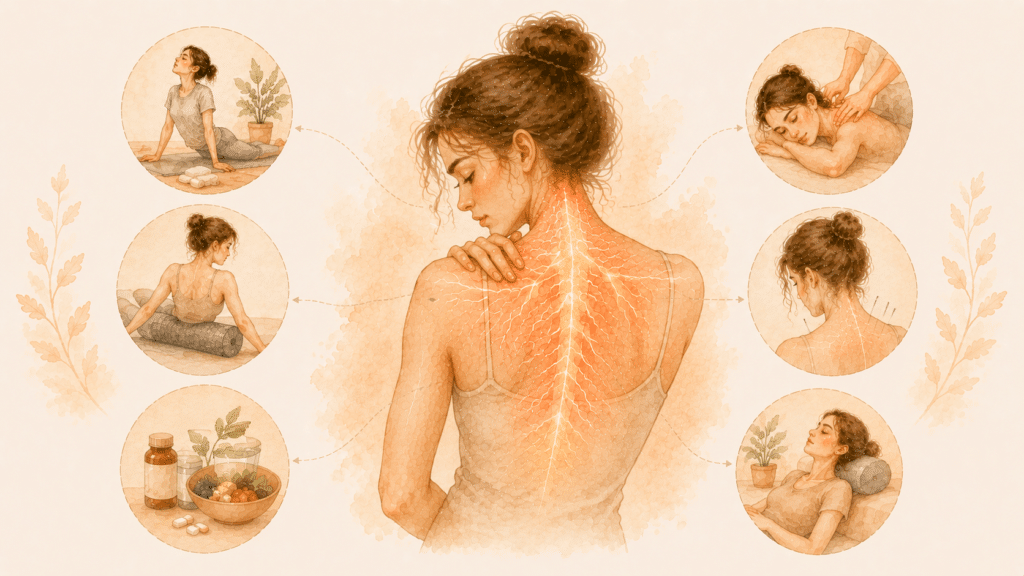
For mild cases, lifestyle changes do a lot. Improving posture, taking breaks from screens, stretching daily, and adjusting workstation ergonomics reduce symptoms significantly.
Physical Therapy
A skilled physiotherapist can help with stretches, posture corrections, and nerve glides. This is especially helpful for muscle strain, sciatica, and chronic back tension.
Medications
Doctors may prescribe NSAIDs, muscle relaxants, gabapentin, or pregabalin depending on the cause. Topical creams with capsaicin or menthol provide short-term relief.
For shingles, antiviral medications like acyclovir or valacyclovir reduce symptoms when started early.
Heat and Cold Therapy
Alternating heat and cold packs help reduce muscle stiffness and nerve irritation. This is simple, but it genuinely works for many people.
Address the Underlying Condition
If kidney issues are involved, treating the infection or stones clears the burning. If neuropathy is the cause, managing diabetes or B12 deficiency improves symptoms.
Stress and Anxiety Management
If anxiety is involved, slow breathing, mindfulness, and regular exercise reduce nerve sensitivity. CBT helps when stress is the long-term trigger.
I personally found that even small daily relaxation routines reduced my mid-back burning significantly.
Surgery in Severe Cases
In severe cases of disc herniation or spinal stenosis, surgical options provide real relief. These are usually last-resort treatments.
Simple Habits That Reduce Back Burning
A few small habits genuinely help. Stretching daily, maintaining good posture, drinking enough water, sleeping on a supportive mattress, and avoiding heavy lifting where possible reduce back strain over time.
If you sit at a desk all day, try standing breaks every 30 to 45 minutes. Even small movements help reduce nerve and muscle stress.
Frequently Asked Questions
It’s usually due to nerve irritation, muscle strain, posture issues, or stress. Burning without a rash typically points to internal causes rather than skin conditions.
Yes. Stress can tighten back muscles and increase nerve sensitivity, leading to burning sensations.
Brief, occasional burning is usually harmless. Worry only when it’s persistent, severe, or paired with weakness, numbness, or urinary changes.
If burning comes with leg weakness, loss of bladder control, fever, severe pain, or chest discomfort, treat it as urgent and seek medical care immediately.
Final Thoughts
A burning sensation in the back can mean many things, depending on the location and the surrounding symptoms. From muscle strain and posture issues to nerve damage and kidney problems, the causes are varied, and so are the treatments.
If your back keeps acting like it’s hosting a private heat lamp, don’t ignore it and don’t panic either. Track the patterns, fix the basics, and consult a qualified doctor when something feels off. Your back supports your entire life every day. The kindest thing you can do is take care of it before it forces you to.