
Have you ever felt like tiny ants were marching across your skin, but when you looked, there was absolutely nothing there? That weird, unsettling feeling that makes you scratch, check, and then double-check just to be sure. I’ve experienced it too, and the first time it happened, I genuinely thought a bug had crawled into my sleeve. Spoiler, it hadn’t.
This sensation has a real medical name and real causes behind it. In this article, I’ll break down what crawling skin actually means, why it happens even with no rash in sight, and how to stop it. Everything I’m sharing is grounded in trusted medical sources like the Mayo Clinic, Cleveland Clinic, and the NHS, plus real-world patterns I’ve come across over time.
What Is Formication?
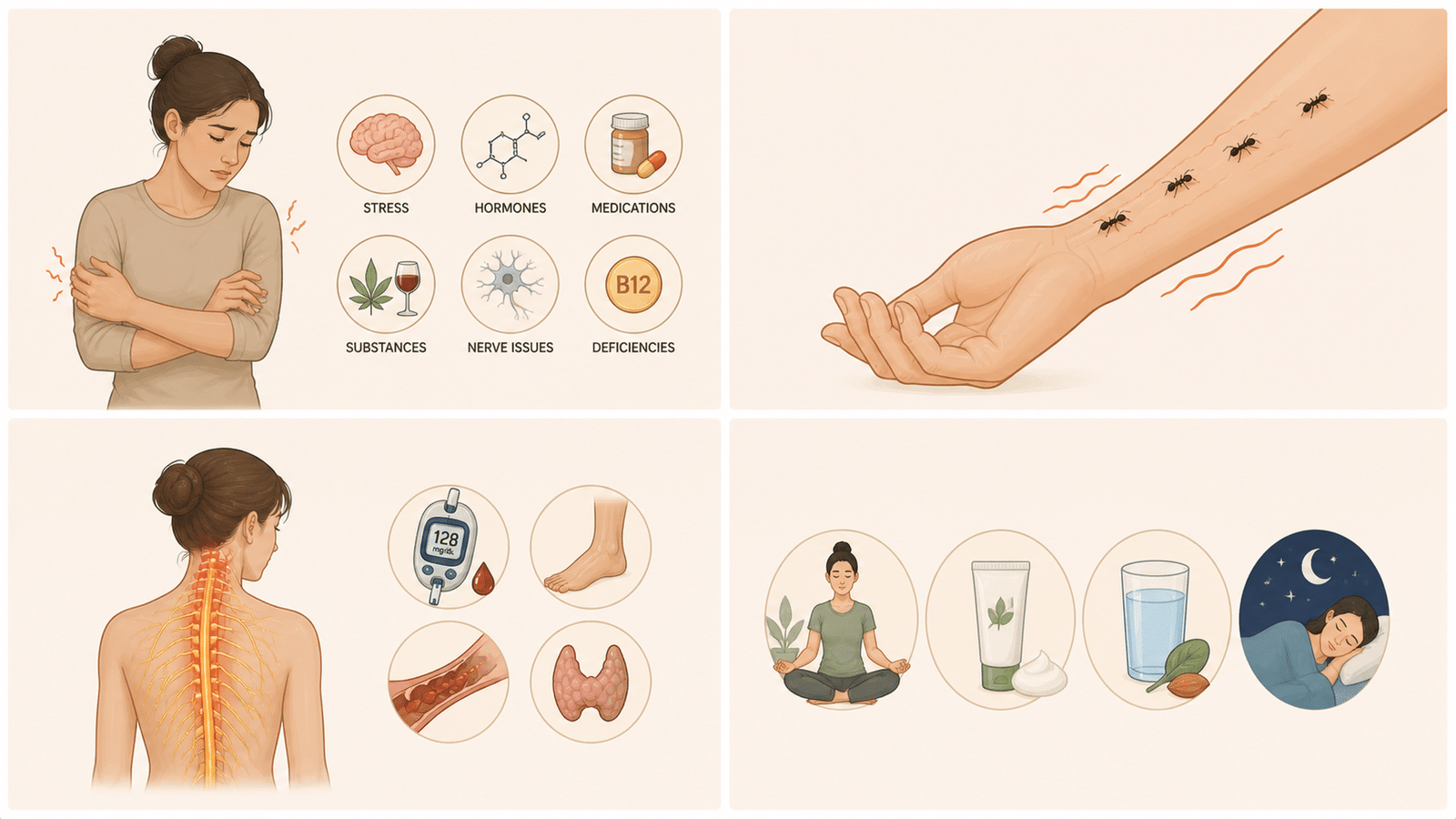
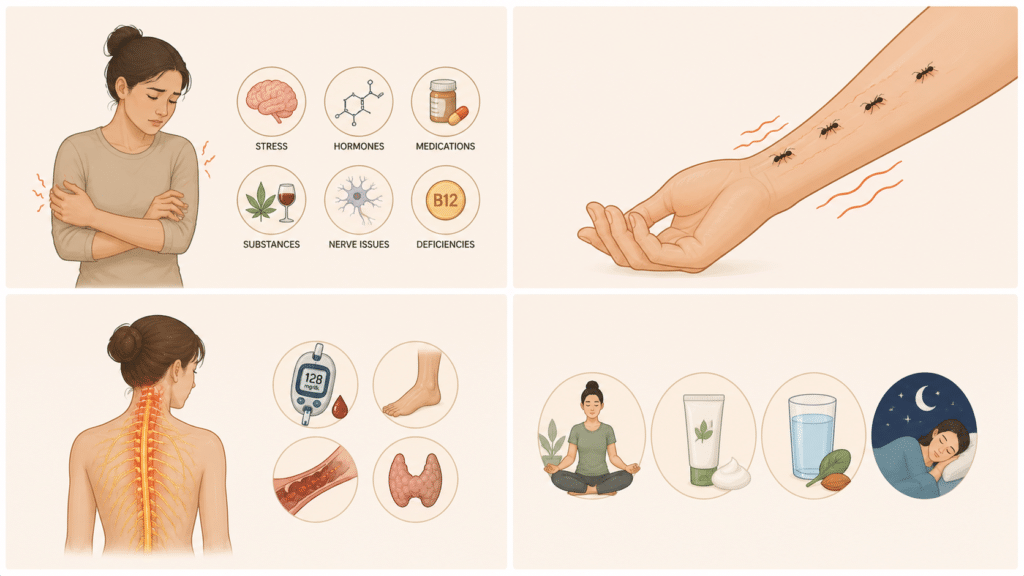
The medical term for a crawling sensation on the skin is formication. It comes from the Latin word “formica”, meaning ant. Honestly, whoever named it nailed it because that’s exactly what it feels like.
Formication is a type of paraesthesia, which simply means an abnormal skin sensation. It can show up anywhere: your arms, legs, scalp, back, or even your face. What makes it tricky is that it often appears with no rash, no bites, and no visible cause, which is exactly why people end up confused and a little freaked out.
Why a Crawling Sensation Happens With No Rash
When skin itches, our brains naturally expect a visible reason. A bite, a rash, dry skin, something. But formication is a nerve-driven sensation, not a skin-driven one. The signal is coming from the nervous system, not the surface.
That’s why creams, anti-itch sprays, and even cold compresses often do very little. You’re treating the wrong layer. Once I understood this, my approach to handling it completely changed.
Common Causes of Crawling Skin
Let me walk you through the most common reasons behind a crawling sensation, especially when there’s no rash to explain it.
Anxiety and Stress
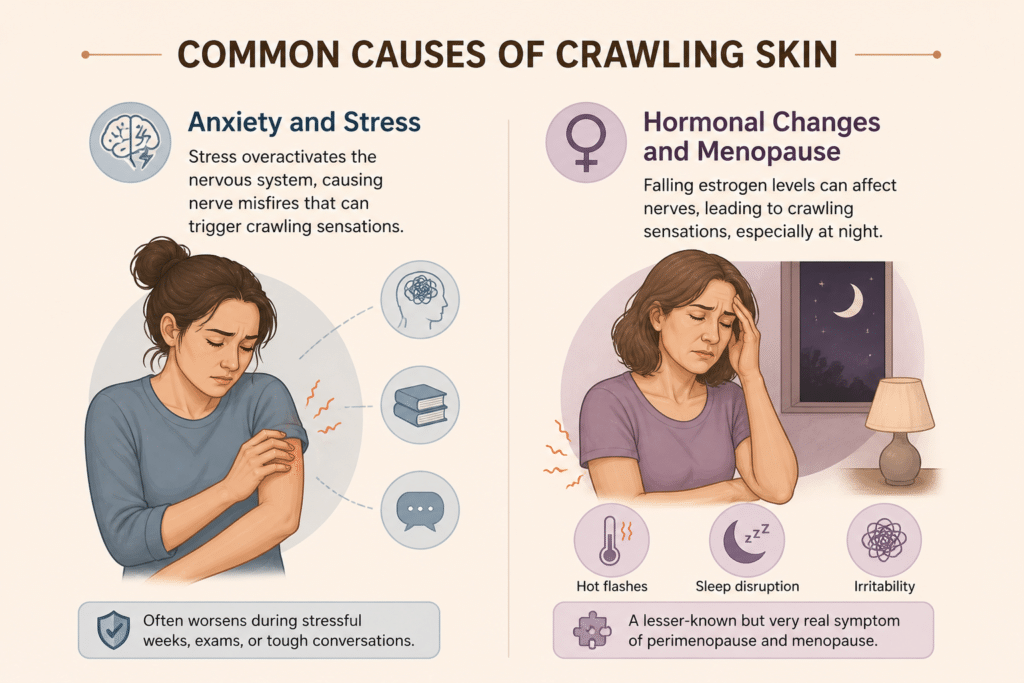
This is by far the most common cause I’ve come across. When the body enters a stressed state, the nervous system goes into overdrive. Nerves misfire, sending random sensations to the brain, including the famous “something is crawling on me” feeling.
I’ve had clients describe it perfectly: “It only happens when my mind won’t switch off.” If your crawling skin shows up during stressful weeks, exam time, or after a tough conversation, anxiety might be the real driver.
Hormonal Changes and Menopause
Menopause is a sneaky cause that doesn’t get talked about enough. Falling oestrogen levels affect the nervous system, and formication is actually a recognised symptom during perimenopause and menopause. The North American Menopause Society lists it among the lesser-known but very real symptoms women experience.
It often appears suddenly, especially at night, and can come along with hot flashes or sleep disruption. If you’re in that phase of life, this might be the missing puzzle piece.
Medications and Drug Side Effects
Certain medications can trigger formication as a side effect. Common culprits include some antidepressants, ADHD medications, and stimulants. Even nicotine withdrawal can cause it.
If you’ve recently started or stopped a medication and the crawling sensation popped up around the same time, it’s worth talking to your doctor. Don’t stop any medication on your own, but do flag it.
Substance Use and Withdrawal
This is a more serious cause but worth mentioning. Stimulants like methamphetamine and cocaine, as well as alcohol withdrawal, can cause intense crawling sensations. The condition is sometimes called “meth mites” or “coke bugs”, though those terms are more cultural than clinical.
These are well-documented in addiction medicine literature and require professional treatment. If this applies to you or someone you know, please reach out to a qualified provider.
Skin Conditions Like Dermatitis or Dry Skin
Sometimes the cause is genuinely on the skin, just not visibly so. Mild dermatitis, eczema, or extremely dry skin can irritate nerve endings without producing an obvious rash. Cold weather, harsh soaps, and dehydration tend to make this worse.
I’ve noticed my own crawling sensations spike during winter when I forget to moisturise. Tiny detail, big difference.
Nerve-Related Causes
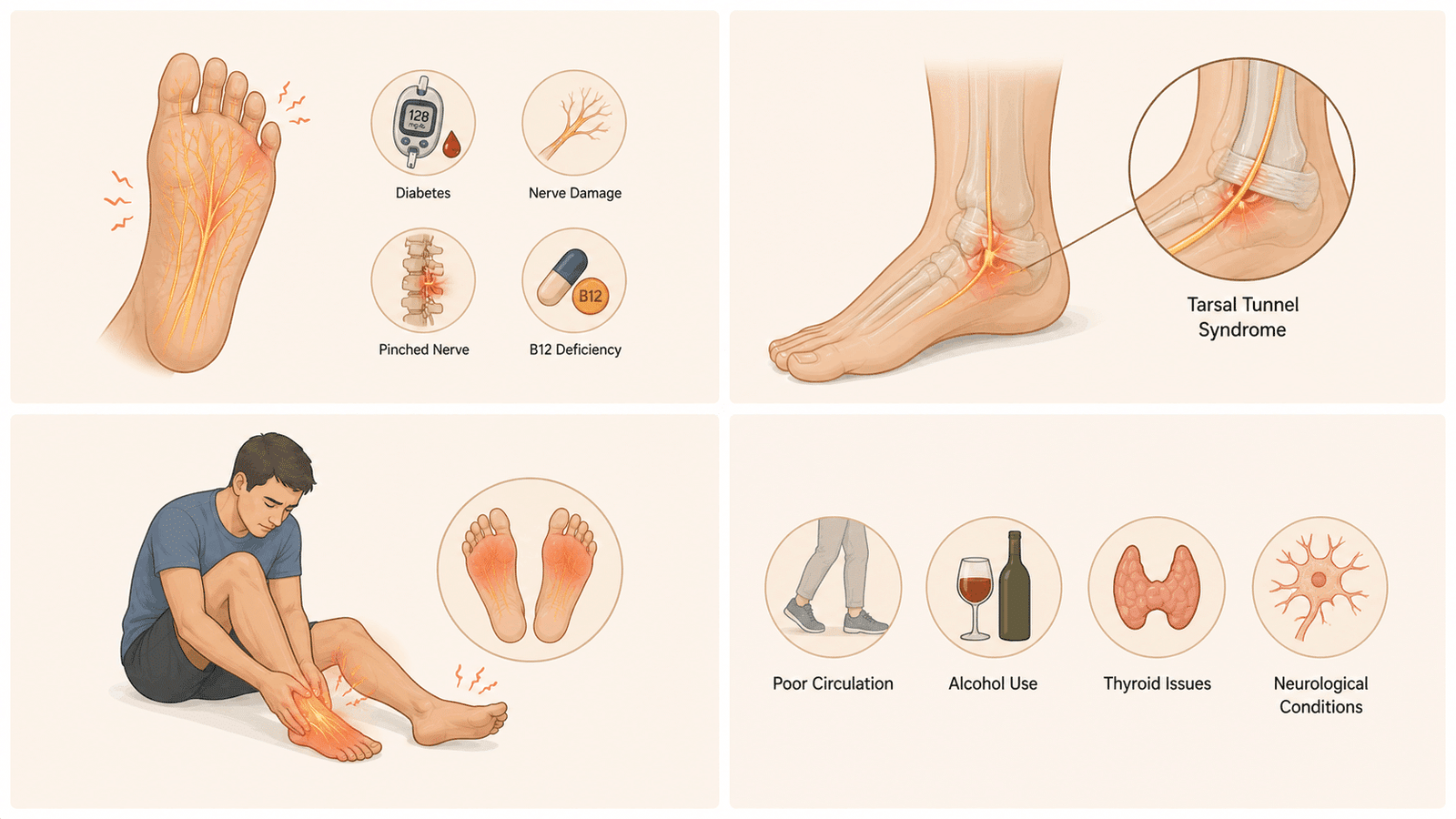
Conditions like peripheral neuropathy, multiple sclerosis, fibromyalgia, and shingles can all cause crawling sensations. Diabetic neuropathy is one of the most common, as long-term high blood sugar damages small nerves and causes random misfires.
If your crawling sensation comes with numbness, weakness, or burning, a neurological cause is worth ruling out.
Vitamin and Mineral Deficiencies
Low B12 is a quietly common reason behind unexplained skin sensations. Iron and magnesium deficiencies can also play a role. The good news is that all of these show up easily in a basic blood test, and correction often clears the symptoms.
Sleep Deprivation
This one surprises people. Severe sleep deprivation can mess with sensory processing, leading to tingling and crawling sensations. I’ve felt this personally during back-to-back project weeks. Once sleep returned to normal, so did my skin.
Mental Health Conditions
In some cases, formication is linked to conditions like depression, OCD, or delusional parasitosis, where a person genuinely believes insects are on or under their skin. This isn’t something to dismiss or judge. It’s a real medical condition that responds well to proper treatment when handled with care.
Environmental and Allergy Triggers
Tiny irritants like dust, pet dander, fabric softeners, or even synthetic clothing fibres can cause crawling sensations without leaving a clear rash. I once spent days trying to figure out why my arms felt weird, only to realise it was a new laundry detergent. True story.
When Crawling Skin Becomes a Red Flag
Most of the time, formication is annoying but not dangerous. However, there are situations where it deserves urgent attention.
If the crawling sensation comes with confusion, hallucinations, severe weakness, slurred speech, or sudden changes in vision, please seek medical care right away. Persistent symptoms lasting weeks, especially with weight loss, fatigue, or numbness, also need a proper checkup.
Trust your gut. If something feels off beyond just irritation, get it looked at.
How Doctors Diagnose Crawling Skin
When I finally went to a doctor about a persistent crawling sensation, I expected a five-minute conversation. Instead, the process was thorough, which honestly made me trust the result more.
A proper evaluation usually starts with a detailed history. Doctors ask about onset, frequency, medications, mental health, and lifestyle. From there, blood tests check for B12, iron, thyroid function, and blood sugar.
If neurological causes are suspected, nerve conduction studies, EMG, or even an MRI may be ordered. For persistent or unexplained cases, a referral to a neurologist or dermatologist is common.
How to Stop the Crawling Sensation
Treatment depends entirely on the cause, but here’s what generally works in real life.
Stress and Anxiety Management
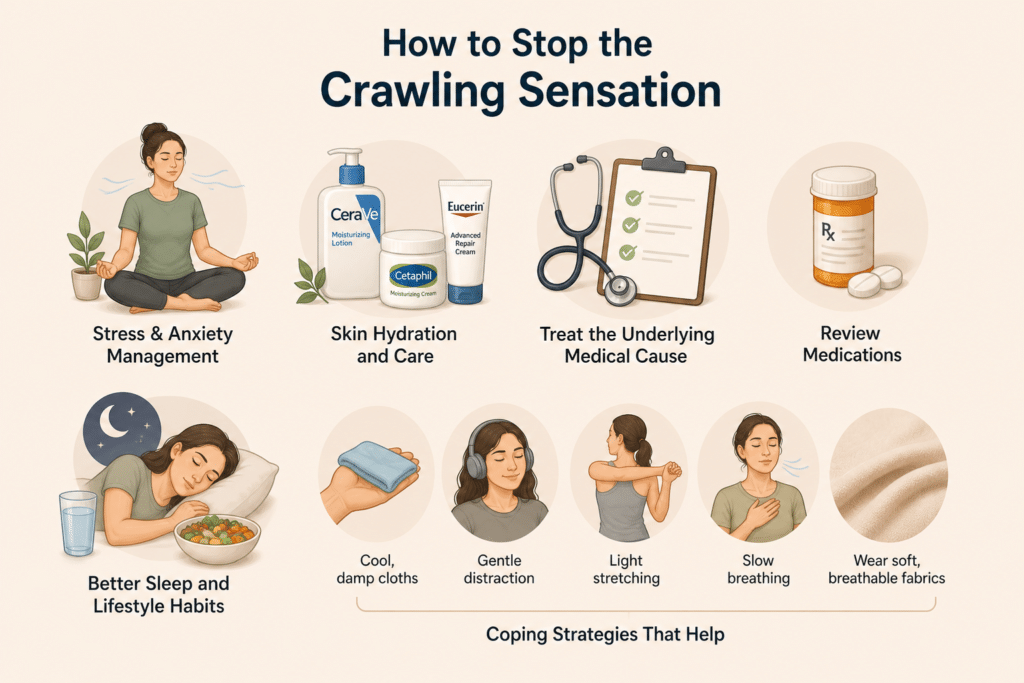
If anxiety is the driver, calming the nervous system helps more than any cream ever could. Deep breathing, regular exercise, therapy, and reducing caffeine can all reduce frequency. I’ve personally found that just 10 minutes of slow breathing before bed cuts down nighttime episodes drastically.
Skin Hydration and Care
For dryness-related causes, fragrance-free moisturisers, lukewarm showers, and gentle cleansers make a real difference. Brands like CeraVe, Cetaphil, and Eucerin are commonly recommended by dermatologists for sensitive skin.
Treating the Underlying Medical Cause
If the cause is a deficiency, hormonal change, or neurological issue, treating that condition usually clears the sensation. B12 supplements, hormone therapy, diabetes management, and nerve-pain medications like gabapentin are common options when needed.
Reviewing Medications
If a medication is the culprit, your doctor may adjust the dose or switch you to an alternative. Never stop medication abruptly without medical guidance, even if you’re sure it’s the cause.
Better Sleep and Lifestyle Habits
Improving sleep quality, drinking enough water, and eating balanced meals does more than people expect. Tiny lifestyle improvements often resolve mysterious symptoms that no test ever explains.
Coping Strategies That Actually Help
When the crawling sensation hits, fighting it usually makes it worse. A few things that genuinely help include cool, damp cloths on the affected area, gentle distraction, light stretching, and slow breathing.
I’ve also noticed that wearing soft, breathable fabrics like cotton instead of synthetic blends reduces episodes for many people. It’s not a cure, but it helps the skin stop reacting to constant irritation.
Frequently Asked Questions
It usually means your nerves are misfiring due to stress, hormones, deficiencies, or medication side effects, not because of an actual insect or skin issue.
Yes, very commonly. Anxiety affects how nerves send signals, which can produce all kinds of strange sensations, including formication.
Often, yes, especially if it’s caused by stress, dryness, or temporary triggers. Persistent crawling sensations usually need a proper diagnosis.
Not by itself. But it can be a symptom of something that needs treatment, so it’s worth investigating if it doesn’t ease within a few days.
Final Thoughts
A crawling sensation on the skin is unsettling, but it’s almost always treatable once you understand what’s behind it. From anxiety and menopause to medications and deficiencies, the causes are varied, and so are the solutions.
If your skin keeps acting like it’s hosting an invisible parade, don’t ignore it and don’t panic either. Track the pattern, note the triggers, and talk to a qualified doctor. Your nervous system is doing its best to tell you something. The kindest thing you can do is listen.