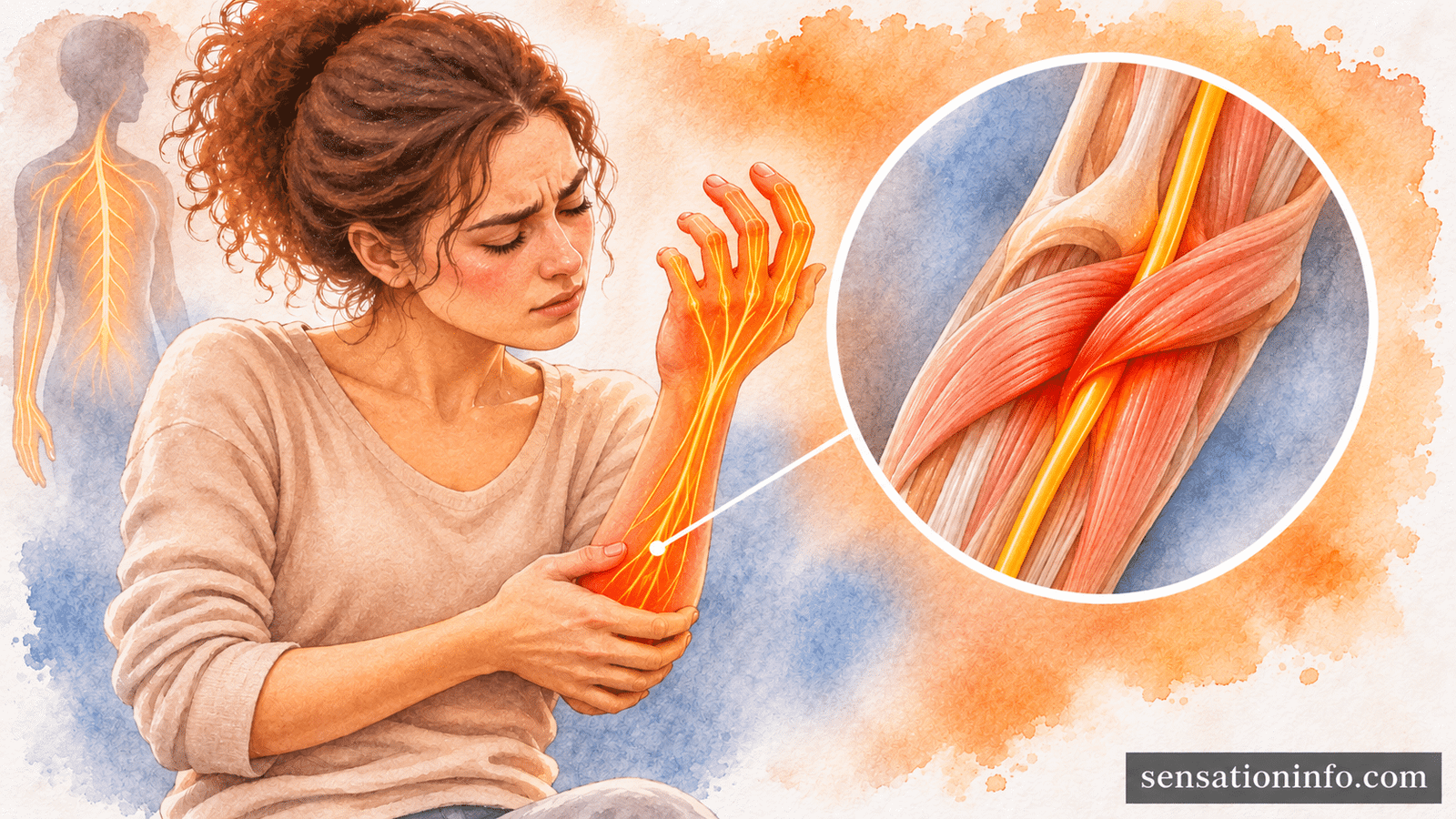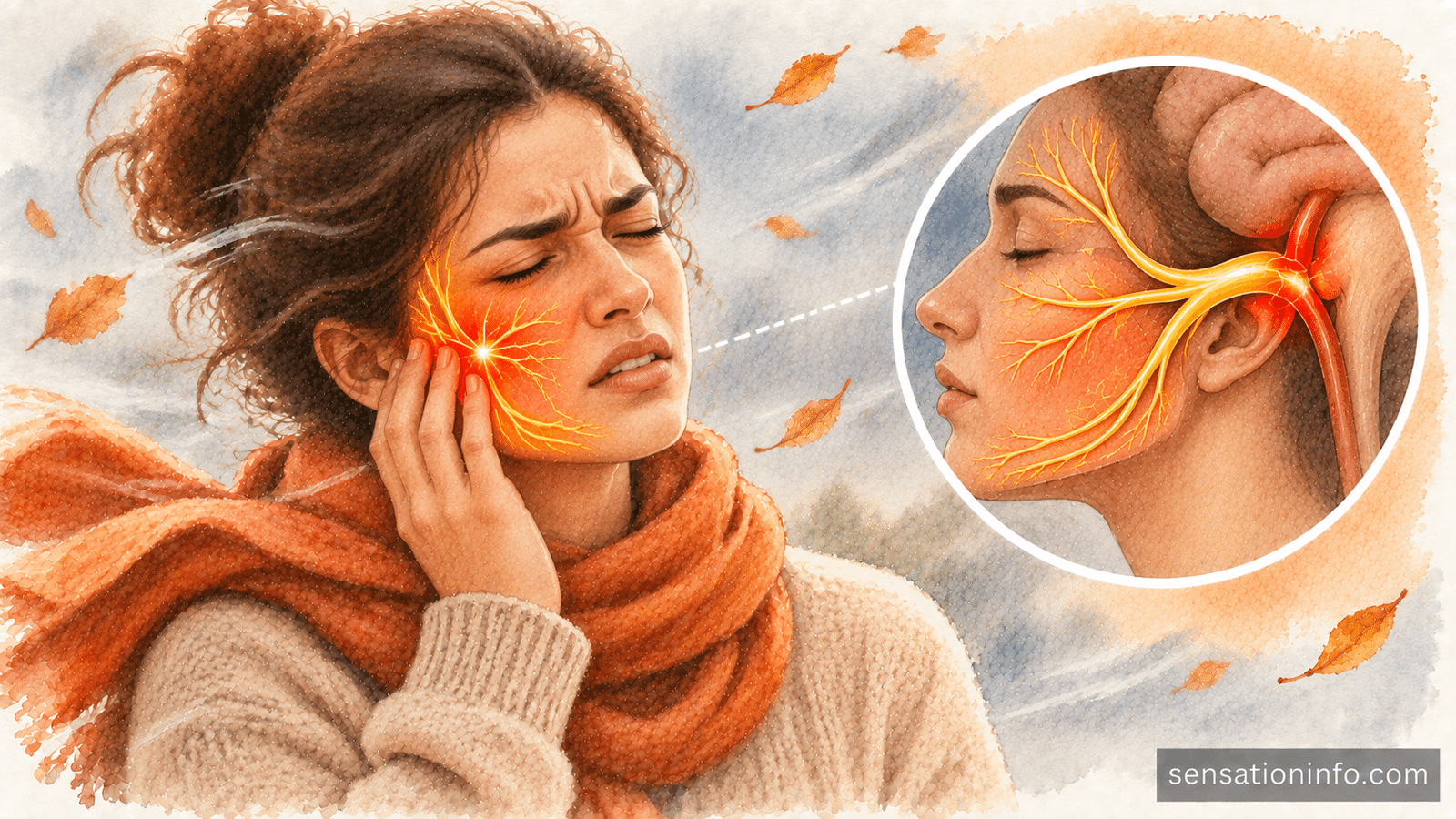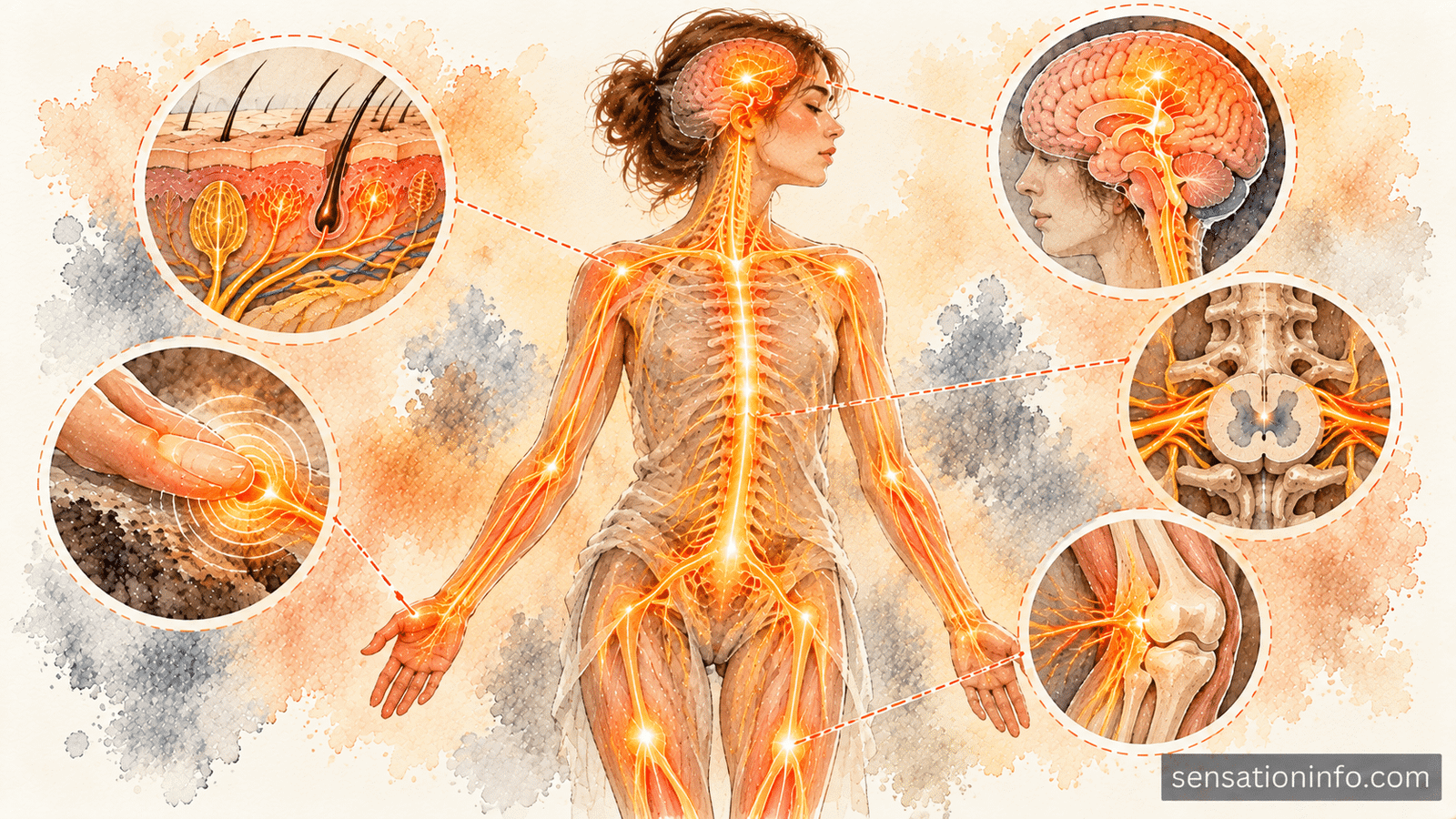

Sensation is the biological process your body uses to gather information about the physical world and send it to your brain. When you touch a hot stove, feel a soft blanket, or notice a sharp pain, thousands of nerve endings fire simultaneously to deliver that message. Understanding how healthy nerves communicate is the first step to figuring out why you might feel abnormal sensations like tingling or burning. Our complete guide to abnormal sensations explains each type. Your nervous system acts as a high speed network that translates physical touch into electrical signals.
To understand what sensation truly is, you have to look past the skin. The feeling of touch does not actually happen in your fingers or toes. The physical contact happens there, but the actual sensation is constructed entirely in your brain.
The Somatosensory System Explained
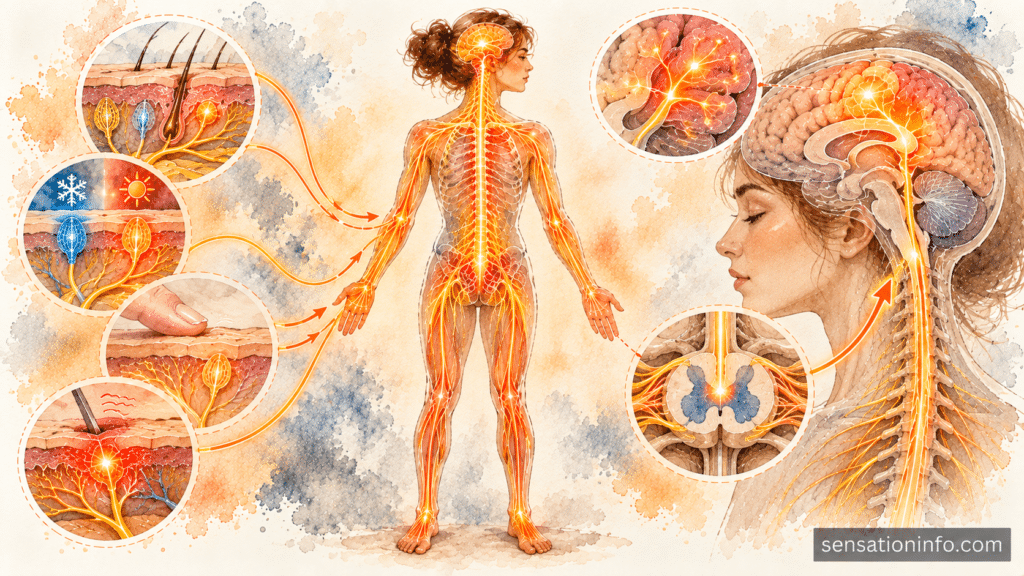
The network responsible for feeling the world around you is called the somatosensory system. This system spans your entire body and consists of two main divisions.
The peripheral nervous system includes all the nerves outside your brain and spinal cord. These are the sensory pathways running down your arms, through your torso, and down to the tips of your toes. They act as the data collectors.
The central nervous system consists of your spinal cord and your brain. The spinal cord acts as the main highway carrying data from the peripheral nerves up to the processing center. Your brain acts as the central computer that translates this raw electrical data into the physical feelings you recognize.
According to the National Institutes of Health, the human brain contains roughly 86 billion neurons, and a large portion of these are dedicated to processing sensory input.
Types of Sensory Receptors in Your Skin
Your skin is not just a protective barrier. It is packed with microscopic sensors called sensory receptors. Different receptors are built to detect completely different types of physical changes, known as stimuli.
| Receptor Type | What It Detects | Example of How It Feels |
| Mechanoreceptors | Pressure, vibration, and physical texture | Feeling the ridges on a coin or the tightness of a shoe |
| Thermoreceptors | Hot and cold temperatures | Stepping onto cold bathroom tiles |
| Nociceptors | Tissue damage and intense stimuli | A paper cut or touching a hot pan |
| Proprioceptors | Muscle stretch and joint position | Knowing where your hand is even with your eyes closed |
Mechanoreceptors are further divided into specialized groups. Some sit very close to the surface of the skin to detect light touch. Others sit deep in the tissue to sense heavy pressure and deep vibration. This is why a gentle breeze feels fundamentally different from a deep tissue massage.
The Sensory Pathway: How a Signal Reaches Your Brain
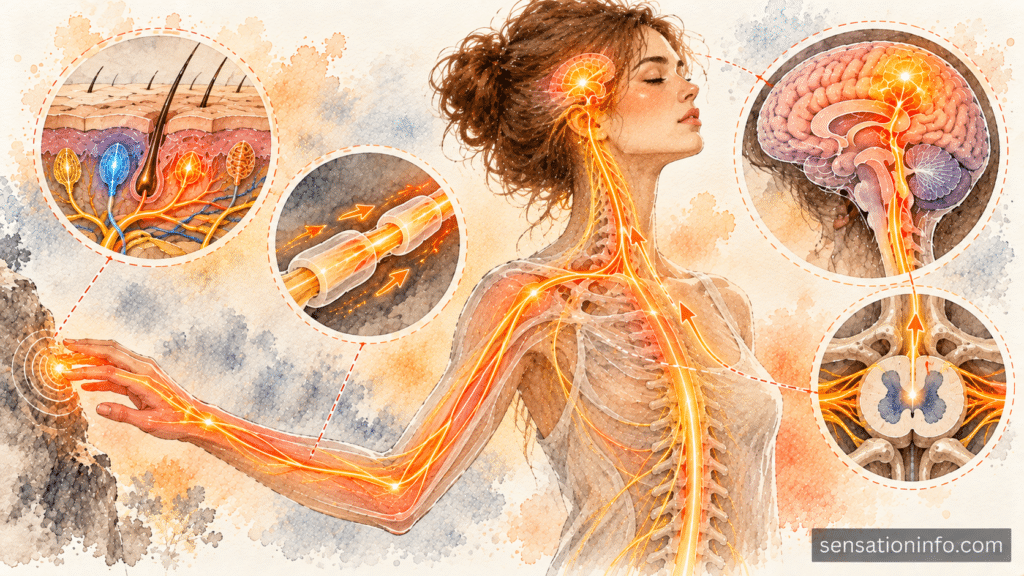
The journey from a physical touch to a conscious feeling happens in a fraction of a second. The process follows a strict biological sequence.
1. The Physical Stimulus
Everything begins with a physical event. This could be a change in temperature, mechanical pressure, or chemical irritation. The sensory receptors in your skin detect this change.
2. The Action Potential Spark
Nerves cannot send physical pressure to the brain. They must convert the physical event into an electrical signal. When a receptor is triggered, it opens channels in the cell membrane. Sodium ions rush in, creating a tiny electrical charge. This electrical spark is called an action potential.
3. The Spinal Cord Highway
Once the action potential is created, it travels up the nerve fiber. Many of your sensory nerves are wrapped in a protective fatty layer called a myelin sheath. This sheath acts like insulation on a copper wire, allowing the electrical signal to travel at extremely high speeds.
Different feelings travel at different speeds. Sharp pain and light touch travel on thick myelinated nerve fibers, meaning the signal reaches your brain instantly. Aching pain and temperature changes travel on thin unmyelinated fibers, which is why a dull ache often sets in a few seconds after an initial injury.
4. Brain Stem Crossover
The sensory signal travels up the spinal cord until it reaches the brain stem. At this point, a fascinating biological crossover happens. Sensory signals from the right side of your body cross over to be processed by the left side of your brain, while signals from the left side cross over to the right side.
5. Arrival at the Somatosensory Cortex
The signal finally arrives at a specific strip of tissue in the brain called the somatosensory cortex. This area contains a highly organized map of your entire body. If a signal arrives at the section dedicated to your index finger, your brain registers the feeling in your index finger. You can explore how different areas of the brain map to different body parts by viewing a complete body sensation map.
Areas of your body that require fine touch, like your lips and fingertips, take up a massive amount of space in the somatosensory cortex. Areas that do not need fine detail, like the middle of your back, take up very little space.
Sensation in Psychology: The Bridge to Perception
While neurology focuses on how physical nerves carry electrical impulses, sensation in psychology examines how the mind receives and represents data from the physical world.
In psychology, sensation is the initial stage of data collection using bottom-up processing, where sensory receptors detect physical energy without yet attaching any meaning to it. Once that raw electrical signal reaches the somatosensory cortex, perception takes over. Perception uses top-down processing, where the brain interprets the signal using past memories, emotions, and context.
This explains why two people can experience the exact same physical touch, but perceive it differently based on stress, attention, or medical history.
Sensory Learning and Neural Adaptation
Your nervous system does not just receive electrical signals once; it records patterns to protect the body and refine movement through sensory learning.
- What Is Sensation Learning? It is the neuroplasticity of the brain, where repeated activation of sensory receptors strengthens synaptic connections, allowing you to recognize textures, temperatures, and movements automatically.
- Which Senses Are Involved? Tactile mechanoreceptors guide fine motor skills; proprioceptors build muscle memory for body positioning; and nociceptors train protective reflexes against injury.
- Why Learning Sensation Matters: It allows the brain to filter out harmless background stimuli (sensory adaptation) while reacting instantly to sudden physical threats or uneven ground.
- When Sensory Learning Happens: It occurs during infancy and early childhood development, throughout adult skill acquisition (such as playing an instrument or exercising), and during clinical sensory re-education when patients recover from nerve damage.
When the Sensory Pathway Fails
A healthy nervous system delivers accurate messages. However, this complex system can experience interference. When a nerve is pinched, damaged, or deprived of oxygen, it begins to misfire.
Instead of sending signals only when you touch something, a damaged nerve might send a constant stream of random electrical impulses. Your brain interprets these random electrical spikes as tingling, burning, or pins and needles. This is known as neuropathy. Learning about the different types of nerve damage can help you understand these misfires, which you can explore in this comprehensive guide to neuropathy.
Conversely, if a nerve is severely compressed or entirely severed, the electrical signals cannot reach the brain at all. When the brain receives no signals from a body part, the result is numbness. You can learn more about the specific causes of loss of sensation to understand why a body part might go entirely numb.
Normal Sensation Versus Nerve Damage
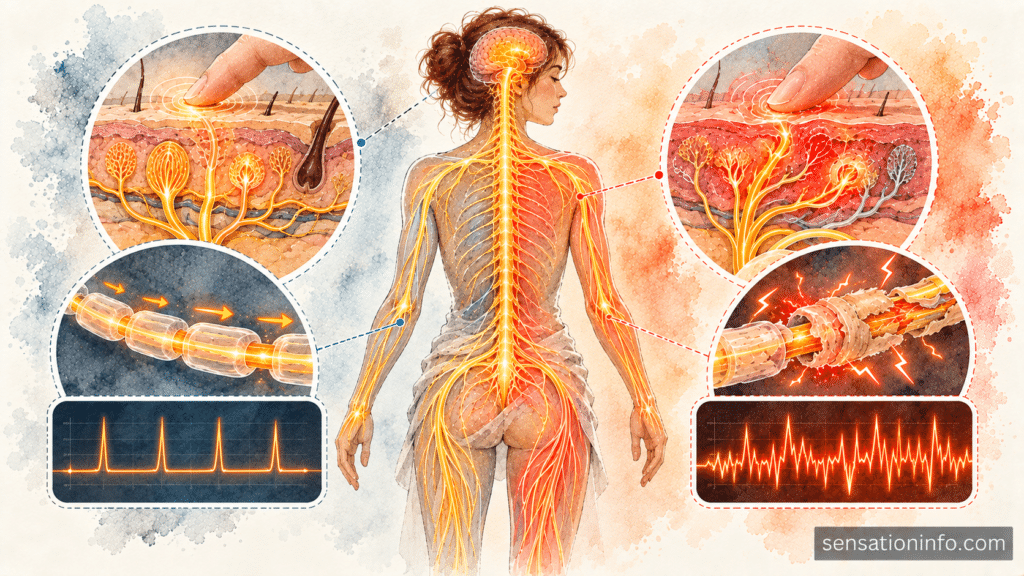
It can be difficult to tell the difference between a normal nervous system response and a damaged nerve. The table below outlines how a healthy sensory system differs from a damaged one.
| Symptom Feature | Normal Sensation | Abnormal Sensation (Nerve Damage) |
| Trigger | Requires a physical stimulus | Happens without anything touching the skin |
| Duration | Stops shortly after the stimulus is removed | Lasts for days, weeks, or months |
| Pain Response | Pain matches the severity of the injury | Severe burning or sharp pain from a light touch |
| Temperature | Feeling cold only in cold environments | A burning hot feeling even when the skin is cool to the touch |
When harmless stimuli like a bedsheet resting on your legs causes severe pain, the condition is called allodynia. This is a clear sign that the sensory processing system is amplifying signals incorrectly.
How Doctors Evaluate Tactile Sensation
If you are experiencing abnormal feelings, a doctor will evaluate your sensory pathways to find where the breakdown is occurring.
During a physical exam, a physician may touch different parts of your body with a soft cotton swab, a tuning fork, or a dull pin. This tests whether your mechanoreceptors and nociceptors are functioning correctly. They may also test your reflexes using a small rubber hammer, which evaluates how well your peripheral nerves communicate with your spinal cord.
For a more precise look at your sensory pathways, a doctor might order nerve conduction studies. This test uses small electrical pulses to measure exactly how fast your nerves are sending signals. If the signal slows down at a specific point in your arm or leg, the doctor can pinpoint exactly where the nerve is compressed or damaged.
Critical Warning Signs of Neurological Emergencies
While many sensory changes are temporary or harmless, some patterns indicate a severe medical emergency. You should seek immediate emergency medical care if you experience any of the following red flags:
- Sudden numbness on one side of your face, arm, or leg
- Loss of sensation accompanied by an inability to speak or understand speech
- Sudden, severe numbness below the waist
- Complete loss of bowel or bladder control alongside numbness in the groin area
- A feeling of weakness that rapidly spreads up your legs
- Numbness that follows a traumatic injury to your head, neck, or back
These symptoms can indicate conditions that require immediate intervention, such as a stroke or severe spinal cord compression. Do not wait to see if these specific symptoms improve on their own.
Daily Habits for Protecting Sensory Health
You can support healthy nerve function through daily habits. Your peripheral nervous system relies on excellent blood flow to supply oxygen to the nerve cells. Regular cardiovascular exercise keeps these blood vessels healthy and open.
Nutritional support is also critical for maintaining the myelin sheath that insulates your sensory nerves. The NIH Office of Dietary Supplements notes that proper levels of Vitamin B12 are essential for nervous system health. Managing chronic conditions, particularly high blood sugar, is the most important step in preventing long-term damage to your sensory receptors.
Key Takeaways
- Sensation is the process of converting physical touch, temperature, and pressure into electrical signals that your brain can understand.
- Sensory receptors in your skin act as specialized data collectors for different feelings like vibration, heat, and pain.
- The electrical signal, called an action potential, travels from the peripheral nervous system up the spinal cord to the brain stem.
- Your brain constructs the actual feeling of touch in a specialized area called the somatosensory cortex.
- Abnormal sensations like burning and tingling occur when damaged nerves fire random electrical signals without a physical trigger.
- Severe, sudden numbness or a loss of bowel control requires immediate emergency medical evaluation.
Frequently Asked Questions
Sensation is the strict biological process of your nerves collecting data and sending it to your brain. Perception is how your brain interprets that data based on your past experiences, emotions, and memories.
If a nerve is only compressed, removing the pressure can allow full sensation to return. If the nerve fiber is physically cut or severely damaged by disease, sensation loss can be permanent, though peripheral nerves can slowly regenerate under specific medical conditions.
Sitting awkwardly compresses the nerves and blood vessels in your leg, temporarily blocking the sensory pathways to your brain. When you move and relieve the pressure, the nerves suddenly wake up and fire rapidly, which your brain interprets as a tingling or prickly feeling.
Doctor’s Recommendation
If your doctor suspects your sensory pathways are damaged, they will likely recommend specialized testing to find the exact location of the problem. A nerve conduction study is the standard clinical tool used to measure the speed and strength of electrical signals traveling from your nerve endings to your spinal cord, helping to identify compression or neuropathy.
References
- National Institutes of Health. Brain Basics: Know Your Brain. 2024.
- National Institute of Neurological Disorders and Stroke. Peripheral Neuropathy Fact Sheet. 2023.
- Cleveland Clinic. Nervous System: What It Is, Parts, Function & Disorders. 2023.
- National Institutes of Health, Office of Dietary Supplements. Vitamin B12 Fact Sheet for Consumers.