
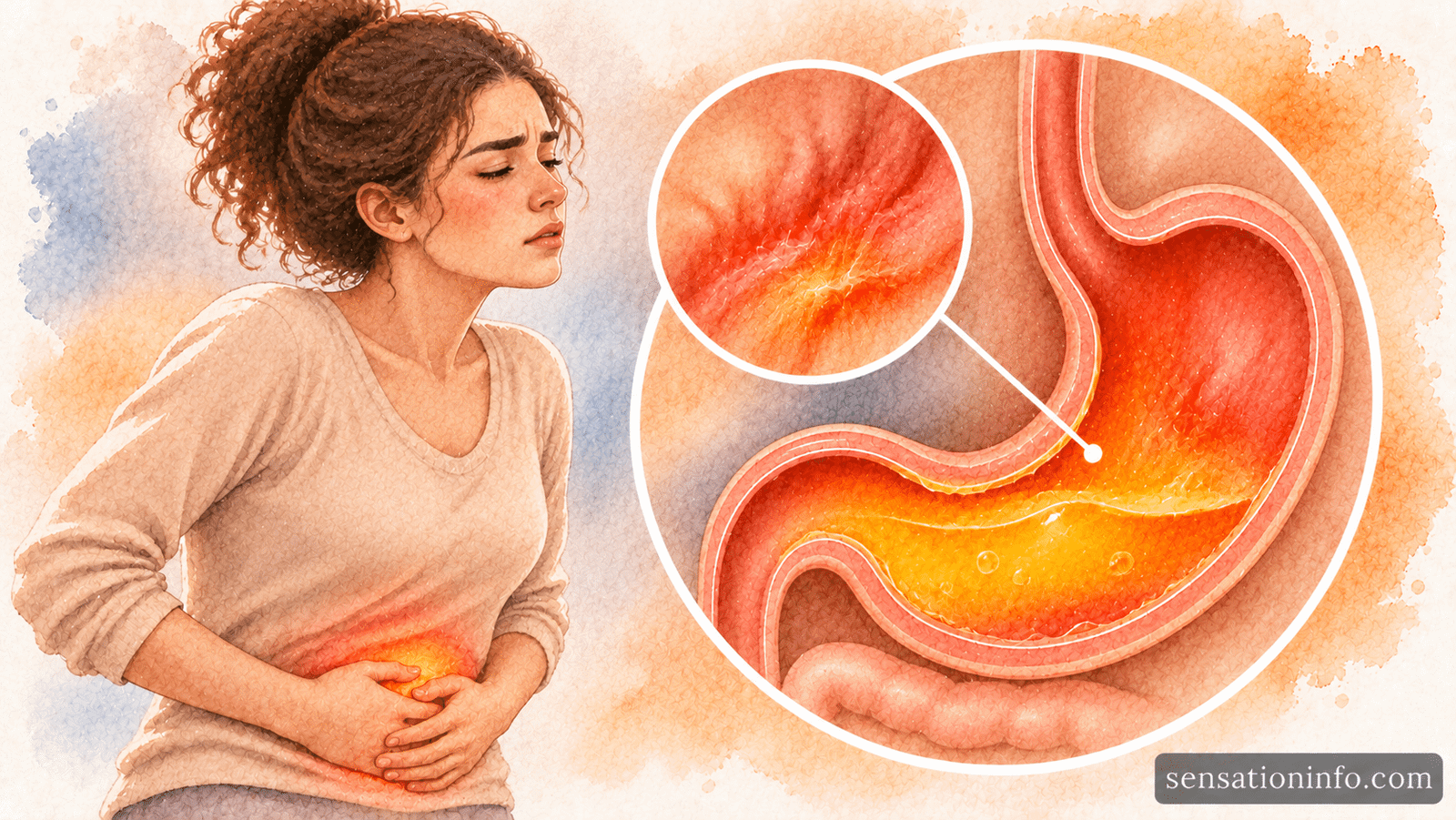

If you are wondering exactly what causes burning sensation in abdomen, the answer usually involves stomach acid irritating your digestive tract. Conditions like acid reflux, gastritis, and peptic ulcers are the most common culprits, creating a gnawing heat that flares up after you eat or when you lie down. If the fiery feeling travels upward, you might also experience a burning sensation in chest from severe heartburn. Less commonly, nerve inflammation or bowel conditions can create a hot, painful cramp lower in your belly. Here is how to tell the difference between typical indigestion and a serious ulcer, how to soothe your stomach at home, and the specific warning signs that mean you need a doctor.
Common Causes of Abdominal Burning
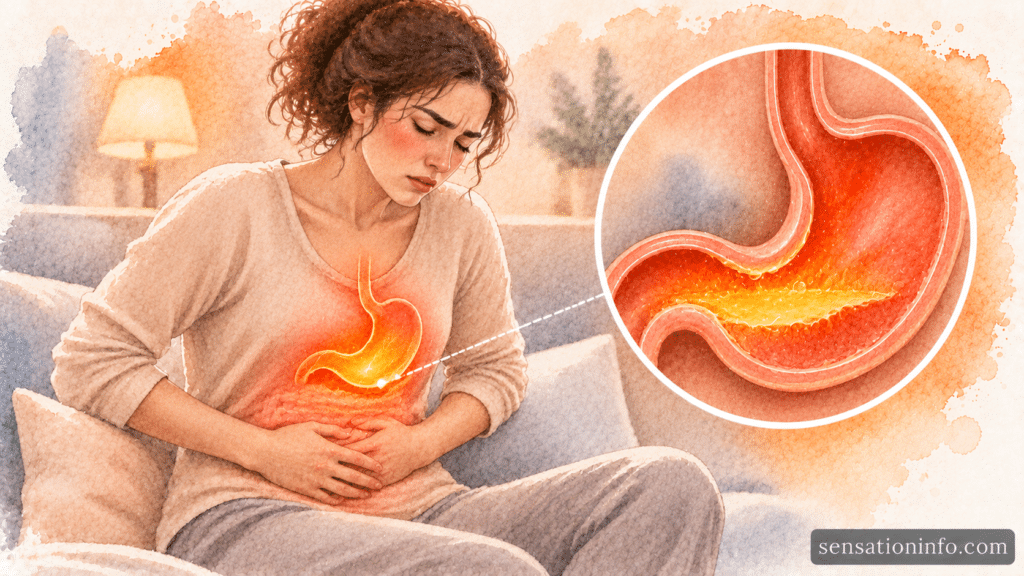
A burning feeling in your abdomen most often comes from gastroesophageal reflux disease, peptic ulcers, or gastritis. Your stomach naturally produces powerful acid to break down food. To protect itself, the stomach is lined with a thick layer of mucus.
When that protective mucus layer wears down, the acid burns the sensitive tissue underneath. This is called gastritis. It often causes a constant, dull heat in the upper center of your belly. If the acid creates an actual open sore in the stomach lining, it becomes a peptic ulcer. Ulcers typically cause a sharp, gnawing burn that temporarily goes away when you eat or drink milk, but returns a few hours later.
If the burning sits lower in your belly and comes with bloating or bowel changes, you might be dealing with irritable bowel syndrome. Actually, not all abdominal burning comes from the gut. A nerve infection like shingles can cause a severe, prickly burn on the skin of your abdomen days before a rash ever appears. If your discomfort feels more like a skin issue or a muscle ache, exploring a burning sensation in stomach beyond acid reflux can help you identify rare nerve related causes.
Symptoms That Often Come With Abdominal Burning
The exact location of the heat and the other symptoms you feel are the best clues for figuring out what is happening inside your gut.
| Where it is | What it feels like | What comes with it | Likely cause | How urgent |
| Upper center belly | Fiery heat moving up | A sour taste in mouth | Acid reflux | Low |
| Upper left belly | Sharp gnawing burn | Pain that wakes you up | Peptic ulcer | Moderate |
| Lower abdomen | Hot cramping waves | Diarrhea or constipation | Irritable bowel syndrome | Low |
| Surface of skin | Prickly electric burn | A red blistered rash | Shingles | Moderate |
| Lower right belly | Sudden severe stab | Fever and vomiting | Appendicitis | Emergency |
Usually Harmless Causes vs Concerning Signs
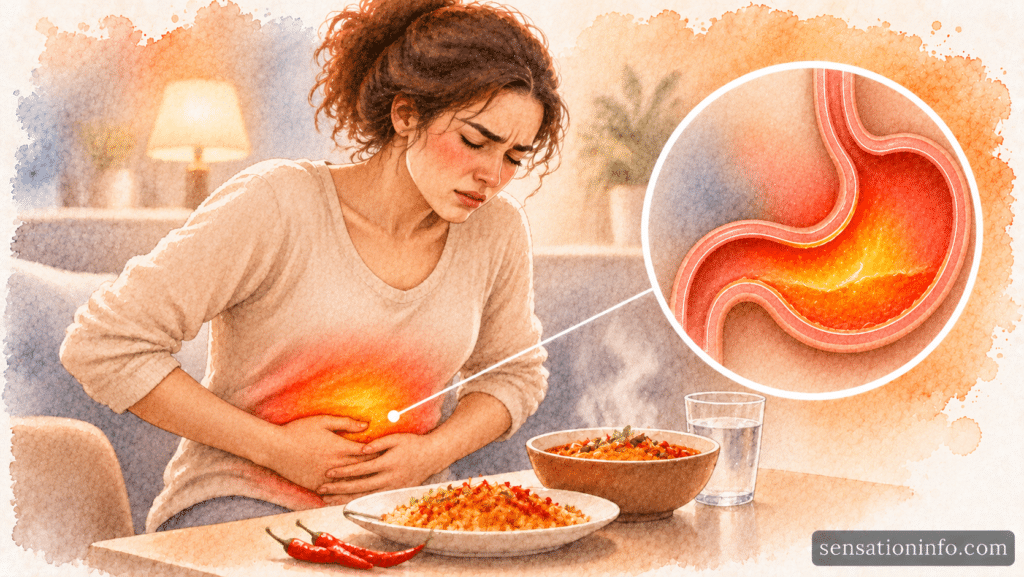
It is completely normal to feel a temporary burn in your belly after eating a massive, spicy meal. Knowing when that burn requires medical attention can prevent serious complications.
Usually Harmless: If the burning only happens occasionally after you eat greasy food, drink too much coffee, or eat right before bed, it is likely simple indigestion. A warm, mild ache that completely vanishes after you take a generic antacid chew is usually harmless and easy to manage with diet changes.
Concerning Signs: You should book a doctor appointment if the burning happens every single day for more than two weeks. It is also concerning if the pain wakes you up in the middle of the night, if you feel full after eating only a few bites, or if you are losing weight without trying. If you also feel a strange pulsating sensation in the abdomen, your doctor will want to check your blood vessels as well. You can always use our nerve symptom checker if the burning feels like it is on your skin rather than deep inside your stomach.
Red Flags: When to Call 911
Some types of abdominal pain indicate a life threatening emergency, such as a perforated ulcer or severe organ inflammation.
Head to the emergency room immediately if the burning is accompanied by any of these red flags:
- You are vomiting blood or material that looks like dark coffee grounds.
- Your bowel movements are black, sticky, and look like tar.
- The pain is sudden, incredibly severe, and makes it hard to breathe.
- Your abdomen is completely rigid and highly tender to the touch.
- You develop a high fever, severe dizziness, or your skin turns yellow.
How to Treat Abdominal Burning at Home
The fastest way to treat a burning sensation in your abdomen is to neutralize the excess stomach acid using over the counter medications.
For immediate relief, you can chew an antacid tablet containing calcium carbonate. This instantly neutralizes the acid currently sitting in your stomach. If you have chronic reflux, a class of medications called H2 blockers, like generic famotidine (Pepcid), can reduce the amount of acid your stomach produces over the next twelve hours.
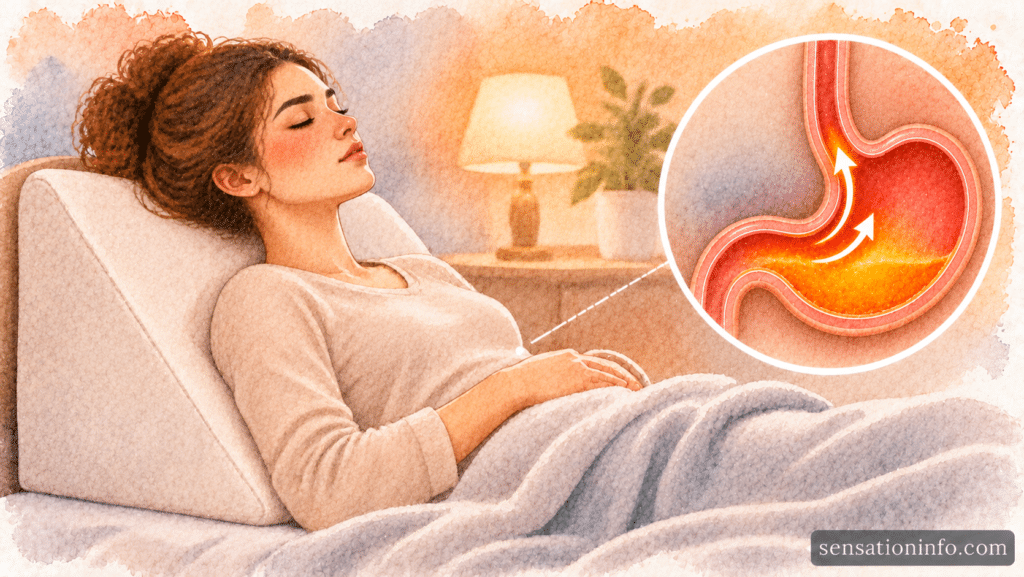
You must also change how and when you eat. Stop eating at least three hours before you go to sleep. When you lie down flat with a full stomach, gravity allows the acid to wash backward and burn your tissue. Sleep with your head and shoulders elevated on a wedge pillow to keep the acid down where it belongs.
Look, you also need to identify and remove your trigger foods. Spicy dishes, citrus fruits, tomatoes, chocolate, alcohol, and heavily caffeinated drinks are notorious for relaxing the valve at the top of your stomach and triggering a burning flare up. Stick to a bland diet of oatmeal, bananas, and lean proteins until the inflammation heals.
Key Takeaways
- The exact reason what causes burning sensation in abdomen is usually excess stomach acid from acid reflux, gastritis, or peptic ulcers.
- A gnawing burn that temporarily improves when you eat is a classic sign of a peptic ulcer.
- Over the counter antacids provide rapid, temporary relief by neutralizing the acid currently in your stomach.
- You should elevate your head while sleeping and avoid eating within three hours of bedtime to prevent acid from washing backward.
- Persistent burning that lasts longer than two weeks requires a doctor visit to rule out a bacterial infection like H. pylori.
- You must seek emergency medical care if you vomit blood, have black tarry stools, or experience sudden, unbearable abdominal pain.
Frequently Asked Questions
While a heart attack typically causes crushing chest pain, some people experience a severe burning sensation in the upper abdomen that feels like extreme indigestion, so sudden severe pain always requires medical attention.
Eating a ripe banana, plain oatmeal, or drinking a small glass of unsweetened almond milk can help coat the stomach lining and temporarily buffer the harsh acid.
Doctors typically diagnose a stomach ulcer by performing an upper endoscopy, where they guide a tiny camera down your throat to look directly at your stomach lining.
Doctor’s Recommendation
If you have tried changing your diet and taking over the counter antacids for two weeks without any improvement, you need a professional evaluation. I highly recommend reading our detailed guide on how to relieve burning sensation in stomach to understand the prescription medications doctors use to heal stubborn ulcers and the simple breath tests used to detect stomach bacteria.

2 Responses