
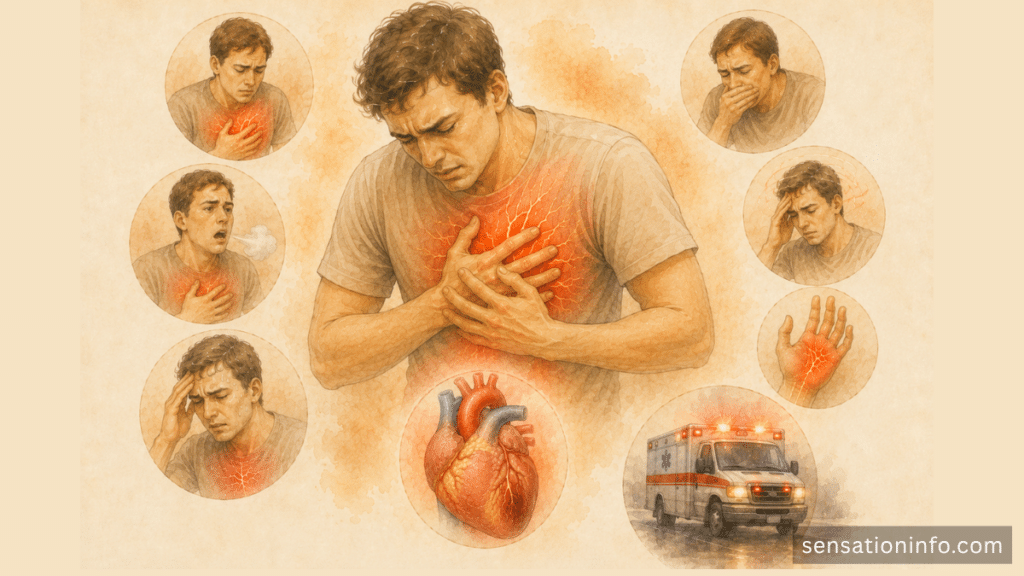
Tingling in the chest can stem from surface nerves, muscle strain, rib irritation, rapid breathing, anxiety, or compression of a nerve or blood vessel. It can also signal a medical emergency involving the heart or lungs, especially when accompanied by pressure, shortness of breath, cold sweating, faintness, nausea, or radiating discomfort.
Evaluating the location, triggers, timing, and associated symptoms helps determine the urgency of medical evaluation.
Where Do You Feel the Tingling in Your Chest?
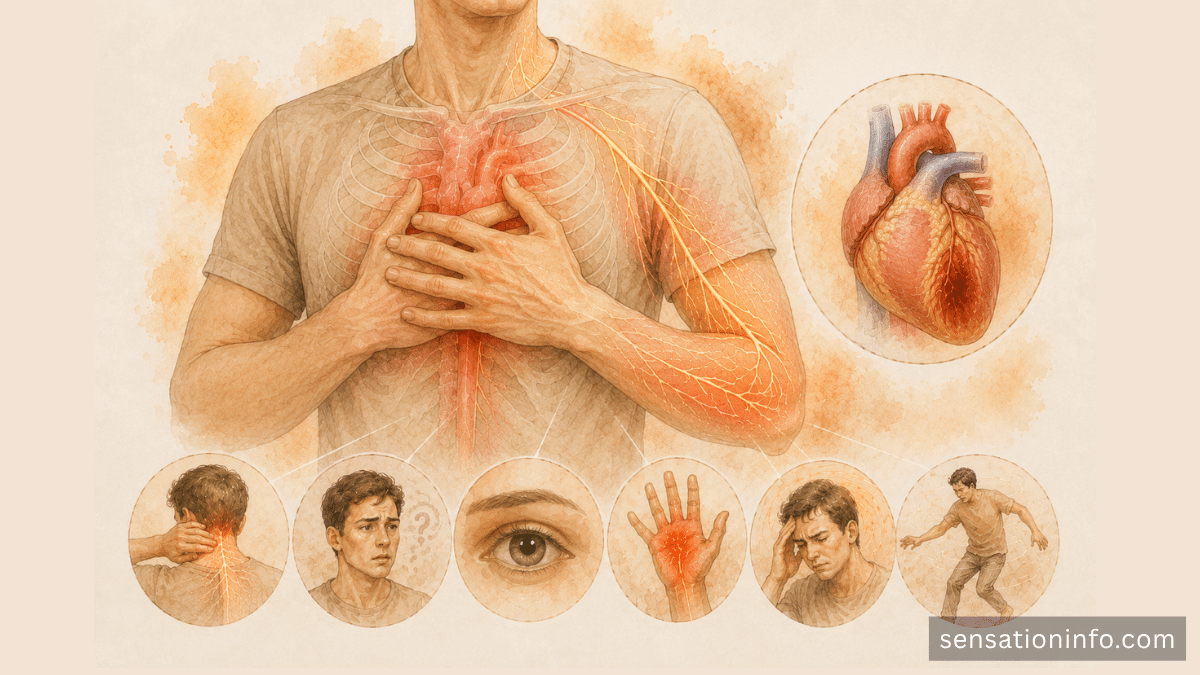
The exact anatomical location provides useful clinical clues, though sensation alone cannot confirm or rule out a diagnosis. During an evaluation, a clinician assesses whether the sensation is superficial (on the skin), musculoskeletal, retrosternal (deep behind the breastbone), or radiating into the shoulder, arm, back, neck, or jaw.
- Superficial Skin Prickling: A localized patch of prickling often stems from external pressure, friction, minor physical trauma, or cutaneous nerve irritation.
- Dermatomal or Band-Like Pattern: Tingling that wraps around one side of the ribcage in a distinct strip typically follows an intercostal nerve pathway.
- Radiating to the Upper Extremity: Tingling that travels down the neck, shoulder, arm, or hand often involves nerve pathways originating from the cervical spine or thoracic outlet.
- Deep Retrosternal Sensation: A sensation deep behind the breastbone warrants caution, especially when paired with heaviness, squeezing, dyspnea, nausea, diaphoresis, or systemic weakness.
Which Chest Symptoms Require Immediate Emergency Care?
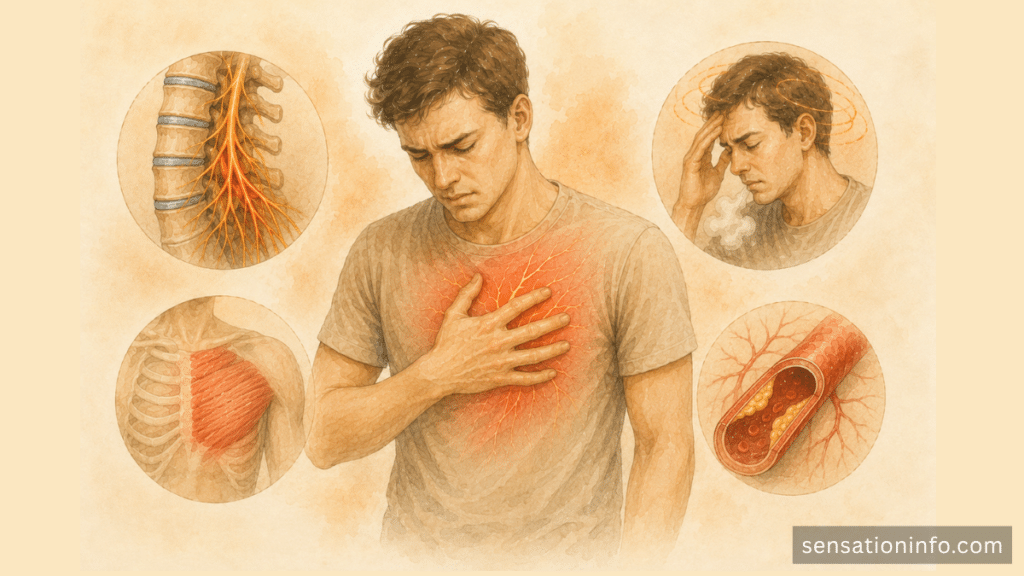
Call 112 in India or 911 internationally immediately if chest tingling occurs alongside any of the following critical warning signs:
- Severe pressure, fullness, squeezing, heaviness, or crushing pain in the center or left side of the chest.
- Shortness of breath, cold sweats, unexplained nausea, vomiting, sudden weakness, or severe lightheadedness.
- Palpitations, rapid or irregular heartbeat, fainting, or sudden presyncope.
- Pain or discomfort radiating to the jaw, neck, back, one or both shoulders, arms, or upper abdomen.
- Acute neurological deficits: unilateral facial drooping, arm or leg weakness, slurred speech, confusion, visual disturbances, or sudden loss of coordination.
- Sudden severe dyspnea, hemoptysis (coughing up blood), cyanosis (blue lips or nail beds), or pleuritic chest pain that worsens with inhalation.
- A unilaterally pale, cool, cyanotic, or markedly swollen arm or hand.
- Symptoms that develop rapidly following physical trauma or deteriorate quickly.
Safety Notice: Do not drive yourself to the hospital. Emergency medical personnel can begin life-saving assessment and stabilization immediately upon arrival.
Does Tingling in the Chest Mean You Are Having a Heart Attack?
Tingling alone is not the most typical symptom of a myocardial infarction, but it can accompany atypical cardiac presentations. A heart attack classically manifests as pressure, tightness, squeezing, or aching in the substernal or left chest area, which may fluctuate in intensity or persist continuously.
Associated cardiac symptoms include:
- Unexplained breathlessness
- Profuse cold sweats
- Marked fatigue or lightheadedness
- Nausea and epigastric discomfort
- Discomfort radiating across the upper torso
Women, older adults, and individuals with diabetes are particularly prone to atypical presentations, frequently reporting profound fatigue, nausea, or breathlessness in place of crushing chest pain. Never ignore chest tingling accompanied by autonomic or systemic symptoms.
What Does the Timing and Triggers of Chest Tingling Indicate?
Identifying what triggers or alters the sensation provides valuable diagnostic context:
1. Stress, Anxiety, or Rapid Breathing
Acute emotional distress or panic can induce hyperventilation (breathing deeper or faster than metabolically required). This lowers arterial carbon dioxide levels (hypocapnia), causing respiratory alkalosis. Common signs include:
- Perioral paresthesia (tingling around the mouth)
- Bilateral hand and finger tingling (carpopedal paresthesia)
- Generalized chest tightness and lightheadedness
While anxiety is common, a new chest symptom must not automatically be attributed to panic until cardiac, pulmonary, and metabolic etiologies have been ruled out.
2. Exertion or Upper-Limb Movement
- During Physical Exertion: Chest sensations brought on by exercise or physical strain must be evaluated for myocardial ischemia. Stop all activity and seek urgent medical care if accompanied by dyspnea, nausea, or pressure.
- During Neck or Shoulder Movement: Symptoms that change with neck rotation, overhead arm elevation, or shoulder posture frequently point to musculoskeletal or neurovascular compression, such as Thoracic Outlet Syndrome.
3. Postprandial or Positional Changes
Gastroesophageal reflux disease (GERD) typically causes a retrosternal burning sensation after meals or when reclining. While reflux causes burning rather than classic paresthesia, sensory descriptions vary. Cardiac ischemia can closely mimic severe indigestion, evaluate new retrosternal symptoms with high vigilance.
4. Post-Trauma or Physical Strain
Blunt trauma, whiplash, lifting injuries, or acute rib strain can irritate peripheral nerves, causing localized or radiating prickling sensations across the torso.
5. Pre-Eruptive Neuropathic Pain (Shingles)
Reactivation of the varicella-zoster virus (herpes zoster) frequently begins with localized tingling, burning, hyperesthesia, or allodynia in a unilateral dermatomal distribution before any vesicular rash erupts.
What Conditions Can Cause Tingling in the Chest?
| Underlying Category | Potential Condition | Typical Clinical Presentation |
| Dermatological / Superficial | Cutaneous nerve irritation, friction, mild burns | Localized prickling limited to the skin surface; resolves when pressure is relieved. |
| Spinal / Radicular | Cervical or thoracic radiculopathy, disc herniation | Sharp, shooting, or prickling sensations tracking along nerve roots; may alter with neck movement or coughing. |
| Musculoskeletal | Intercostal muscle strain, costochondritis | Localized chest wall tenderness, discomfort reproduced by direct palpation or deep inspiration. |
| Neurovascular | Thoracic Outlet Syndrome | Compression of the brachial plexus or subclavian vessels; causes unilateral arm or chest paresthesia, coolness, or swelling when elevating the arm. |
| Metabolic | Hypoglycemia, Peripheral Neuropathy (e.g., Vitamin B12 deficiency) | Sweating, tremors, palpitations, and systemic or bilateral paresthesia across extremities and torso. |
| Pulmonary | Pulmonary embolism, pleurisy, pneumothorax | Sudden dyspnea, sharp pleuritic pain, tachypnea leading to secondary hyperventilation-induced paresthesia. |
| Cardiac | Angina pectoris, acute myocardial infarction | Substernal pressure, diaphoresis, dyspnea, radiation to jaw, shoulder, or arm. |
Symptom Triaging Matrix
| Additional Symptoms | Potential Clinical Etiology | Recommended Action |
| Substernal squeezing, sweating, nausea, jaw or arm radiation | Acute coronary syndrome / cardiac ischemia | Emergency Care (Call 112 / 911) |
| Sudden unilateral weakness, facial droop, speech difficulty, ataxia | Acute stroke or TIA | Emergency Care (Call 112 / 911) |
| Acute breathlessness, coughing blood, cyanosis, pleuritic pain | Pulmonary embolism / lung emergency | Emergency Care (Call 112 / 911) |
| Arm tingling with limb pallor, cyanosis, coolness, or swelling | Vascular / severe neurovascular compression | Urgent Medical Evaluation |
| Tingling paired with hyperventilation, acute panic, and perioral numbness | Respiratory alkalosis secondary to anxiety | Clinical Assessment (rule out cardiac causes first) |
| Sharp chest wall tenderness changing with posture or palpation | Costochondritis or musculoskeletal strain | Non-Emergency Medical Assessment |
| Unilateral dermatomal tingling followed by a blistering rash | Herpes Zoster (Shingles) | Prompt Medical Evaluation (<72 hours for antivirals) |
Diagnostic Workup: How Clinicians Find the Cause
When evaluating chest paresthesia, a clinician will take a detailed history regarding onset, duration, dermatomal distribution, and aggravating or relieving factors.
1. Physical and Neurological Exam
- Assessment of vital signs (blood pressure in both arms, pulse oximetry, heart rate).
- Complete cardiopulmonary auscultation.
- Comprehensive neurological examination (sensory mapping, deep tendon reflexes, motor strength).
- Palpation of the thoracic cage and provocative maneuvers for thoracic outlet compression.
2. Diagnostic Testing
- Electrocardiogram (ECG): Evaluates cardiac rhythm, conduction abnormalities, and acute ischemic changes.
- Laboratory Testing: Cardiac biomarkers (Troponin), complete blood count, metabolic panel, blood glucose, and serum Vitamin B12.
- Diagnostic Imaging: Chest radiography, CT angiography (if pulmonary embolism or aortic pathology is suspected), or cervical/thoracic spine MRI.
- Electrophysiological Studies: Electromyography (EMG) and nerve conduction studies for chronic or peripheral nerve compression.
Treatment and Management Approaches
Therapeutic strategy depends strictly on the underlying pathology:
- Cardiac & Pulmonary Emergencies: Immediate pharmacological and interventional reperfusion therapy, anticoagulation, or stabilization.
- Neurovascular & Spinal Conditions: Physical therapy, postural correction, targeted stretching of scalene or pectoral muscles, ergonomic adjustments, or surgical decompression in refractory cases.
- Musculoskeletal Inflammation: Relative rest, non-steroidal anti-inflammatory drugs (NSAIDs), and physical modalities.
- Herpes Zoster: Early initiation of oral antiviral therapy (ideally within 72 hours of rash onset) and neuropathic analgesics.
- Hyperventilation / Anxiety: Breathing retraining, cognitive behavioral therapy (CBT), and clinical management of anxiety disorders.
Key Takeaways
- Multiple Origins: Chest tingling can stem from cutaneous nerves, spinal roots, muscular strain, hyperventilation, thoracic outlet compression, or acute cardiovascular/pulmonary conditions.
- Recognize Red Flags: Treat chest tingling as an emergency when paired with retrosternal pressure, diaphoresis, dyspnea, nausea, presyncope, or neurological deficits.
- Seek Immediate Transport: Never drive yourself to an emergency facility if red-flag symptoms are present; call emergency medical services immediately.
- Positional Clues: Symptoms exacerbated by overhead arm elevation or neck movement frequently point to neurovascular entrapment such as Thoracic Outlet Syndrome.
- Get Evaluated: Any new, recurring, persistent, or unexplained chest sensation warrants a thorough evaluation by a qualified medical professional.
Frequently Asked Questions
Tingling alone is not the most typical heart attack symptom, but it needs emergency attention when it occurs with chest pressure, squeezing, shortness of breath, sweating, nausea, faintness, weakness, or discomfort spreading to the arm, jaw, back, neck, or shoulder. Call 112 in India or 911 internationally for these symptoms.
Yes. An irritated or compressed nerve can cause tingling in the chest, back, ribs, shoulder, or arm. The sensation may worsen with posture, twisting, coughing, deep breathing, or arm movement, but these clues cannot rule out a heart or lung problem.
Muscle strain or nerve irritation can cause chest discomfort and may be treatable, but chest tingling cannot be safely labeled as harmless from symptoms alone. Emergency warning signs such as chest pressure, shortness of breath, sweating, faintness, spreading discomfort, or sudden weakness require emergency help. Call 112 in India or 911 internationally.
Doctor’s Recommendation
For tingling that follows the neck, shoulder, arm, or hand, or changes when you raise one arm, the next useful clinical question is whether a nerve or blood vessel is being compressed. Thoracic Outlet Syndrome: Causes, Symptoms, Diagnosis, and Treatment explains that pattern in more detail. What Is Neuropathy? A Complete Guide to Types, Causes, Symptoms, and Treatment may help when tingling persists or affects multiple areas. Neither article can establish a diagnosis.
Conclusion
Tingling in the chest may begin in the skin, nerves, muscles, ribs, or breathing pattern, but chest symptoms can also accompany serious heart, lung, or blood vessel problems. Pay attention to what the sensation feels like, where it spreads, and what occurs with it. If pressure, breathing difficulty, faintness, sweating, nausea, spreading discomfort, or sudden neurologic symptoms appear, call 112 in India or 911 internationally. If the tingling is new, recurrent, persistent, or unexplained, arrange a medical evaluation.
References
- Centers for Disease Control and Prevention. About Heart Attack Symptoms, Risk, and Recovery. CDC.
- National Library of Medicine. Chest Pain. MedlinePlus.
- National Library of Medicine. Heart Attack. MedlinePlus.
- Cleveland Clinic. Thoracic Outlet Syndrome: Symptoms and Treatment.
- Cleveland Clinic. Paresthesia: What It Is, Causes, Symptoms and Treatment.