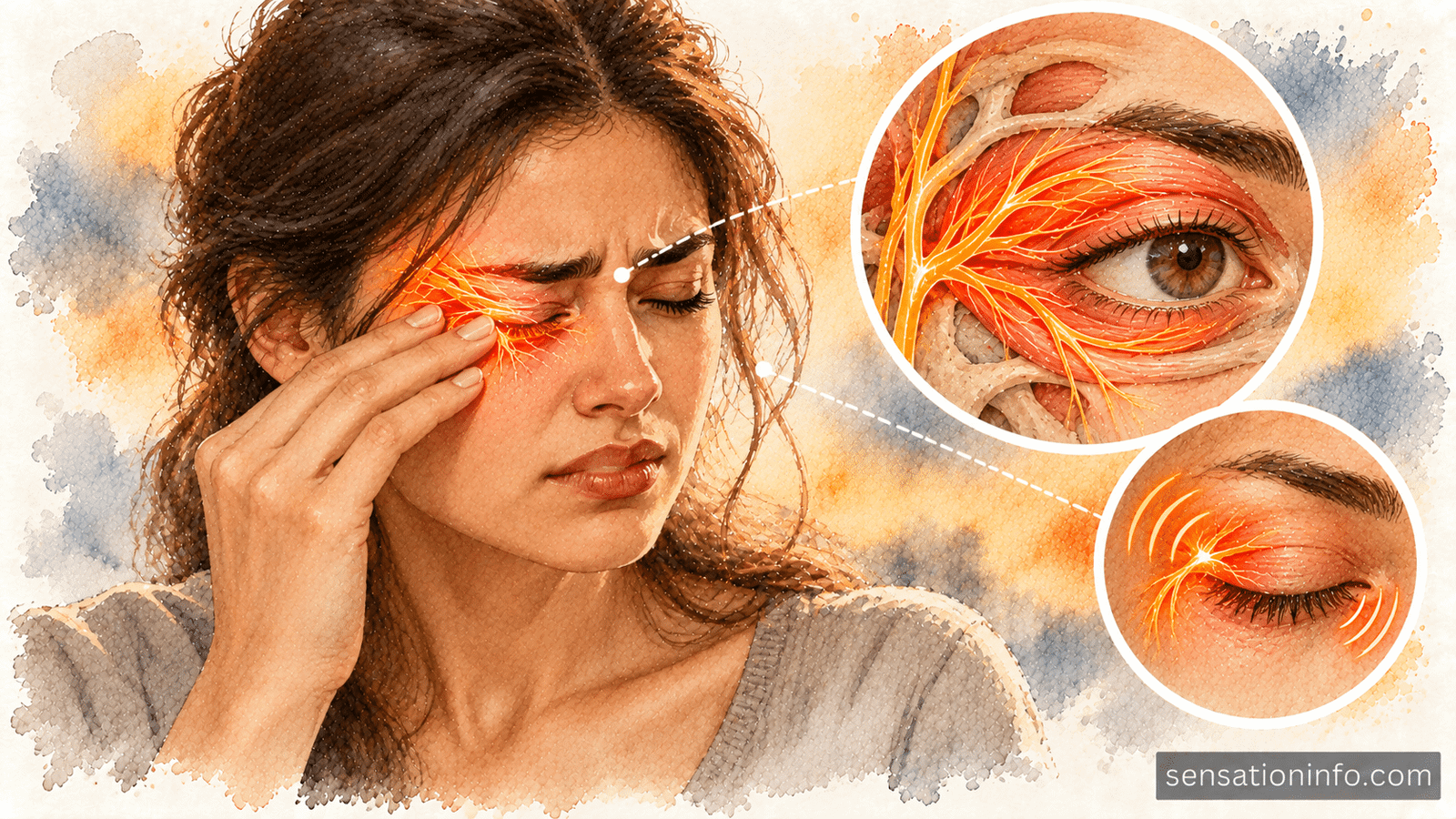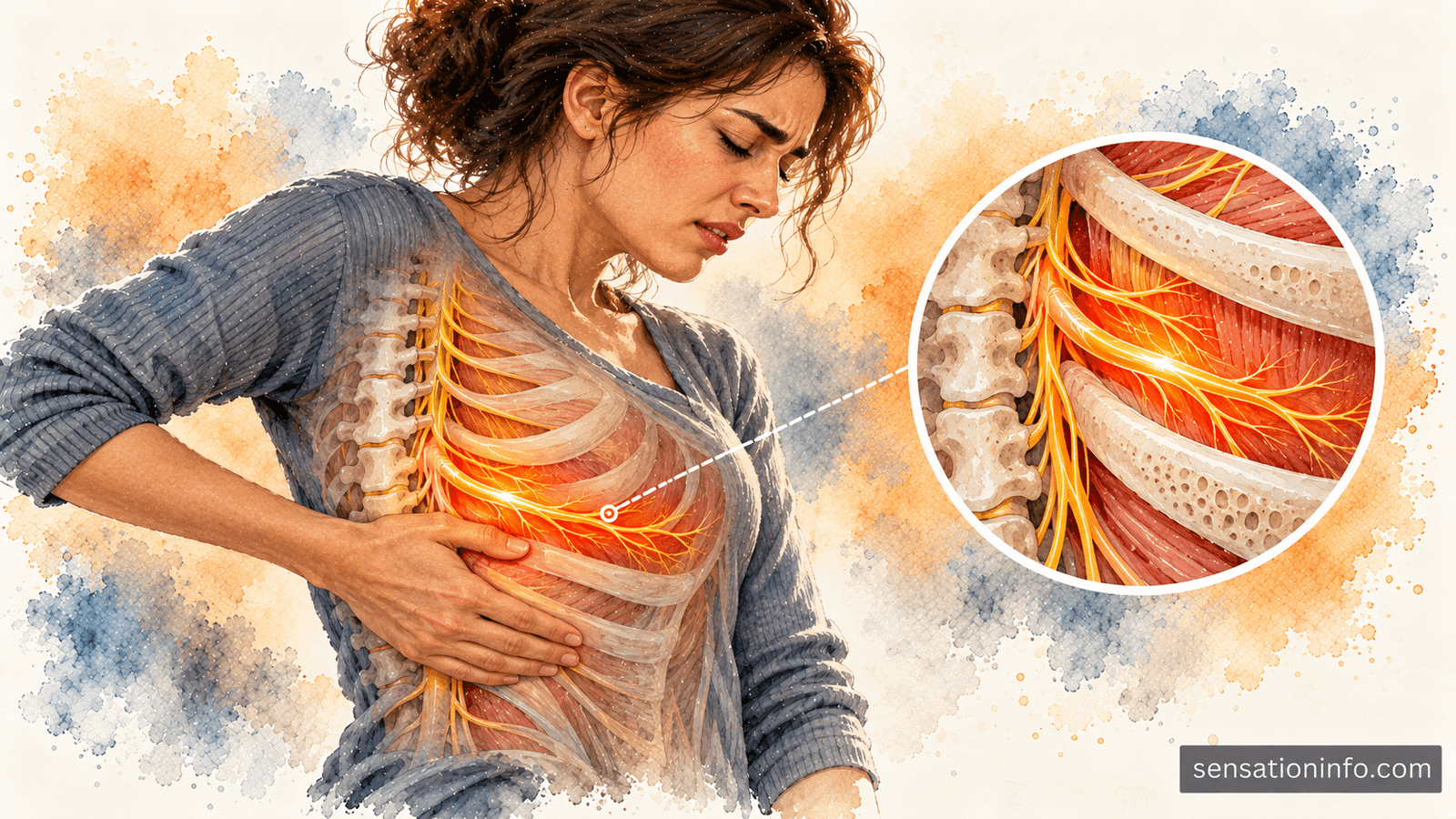

Feeling a sudden wave of pins and needles in flank and ribs you feel can be a scary experience. This distinct tingling is usually caused by an irritated intercostal nerve traveling along your rib cage. Because the nerves in this physical area share pathways with other vital structures you might also experience alarming chest tingling that mimics heart issues. Understanding how nerve irritation feels is the first step to finding relief and making sure your internal organs are safe and healthy.
The Layout of Your Rib Nerves
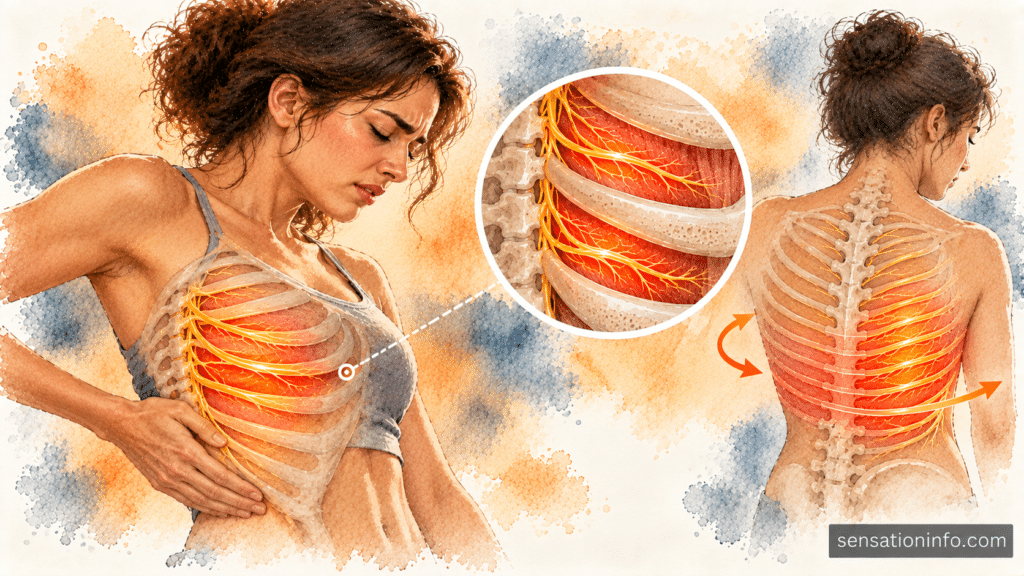
To understand why your side tingles you need to know how the nerves in your chest are arranged. The human body has twelve pairs of intercostal nerves. These nerves act like communication cables between your spine and your torso.
How the Nerves Travel
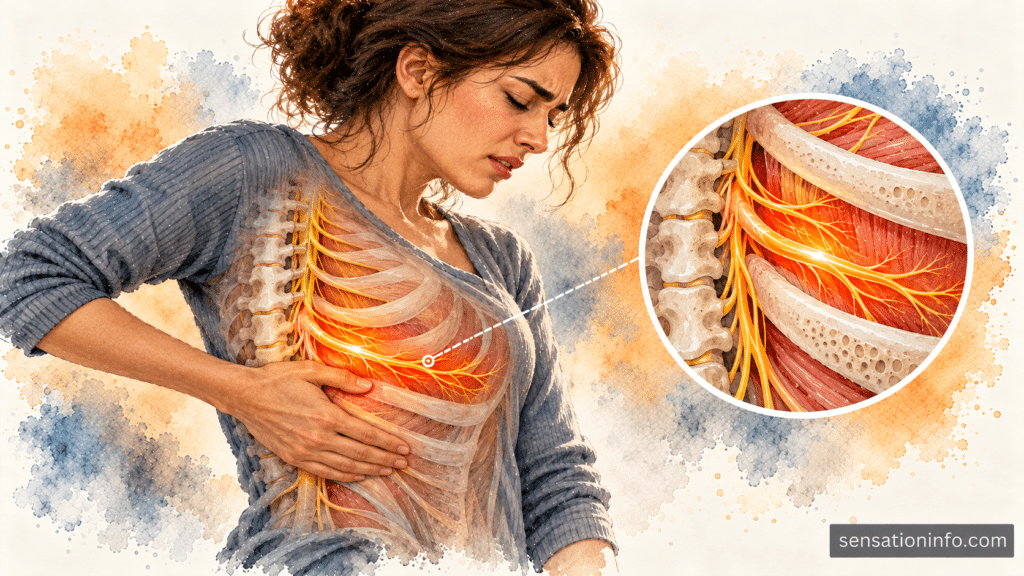
Each intercostal nerve starts in your spinal cord right in the middle of your back. From the spine the nerve wraps horizontally around your body. It sits tucked safely in a small groove located just beneath each rib. This nerve gives feeling to the skin over your ribs. It also tells the small muscles between your ribs to expand when you take a breath.
The Band of Tingling
When one of these nerves gets pinched or swollen it sends confused electrical signals to your brain. Medical professionals call this uncomfortable crawling or static nerve sensation paresthesia.
Because each nerve only supplies a specific strip of skin the tingling follows a very precise path. This strip of skin is known as a dermatome. The tingling almost always stays on just one side of your body. It rarely crosses the exact middle of your chest or your back. If the tingling stays in a horizontal band you are likely dealing with a nerve issue.
What Does Nerve Tingling Feel Like?
Nerve irritation feels completely different from a standard muscle cramp or a sore bone. People describe intercostal nerve tingling using very specific words.
Common Sensations
If your rib nerve is irritated you will likely notice one or more of these feelings:
- Static electricity vibrating just under the surface of your skin.
- A creepy feeling like insects are crawling over your ribs.
- A patch of skin that feels strangely numb or dead when you touch it.
- Sudden electrical zaps that shoot from your back around to your side.
- A severe burning feeling that makes wearing normal clothing unbearable.
Actions That Make the Tingling Worse
The severity of the tingling can change based on how you move your body. Certain actions squeeze the rib cage and temporarily worsen the nerve irritation. Common triggers include:
- Taking a very deep breath that fully expands your chest.
- Sneezing violently or coughing hard.
- Twisting your upper body to look behind you.
- Slouching forward in a chair for a long time.
- Wearing tight clothes that press directly into your side.
Main Causes of Pins and Needles in Flank and Ribs
Several different health issues can irritate the nerves in your chest wall. Finding the exact cause requires looking at your other symptoms and your recent medical history.
Swollen Rib Nerves
Intercostal neuralgia is the medical name for nerve pain and tingling along the ribs. It happens when the nerves become swollen or damaged. Severe chest colds can cause this problem. Heavy coughing strains the tiny muscles between your ribs. When these muscles tighten up they clamp down on the nerve causing electrical pins and needles. A direct hit to the chest or a bruised rib will also crush the nerve and cause long lasting tingling.
Shingles and Nerve Damage
Shingles is a major reason for nerve tingling on just one side of the body. According to the Centers for Disease Control and Prevention about one in three adults in the United States will get shingles at some point. The varicella zoster virus causes this painful condition.
After you recover from childhood chickenpox the virus sleeps in your nerve roots. When your immune system gets weak the virus wakes up. You might feel intense pins and needles itching or burning in your flank for several days before a blistering rash appears.
If the relentless burning and tingling outlasts the visible rash the condition has turned into postherpetic neuralgia. This chronic nerve damage can cause abnormal sensations that last for months or even years.
Slipping Rib Syndrome
Slipping rib syndrome happens when the flexible tissue connecting your lower ribs becomes too loose. The eighth ninth and tenth ribs are usually the ones affected. Because they are not attached directly to your breastbone they can move around more easily.
When this loose tissue slips the rib bone can rub directly against the delicate nerve. This rubbing creates a sharp tingling or pinching feeling in your lower side. You might even hear a popping or clicking noise in your lower ribs when you bend over or twist your body.
Pinched Nerves in the Mid Back
Sometimes the root of the tingling starts before the nerve even reaches your ribs. Problems in your spine can pinch the nerve root as it leaves your back. A bulging disc in your mid back can press on the nerve. Doctors call this thoracic radiculopathy. It often causes frustrating tingling in the upper and lower back that shoots straight outward into your flank. Severe arthritis in the spine can also shrink the bony holes where the nerves exit causing constant pressure and tingling.
Other Reasons for Flank Tingling
While pinched nerves and shingles cause most flank tingling certain overall health conditions can also play a part.
High blood sugar from diabetes can damage nerves all over the body. While diabetic nerve damage usually starts in the feet it can sometimes affect the chest nerves. This causes a band of tingling around the stomach or flank. It usually happens in older adults who have had diabetes for many years.
Low vitamin B12 can also lead to nerve tingling. Your body needs vitamin B12 to keep the protective coating on your nerves healthy. When this coating breaks down you might feel pins and needles in multiple areas at the same time.
Healing from surgery is another common cause. Operations on the lungs or breasts can stretch or bruise the surrounding rib nerves. As the tiny nerve fibers heal over several months the numb areas often turn into intense tingling before returning to normal.
Is It a Nerve Muscle or Organ?
It is very common to mistake flank tingling for a kidney infection or a pulled muscle. However nerves muscles and internal organs produce entirely different types of pain. Knowing the difference can help you figure out what is wrong.
Recognizing a Muscle Strain
A pulled muscle produces a dull ache stiffness or a pulling feeling. The pain covers a wide area over the muscle rather than a narrow band. Your skin feels completely normal but pressing deeply into the muscle will make it hurt.
Recognizing Internal Organ Pain
Kidney issues like a severe infection or a kidney stone cause a deep heavy throbbing pain. This pain starts deep inside the lower back and usually stays constant no matter how you move or sit. Internal organs do not cause electrical nerve zaps or surface skin tingling.
Quick Symptom Guide
| Symptom | Nerve Issue | Pulled Muscle | Kidney Issue |
| Type of Feeling | Electrical pins and needles crawling burning. | Dull ache pulling feeling tightness. | Deep heavy throbbing cramping. |
| Location | Narrow horizontal band on one side. | Wide area over the whole muscle. | Deep inside the lower back. |
| Skin Feeling | Skin feels very sensitive to light touch. | Skin feels normal but deep pressure hurts. | Skin feels normal surface touch does nothing. |
Red Flags: When to Go to the Emergency Room
Most rib and flank tingling comes from simple nerve irritation. However because your heart and lungs live in this area you must take certain symptoms very seriously. Seek emergency medical help right away if your flank sensations happen along with any of these warning signs:
- A feeling of crushing pressure or heavy squeezing in the center of your chest.
- Pain or tingling that moves quickly into your left arm jaw or neck.
- Sudden trouble breathing or feeling short of breath while resting.
- Unexplained dizziness severe weakness or sudden cold sweats.
- A high fever along with violent chills or throwing up.
- A sudden inability to control your bathroom habits.
These critical symptoms could point to a heart attack a blood clot in the lungs or a severe infection. They require immediate hospital care.
How Doctors Find the Problem
Finding out exactly why your side is tingling takes a careful exam at the doctor office. Your doctor will ask exactly where you feel the pins and needles. They will want to know if the feeling wraps around your side like a belt.
The doctor will gently press along your ribs and back to find the sore spots. They might touch the skin on your side with a small soft cotton swab. This helps them map out the exact areas that are numb or overly sensitive. Finding the exact numb spot helps the doctor know which specific nerve is hurt.
If the doctor thinks a bulging disc in your back is the problem they will likely order a magnetic resonance imaging scan. This scan gives a very clear picture of your spinal cord and nerves. A regular chest x ray cannot show nerves but the doctor might order one to make sure you do not have a broken rib.
Ways to Get Relief at Home and the Clinic

Treating nerve tingling focuses on calming the angry nerve and stopping the confused electrical signals.
Simple Home Care
Home care works well for mild nerve irritation. Heat therapy can relax tight muscles that might be squeezing the nerve. Placing a warm damp cloth on your side for fifteen minutes brings more healing blood to the area. If the nerve is swollen from a recent injury an ice pack might work better to numb the tingling.
Sitting up straight is also very important. Slouching crushes the space in your spine and puts more pressure on the rib nerves. Sit tall with your shoulders back to give the nerves as much room as possible.
Medical Treatments
Regular pain pills like ibuprofen often do not work for nerve tingling. They fix swelling but they do not stop the nerve signals. Doctors often prescribe special nerve medications like gabapentin (Neurontin). These pills change how your nerves talk to your brain which turns down the volume on the pins and needles.
Creams and patches work very well for rib tingling because the nerves are close to the skin. Prescription lidocaine patches can numb the irritated nerve endings.
Doctor Procedures
If pills and creams do not help a pain doctor might suggest a nerve block. Using an ultrasound machine to guide the needle the doctor injects numbing medicine directly around the swollen nerve. This washes away the swelling and stops the tingling for several months.
How Long Does It Take to Heal?
The time it takes to heal completely depends on what caused the tingling in the first place. Tingling from a minor muscle strain pressing on a nerve usually goes away in two to four weeks with rest.
If a virus like shingles caused the tingling the severe nerve sensations usually get better over four to six weeks as your body fights the virus. Nerve tissue heals very slowly compared to skin or muscle. If a nerve was bruised during chest surgery it might take three to six full months for the tingling to fade away completely.
Key Takeaways
- Rib nerves travel horizontally around your chest and their irritation causes pins and needles on your side.
- The tingling sensation follows a narrow band and rarely crosses the exact middle of your body.
- Common triggers include bruised ribs shingles loose rib cartilage and a pinched nerve in the back.
- Nerve tingling feels electrical and happens near the skin unlike the deep heavy ache of a kidney issue.
- You must seek emergency medical care if your rib tingling happens with chest pressure or trouble breathing.
- Treatment ranges from sitting up straight and using heat to special nerve medications and numbing patches.
Frequently Asked Questions
The time depends on the injury. Tingling from a minor muscle strain pressing on the nerve may heal completely in a few weeks with rest. However severe nerve damage from surgery or shingles can last for many months without special medical help.
No. Kidney infections usually cause a deep intense and throbbing pain in the lower back that might travel down to the groin. Kidneys do not cause electrical pins and needles or surface skin tingling.
Yes. Wearing a very tight bra can press the small nerve branches against your rib cage. This tight squeezing often leads to numbness or a pins and needles feeling exactly where the clothing band rests against your skin.
Doctor’s Recommendation
If your side tingling is severe constant or keeps you from sleeping well it is time to see a medical specialist. A board certified pain doctor can figure out complex nerve issues and offer special treatments like nerve blocks that regular doctors do not provide. We suggest reading our guide on finding a specialist to manage severe sleep disrupting nerve pain to help you locate a qualified doctor who understands chest nerve problems.
References
National Institute of Neurological Disorders and Stroke. Paresthesia Information Page. 2023.
Centers for Disease Control and Prevention. Shingles Burden and Core Clinical Information. 2024.
Mayo Clinic. Intercostal Neuralgia: Symptoms and Causes. 2022.
Cleveland Clinic. Slipping Rib Syndrome: Diagnosis and Management. 2021.