

Waking up with numbness in the index fingertip might make you worry about your hand, but the actual problem is often located in your neck. The index finger gets its feeling from the C6 nerve root, which exits your spinal cord in your lower neck. When a herniated disc or tight muscle compresses this nerve at the cervical spine, the numbness travels all the way down your arm to the tip of your index finger. While wrist issues like carpal tunnel syndrome can also cause this sensation, neck related nerve compression is a highly common and frequently missed cause of isolated finger numbness.
How Your Neck Controls Your Index Finger
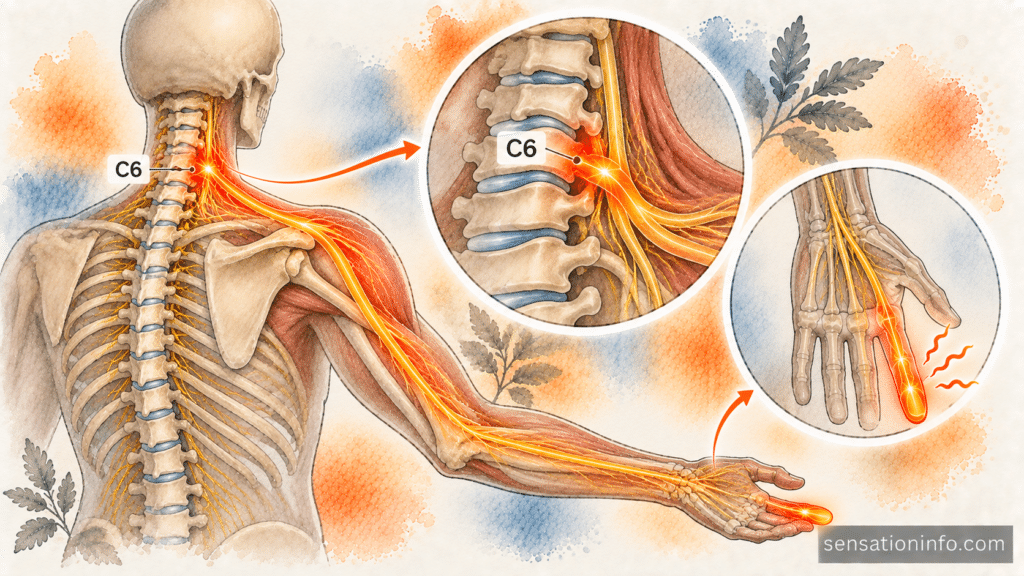
To understand why your neck causes finger numbness, you have to look at how your nervous system is built. Your spinal cord acts as the main highway for electrical signals traveling between your brain and your body. Cervical nerves branch off from this highway through small openings in your spine.
The nerve that supplies sensation to your index finger and thumb is called the C6 nerve root. It exits the spine in your lower neck. From there, it travels down your shoulder, through your arm, past your elbow, and into your hand.
When something puts pressure on the C6 nerve root in your neck, the brain gets confused. The irritation is happening at the cervical spine, but your brain interprets the signal as coming from the end of the nerve line, creating a tingling sensation clinically known as paresthesia. This is why you feel a loss of sensation in your index fingertip even though your hand is perfectly healthy. Medical professionals call this condition cervical radiculopathy. According to the National Institutes of Health, the C6 and C7 nerve roots are the most frequently compressed nerves in the cervical spine.
Neck Versus Wrist: Where Is the Nerve Pinched?
The biggest challenge in treating index finger numbness is figuring out exactly where the nerve is being squeezed. The two most common culprits are a pinched nerve in the neck and carpal tunnel syndrome in the wrist. Both conditions affect the median nerve pathway, but they have distinct differences.
| Symptom Pattern | Pinched Nerve in Neck (C6 Radiculopathy) | Carpal Tunnel Syndrome |
| Affected Fingers | Thumb and index finger | Thumb, index finger, and middle finger |
| Arm Symptoms | Aching or burning pain down the shoulder and bicep | Pain mainly in the wrist and forearm |
| Neck Movement | Looking up or twisting the neck makes numbness worse | Neck movement has no effect on the fingers |
| Nighttime Symptoms | Varies based on sleeping position and pillow height | Extremely common to wake up and shake the hand |
| Weakness | Difficulty flexing the bicep or lifting the arm | Weakness when gripping objects or pinching |
You can usually tell them apart by paying attention to what makes the sensation worse. If typing at a keyboard triggers the numbness, the problem is likely in your wrist. If turning your head to back out of a driveway sends a tingling shock down your arm, the issue is almost certainly in your neck. If you also feel a burning sensation in neck tissues, a cervical issue is highly probable.
A physician might perform a Spurling test by gently pressing down on your head while you bend your neck to see if it recreates the tingling. They understand that the specific area of skin supplied by a single nerve root is called a dermatome, and the C6 dermatome covers exactly the thumb and index finger.
Other Possible Causes of Index Fingertip Numbness
While cervical radiculopathy and carpal tunnel syndrome are the most common culprits, a few other conditions can cause you to lose feeling in your index finger.
Thoracic Outlet Syndrome
Sometimes the nerve gets compressed just below the neck, right around your collarbone. This area is called the thoracic outlet. If the muscles here become too tight from poor posture or repetitive overhead reaching, they can squeeze the nerves leading to your hand. This compression often causes thoracic outlet syndrome, which leads to arm heaviness and tingling.
Local Nerve Damage
A direct injury to the finger can damage the tiny sensory nerves at the fingertip. If you recently slammed your finger in a door, sliced it while cooking, or developed a deep splinter, the resulting swelling can cause localized numbness. If you experience numbness after an injury, the nerve function will typically return as the tissue recovers.
Peripheral Neuropathy
If you have diabetes or an autoimmune condition, high blood sugar and systemic inflammation can damage the peripheral nerves over time. However, peripheral neuropathy typically affects both hands and both feet at the same time, feeling like you are wearing gloves. It rarely targets just one isolated index finger.
What to Do Next for Finger Numbness
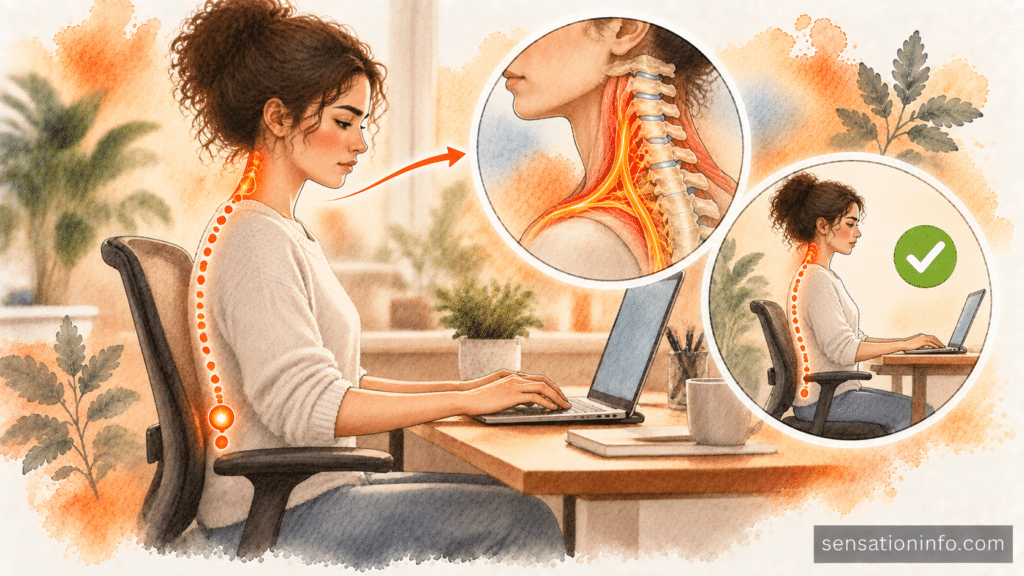
If you suspect your neck is the root cause of your finger numbness, you can take a few simple steps at home to relieve the pressure on the nerve.
First, examine your daily posture. Looking down at a phone or hunching over a laptop places massive strain on your cervical spine. Try to keep your screens at eye level and sit back in your chair. Gentle neck stretches can also help relieve muscle tension that might be squeezing the nerve.
When you sleep, use a supportive pillow that keeps your neck neutral. A pillow that is too high will push your chin to your chest, which can stretch the nerves improperly over time.
If your symptoms do not improve within a week, or if the numbness starts spreading up your arm, it is time to schedule a medical evaluation. A doctor can perform specific physical tests and order imaging like a magnetic resonance imaging scan to pinpoint exactly where the nerve is compressed.
Key Takeaways
- Numbness in the index fingertip is frequently caused by a compressed C6 nerve root in the lower neck.
- The brain misinterprets pressure at the cervical spine as a loss of sensation at the end of the nerve in the finger.
- Carpal tunnel syndrome usually affects the thumb, index finger, and middle finger, while a neck issue is more likely to cause shoulder pain along with finger numbness.
- Sudden numbness paired with weakness, facial drooping, or confusion is a medical emergency requiring immediate stroke evaluation.
- Correcting your posture and keeping your neck in a neutral position can often relieve mild nerve compression.
Frequently Asked Questions
The fastest immediate relief comes from correcting your posture to sit up straight with your shoulders back and your chin slightly tucked. This neutral position opens up the spaces in your cervical spine and takes the pressure off the irritated nerve roots.
A wrist brace will only help if the numbness is caused by carpal tunnel syndrome or a local wrist issue. If the numbness is originating from a compressed C6 nerve root in your neck, a wrist brace will provide no relief.
Not always. While carpal tunnel syndrome commonly causes numbness in the thumb, index finger, and middle finger, isolated index finger numbness paired with neck or shoulder pain usually points to a cervical spine issue rather than a wrist problem.
Doctor’s Recommendation
If you are struggling to determine whether your finger numbness is coming from your neck or your wrist, I highly recommend reading our detailed guide on Numbness in Hands: 9 Causes and What to Do. That article provides a comprehensive breakdown of how different nerve compression syndromes present, helping you understand when conservative home care is enough and when you need to request a nerve conduction study from your physician.
References
National Institutes of Health. Cervical Radiculopathy. StatPearls. 2023.
Centers for Disease Control and Prevention. Stroke Signs and Symptoms. CDC. 2024.
Mayo Clinic. Pinched Nerve. Mayo Clinic Diseases and Conditions. 2023.
Cleveland Clinic. Carpal Tunnel Syndrome. Cleveland Clinic Health Library. 2023.