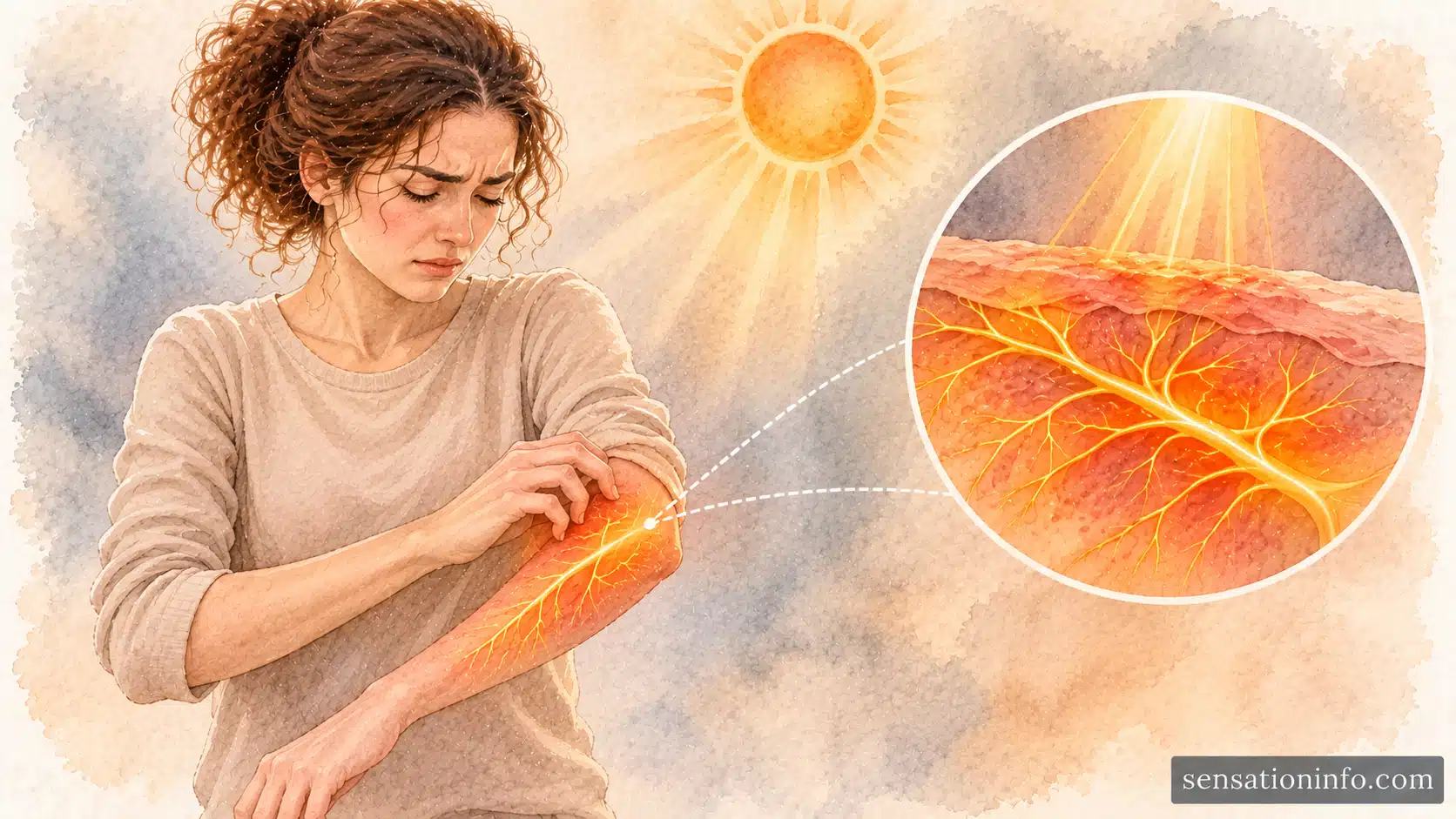

Brachioradial pruritus is a nerve condition that causes intense itching, burning, stinging or tingling on the outer forearms, usually with no rash at all. It is a type of neuropathic itch that comes from irritated nerves in the neck, and sunlight on the skin seems to set it off. That is why itchy forearms like this often flare in summer and calm down in winter.
Why Do My Forearms Itch So Badly After Being in the Sun?
Your forearms itch because two things happen at once. Nerves in your neck are irritated, and ultraviolet (UV) light from the sun seems to make the nerve endings in your forearm skin more sensitive.
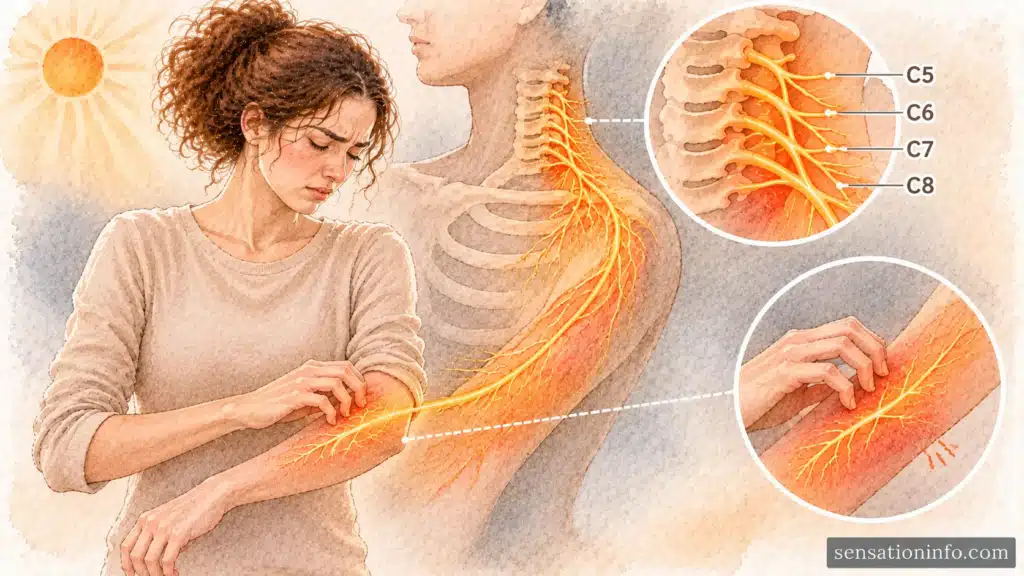
The nerves that supply your outer arms leave the spine in your neck, between the levels doctors call C5 and C8. When something narrows the space around them, they send false signals that your brain reads as itch, burning or stinging. These are the neck problems I look for:
- Degenerative disk disease, the wear and tear of the cushions between neck bones.
- A herniated disk pressing on a nerve root.
- Osteoarthritis and bone spurs in the neck.
- Foraminal stenosis, a narrowing of the openings where nerves leave the spine.
Sun exposure adds the second piece. Many patients tell me the itch is worst after gardening, golf or driving with the window down, and nearly gone by winter.
Women are about three times more likely to get it than men. It is also more common in people with lighter skin and those who spend a lot of time outdoors, and the average age at diagnosis is 59.
Symptoms of Brachioradial Pruritus
The main symptom is a deep, maddening itch on the outer forearm, between the elbow and the wrist. It often feels like it is under the skin, so scratching does little.
Patients describe the same few sensations again and again. Knowing them helps you explain the problem clearly at your appointment:
- Intense itching on the outer forearm, sometimes spreading to the upper arm, shoulder or neck.
- Burning, stinging or a prickly, “sunburned” feeling without a sunburn.
- Tingling, pins and needles or a crawling feeling under the skin.
- Quick relief from an ice pack, with the itch returning once the ice is removed.
Both arms are affected in about three out of four people, but it can affect just one. Many people tell me the itch keeps them awake, and they keep ice packs in the freezer just for their arms.
Is It Sunburn, a Rash or a Nerve Itch?
It is a nerve itch, not a rash, which is why rash creams rarely help. The table below compares the three patterns people most often confuse:
| Feature | Nerve itch (brachioradial type) | Sunburn | Skin rash (eczema or contact dermatitis) |
|---|---|---|---|
| How the skin looks | Normal, or scratch marks only | Red, hot, sometimes peeling | Red, scaly, bumpy or blistered |
| Main feeling | Deep itch, burning, stinging | Soreness and heat | Surface itch |
| Where it is | Outer forearms, often both | Any sun exposed skin | Where the trigger touched |
| What helps | Ice packs, sun protection, nerve medicines | Cooling and time | Moisturizer, avoiding the trigger, steroid cream |
| Timing | Lasts weeks to months, worse in summer | Fades in days | Comes and goes with the trigger |
If your main feeling is creeping or crawling rather than itch, a skin crawling sensation can have other nerve and skin causes worth sorting out.
Other Conditions That Can Feel Similar
A few other problems cause arm itch, burning or tingling, and some need different care. This table maps the ones I rule out:
| Where it is | What it feels like | What comes with it | Likely cause | How urgent |
|---|---|---|---|---|
| One patch beside a shoulder blade | Itch, tingling, burning | Brown patch from rubbing | Notalgia paresthetica | See a doctor within weeks |
| Neck into the arm and hand | Sharp or burning pain, numbness | Weak grip or arm, worse moving the neck | Cervical radiculopathy | See a doctor soon |
| Where skin touched a product or plant | Itch with red, bumpy skin | Visible rash | Contact dermatitis | See a doctor if it lasts |
| Itch all over the body | Itch without rash | Fatigue, weight changes | Kidney, liver or thyroid disease, or diabetes | See a doctor within weeks |
This condition has a close cousin on the back. Notalgia paresthetica causes the same kind of nerve itch beside the shoulder blade, and some people have both.
If your neck itself tingles or aches, pins and needles in the neck can point to the same nerve irritation that drives the arm symptoms.
When Should I See a Doctor?
Most cases are not urgent, but an itch that keeps coming back deserves a proper diagnosis. This comparison shows which column your symptoms fall in:
| Usually less worrying | Book a doctor visit |
|---|---|
| Brief itch after a day in the sun that settles overnight | Itch on the forearms lasting more than 2 weeks |
| Itch that clears once you cool the skin and cover up | Itch that wakes you at night or affects work |
| Mild itch that stops by the end of summer | Itch that keeps getting worse despite sun protection |
A few signs need faster care. Act on these quickly:
- New arm weakness, a weak grip or dropping things: contact your doctor as soon as possible.
- Neck pain after a fall or accident: go to the nearest emergency room.
- Itch with unexplained weight loss, fatigue or bowel changes: book a visit within a week.
- Scratch marks that become hot, swollen or filled with pus: get same day care for possible infection.
What Will My Doctor Ask and Test?
Before your visit, a nerve symptom checker can help you sort what the sensation feels like and what makes it worse. Then be ready to cover these points:
- Exactly where the itch sits, and whether it affects one arm or both.
- Whether it gets worse in summer or after time outdoors.
- Whether an ice pack stops it, and how quickly it returns.
- Any neck pain, past neck injury, or numbness or weakness in the arms.
- Creams, medicines and home remedies you have already tried.
What Happens During the Exam?
In my exam, I first check that there is no rash. Then I often do an ice pack test: I place an ice pack on the itchy area, and if the itch stops while the ice is on and returns once it is removed, that strongly points to this condition.
I also check your neck movement, arm strength, reflexes and sensation. An X-ray or MRI of the neck is ordered only in some cases, such as when you have neck pain, weakness or symptoms that do not improve. Some doctors also use a nerve test called electromyography (EMG), which records the electrical activity of muscles and can show irritation of the C5 and C6 nerve roots.
Good questions to ask include “Could this come from my neck?”, “Do I need any scans?” and “Which treatments should I try first?”
Treatment Options That Help
Most people need a mix of sun protection and nerve calming treatment rather than a single fix.
What Can I Do at Home?
Sun protection is the foundation of treatment, and it often reduces flares on its own. Start with these steps:

- Use a broad spectrum sunscreen with SPF 30 or higher on your arms every day, and reapply after 2 hours outdoors or after swimming or sweating.
- Wear long sleeves made from tightly woven fabric, or UV protective sleeves, when you are outside.
- Stay in the shade during strong sun, especially when the UV index is 3 or higher.
- Avoid tanning beds completely.
- Keep an ice pack wrapped in a thin towel ready for flares, and limit each use to short sessions to protect your skin.
What Medical Treatments Help?
Medicines taken by mouth that calm nerve signals are often the most effective step. Amitriptyline is the one doctors prescribe most often, and gabapentin (Neurontin) is another common choice. Hydroxyzine (Vistaril), an antihistamine that also eases itch, may help at night.
Your doctor will choose the medicine and dose.
Creams and gels can help alongside oral medicine. Options include capsaicin cream made from chili peppers, a compounded cream that combines amitriptyline and ketamine, numbing creams and mild steroid creams. Capsaicin burns at first, so start on a small patch of skin.
When a pinched nerve in the neck is clearly involved, treating the neck with physical therapy or other spine care can help the itch too. Surgery on the neck is very rarely needed for this condition.
How Long Does It Last?
With sun protection and the right medicine, symptoms often settle within weeks to months, but flares can return each summer for years.
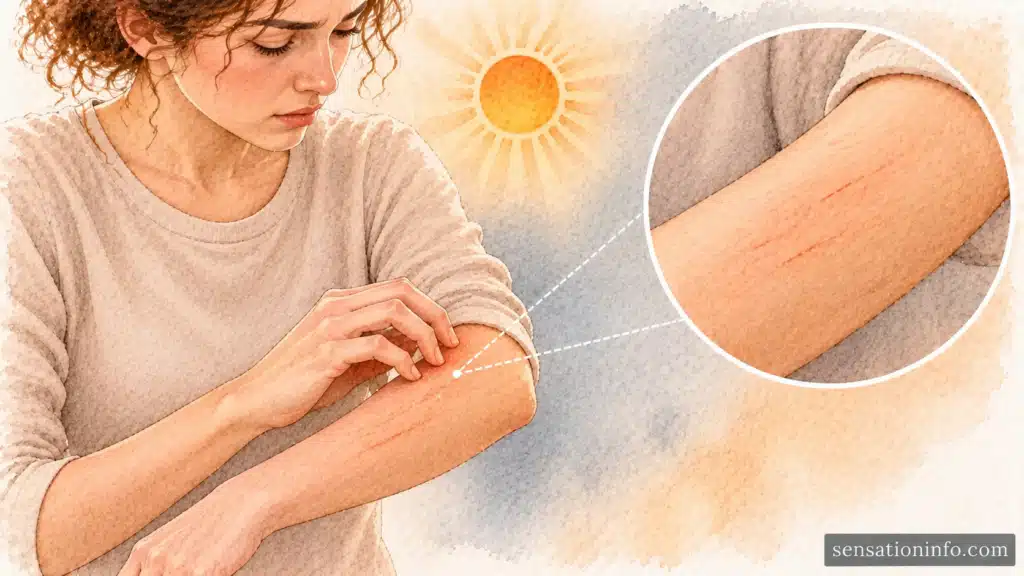
Scratching is the biggest risk to your skin. Over time it can cause sores, thick leathery patches, hard itchy lumps called prurigo nodules, and lighter or darker skin. Treating the itch early protects your skin.
Starting sun protection early in spring, before the first flare, often makes summer much easier.
Key Takeaways
This condition is often missed and very treatable. Keep these points in mind:
- Brachioradial pruritus is a nerve itch on the outer forearms that usually has no rash.
- It is linked to a pinched nerve in the neck combined with sun exposure.
- An ice pack that stops the itch, with the itch returning when removed, is a strong clue.
- Daily sun protection, nerve calming medicines and creams such as capsaicin often bring relief.
- New arm weakness or neck pain after an injury needs prompt medical care.
Frequently Asked Questions
Cold seems to quiet the irritated nerve signals in the forearm skin, which is why an ice pack stops brachioradial pruritus itching almost immediately. The itch usually returns once the skin warms up again, and doctors use this response as a strong clue to the diagnosis.
Yes. Brachioradial pruritus is more common in the summer months, and many people notice relief during winter and when they protect their arms from the sun. Daily sunscreen and sun protective sleeves often reduce summer flares.
Brachioradial pruritus can ease within weeks to months with sun protection and treatment, but it often returns, especially in summer. Some people have flares on and off for life, so long term sun protection is usually part of the plan.
Doctor’s Recommendation
A dermatologist is the best first specialist for a stubborn forearm itch, and a neurologist or spine specialist can help when neck pain, numbness or arm weakness are part of the picture. Your primary care doctor is a good first stop to rule out rashes and body wide causes of itch. If your doctor suggests nerve testing, a list of EMG and nerve conduction test centers can help you find one.
References
- Cleveland Clinic. Brachioradial Pruritus. Cleveland Clinic. 2023.
- Cleveland Clinic. Cervical Radiculopathy (Pinched Nerve). Cleveland Clinic. 2022.
- Cleveland Clinic. Pruritus (Itchy Skin). Cleveland Clinic. 2022.
- Centers for Disease Control and Prevention. Sun Safety Facts. CDC. 2026.
- Shields LB, Iyer VG, Zhang YP, Shields CB. Brachioradial Pruritus: Clinical, Electromyographic, and Cervical MRI Features in Nine Patients. Cureus. PubMed Central, National Library of Medicine. 2022.