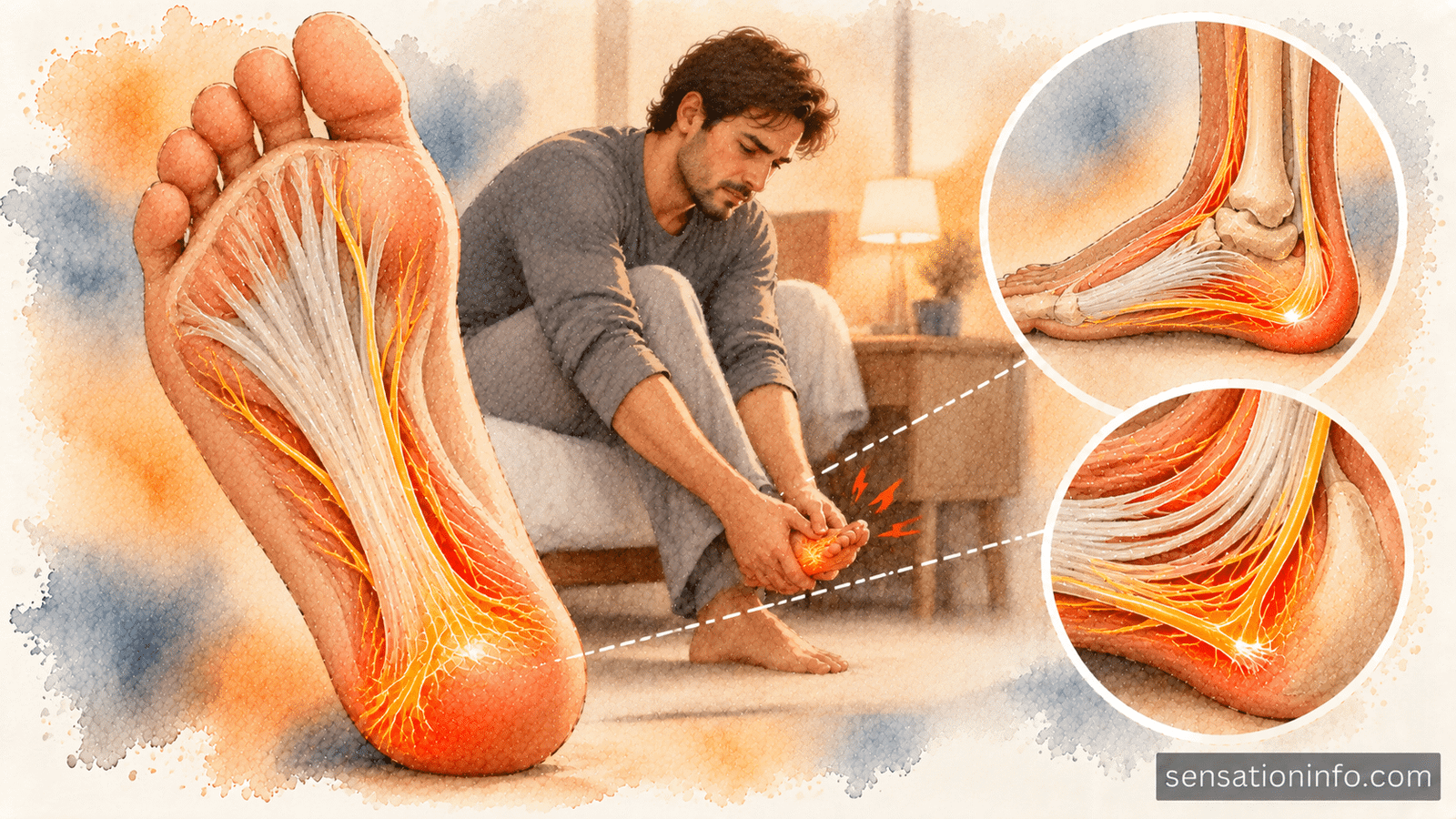

Waking up to a heel that feels dead, prickly, or completely numb can make your first morning steps incredibly painful and difficult. Numbness in the heel is usually caused by physical compression of the nerves running along the bottom of your foot, most commonly from severe plantar fasciitis or a condition called Baxter’s nerve entrapment.
When you sleep, your foot rests in a relaxed, downward position that can shorten ligaments and pinch these sensitive nerves. If the numbness spreads upward into your ankle, it could be an early warning sign of tarsal tunnel syndrome. Fortunately, a few targeted morning stretches can relieve the pressure on the nerve and restore normal feeling before your feet even touch the floor.
Why Does My Heel Go Numb in the Morning?

During the night, your feet naturally fall into a state of plantar flexion, meaning the toes point downward. This extended position allows the plantar fascia band on the bottom of your foot to contract and tighten. When you finally stand up, this sudden stretching pulls violently on the tight tissues, which instantly compresses the surrounding nerves and cuts off normal sensory signals.
As blood flow rushes back into the compressed area, the sensory nerves begin firing erratically. This rapid return of nerve signaling causes a transition from total numbness to a painful prickly sensation.
Patients commonly describe this morning transition in several distinct stages:
- A completely dead sensation resembling a block of wood.
- A sudden rush of pins and needles in your feet as you take your first three steps.
- A sharp, burning pain that slowly fades into a dull ache as you walk around the house.
Common Causes of Heel Numbness
Isolated heel numbness is fundamentally a nerve compression issue. While general numbness in your feet can be caused by systemic issues like diabetes or poor circulation, numbness strictly confined to the heel is usually mechanical. The physical structure of the foot is pinching a specific nerve.
Plantar Fasciitis and Nerve Irritation
Plantar fasciitis is the most famous cause of morning heel pain, but it can also cause significant numbness. The plantar fascia is a thick band of tissue connecting your heel bone to your toes. When this band becomes severely inflamed from overuse, the swollen tissue physically presses against the tiny sensory nerves in the heel pad.
Because inflammation pools in the heel while you sleep, the nerve compression is at its absolute worst first thing in the morning. Once you begin walking and moving the fluid out of the area, the swelling decreases slightly, and the numbness often subsides.
Baxter’s Nerve Entrapment
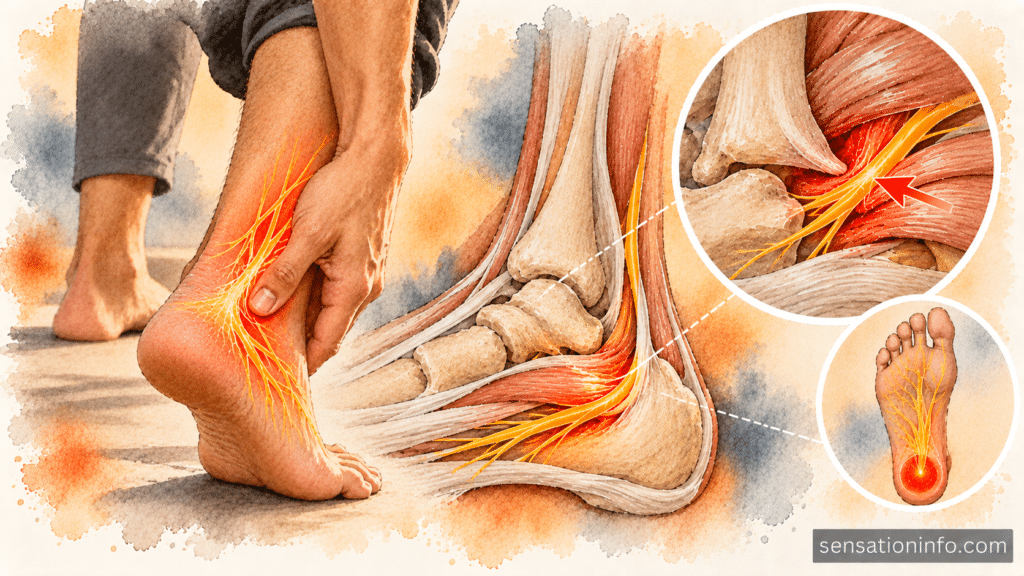
Baxter’s nerve entrapment is the leading cause of isolated heel numbness and is frequently misdiagnosed as standard plantar fasciitis. Baxter’s nerve is the first branch of the lateral plantar nerve. It runs directly across the bottom of the heel and provides sensation to the heel pad.
When this specific nerve gets trapped between the tight muscles of the foot and the heel bone, it completely shuts down sensory feedback. If you have chronic heel numbness that does not respond to basic arch supports or typical fasciitis treatments, a trapped Baxter’s nerve is highly likely.
Tarsal Tunnel Syndrome
Tarsal tunnel syndrome occurs when the main posterior tibial nerve is squeezed as it passes through a narrow tunnel of bone and tissue inside the ankle. This is very similar to carpal tunnel syndrome in the wrist, but it happens in the foot.
While the compression happens up in the ankle, the sensory numbness radiates downward directly into the heel and the sole of the foot. Patients with tarsal tunnel syndrome often feel burning and numbness that wakes them up in the middle of the night, rather than just during their first morning steps.
Simple Morning Stretches for Immediate Relief
The worst thing you can do for a numb heel is to jump directly out of bed and place your full body weight on a tight foot. Standing on compressed nerves and shortened ligaments causes micro tears and worsens the inflammation.
To safely restore blood flow and decompress the nerves, perform these simple movements before your feet ever touch the floor:

- The Towel Stretch: Sit up in bed and loop a rolled towel around the ball of your foot. Keep your leg straight and gently pull the towel toward you to stretch the calf and the bottom of the heel for thirty seconds.
- Seated Fascia Massage: Cross your affected leg over your opposite knee. Grab your toes and pull them backward toward your shin to expose the tight band on the bottom of your foot. Use your thumb to massage the heel pad deeply.
- Ankle Pumps: Point your toes straight down away from your body, then pull them back aggressively toward your shin. Repeat this twenty times to actively pump trapped fluid away from the heel nerves.
When to See a Podiatrist or Specialist
While morning heel numbness is common, ignoring chronic nerve compression can lead to permanent sensory loss in your foot. Over time, a pinched nerve will physically degrade if the pressure is not surgically or mechanically relieved.
You should schedule an evaluation with a podiatrist or neurologist if you experience any of the following warning signs:
- The numbness lasts all day instead of fading after your morning walk.
- You lose the ability to spread your toes or feel weakness in the foot.
- The numbness is accompanied by severe shooting pain up into the calf.
- You develop a dragging sensation or drop foot when walking.
Key Takeaways
- Morning heel numbness is mechanical. It is usually caused by shortened tissues pinching sensory nerves while you sleep in a relaxed position.
- Plantar fasciitis causes nerve irritation. Severe inflammation in the fascia band can swell and compress the nerves in the heel pad.
- Baxter’s nerve entrapment is a primary suspect. This trapped nerve is the leading cause of isolated heel numbness and is often mistaken for standard heel pain.
- Stretch before standing. Doing simple towel stretches in bed decompresses the nerves and prevents micro tears in the foot tissue.
- Seek specialist care for chronic cases. If the numbness does not fade after your morning routine, you must see a doctor to prevent permanent nerve damage.
Frequently Asked Questions
Yes. Wearing worn out shoes lacking arch support forces your plantar fascia to overwork during the day. This creates severe inflammation that swells and compresses your heel nerves while you sleep at night.
Isolated heel numbness is rarely a blood clot. Blood clots typically cause deep throbbing pain, visible swelling, warmth, and redness in the calf. Mechanical nerve compression is much more likely to cause localized heel numbness.
No. While gentle stretching is excellent, aggressive deep tissue massage directly over a pinched or inflamed nerve can actually increase the swelling and make the numbness worse.
Doctor’s Recommendation
If your heel numbness persists throughout the day or is accompanied by burning nerve pain, you require a specialized evaluation to prevent permanent damage. We recommend consulting our nationwide directory of neuropathy specialists to find a highly rated nerve expert or podiatrist in your local area.
References
- National Institute of Neurological Disorders and Stroke. Peripheral Neuropathy Fact Sheet. National Institutes of Health. 2024.
- American Podiatric Medical Association. Heel Pain. APMA. 2024.
- National Center for Biotechnology Information. Baxter Nerve Entrapment. StatPearls Publishing. 2024.
- Mayo Clinic. Plantar fasciitis: Symptoms and causes. Mayo Foundation for Medical Education and Research. 2024.