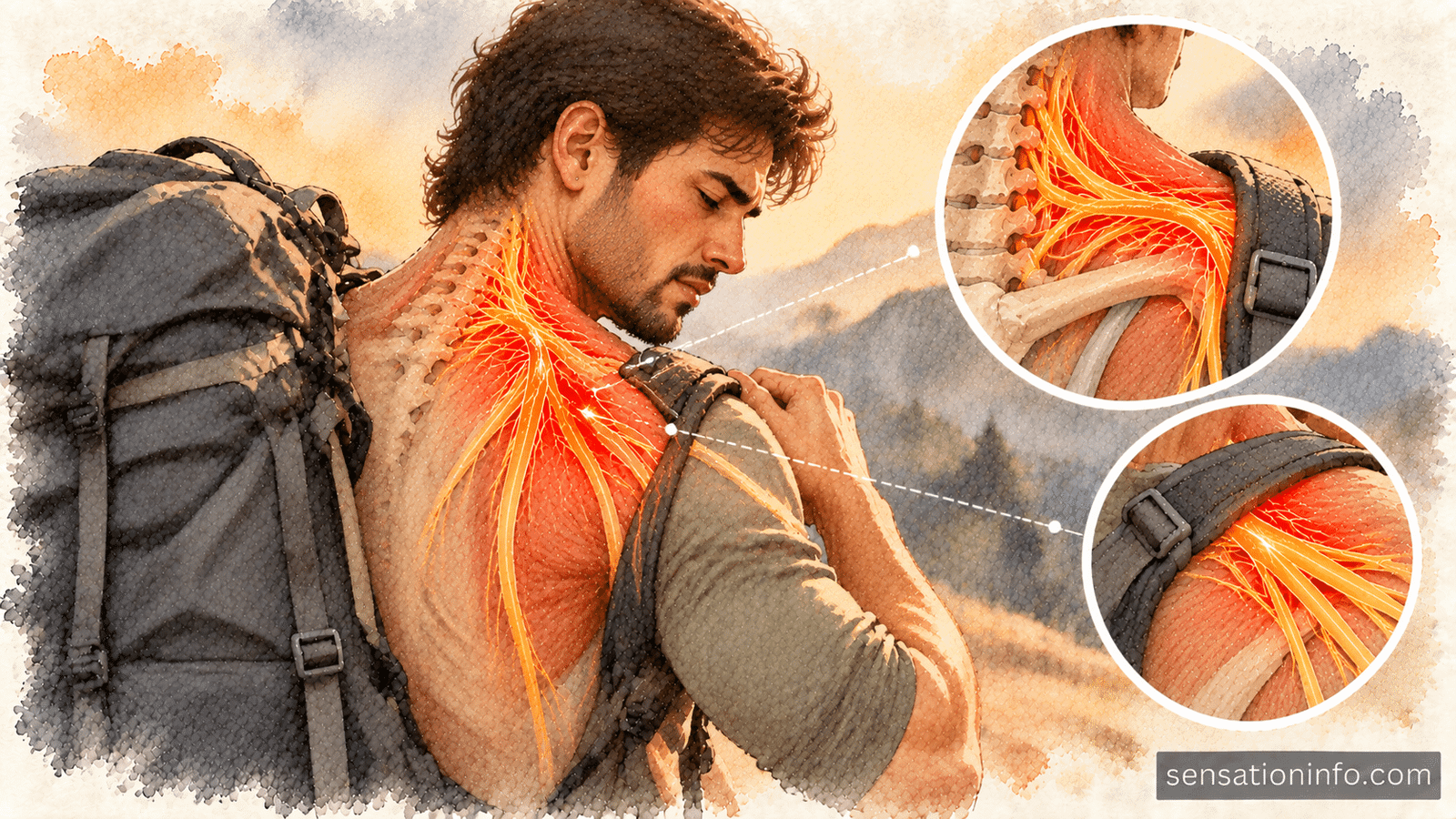

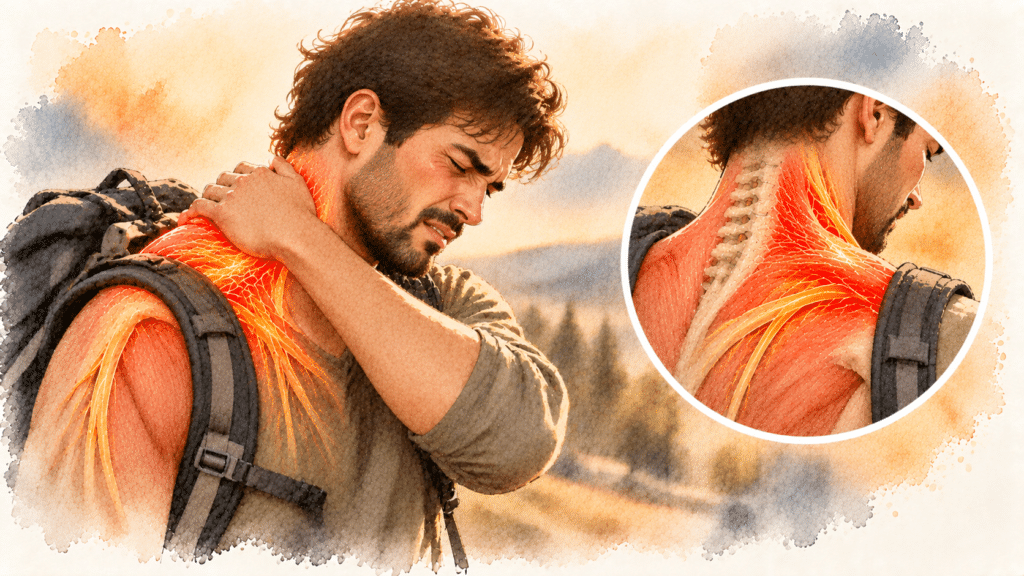
A burning sensation in the traps after carrying a heavy backpack is a direct warning sign that the load is crushing your nerves and overworking your upper back muscles. When thin or poorly adjusted straps dig into your shoulders, they restrict blood flow and compress the sensitive nerve bundles sitting right beneath your collarbone.
If you are desperate to relieve constant burning pain in your shoulder, the fastest fix is immediately shifting the bag weight off your trapezius muscles and directly onto your hips.
The Anatomy of Backpack Shoulder Pain
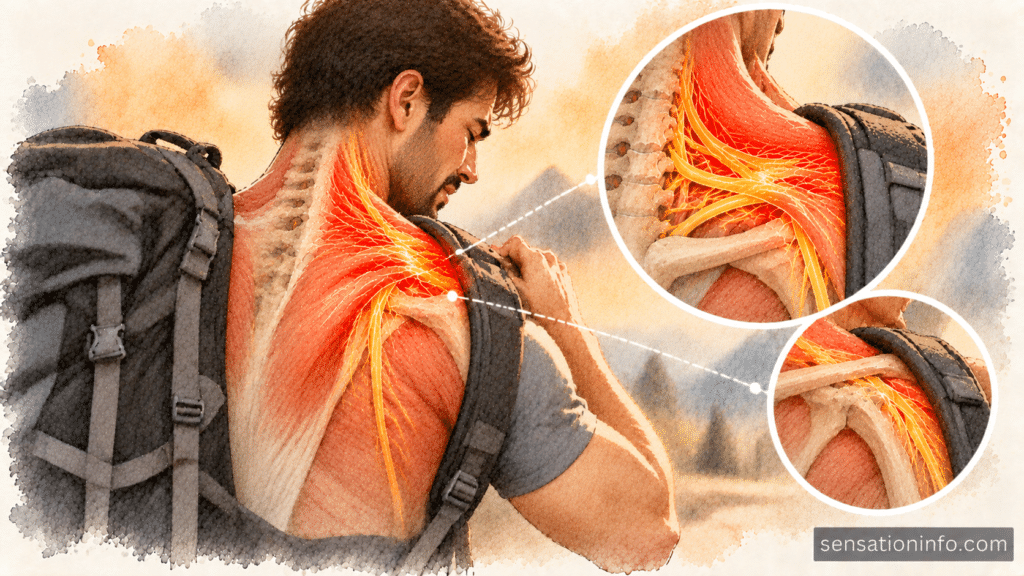
Your trapezius muscle is a large triangle shaped muscle that spans from the base of your skull down to the middle of your back and across to your shoulders. It is responsible for supporting the weight of your arms and keeping your posture upright.
When you sling a heavy backpack over your shoulders, the entire downward force is concentrated directly on the upper fibers of your traps. This constant mechanical pressure creates two distinct physical problems that trigger a hot and fiery sensation.
First, the muscle fibers become exhausted and starved of oxygen. The heavy straps act like a tourniquet. They squeeze the local blood vessels and prevent fresh oxygen from reaching the working muscle tissue. The muscle responds by building up lactic acid which creates a deep and radiating chemical burn.
Second, the straps physically crush your nerves against your collarbone and ribcage. The heavy load pulls your shoulders downward and backward into an unnatural posture. This stretches the nerves to their absolute limit while simultaneously pinching them under the heavy canvas or nylon straps.
The Nerves Involved in Trap Burning
Understanding which nerve is getting pinched helps you fix the problem faster. A heavy backpack typically irritates two major neurological structures in your neck and shoulder region.
The Brachial Plexus
The brachial plexus is a massive network of nerves that exits your cervical spine and travels directly under your collarbone and down your arm. Because these nerves sit so close to the surface of the skin on the top of your shoulder, backpack straps compress them easily.
When a heavy load presses down on the brachial plexus, it causes a condition medically known as rucksack palsy. This compression creates a sharp burning pain across the top of your shoulder. If you need to stop the tingling radiating down your arm, you must remove the pressure from this specific nerve bundle immediately.
The Spinal Accessory Nerve
The spinal accessory nerve controls the movement of your trapezius muscle. While it sits slightly deeper than the brachial plexus, severe muscle spasms caused by a heavy backpack can clamp down tightly around this nerve. When this happens, you will feel a localized fiery ache right at the base of your neck that worsens when you try to turn your head or shrug your shoulders.
Muscle Soreness vs Nerve Compression
It is crucial to know whether your burning sensation is just standard muscle fatigue or a more serious nerve compression issue. Muscle fatigue will heal quickly with rest, but nerve compression requires immediate ergonomic changes to prevent long term damage.
| Feature | Muscle Fatigue | Nerve Compression (Rucksack Palsy) |
| Type of Pain | Deep aching and generalized warmth | Sharp stinging or electric burning |
| Location | Spread evenly across both upper traps | Often shoots down one arm or up into the neck |
| Accompanying Symptoms | Stiffness and a feeling of heaviness | Numbness, tingling, or a dead arm sensation |
| Response to Rest | Ache lingers for a day or two after removing the bag | Burning often stops shortly after taking the bag off |
| Movement | Hurts worse when you squeeze the muscle | Hurts worse when you stretch your neck away from the shoulder |
Red Flags: When to Seek Immediate Medical Help
Most burning in the traps from a heavy backpack is highly uncomfortable but not dangerous. However, severe nerve compression can lead to motor loss if you ignore the warning signs. Seek emergency medical care or an urgent orthopedic evaluation if you experience any of the following symptoms.
- Profound weakness: You suddenly cannot lift your arm above your head or hold a coffee cup.
- Loss of sensation: Your arm goes completely numb and you cannot feel hot or cold temperatures on your skin.
- Muscle wasting: You notice the muscles in your shoulder or hand look visibly smaller than the other side.
- Breathing difficulty: The burning pain is accompanied by sudden shortness of breath or crushing chest pressure.
- Unrelenting pain: The intense burning sensation does not stop even after you have rested without the backpack for several days.
How to Adjust Your Backpack to Stop the Burning
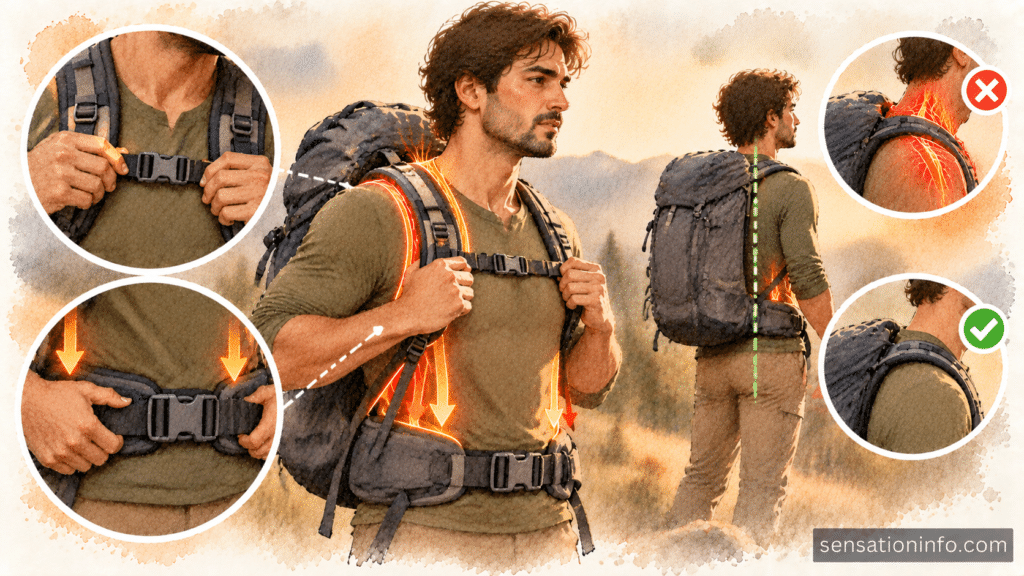
You do not necessarily need to buy a new backpack to stop the pain. Adjusting your current bag to change how the load sits against your body can instantly relieve the pressure on your trapezius muscles.
- Use the hip belt: This is the single most important adjustment you can make. Fasten the padded hip belt tightly over your hip bones before you tighten the shoulder straps. This transfers up to eighty percent of the bag weight off your shoulders and onto your strong leg and pelvic muscles.
- Tighten the load lifter straps: These are the small straps located at the very top of the shoulder straps near your collarbone. Pull them snug to bring the top of the backpack closer to your body. This stops the bag from pulling backward and straining your traps.
- Fasten the sternum strap: Clip the small strap across your chest. This prevents the shoulder straps from sliding outward into your armpits and pulling directly on the brachial plexus nerves.
- Pack the heaviest items low and centered: Place your heaviest books or gear at the very bottom of the bag and as close to your spine as possible. A low center of gravity prevents the backpack from acting like a lever that pries your shoulders backward.
- Wear both straps: Never carry a heavy backpack on just one shoulder. Slugging a heavy bag on one side forces your opposite trapezius muscle to remain locked in a spasm just to keep you standing upright.
Fast Home Care to Relieve Trap Burning
Once you take the heavy backpack off, you can use simple therapies at home to calm the inflamed nerves and flush the lactic acid out of your exhausted muscles.
Apply Ice First Then Heat
If your traps feel like they are actively on fire right after a hike or a long commute, apply an ice pack wrapped in a towel for fifteen minutes. Cold therapy constricts the blood vessels and rapidly numbs irritated superficial nerves. After forty eight hours, switch to a warm heating pad to relax the tight muscle fibers and encourage fresh blood flow into the area.
Perform Gentle Neck Stretches
Stretching helps release the tight muscle bands that are clamping down on your nerves. Sit up straight and gently tilt your right ear toward your right shoulder until you feel a pull along the left side of your neck. Hold this position for thirty seconds and then switch sides. Never force the stretch to the point of sharp pain.
Use Targeted Massage
If you need to alleviate a hot burning feeling in your neck, a tennis ball can work wonders. Stand with your back against a wall and place a tennis ball directly over the fleshy part of your trap muscle. Lean into the ball and roll it slowly over the tender knots to manually release the muscle spasms.
Prevention and Recovery Timeline
A burning sensation in the traps caused by a heavy backpack is highly treatable and usually resolves very quickly once you fix the mechanical strain.
If you just carried a heavy load for one afternoon, the burning and soreness will typically fade within two to three days of rest. If you have been carrying an overloaded school bag improperly for months, the chronic muscle knots and mild nerve irritation may take three to four weeks of strict ergonomic changes to heal completely. During this recovery phase, you must keep your backpack weight under ten percent of your total body weight. If you still soothe a fiery ache under your shoulder blade after a month of rest and proper bag adjustments, you should consult a physical therapist for a tailored rehabilitation program.
Key Takeaways
- A burning sensation in the traps is usually caused by heavy backpack straps compressing the brachial plexus nerves and restricting blood flow to the muscle.
- Sharp electrical pain that shoots down your arm points to nerve compression, while a deep warm ache signifies simple muscle fatigue.
- The fastest way to stop the burning is to transfer the weight of the bag onto your hips by using a padded waist belt.
- Always pack the heaviest items at the bottom of the bag and closest to your spine to prevent the load from pulling your shoulders backward.
- If you experience sudden weakness in your arm or the numbness does not go away after removing the backpack, you need to seek a medical evaluation.
Freaquently Asked Questions
Doctor’s Recommendation
If your shoulder burning is accompanied by persistent tingling down your arm, severe weakness, or if it disrupts your sleep even when you are not wearing a backpack, you should have a clinical evaluation. For readers dealing with ongoing nerve irritation that does not respond to backpack adjustments or rest, exploring our guide to the best pain management doctors for nerve pain in the USA can help you locate a specialist who can accurately diagnose and treat conditions like brachial plexus compression or chronic muscle spasms.