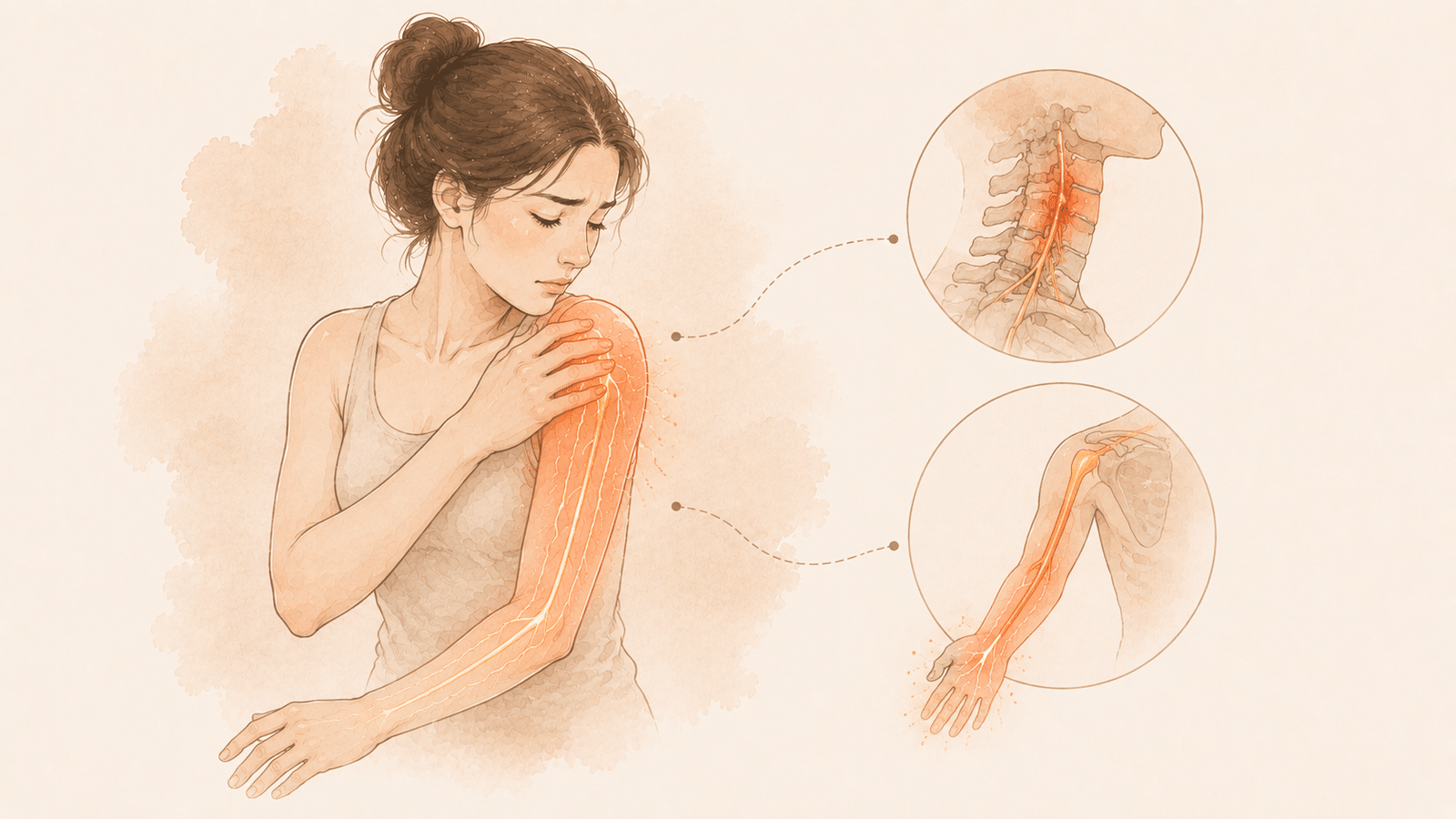

The first time I felt that strange electric buzz running from my shoulder down to my fingertips, I genuinely thought I had slept wrong. A day later, when it hadn’t gone away, I started paying closer attention. That experience taught me something important: shoulder and arm tingling is rarely random. There’s almost always a clear reason behind it.
If you’re dealing with that uncomfortable pins-and-needles feeling traveling down your arm, this article will help you understand why it happens and what you can actually do about it.
Why Tingling in the Shoulder and Arm Happens
Tingling, medically called paresthesia, usually means a nerve somewhere along the pathway from your neck to your fingers is being compressed, irritated, or inflamed. It’s your body’s way of saying, “Hey, something’s off here.”
The tricky part is that the source of the tingling isn’t always where you feel it. You might feel buzzing in your hand, but the actual problem could be sitting up in your neck. This is one of the most misunderstood aspects of nerve pain, and it’s why proper diagnosis matters so much.
Let me walk you through the most common reasons people experience tingling in shoulder going down arm causes.
Cervical Radiculopathy: The Neck Connection
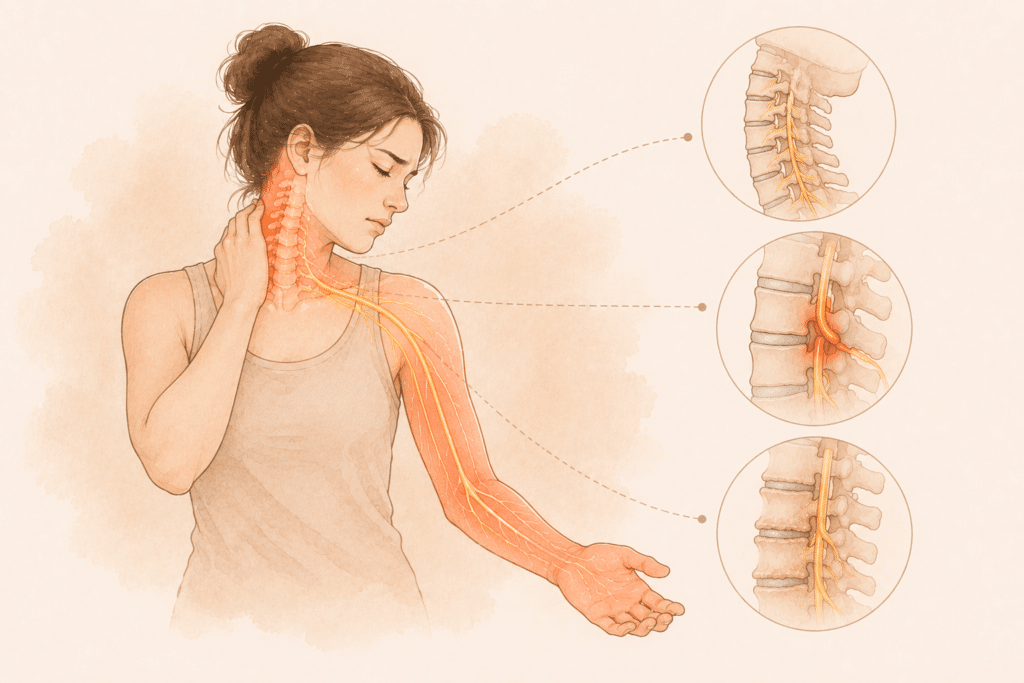
This is the heavyweight champion of shoulder-arm tingling causes. Cervical radiculopathy happens when a nerve root in your neck gets pinched, often due to a herniated disc, bone spurs, or general wear and tear.
The nerves that travel down your arm originate in your cervical spine, so any irritation up there can send symptoms all the way down to your fingers. According to the American Academy of Orthopaedic Surgeons (AAOS), this condition most commonly affects people between 40 and 60, but I’ve seen plenty of younger folks deal with it too, especially those glued to laptops and phones.
The hallmark symptom is tingling or numbness that follows a specific path, sometimes down the outside of the arm to the thumb, sometimes along the inside toward the pinky. Knowing the path actually helps doctors figure out which nerve root is involved.
Thoracic Outlet Syndrome
This one’s less famous but worth understanding. Thoracic outlet syndrome (TOS) occurs when nerves or blood vessels get compressed in the narrow space between your collarbone and first rib.
People with TOS often describe tingling that gets worse when raising their arms overhead. I had a friend who’s a hairstylist deal with this for months before figuring it out. Her job kept her arms elevated for hours, and the symptoms made perfect sense once she connected the dots.
The Cleveland Clinic notes that TOS is more common in people with repetitive overhead movements, poor posture, or anatomical variations like an extra rib.
Rotator Cuff Issues
The rotator cuff is a group of four muscles and tendons that stabilize your shoulder. When these get torn, inflamed, or impinged, the resulting swelling can irritate nearby nerves.
This usually causes pain first, with tingling showing up as a secondary symptom. The discomfort tends to worsen at night, especially when you sleep on the affected side. If you’ve ever woken up with a dead arm and shoulder ache that won’t quit, this could be the culprit.
Rotator cuff problems are extremely common in people over 40, athletes, and anyone whose job involves repetitive arm motion.
Pinched Nerve in the Shoulder
Sometimes the nerve gets compressed right at the shoulder rather than in the neck. The suprascapular nerve and axillary nerve are common candidates. Carrying heavy bags on one shoulder, sleeping in awkward positions, or even wearing a tight backpack can do it.
The tingling here is usually more localized, but it can radiate down depending on which nerve is affected. The good news is that pinched nerves at this location often resolve with rest and posture adjustments.
The Nerve Pathway: Why Location Matters
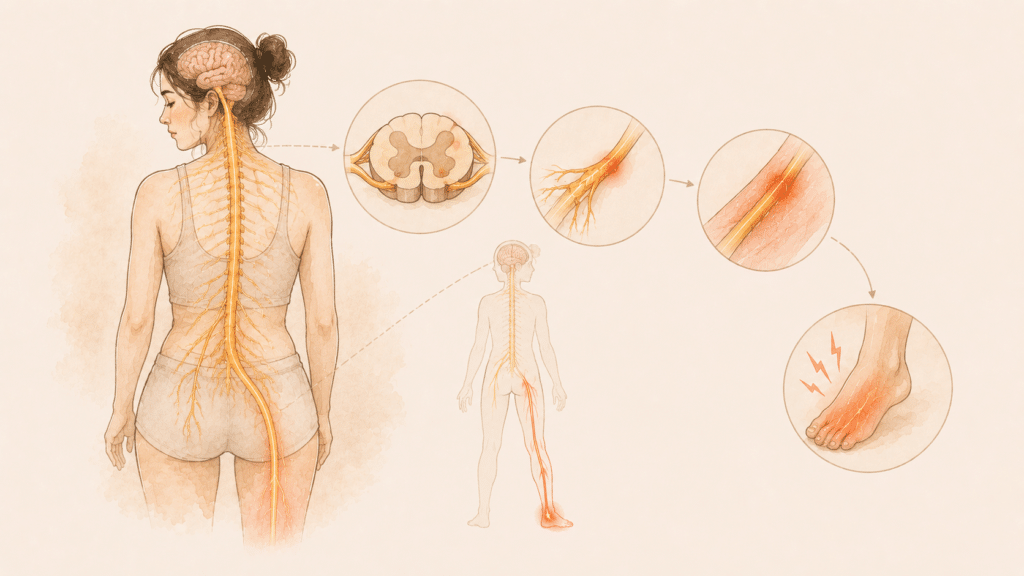
Understanding the nerve pathway helps explain why a problem in one spot causes symptoms somewhere else.
The brachial plexus is a network of nerves that starts in your neck (C5 to T1 spinal levels) and runs through your shoulder, down your arm, and into your hand. Think of it like a highway system. A traffic jam at the entrance affects every exit further down.
This is why a herniated disc in your neck can make your pinky tingle. The nerve signal gets disrupted at the source, but you feel it at the destination. Once you understand this, the seemingly random nature of nerve symptoms starts making a lot more sense.
Other Causes Worth Knowing About
A few less common but important causes include:
Diabetic neuropathy, especially in people with poorly controlled blood sugar, can affect nerves throughout the body, including the arms.
Vitamin B12 deficiency is surprisingly common and can cause tingling in the extremities. A simple blood test catches it.
Multiple sclerosis sometimes presents with arm tingling, though it’s usually accompanied by other neurological symptoms.
Cardiac issues, particularly heart attacks, can cause left arm tingling. This is why sudden, unexplained arm symptoms paired with chest discomfort, shortness of breath, or sweating should be treated as an emergency.
I want to be clear: most shoulder-arm tingling isn’t a heart attack. But knowing the red flags can save a life.
Treatment Options That Actually Help
Treatment depends entirely on the cause, which is why a proper diagnosis comes first. That said, here’s a breakdown of what typically works.
Physical therapy is the most consistently helpful treatment across nearly all causes. A skilled therapist can identify movement patterns, posture issues, and weak muscles contributing to the problem. I’ve seen people make remarkable recoveries just by fixing how they sit, stand, and sleep.
Anti-inflammatory medications like ibuprofen can reduce nerve irritation in the short term. They’re not a long-term solution, but they help during flare-ups.
Posture correction sounds boring, but it’s transformative. Most modern shoulder-arm problems trace back to hours hunched over screens. Setting up an ergonomic workspace, using a proper chair, and taking movement breaks every 30 minutes makes a measurable difference.
Targeted stretches and strengthening exercises for the neck, shoulders, and upper back help relieve nerve compression and prevent recurrence.
For more severe cases, doctors might recommend corticosteroid injections to reduce inflammation around the affected nerve. Surgery is rarely the first option, but for severe cervical radiculopathy or persistent thoracic outlet syndrome, it can be necessary.
When to See a Doctor
I’m generally not one to rush to the doctor for every ache, but some symptoms shouldn’t wait.
See a healthcare provider if your tingling lasts more than a few days, gets progressively worse, affects your grip strength, or comes with weakness, severe pain, or loss of coordination. Sudden tingling accompanied by chest pain, slurred speech, or facial drooping needs emergency care immediately.
A primary care doctor can do an initial assessment, and they’ll often refer you to a neurologist, orthopedist, or physical therapist depending on what they find.
FAQ
It depends on the cause. Posture-related tingling can resolve in days with simple adjustments. Cervical radiculopathy and rotator cuff issues often take weeks to months of treatment.
It depends on the cause. Posture-related tingling can resolve in days with simple adjustments. Cervical radiculopathy and rotator cuff issues often take weeks to months of treatment.
No, but it’s worth taking seriously. If it comes with chest pressure, shortness of breath, nausea, or sweating, treat it as a medical emergency. Otherwise, it’s usually nerve-related.
Sometimes, yes, especially if it’s caused by temporary nerve compression. But persistent or recurring tingling needs evaluation. Ignoring it can let small problems become bigger ones.
Final Thoughts
Tingling in your shoulder and arm might feel mysterious, but it almost always has a logical explanation. Whether it’s a pinched nerve, a posture problem, or something deeper in your cervical spine, identifying the source is the first real step toward fixing it.
My honest advice: don’t wait it out indefinitely hoping it’ll fade. Pay attention to what triggers it, how long it lasts, and what makes it worse. That information is gold when you sit down with a doctor or physical therapist. Your nerves are doing their best to communicate, so the sooner you listen, the sooner you’ll find relief.