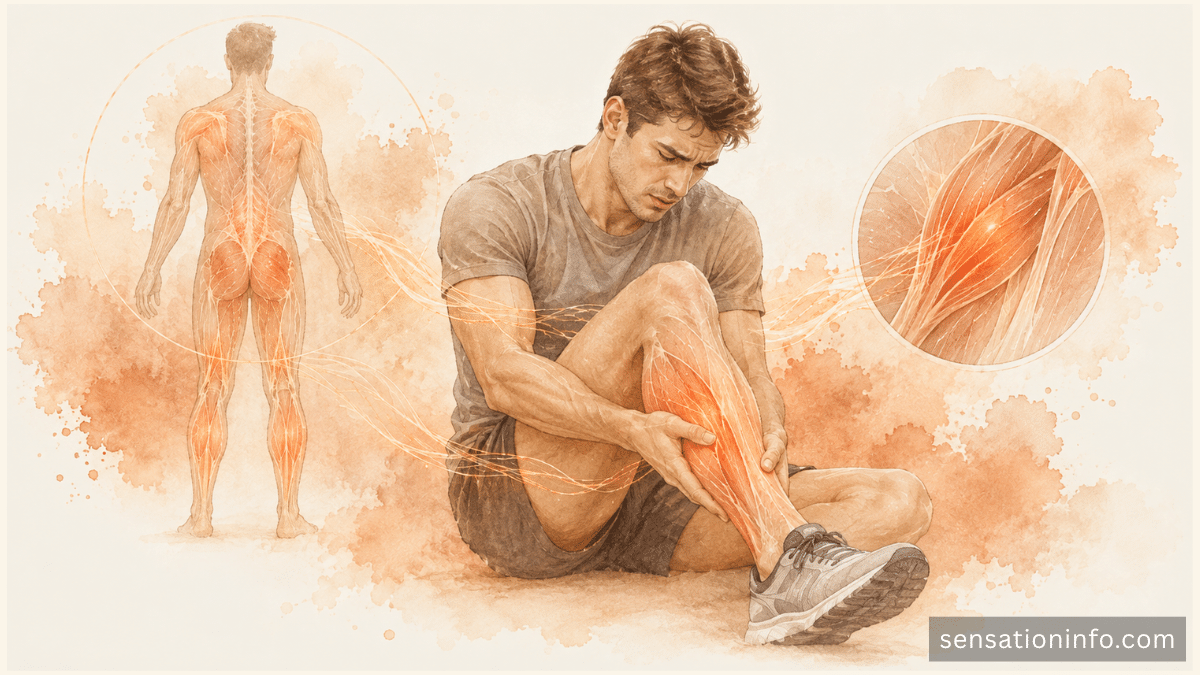

A burning muscle sensation may occur during intense exercise, after overuse, or when a muscle is strained. Burning that appears at rest can also involve a nerve, inflammation, infection, medicine effect, or reduced blood flow. The timing, movement pattern, visible changes, and symptoms elsewhere help determine whether the problem is likely minor or needs medical care.
When does the muscle begin to burn?
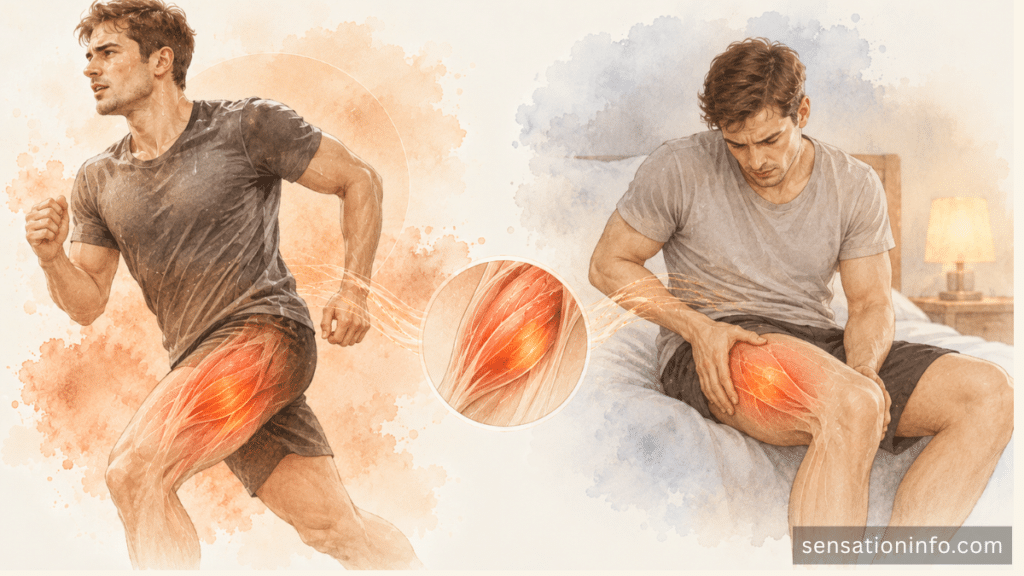
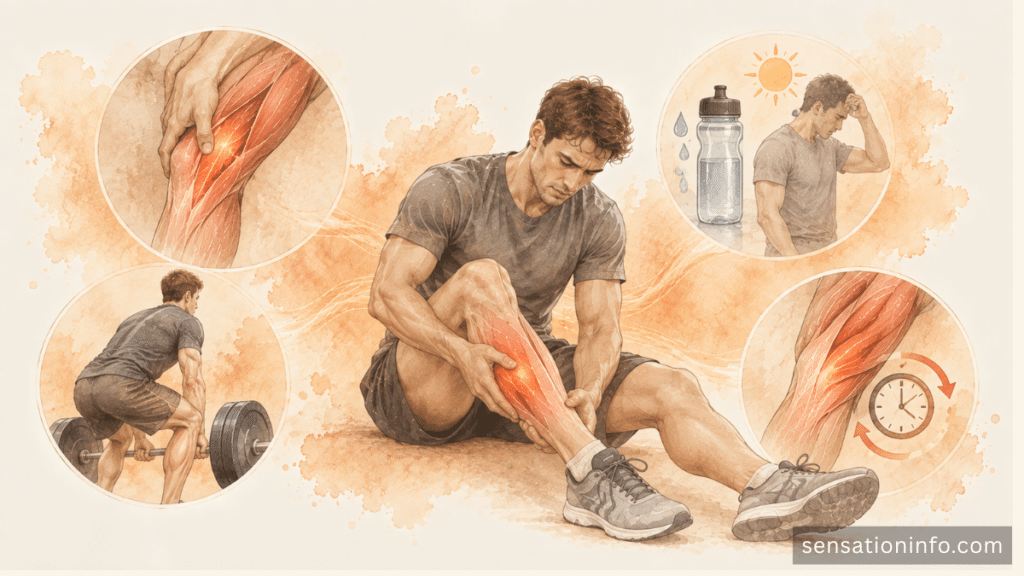
Burning during a demanding workout often feels like fatigue, heaviness, or heat in the muscles being used. It may ease after you stop or reduce the intensity. Burning after exercise can appear later with soreness and stiffness, especially after a new activity or a change in training.
Burning that starts without exertion, repeatedly wakes you at night, follows a narrow line, or affects the skin more than the muscle may have a different source. Burning with weakness, swelling, fever, dark urine, numbness, or breathing difficulty needs prompt attention.
The sensation alone cannot show whether the cause is muscle tissue, a nerve, blood flow, or another condition.
Which symptoms need emergency care?
Call 112 in India or 911 internationally, or go to the nearest emergency department, if burning muscle discomfort occurs with:
•Trouble breathing, chest pressure, fainting, or severe dizziness.
•Extreme weakness that makes routine activities difficult.
•Sudden numbness, facial drooping, trouble speaking, confusion, or severe loss of balance.
•A severe injury that prevents movement or causes bleeding.
•High fever with a stiff neck, confusion, or a rapidly spreading rash.
•A limb that becomes cold, pale, blue, severely swollen, or difficult to move.
•Severe muscle pain and weakness after intense exercise with dark urine.
•Rapidly worsening pain, swelling, or loss of function.
These symptoms can occur with serious injury, a neurologic emergency, severe muscle breakdown, infection, a circulation problem, or a heart or lung condition. Do not exercise through them.
What is the difference between exercise burn and pain at rest?
| Timing or trigger | Pattern that may fit | What to do |
| During strenuous exercise and easing after rest | Temporary exercise fatigue or exertional muscle discomfort | Reduce intensity and monitor recovery |
| One to three days after a new or intense workout | Delayed muscle soreness with stiffness and tenderness | Rest from the trigger and return gradually |
| After a sudden lift, twist, or impact | Strain, sprain, or muscle injury | Seek care for severe pain, swelling, or loss of movement |
| At rest with tingling, numbness, or an electric quality | Nerve irritation or neuropathic pain | Arrange a clinical evaluation |
| At rest with redness, warmth, swelling, or fever | Infection or inflammation | Seek prompt medical care |
| During walking with calf pain that improves after stopping | Possible circulation problem | Arrange medical assessment |
| Severe after exercise with weakness and dark urine | Possible rhabdomyolysis | Seek emergency care |
A burning sensation that fades quickly can still deserve evaluation if it returns predictably or limits activity.
Why can exercise make a muscle feel hot or burning?
Muscles work harder during intense activity and can feel tired, tight, or hot. A new exercise, heavier load, faster pace, or longer session can create more soreness than your usual routine.
This does not mean every exercise burn is harmless. Pain that is sudden, severe, sharply localized, associated with a popping sensation, or followed by major swelling may indicate an injury. Pain with numbness or unusual tingling sensations after exercise may indicate nerve irritation rather than standard athletic fatigue.
Increase training gradually, warm up appropriately, and stop when pain is sharp, disabling, or accompanied by warning symptoms.
What causes burning muscle sensation after exercise?
Muscle overuse and delayed soreness
Overuse can produce aching, tenderness, tightness, and burning in the muscles used. Delayed soreness may become noticeable later rather than during the activity.
Recovery often improves with rest from the triggering activity, gentle movement, sleep, and a gradual return to exercise. Persistent or worsening symptoms need assessment.
Muscle Strain
A strain occurs when muscle fibers or their attachments are overstretched or injured. Burning may occur with pain during movement, tenderness, swelling, bruising, weakness, or reduced range of motion. A sudden injury accompanied by a pop, a large bruise, or burning muscle pain paired with sudden weakness should be evaluated promptly to rule out major structural tears or nerve damage.
Dehydration or electrolyte changes
Sweating, vomiting, diarrhea, heat exposure, and inadequate fluid intake can affect fluid and electrolyte balance. Cramps, twitching, weakness, fatigue, and unusual sensations may occur.
People with kidney disease, heart disease, or medicines that affect fluid balance need individual advice. Do not take large amounts of salt, potassium, magnesium, or electrolyte products without medical guidance.
Exertional compartment syndrome
Pressure can build inside a muscle compartment during exercise and cause tightness, burning pain, swelling, numbness, or weakness. Symptoms may begin at a predictable time during activity and improve after rest, but recurrent exercise related symptoms need a medical evaluation.
Severe pain that does not improve, increasing swelling, numbness, weakness, or difficulty moving the limb is urgent.
Rhabdomyolysis
Severe muscle breakdown can follow intense exercise, heat exposure, trauma, seizures, prolonged immobilization, or certain medicines. Symptoms may include extreme muscle pain, weakness, swelling, and dark urine.
Rhabdomyolysis can harm the kidneys and needs urgent medical assessment. Do not continue exercising or rely only on extra fluids at home when these symptoms occur.
Why can a muscle burn when you are not exercising?
Nerve Irritation
An irritated nerve can create burning, electric, or shooting pain that feels as though it is in a muscle. A nerve root in the neck or back, or a peripheral nerve near an elbow, wrist, hip, or knee, can cause pain with tingling, numbness, or weakness. A narrow path of burning, symptoms that shift with spinal posture, or sharp burning radiating down the buttock and leg often points to sciatic nerve root compression rather than a true hamstring strain.
Peripheral neuropathy
Peripheral neuropathy affects nerves outside the brain and spinal cord. It can cause burning, tingling, numbness, sensitivity to touch, cramps, or weakness. Diabetes, vitamin deficiency, alcohol, medicines, toxins, kidney or thyroid disease, infection, autoimmune disease, and inherited disorders can contribute.
For broader information about nerve related burning, see the guide to neuropathy symptoms and evaluation.
Inflammation or Autoimmune Disease
Inflammatory conditions can cause muscle pain, weakness, fatigue, fever, joint symptoms, or skin changes. When persistent muscular burning is widespread, fluctuates with stress, and occurs alongside profound fatigue, it may align with fibromyalgia-related muscle sensitivity and burning. Do not start steroids or other prescription treatments without a clinician confirming the root cause.
Infection
Viral illnesses and bacterial infections can cause muscle aches and burning. Fever, redness, warmth, swelling, drainage, severe tenderness, or feeling very unwell increases the need for medical care.
A high fever with severe neck stiffness, confusion, or difficulty breathing is an emergency.
Medicine or toxin effects
Some medicines, alcohol, recreational substances, and toxins can affect muscles or nerves. A new medicine, dose change, supplement, or workplace exposure may be relevant.
Bring a full list to your appointment. Do not stop a prescribed medicine without discussing it with the prescriber.
Reduced blood flow
A circulation problem can cause burning or pain during activity, coldness, numbness, weakness, and color changes. When reduced blood flow limits oxygen delivery to hard-working tissue, learning how to improve poor circulation in the limbs can help differentiate vascular claudication from standard muscle cramping. A sudden cold, pale, blue, swollen, or weak limb requires emergency care; do not massage a limb showing these warning signs.
What does the location suggest?
A burning sensation in a muscle that is tender after exercise may follow overuse or strain. Burning in the calf with swelling or warmth may require assessment for a vein problem. Burning in the buttock or thigh that travels down the leg may involve a nerve from the lower back.
Burning in both feet or hands with numbness may fit peripheral neuropathy or a metabolic cause. Burning near the chest or shoulder with breathlessness, sweating, nausea, or faintness needs emergency evaluation. Having an understanding of burning shoulder blade sensation may help in comparing a localized shoulder pattern, but it does not replace medical assessment.
How should you manage a mild exercise related burn?
Stop the activity that clearly worsens the symptoms and allow the muscle to recover. Gentle movement may be reasonable if it does not increase pain, but do not stretch forcefully or train through sharp or disabling pain.
Use safe hydration practices and avoid extreme heat. Protect any numb area from burns and pressure. Note the activity, intensity, duration, location, and time it took for symptoms to improve.
Seek medical advice if symptoms recur at the same exercise intensity, persist at rest, worsen, or occur with weakness, swelling, numbness, dark urine, or a change in limb color.
How is burning muscle sensation diagnosed?
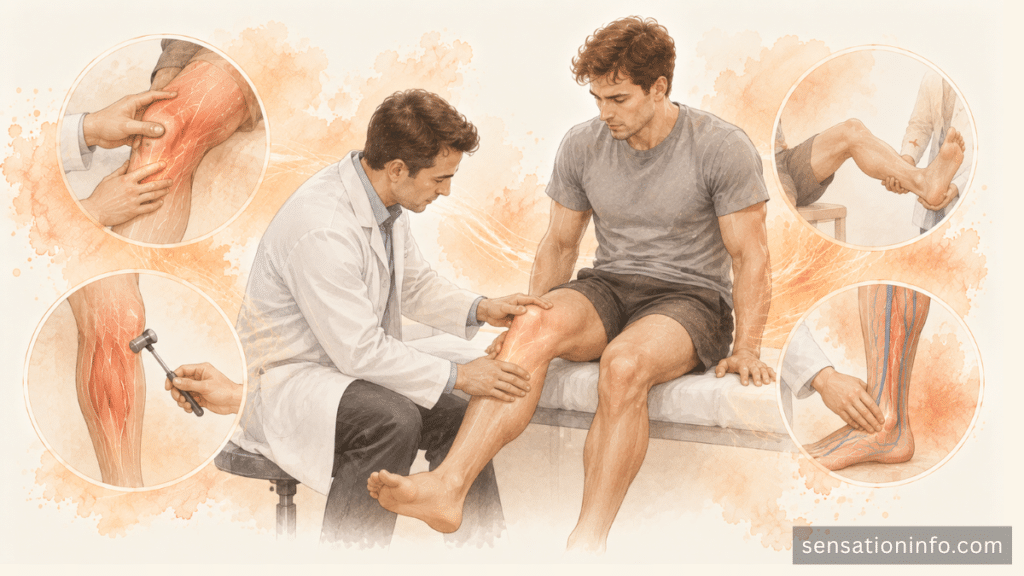
A clinician will ask about exercise, injury, timing, movement, illness, medicines, diet, fluid loss, and symptoms such as weakness, numbness, fever, swelling, or dark urine.
The examination may assess tenderness, swelling, range of motion, strength, sensation, reflexes, pulses, skin temperature, and gait. Depending on the pattern, testing may include blood tests for muscle enzymes, electrolytes, kidney function, glucose, thyroid function, or inflammation.
Imaging, ultrasound, nerve studies, or other tests may be used when an injury, nerve problem, compartment syndrome, or circulation issue is suspected.
How is the underlying cause treated?
Treatment depends on the cause. Overuse and mild strain may improve with activity changes, rehabilitation, and clinician guided pain management. Electrolyte abnormalities, infection, inflammatory disease, medicine effects, and metabolic problems need cause specific care.
Nerve related pain may require physical therapy, treatment of the underlying condition, or clinician selected medicines. Compartment syndrome, severe muscle breakdown, major injury, circulation problems, and serious infection may require urgent hospital treatment.
Avoid taking high dose supplements or prescription medicines without medical guidance.
When should you make an appointment?
Arrange a medical visit if burning lasts beyond a short recovery period, recurs, occurs at rest, interrupts sleep, limits movement, or has no clear trigger. Make an appointment after an injury or medicine change if the symptom continues.
Seek prompt care for weakness, numbness, swelling, fever, redness, dark urine, repeated exercise related pain, or a change in limb temperature or color. Call 112 in India or 911 internationally for emergency warning signs.
Key Takeaways
1.Burning muscle sensation may follow exercise, overuse, strain, dehydration, nerve irritation, inflammation, infection, medicine effects, or reduced blood flow.
2.Exercise related discomfort should improve with recovery, while recurrent or rest related burning needs evaluation.
3.Severe pain with weakness, swelling, dark urine, breathing difficulty, fever, or a cold or discolored limb is urgent.
4.Call 112 in India or 911 internationally for sudden neurologic symptoms, severe breathing trouble, chest pressure, fainting, or rapidly worsening symptoms.
5.A clinician should assess persistent, recurrent, unexplained, or function limiting burning.
Frequently Asked Questions
Intense or unfamiliar exercise can make working muscles feel hot, tired, tight, or burning. The sensation should improve after reducing the activity and allowing recovery. Sharp pain, major swelling, weakness, numbness, or loss of movement needs assessment.
Muscle burning is often linked to a used or injured muscle and may include tenderness, tightness, or pain with movement. Nerve burning may feel electric or travel along a narrow path with tingling, numbness, or weakness. The patterns can overlap.
Dark urine with severe muscle pain or weakness after intense exercise can occur with serious muscle breakdown called rhabdomyolysis. Seek urgent medical assessment instead of continuing exercise or relying only on home hydration.
Reduced blood flow can cause pain or burning during activity, coldness, numbness, weakness, or color changes. A suddenly cold, pale, blue, swollen, or weak limb is an emergency.
Doctor’s Recommendation
The first task is to determine whether the burning is truly in the muscle or is being referred from a nerve, blood vessel, joint, or internal condition. What Is Neuropathy? A Complete Guide to Types, Causes, Symptoms, and Treatment may help readers understand nerve related burning, but recurring or severe symptoms still need a clinical assessment.
Conclusion
A burning muscle sensation can be a normal response to demanding exercise, but burning at rest or burning with weakness, numbness, swelling, fever, dark urine, or color change needs more attention. Stop the triggering activity, protect the affected area, and arrange medical care when the symptom persists or returns. Call 112 in India or 911 internationally for emergency warning signs.
References
Mayo Clinic. Muscle Pain: Causes and Definition.
National Library of Medicine. Rhabdomyolysis. MedlinePlus Medical Encyclopedia.
Cleveland Clinic. Compartment Syndrome: Causes, Symptoms and Treatment.
National Library of Medicine. Numbness and Tingling. MedlinePlus Medical Encyclopedia.