
The first time I felt that burning sensation in my stomach, I immediately assumed it was something I ate. Maybe that extra cup of coffee, or perhaps the spicy taco I had for lunch. But when the burning kept coming back day after day, I realized I could not just blame my lunch anymore.
If you have ever experienced a burning sensation in your stomach that seems to come out of nowhere or lingers long after your last meal, you are not alone. This is one of the most common symptoms I hear about from friends, family, and readers. While acid reflux gets most of the attention, there are actually many reasons your stomach might feel like it is on fire.
What Does a Burning Sensation in Your Stomach Feel Like
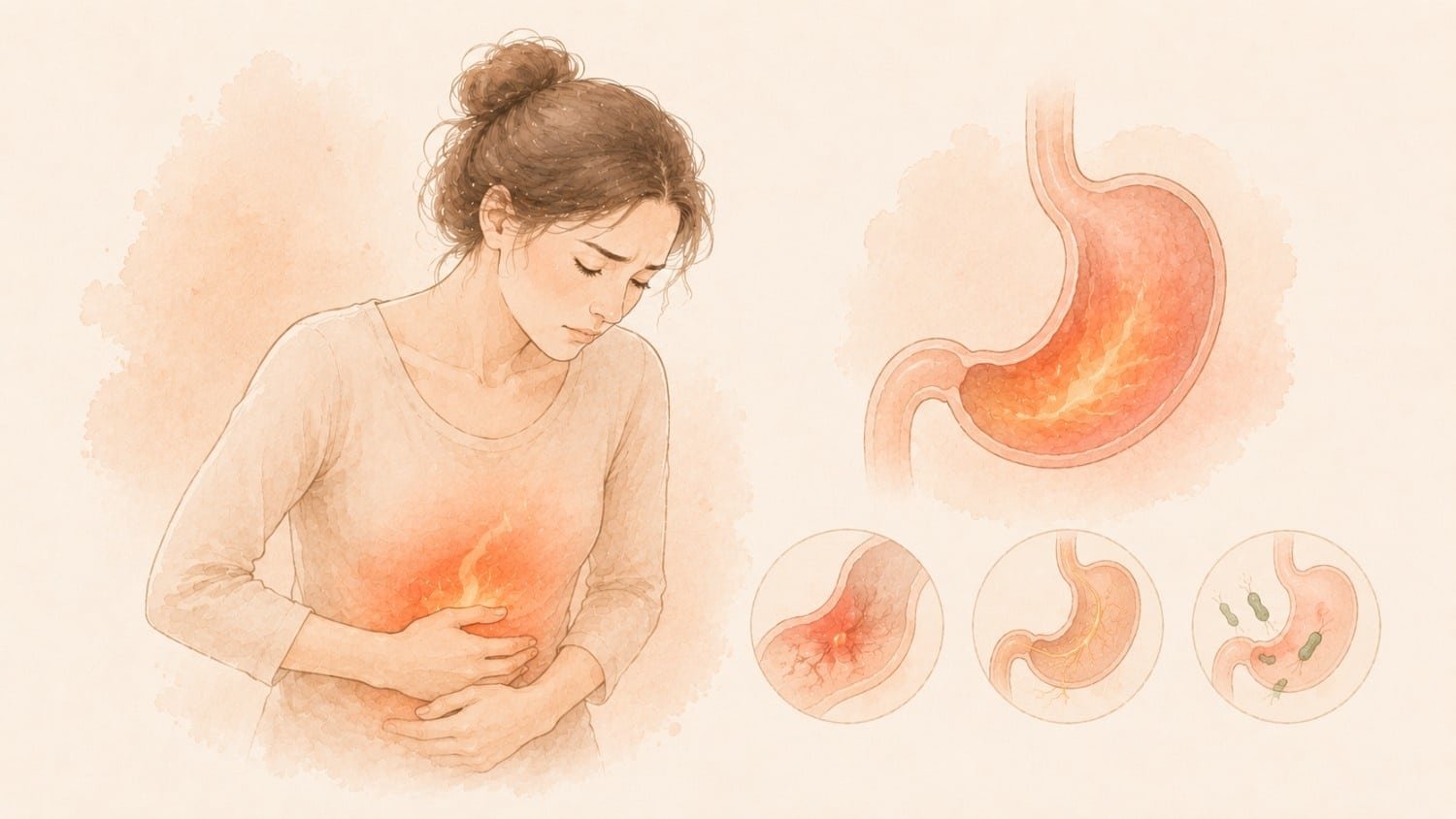
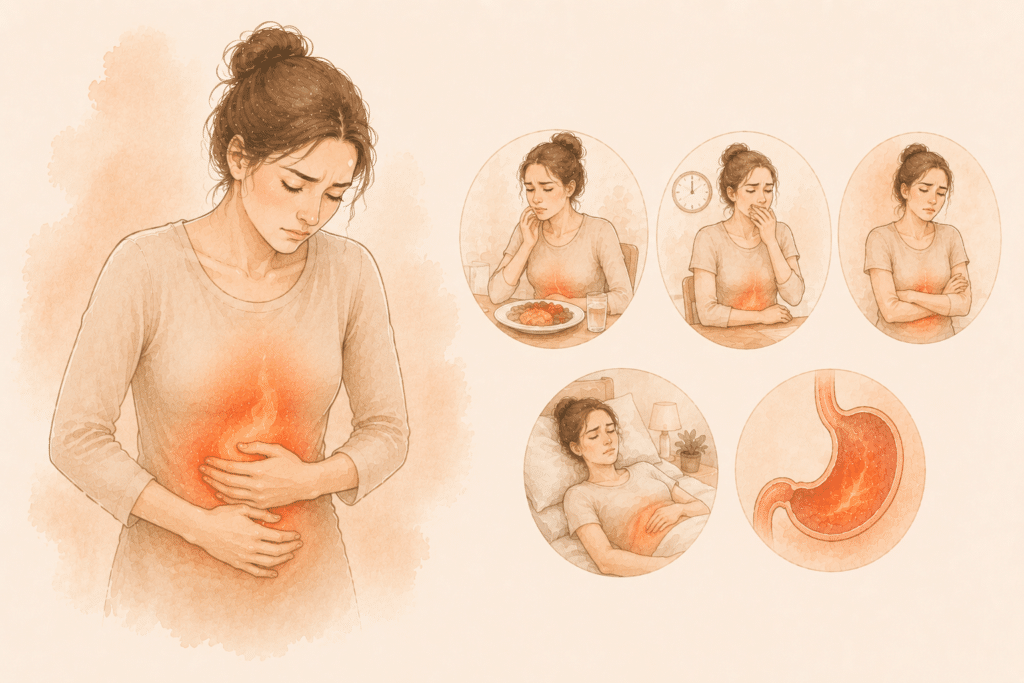
Let me describe what this sensation actually feels like because I think it helps to put words to it. The burning typically starts somewhere in the upper abdomen, right below your ribs, and can range from a mild warmth to an intense, almost painful heat. Some people describe it as feeling like their stomach is glowing from the inside.
The tricky part is that this burning can come and go, appear after certain foods, or strike when you have not eaten anything for hours. It might last a few minutes or persist for hours. Understanding when it happens and what makes it better or worse gives your doctor important clues about what is causing it.
Unlike the sharp pain of a stomach cramp or the dull ache of hunger, that burning sensation has a distinct quality that tells you something is irritating the lining of your stomach or the lower part of your esophagus.
Common Causes Beyond Acid Reflux
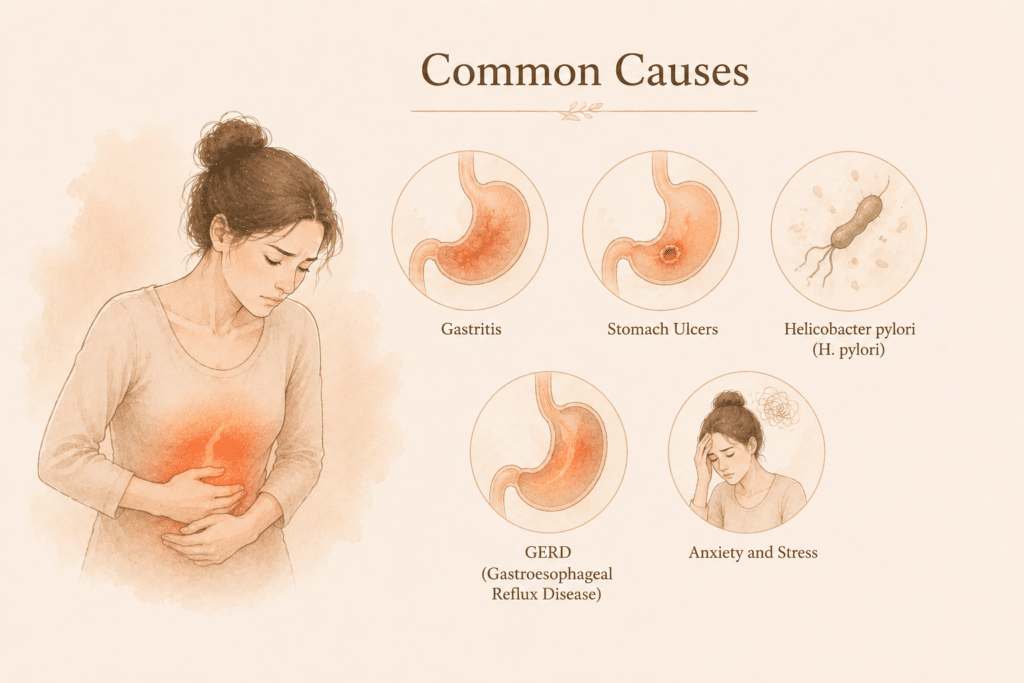
Gastritis
Gastritis is one of the most common culprits behind persistent stomach burning. It is essentially inflammation of the stomach lining, and it can be caused by several things. The most common cause I see is long-term use of nonsteroidal anti-inflammatory drugs like ibuprofen or aspirin. These medications, while effective for pain relief, can irritate your stomach lining when used regularly.
Bacterial infections can also trigger gastritis. In fact, the bacteria Helicobacter pylori, which I will talk about more in a moment, is a leading cause of both gastritis and stomach ulcers. Alcohol consumption, especially when it is heavy or frequent, is another major contributor. Some people also develop gastritis from extreme stress, which is why you might have heard of stress-related stomach issues.
The burning from gastritis often feels worse when your stomach is empty, and you might notice some relief after eating — though sometimes eating makes it worse, depending on what you eat.
Stomach Ulcers
Speaking of ulcers, these open sores that form on the inner lining of your stomach can cause a very specific type of burning. The sensation often comes and goes and might be worse at night or between meals. Many people with ulcers describe the pain as a burning that feels like hunger, but eating does not make it go away like normal hunger would.
What surprises many people is that ulcers are often caused by the same bacteria that causes gastritis — H. pylori. Not all ulcers are from bacteria though. Some develop from long-term NSAID use, just like gastritis. The good news is that ulcers are treatable, and once you address the underlying cause, the burning typically subsides.
Helicobacter pylori (H. pylori)
Let me spend a moment on this because H. pylori is more common than people realize. This bacteria lives in the stomach of about half the world’s population. Most people who have it never develop symptoms, but for those who do, it can cause chronic gastritis, ulcers, and that persistent burning sensation.
H. pylori is typically diagnosed with a breath test, blood test, or endoscopy. Treatment usually involves a combination of antibiotics and acid-reducing medications. Getting rid of the bacteria can provide significant relief and even resolve longstanding digestive issues that people have suffered with for years.
GERD (Gastroesophageal Reflux Disease)
I know I said we are going beyond acid reflux, but I would be doing you a disservice if I did not mention GERD. This condition occurs when stomach acid regularly flows back into your esophagus, the tube that connects your mouth to your stomach. While the primary symptom is heartburn, many people with GERD also experience a burning sensation in their stomach.
GERD is different from occasional acid reflux. It is a chronic condition that often requires ongoing management. If you find yourself reaching for antacids more than twice a week, it is worth talking to your doctor about whether GERD might be the underlying issue.
Anxiety and Stress
Here is one that many people do not expect — anxiety can absolutely cause a burning sensation in your stomach. When you are stressed, your body produces more cortisol and other stress hormones. These can increase stomach acid production and make your digestive system more sensitive.
I have spoken to many people who noticed their stomach burning flare up during particularly stressful periods at work or in their personal lives. The connection between your brain and your gut is very real — it is called the gut-brain axis, and it explains why emotional stress so often manifests as digestive symptoms.
If your burning sensation seems to correlate with stressful periods, anxiety might be playing a bigger role than you realize.
Food-Related vs Non-Food-Related Causes
One of the most helpful things you can do is track when the burning happens. Does it always happen after certain foods, or does it occur regardless of what you eat?
If the burning comes after eating specific foods, you might be dealing with a food intolerance or sensitivity. Spicy foods, caffeine, alcohol, fatty foods, and citrus are common triggers. But if the burning happens whether you have eaten or not, or if it wakes you up at night, that points more toward conditions like gastritis, ulcers, or H. pylori infection.
Keeping a simple food and symptom diary for a couple of weeks can give you and your doctor valuable information about what might be causing your symptoms.
When to Take It Seriously
While occasional stomach burning is usually not concerning, certain signs mean you should get it checked out sooner rather than later.
Persistent burning that lasts more than a few weeks deserves medical attention. If the burning is severe enough to interfere with your sleep, that is another red flag. Unexplained weight loss, difficulty swallowing, vomiting, or seeing blood in your stool are all reasons to seek immediate care.
If you are over 55 and experiencing new-onset stomach burning, do not assume it is just indigestion — older adults should be more cautious about digestive symptoms.
Age is not the only factor. If you have a family history of stomach cancer or have taken NSAIDs regularly for years, getting evaluated is smart. The goal is not to worry you, but to catch any potential problems early when they are easier to treat.
Treatment Options
Treatment depends entirely on what is causing your burning sensation. Here is how different causes are typically addressed.
For gastritis caused by NSAID use, the first step is usually stopping or reducing those medications. Your doctor might recommend an acid-reducer to give your stomach lining a chance to heal. If H. pylori is present, a course of antibiotics will be prescribed.
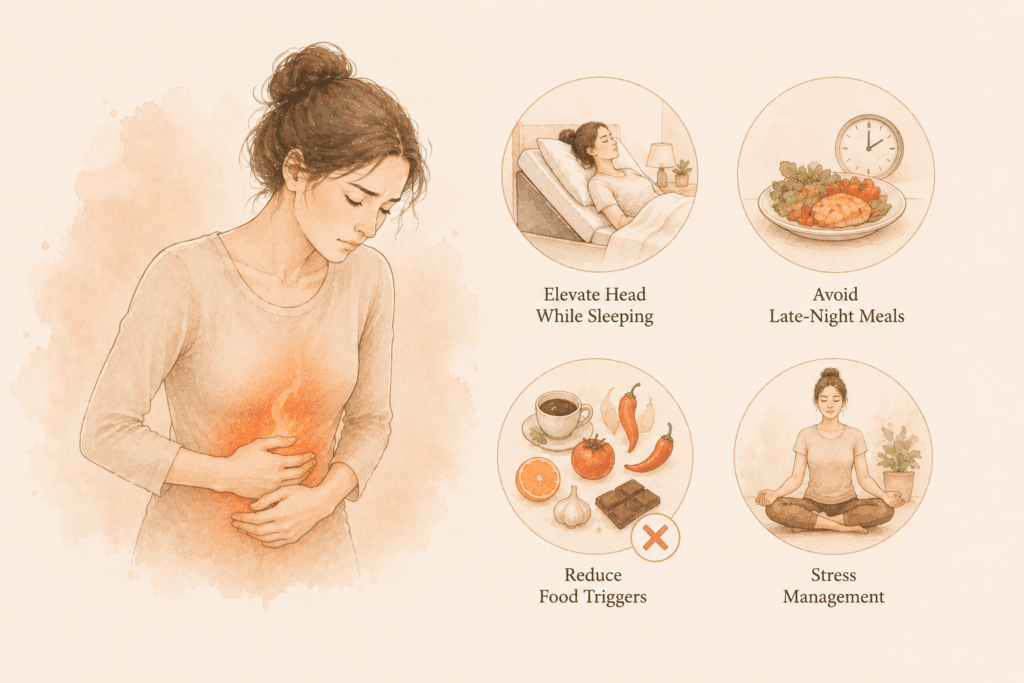
For GERD, lifestyle modifications often help. Elevating the head of your bed, avoiding late-night meals, and identifying and eliminating food triggers can make a big difference. Some people need ongoing medication to manage their symptoms.
If anxiety is a factor, addressing the stress through therapy, exercise, meditation, or other stress-management techniques can reduce or eliminate the burning. Sometimes a combination of approaches works best.
Making dietary adjustments is useful regardless of the cause. Eating smaller, more frequent meals, avoiding known triggers, and not lying down right after eating are simple changes that can help.
Frequently Asked Questions
Yes, stress and anxiety can increase stomach acid production and cause inflammation in the stomach lining, leading to a burning sensation. Managing stress often helps reduce these symptoms.
While it can be a symptom of stomach cancer, it is much more likely to be caused by something benign like gastritis or acid reflux. However, persistent symptoms should always be evaluated by a doctor to rule out anything serious.
Not necessarily. While some people find that acidic foods worsen their symptoms, trigger foods vary from person to person. Rather than cutting out entire food groups, try identifying your specific triggers through an elimination approach.
This depends on the cause. Gastritis might improve within weeks with proper treatment. Ulcers typically heal within a few months. If H. pylori is the culprit, you should feel much better once the bacteria is eradicated.
Mild, occasional burning might respond to over-the-counter antacids or lifestyle changes. However, if it is persistent, recurrent, or severe, seeing a doctor for proper diagnosis and treatment is important.
Final Thoughts
That burning sensation in your stomach is your body’s way of telling you something is not quite right. While it might be something simple like a food sensitivity, it could also be a sign of gastritis, an ulcer, or an underlying infection that needs treatment.
My advice is simple: do not ignore persistent symptoms. Keep track of when the burning happens, what makes it better or worse, and any other symptoms you notice. This information helps your doctor figure out what is going on and get you on the right treatment.
Your digestive health matters more than many people realise. Taking care of your stomach now can prevent bigger problems down the road.