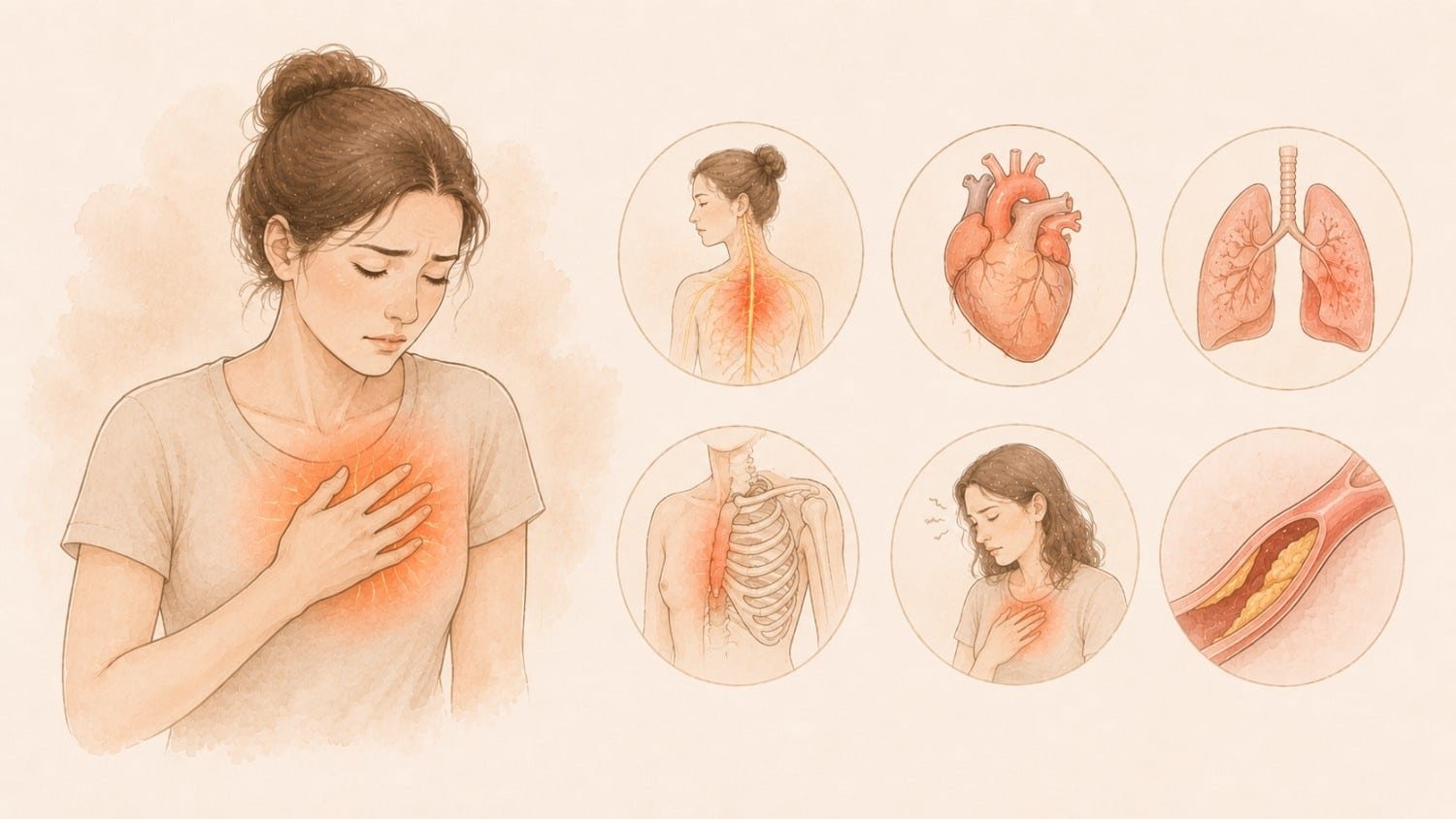

Have you ever felt a strange burning in your chest that didn’t feel like heartburn but didn’t feel quite right either? I’ve been there too. The first time it happened, I genuinely paused, did a quick mental scan of everything I’d eaten that day, and thought, “This isn’t food. So what is this?” It’s an experience many people go through, often without realising how many causes can be behind it.
A burning sensation in the chest, not heartburn, can come from a wide range of sources, some harmless and some that genuinely deserve attention. In this article, I’ll walk you through the real reasons behind it, when to worry, and how to know when it’s something serious. Everything I share is based on credible medical sources like the Mayo Clinic, Cleveland Clinic, the American Heart Association, and the NHS.
What a Burning Sensation in the Chest Really Means
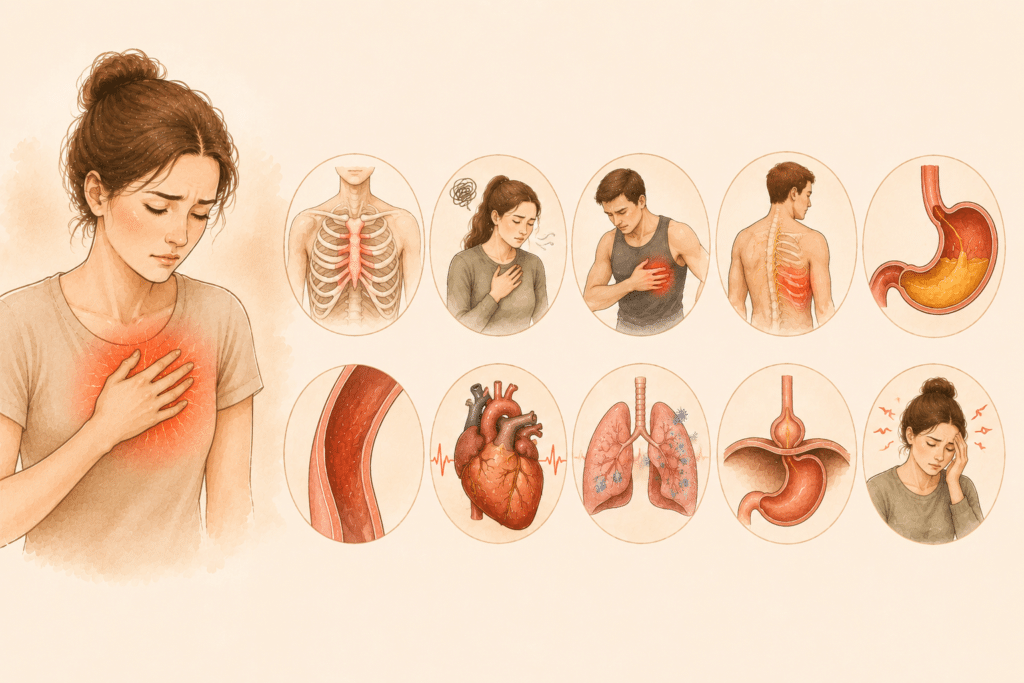
A burning chest sensation is exactly what it sounds like, a heat-like or scalding feeling somewhere between your throat and stomach. While heartburn from acid reflux is the most common cause, it’s far from the only one.
Sometimes the cause is muscular. Sometimes it’s nerve-related. And sometimes, even though we don’t like to think about it, the cause can be cardiac. Knowing the differences matters more than people realise.
Why It’s Important Not to Assume It’s Just Heartburn
A lot of people brush off chest burning as “just acidity”, especially if they’ve had it before. But assuming the cause without paying attention to the details can be risky. Cardiac, muscular, and nerve-related conditions can all mimic heartburn closely.
I’ve personally learned this the hard way during a stressful work week, when what felt like reflux turned out to be a panic-related chest reaction. Once I understood my own patterns, I stopped guessing.
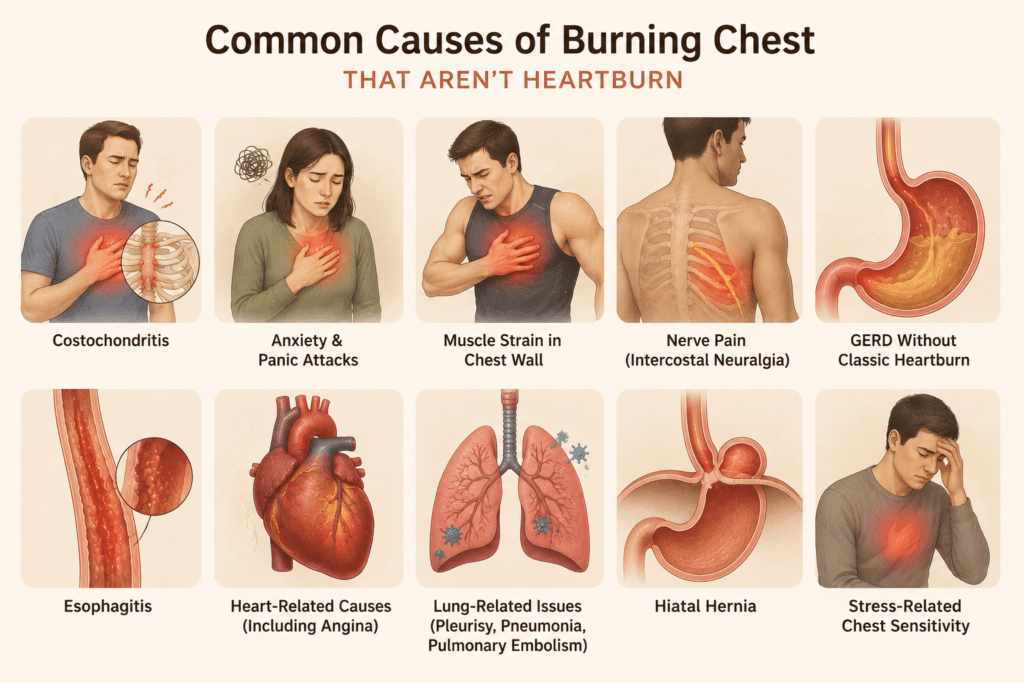
Common Causes of Burning Chest That Aren’t Heartburn
Let me walk you through the most common reasons behind a burning chest sensation, both from real-world experience and trusted medical sources.
Costochondritis
This is one of the most overlooked causes. Costochondritis is inflammation of the cartilage that connects your ribs to your sternum. It causes a sharp or burning sensation in the chest that often gets worse with movement, deep breathing, or pressing on the chest.
The Cleveland Clinic clearly recognises costochondritis as a common but underdiagnosed cause of chest discomfort, especially in younger adults and those who exercise heavily.
Anxiety and Panic Attacks
Anxiety can absolutely cause real, physical chest symptoms, including burning sensations. When the body enters fight-or-flight mode, the chest muscles tighten, breathing becomes shallow, and nerves get hypersensitive.
I’ve personally felt this during high-pressure weeks, where the burning came with chest tightness, racing thoughts, and shortness of breath. Once anxiety eased, so did the symptoms.
Muscle Strain in the Chest Wall
This one happens more often than people think. Heavy lifting, intense workouts, coughing fits, or even sleeping in a strange position can strain the chest muscles, causing a burning ache or tenderness.
The pain often gets worse with movement or pressing the area. Most cases improve within a few days with rest and gentle stretching.
Nerve Pain (Intercostal Neuralgia)
The intercostal nerves run between your ribs. When they get irritated, compressed, or inflamed, they can cause a sharp, burning pain in the chest that wraps around the side or back.
Common triggers include shingles, rib injuries, posture issues, or chronic muscle tightness. Mayo Clinic recognises this as a real and treatable cause of chest discomfort.
GERD Without Classic Heartburn
Gastro-oesophageal reflux disease can cause burning in the chest even without typical heartburn symptoms. Some people only feel chest burning, throat irritation, or mild discomfort after meals.
If your symptoms get worse when lying down or eating spicy or fatty foods, GERD might still be involved.
Esophagitis
This is inflammation of the oesophagus, often caused by acid reflux, infections, or certain medications. It can cause burning chest discomfort, painful swallowing, or a feeling of food sticking.
Common triggers include alcohol, smoking, NSAIDs, and certain antibiotics. A doctor can confirm this through endoscopy.
Heart-Related Causes (Including Angina)
This is the most important cause to understand because it’s the one you can’t afford to miss. Cardiac issues like angina or a heart attack can cause chest burning, pressure, tightness, or heaviness.
Symptoms that suggest a cardiac cause include burning paired with shortness of breath, dizziness, sweating, jaw or arm pain, or pain triggered by activity. The American Heart Association strongly recommends treating these signs seriously, especially if you have risk factors like high blood pressure, diabetes, or a family history of heart disease.
If something feels deeply wrong, please don’t wait it out. Call emergency services immediately.
Lung-Related Issues
Conditions like pleurisy, pneumonia, or pulmonary embolism can cause burning chest discomfort. The pain often gets worse with deep breathing or coughing.
If your burning comes with breathlessness, fever, or coughing, get medical evaluation right away.
Hiatal Hernia
A hiatal hernia happens when part of the stomach pushes through the diaphragm. It can cause chest burning, regurgitation, and discomfort that mimics reflux without actually being heartburn.
It’s surprisingly common in people over 40 and often goes undiagnosed.
Stress-Related Chest Sensitivity
Even without anxiety attacks, chronic stress can cause muscle tension, hyperventilation, and nerve hypersensitivity that produces burning sensations in the chest. It’s not dangerous, but it’s very real.
Differentiating a Heart Attack From Other Chest Burning
This is one of the most searched questions for a reason. Most people are unsure whether chest burning is dangerous or not.
A heart attack tends to come with the following:
- Pressure, heaviness, or tightness, not just burning
- Pain that radiates to the arm, jaw, neck, or back
- Sweating, nausea, or vomiting
- Shortness of breath
- Lightheadedness
- Worsening with activity
Non-cardiac chest burning usually
- Feels localised
- Worsens with movement, breathing, or eating
- Eases with rest, antacids, or stretching
- Is paired with stress or muscle strain
The American Heart Association strongly advises always erring on the side of caution. If something feels different, off, or unusually severe, it’s safer to go to the ER than to wait.
Where the Burning Happens: What the Location Tells You
The location of the burning often gives a useful clue.
If the burning is in the centre of the chest, GERD, costochondritis, or cardiac causes are common.
If it’s on the left side, it could be heart-related, muscle strain, or anxiety.
If it’s on the right side, gallbladder issues, lung problems, or muscle strain top the list.
If the pain wraps around the ribs, intercostal neuralgia or shingles is worth investigating.
If it spreads to the arm, jaw, or back, treat it as a possible cardiac event and seek immediate help.
When Burning in the Chest Becomes an Emergency
Most chest burning is mild and treatable, but some situations need urgent care. Get medical help immediately if:
- The burning is severe or sudden
- It comes with shortness of breath, sweating, dizziness
- It radiates to your arm, neck, jaw, or back
- It worsens with activity
- It comes with chest pressure or tightness
- You have heart disease risk factors
Do not delay. Heart conditions are the leading cause of preventable deaths globally, and most people regret waiting longer than they wished they had.
How Doctors Diagnose Burning Chest Sensations
When I finally got my own evaluated years ago, I was surprised at how systematic the process was. Diagnosing chest burning isn’t a guessing game.
A proper workup usually includes a physical exam, ECG, blood tests for cardiac markers, and sometimes a chest X-ray. If GERD or oesophagitis is suspected, doctors may order an endoscopy. For nerve-related causes, MRI or nerve conduction studies are sometimes used.
Cardiac stress tests are commonly used when angina or coronary artery disease is suspected. The right diagnosis prevents months of guesswork and often saves lives.
How to Treat a Burning Sensation in the Chest
Treatment depends entirely on the cause, but here’s what generally works in real-world cases.
Lifestyle Adjustments
For mild causes, lifestyle changes often make the biggest difference. Avoiding spicy foods, eating smaller meals, reducing caffeine and alcohol, and not lying down right after eating help reduce reflux-related symptoms.
I personally noticed huge improvements after I stopped eating heavy meals before bed. Tiny shift, real results.
Address the Underlying Condition
If GERD is the cause, doctors often prescribe proton pump inhibitors like omeprazole or pantoprazole. Antacids like Tums or Gaviscon offer short-term relief. Brands like Pepcid (famotidine) are also widely used.
For costochondritis or muscle strain, NSAIDs and rest help. For nerve-related causes, gabapentin or pregabalin may be prescribed.
Manage Stress and Anxiety
If anxiety is involved, slow breathing, mindfulness, regular exercise, and reducing caffeine help calm the nervous system. Therapy, including CBT, is highly effective for chronic anxiety-related symptoms.
Cardiac Care When Needed
If a cardiac cause is identified, treatment depends on the diagnosis. Medications, lifestyle changes, and sometimes interventions like angioplasty are part of long-term management. Always follow your cardiologist’s advice closely.
Physical Therapy
A skilled physiotherapist can help with posture, breathing techniques, and chest wall stretching. This is especially helpful for costochondritis and intercostal nerve issues.
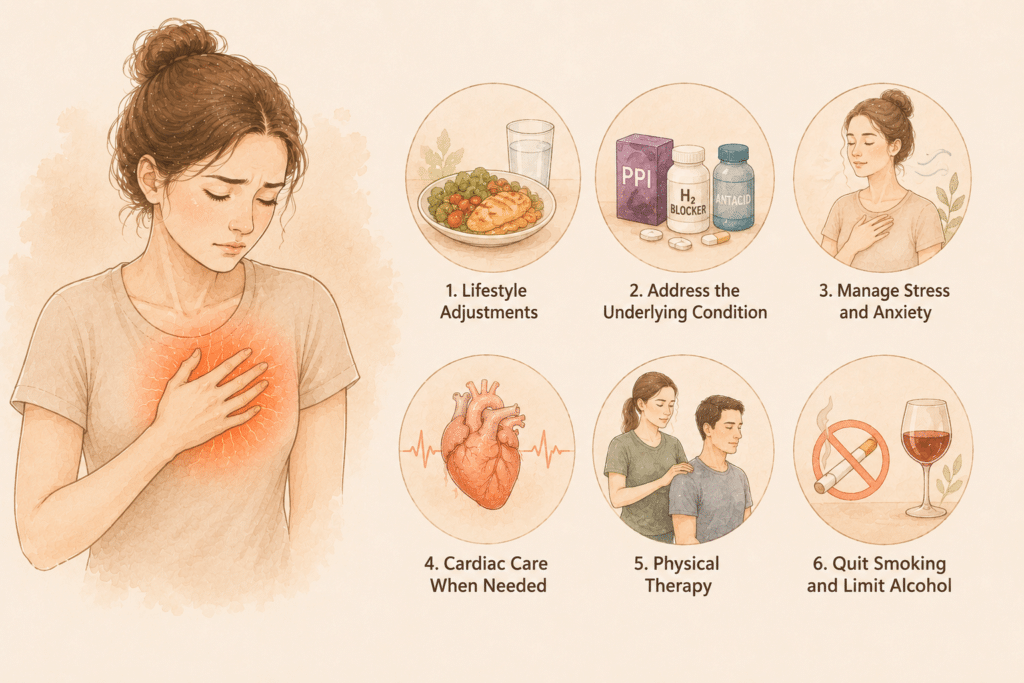
Quit Smoking and Limit Alcohol
Both smoking and alcohol increase reflux, weaken the lower oesophageal sphincter, and damage the cardiovascular system. Quitting genuinely changes long-term outcomes.
Frequently Asked Questions
It can be due to muscle strain, anxiety, costochondritis, nerve pain, or even cardiac issues. Always evaluate the pattern carefully.
Yes. Stress and anxiety commonly cause chest tightness, burning, or pressure due to nervous system overstimulation.
Brief, mild episodes are usually harmless. Worry only when symptoms are severe, sudden, recurring, or come with breathlessness, sweating, or radiating pain.
If chest burning comes with shortness of breath, sweating, jaw or arm pain, or worsening with activity, treat it as cardiac until proven otherwise. Get immediate medical help.
Final Thoughts
A burning sensation in the chest, not heartburn, can come from many sources, ranging from mild muscle strain to serious cardiac issues. The key is paying attention to the pattern, severity, and accompanying symptoms.
If your chest keeps burning in unfamiliar ways, don’t ignore it and don’t panic either. Track the triggers, note the pattern, and get a proper evaluation. Your chest holds your most important organs. The kindest thing you can do is take it seriously when it speaks up.