
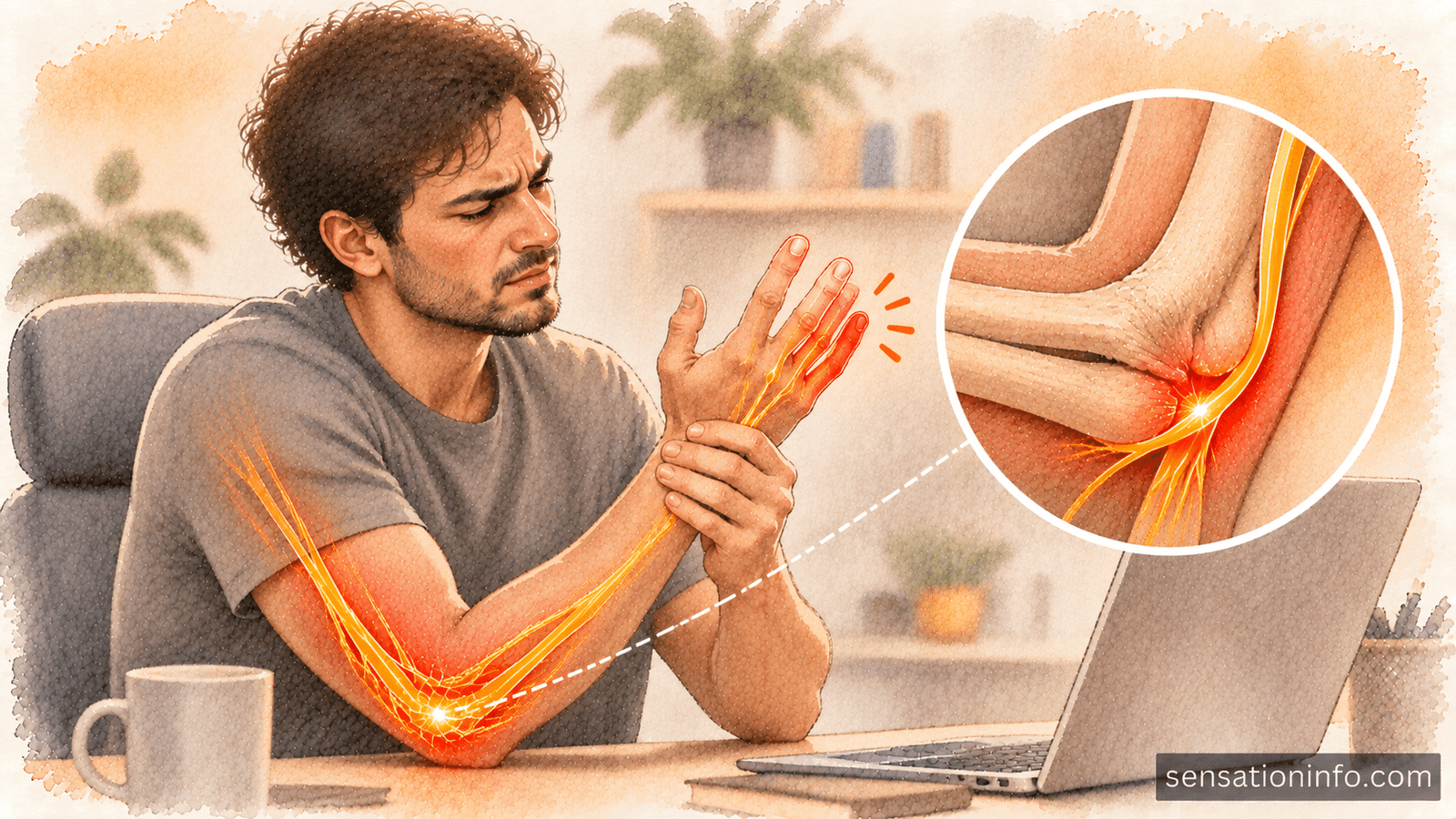

Experiencing numbness in pinky and ring finger often points directly to a pinched ulnar nerve at the elbow, rather than a problem in your hand. This nerve controls sensation in your two smallest fingers, and resting your elbow on a hard desk compresses it against the bone.
If you notice muscle wasting in your hand or cannot pinch your thumb and index finger together, seek immediate medical evaluation to prevent permanent damage. Otherwise, making minor ergonomic adjustments can quickly relieve the pressure and resolve early stage cubital tunnel syndrome before it becomes a daily disruption.
Understanding Cubital Tunnel Syndrome
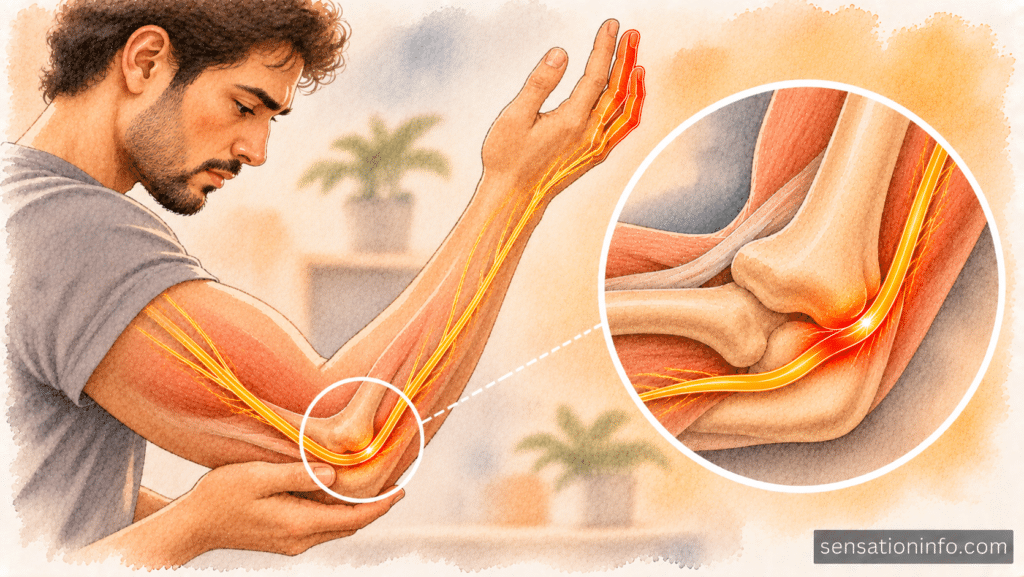
Cubital tunnel syndrome is a medical condition where the ulnar nerve becomes severely compressed or irritated as it passes through the inside of your elbow. The ulnar nerve is one of the three main nerves in your arm. And it travels from your neck all the way down into your hand. It happens to run through a very narrow space called the cubital tunnel right at the elbow joint.
Because this specific tunnel has very little padding to protect the nerve, it is highly vulnerable to external pressure. Actually, whenever you lean on your elbow, you are squeezing this nerve directly against the bone. This mechanical compression disrupts the electrical signals traveling down to your hand. That’s why your fingers begin to feel numb.
The Ulnar Nerve Pathway
The ulnar nerve pathway begins in the cervical spine, travels down the arm, and passes behind the medial epicondyle bone on the inside of the elbow. It then continues down the forearm and branches out to provide sensation strictly to your pinky and half of your ring finger. It also controls most of the small muscles in your hand that allow you to execute fine motor movements.
Look at how the nerve functions when the elbow bends:
- When your arm is straight, the ulnar nerve rests comfortably in the cubital tunnel with plenty of slack.
- When you bend your elbow past ninety degrees, the nerve stretches tightly around the medial epicondyle bone.
- If you hold this bent position for long periods, the physical stretch temporarily restricts blood flow to the nerve itself.
So, prolonged bending literally starves the nerve of oxygen. This temporary oxygen deprivation triggers the classic pins and needles sensation.
Why Your Pinky and Ring Fingers Go Numb
Your pinky and ring fingers go numb because the ulnar nerve is entirely responsible for transmitting sensory information from those specific digits back to your brain. Paresthesia is the medical term for this abnormal tingling or prickling sensation. The human body maps specific nerves to specific areas of skin. The median nerve handles your thumb, index, and middle fingers, while the ulnar nerve handles the remaining two.
When you compress the ulnar nerve at the elbow, the electrical signal gets blocked on its way up to the brain. But your brain still interprets the disruption as originating from the end of the nerve line in your hand. This creates a very confusing scenario where your elbow is the root problem, but your fingers feel all the symptoms.
What Causes Cubital Tunnel Syndrome?
Cubital tunnel syndrome is primarily caused by repetitive bending, direct mechanical pressure on the elbow, or fluid buildup inside the joint. The thing is, many people sleep with their elbows sharply bent tucked under their pillows. This awkward sleep posture stretches the nerve for eight hours straight. That easily explains why many people experience tingling in hands at night and wake up with dead fingers.
Other common causes include leaning on a hard armrest while driving or typing at a desk with your elbows resting heavily on the surface. Prior elbow fractures or bone spurs can also narrow the tunnel permanently. This creates constant friction against the nerve every single time you move your arm.
Cell Phone Elbow: A Modern Nerve Problem
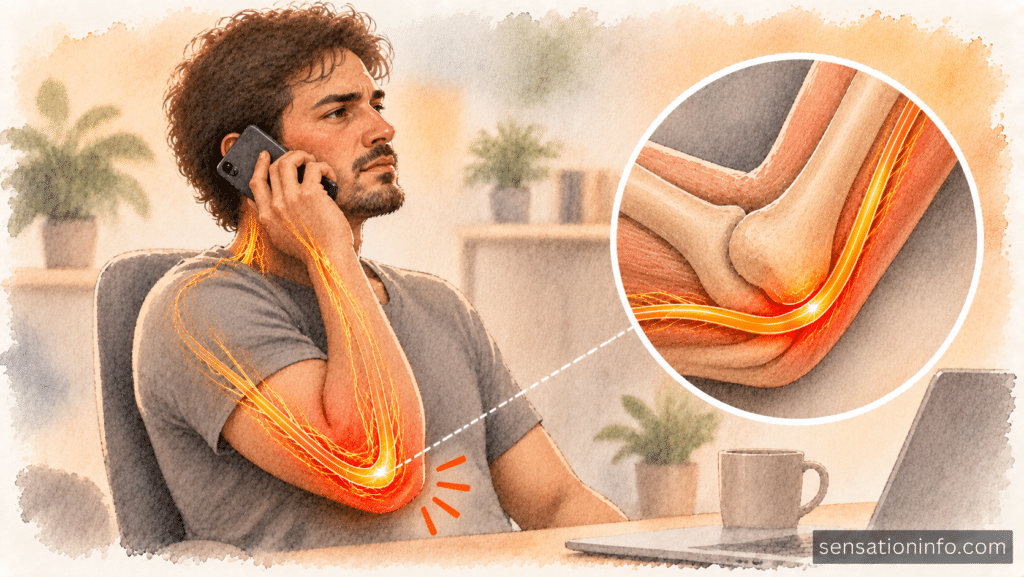
Cell phone elbow is a modern clinical term for cubital tunnel syndrome caused by holding a smartphone to your ear for extended periods. When you hold a phone up, you forcefully bend your elbow well past ninety degrees. Doing this for a one hour phone call stretches the ulnar nerve tight over the elbow bone.
Here is how modern habits impact your ulnar nerve:
| Activity | Elbow Position | Effect on Ulnar Nerve |
| Talking on a cell phone | Sharply bent | Stretches the nerve tight across the bone |
| Typing on a laptop | Resting on hard surface | Direct compression against the cubital tunnel |
| Sleeping in fetal position | Curled and bent | Prolonged stretch restricting local blood flow |
| Driving a car | Leaning on center console | Chronic mechanical pressure on the joint |
Plus, constantly swiping and tapping requires fine motor control. This further exhausts the already irritated nerve pathway, making the numbness much more noticeable.
How to Stop Numbness in Your Fingers
To stop the numbness in your fingers, you must immediately remove the physical pressure and tension from your elbow joint. The nerve needs time and space to heal. So your primary goal is to keep your elbow as straight as possible during your daily routine. Avoid resting your elbow on your desk, your car door window, or the armrests of your chair.
Take frequent breaks if your job requires repetitive arm movements. And try using a hands free headset for long phone calls to avoid holding your arm in a bent position. Applying a cold pack to the inside of your elbow for ten minutes can also reduce local inflammation inside the tunnel.
Simple Home Adjustments for Nerve Relief
Simple home adjustments focus entirely on preventing the elbow from bending too far, especially while you are asleep. Since you cannot control your posture while unconscious, you need a physical barrier. Wrapping a thick towel loosely around your elbow before bed prevents the joint from bending past a safe angle.
You can also purchase a specialized elbow splint designed specifically to keep your arm straight at night. During the day, monitor your desk ergonomics. Ensure your chair is high enough so your forearms hover over the keyboard rather than resting heavily on the desk edge. These small behavioral changes often resolve mild paresthesia symptoms within a few short weeks.
When to See a Doctor for Ulnar Nerve Entrapment
You should see a doctor for ulnar nerve entrapment if the numbness becomes constant or if you start dropping objects frequently. Mild tingling that goes away when you straighten your arm is generally safe to manage at home. But if the sensation persists all day regardless of your arm position, the nerve is sustaining more severe damage.
A doctor will perform a physical exam and likely order an electromyography test. This specialized test measures exactly how fast electrical signals travel down your nerve. It confirms exactly where the compression is happening and measures the severity of the damage.
Signs of Permanent Nerve Damage

Signs of permanent nerve damage include visible muscle wasting in your hand and a complete inability to cross your fingers. Look specifically at the fleshy area between your thumb and index finger on the back of your hand. If that muscle looks hollowed out or flattened compared to your other hand, the motor fibers of the nerve are dying.
You might also develop a condition called an ulnar claw, where your pinky and ring fingers curl inward and cannot fully straighten. At this advanced stage, conservative treatments will no longer work. Your doctor will likely recommend a surgical procedure called an ulnar nerve release or transposition. This surgery literally moves the nerve out from behind the elbow bone to a safer position to prevent total paralysis of your hand.
Key Takeaways
- Numbness in your two smallest fingers is almost always caused by ulnar nerve compression at the elbow, not a problem in the hand itself.
- Leaning on hard surfaces or keeping your elbow sharply bent for long periods restricts blood flow to the nerve and triggers the tingling.
- You can often stop the symptoms by keeping your elbow straight, avoiding armrests, and wearing a loose towel splint while sleeping.
- Severe symptoms like visible muscle wasting or a weak grip require immediate medical evaluation to prevent permanent nerve damage.
Frequently Asked Questions
Yes, sleeping on your side often causes numbness if you curl your arms up toward your chest. This fetal position bends the elbow sharply, stretching the ulnar nerve and cutting off its blood supply while you sleep.
Most people do not need surgery and recover fully with conservative treatments like elbow splints and posture changes. Surgery is only required if you develop muscle wasting, severe weakness, or if non-surgical treatments fail after several months.
Yes, ulnar nerve gliding exercises can help the nerve slide smoothly through the cubital tunnel without catching on the bone. Your doctor or physical therapist can demonstrate these specific stretches to prevent further irritation.
Doctor’s Recommendation
If you notice that your grip strength is failing alongside the tingling, do not ignore it. I highly recommend reading our guide on numbness and tingling in hands and feet to understand when these specific sensory changes cross the line from a mild ergonomic issue into a medical emergency requiring clinical testing.
References
Mayo Clinic (2022): Ulnar Nerve / Cubital Tunnel Syndrome
Cleveland Clinic (2026): Ulnar Nerve Entrapment: Causes, Symptoms & Treatment


2 Responses