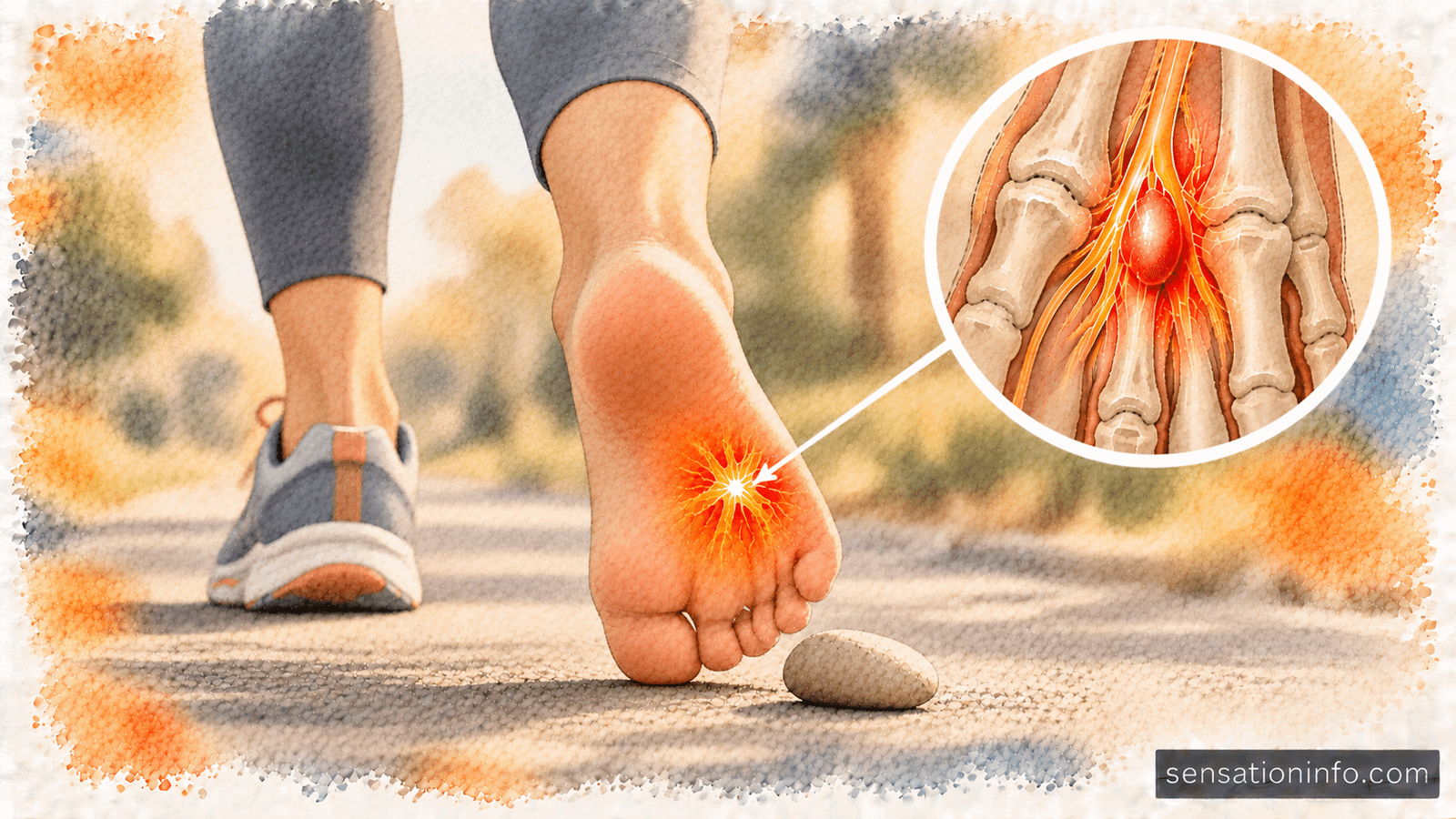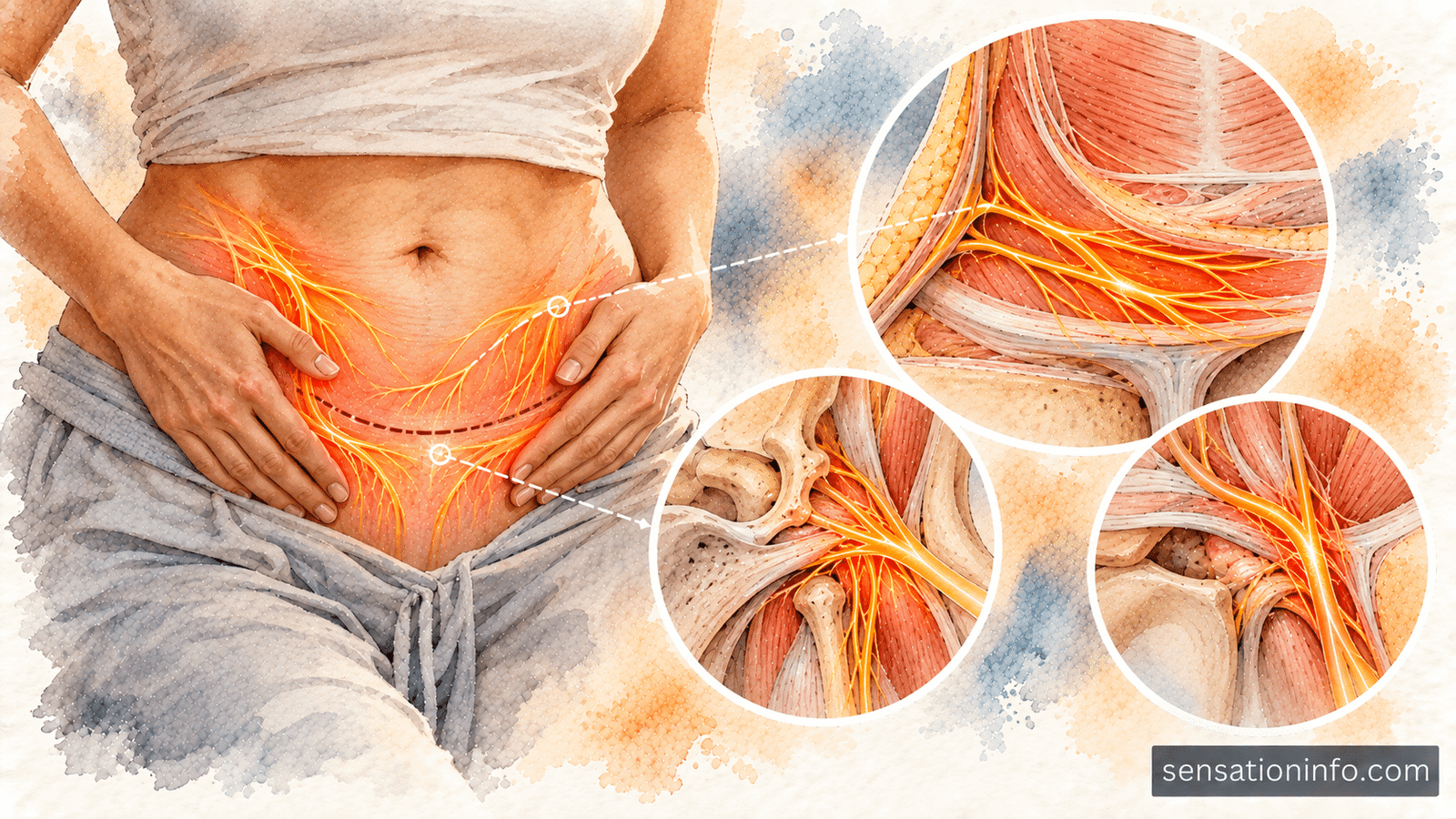

Numbness across the lower abdomen and pubic region is most commonly caused by irritation or entrapment of the small sensory nerves that weave through your abdominal wall muscles. If you have recently had a cesarean section or hernia repair, experiencing this persistent numbness and odd sensory loss after surgery can leave your skin feeling tingly or completely disconnected from normal touch.
While this alarming lack of sensation usually reflects a localized nerve injury that gradually improves on its own as the tissues heal, understanding the specific nerve pathways involved helps you recognize exactly when a professional evaluation is needed.
What the Numbness Feels Like
Patients typically describe the sensory loss in a few distinct ways. You might experience a “dead” patch where the skin cannot register touch, pressure, or temperature variations. In other cases, the area feels “tingly-flat,” meaning the sensation is muted but accompanied by a constant static feeling. You may also notice mild burning, itching, or hypersensitivity localized around the outer edges of the numb zone.
When these sensory changes follow a specific trigger—such as an operation, blunt physical trauma, or an intense new workout routine—they are generally temporary. However, if the numbness persists for weeks, spreads, or occurs alongside pain, swelling, or fever, you require a clinical evaluation.
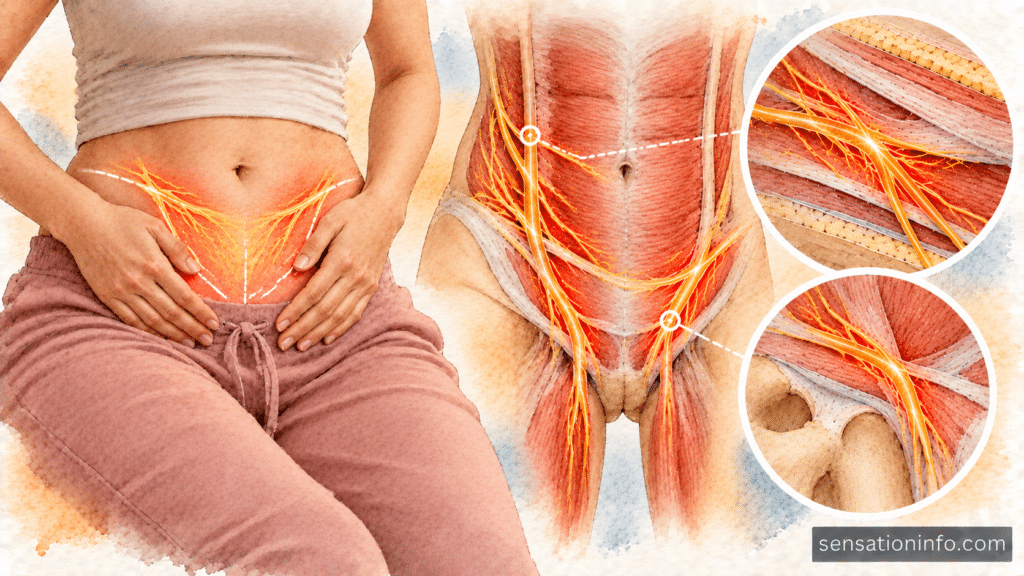
Most Common Causes of Numbness Across the Lower‑Abdominal and Pubic‑Bone
| Cause | Why It Happens | Typical Triggers | How to Recognise |
| Iliohypogastric or ilioinguinal nerve irritation (abdominal wall entrapment) | These nerves travel between the internal oblique and transversus abdominis muscles. Scar tissue, tight muscles, or swelling can compress them, blocking sensory signals. | Cesarean section, hernia repair, laparoscopic ports, deep core exercises, or heavy lifting. | Numbness limited to a triangular area over the lower abdomen or the upper groin, often unilateral. |
| Post‑surgical scar formation | Healing tissue contracts and tethers nerves beneath the skin… Numbness matching the incision line that appears weeks after the operation is a classic presentation of numbness after surgery. | Any incision that crosses the lower abdomen – C‑section, gynecologic surgery, appendectomy. | Numbness appears weeks after the operation, matching the incision line. |
| Blunt abdominal trauma | Direct impact bruises the muscles and can stretch the nerves. | Car accidents, sports collisions, falls onto the pelvis. | Sudden numbness paired with visible bruising and localized pain, which is common when experiencing numbness after an injury. |
| Hernia or abdominal wall herniation | A protruding sac presses on the nerves that run along the fascial planes. | Inguinal or Spigelian hernias, especially when they enlarge. | Numbness may fluctuate with activity; a bulge can be felt or seen. |
| Pregnancy‑related stretching | The expanding uterus pulls on the abdominal wall and may stretch the iliohypogastric nerve. | Late‑second or third trimester, especially in twin pregnancies. | Numbness that begins gradually and may improve after delivery. |
| Diabetic peripheral neuropathy | High blood sugar damages small nerve fibers throughout the body, including the abdominal wall. | Long‑standing uncontrolled diabetes. | Numbness that is bilateral, often accompanied by tingling in the feet and hands. |
| Spinal radiculopathy (L1‑L2) | A disc bulge or spinal degeneration can compress the nerve roots that later become the iliohypogastric nerve. | Chronic low‑back pain, heavy lifting, poor posture. | Numbness that starts in the lower back and radiates to the lower abdomen. |
Quick Red‑Flag List
Seek emergency medical care immediately if your numbness occurs alongside any of the following symptoms:
- Sudden, severe pain with numbness across the lower abdomen.
- Fever, chills, or swelling in the lower abdomen.
- Rapidly spreading numbness to the legs.
- Loss of bowel or bladder control.
- Numbness that does not improve after two weeks of home care.
If any of these appear, seek emergency medical care.
How Doctors Diagnose the Issue
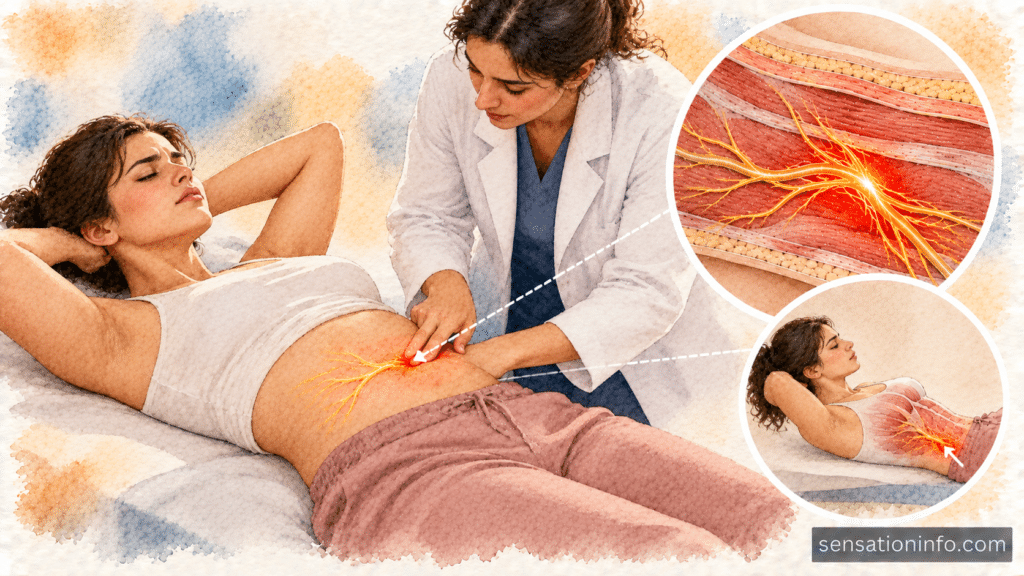
- History taking – The clinician asks when the numbness began, any recent surgeries, injuries, or new exercise routines, and whether other symptoms are present.
- Physical examination – Light touch, pinprick, and temperature testing map the exact area of sensory loss. The doctor also checks for visible scars, hernias, or muscle tension.
- Imaging –
- Ultrasound of the abdominal wall visualises scar tissue, hernias, or fluid collections that may be compressing the nerves.
- MRI of the lumbar spine when a spinal radiculopathy is suspected.
- Nerve conduction studies – Electromyography (EMG) and nerve conduction studies test electrical activity and confirm whether the iliohypogastric or ilioinguinal nerves are conducting signals normally.
Targeted Treatment Options
Nerve-Related Strategies
- Gentle scar massage: Beginning six weeks post-surgery, a physical therapist can demonstrate soft, circular massage motions designed to remodel rigid scar tissue and free trapped nerves.
- Core-stability exercises: Strengthening the internal oblique and transverse abdominis reduces overall muscle tension, preventing the tissues from pulling tightly on nerve pathways.
- Heat therapy: Applying warm packs to the affected area for 10 to 15 minutes twice daily stimulates blood flow and relaxes tight surrounding muscles.
- Topical lidocaine 4% patches: These provide temporary surface-level numbness to break the cycle of nerve hypersensitivity.
- Oral neuropathic agents: Doctors may prescribe medications like gabapentin or pregabalin when the numbness is paired with chronic burning or tingling that resists physical therapy.
- Nerve block: Under ultrasound guidance, an anesthesiologist can inject a local-anesthetic and steroid mixture directly around the iliohypogastric nerve to provide short-term pain relief and significantly reduce localized inflammation.
Surgical or Procedural Options
- Release of entrapped nerve: In severe, treatment-resistant cases, a surgeon performs a neurolysis procedure to physically detach the nerve from binding scar tissue.
- Hernia repair: When a hernia causes the compression, surgically repairing the abdominal defect typically restores normal nerve function.
Systemic Management
- Diabetes control: Maintaining tight blood-sugar management (an A1c below 7%) slows nerve damage and can reverse the effects of peripheral neuropathy.
- Vitamin B12 supplementation: If laboratory tests indicate a deficiency, oral or intramuscular B12 restores myelin sheath health and improves overall nerve sensation.
Practical Home Care Strategies
- Warm, moist compress: Apply heat to the numb zone for 10 minutes twice a day to encourage healthy blood circulation.
- Gentle stretching: Slowly raise your arms overhead while keeping your torso relaxed to safely stretch the abdominal wall without straining tissues.
- Avoid tight clothing: Wear loose cotton waistbands and underwear to eliminate external physical compression on superficial nerves.
- Hydration: Drinking adequate fluids keeps fascia and tissues supple, which directly supports nerve health.
- Deep breathing: Practicing diaphragmatic breathing reduces overall trunk tension and helps the abdominal nerves recover.
Expected Recovery Timeline
Nerve regeneration is a notoriously slow process, meaning patience and consistency are essential once you begin treatment. While minor nerve compressions may resolve in a matter of weeks, chronic entrapment or systemic nerve damage often requires several months of dedicated management before normal sensation fully returns.
| Condition | Typical Improvement Period |
| Post‑surgical nerve irritation | 2 weeks to 3 months with scar massage and heat therapy. |
| Trauma‑related numbness | 1 to 4 weeks as bruising resolves; may need physical therapy. |
| Hernia‑related compression | 4‑6 weeks after surgical repair. |
| Diabetic neuropathy | Gradual improvement over months with strict glucose control and B12 replacement. |
| Pregnancy‑related stretching | Usually resolves within 6 weeks postpartum. |
How to Differentiate Between Causes
Figuring out exactly why your lower abdomen is numb often comes down to tracking how and when the sensory loss started. By comparing the specific onset, physical location, and visual skin changes, you can better distinguish between a localized mechanical issue and a broader systemic problem. Use the breakdown below to help identify the most likely source of your nerve irritation.
| Feature | Post‑Surgical Nerve Irritation | Trauma | Hernia | Diabetic Neuropathy |
| Onset | Weeks after incision | Immediately after impact | Gradual enlargement of bulge | Slow, bilateral progression |
| Distribution | Matches incision line or triangle | Localised to impact site | Extends with hernia size | Symmetrical, often feet/hand involvement |
| Skin changes | May show scar, but skin otherwise normal | Bruising, discoloration | Visible bulge | No skin changes |
| Response to therapy | Improves with scar massage | Improves with rest and heat | Resolves after repair | Improves with glucose control |
Key Takeaways
- Numbness across the lower abdomen and pubic bone most often results from irritation of the iliohypogastric or ilioinguinal nerves, especially after surgery or trauma.
- Simple home measures—heat, gentle stretching, and scar massage—resolve the majority of cases within weeks.
- Red‑flag symptoms such as severe pain, fever, rapid spread, or loss of bowel/bladder control require urgent evaluation.
- Systemic conditions like diabetes or vitamin B12 deficiency can worsen or mimic nerve entrapment; proper lab testing is essential.
- When conservative care fails, targeted nerve blocks, neurolysis, or hernia repair provide long‑term relief.
Frequently Asked Questions
During a C‑section the surgeon makes a horizontal incision that crosses the path of the iliohypogastric and ilioinguinal nerves. Healing scar tissue can tether these nerves, causing a patch of numbness that often resolves as the scar remodels over weeks to months.
Yes. A compressive belt can press directly on the superficial ilioinguinal nerve, leading to temporary loss of sensation. Removing the belt and allowing the area to rest usually restores normal feeling within a few days.
Occasionally a lumbar disc bulge at L1‑L2 can compress the nerve root that later becomes the iliohypogastric nerve. If you also have low‑back pain, radiating leg symptoms, or muscle weakness, a spinal MRI is warranted.
Doctor’s Recommendation
If your numbness persists for more than two weeks despite using heat, scar massage, and avoiding tight clothing, a specialist who focuses on peripheral nerve disorders can offer advanced evaluation. A board‑certified pain‑management physician or a physiatrist can perform an ultrasound‑guided nerve block, order EMG testing, and design a personalised rehabilitation program. To find qualified experts, explore our directory of best pain‑management doctors for nerve pain USA.
References
Cleveland Clinic. Hernia: Diagnosis and management. Cleveland Clinic Health Library. 2023.
American Diabetes Association. Standards of Care in Diabetes—2024. Diabetes Care. 2024.
National Multiple Sclerosis Society. Sensory symptoms in MS. National MS Society. 2024.