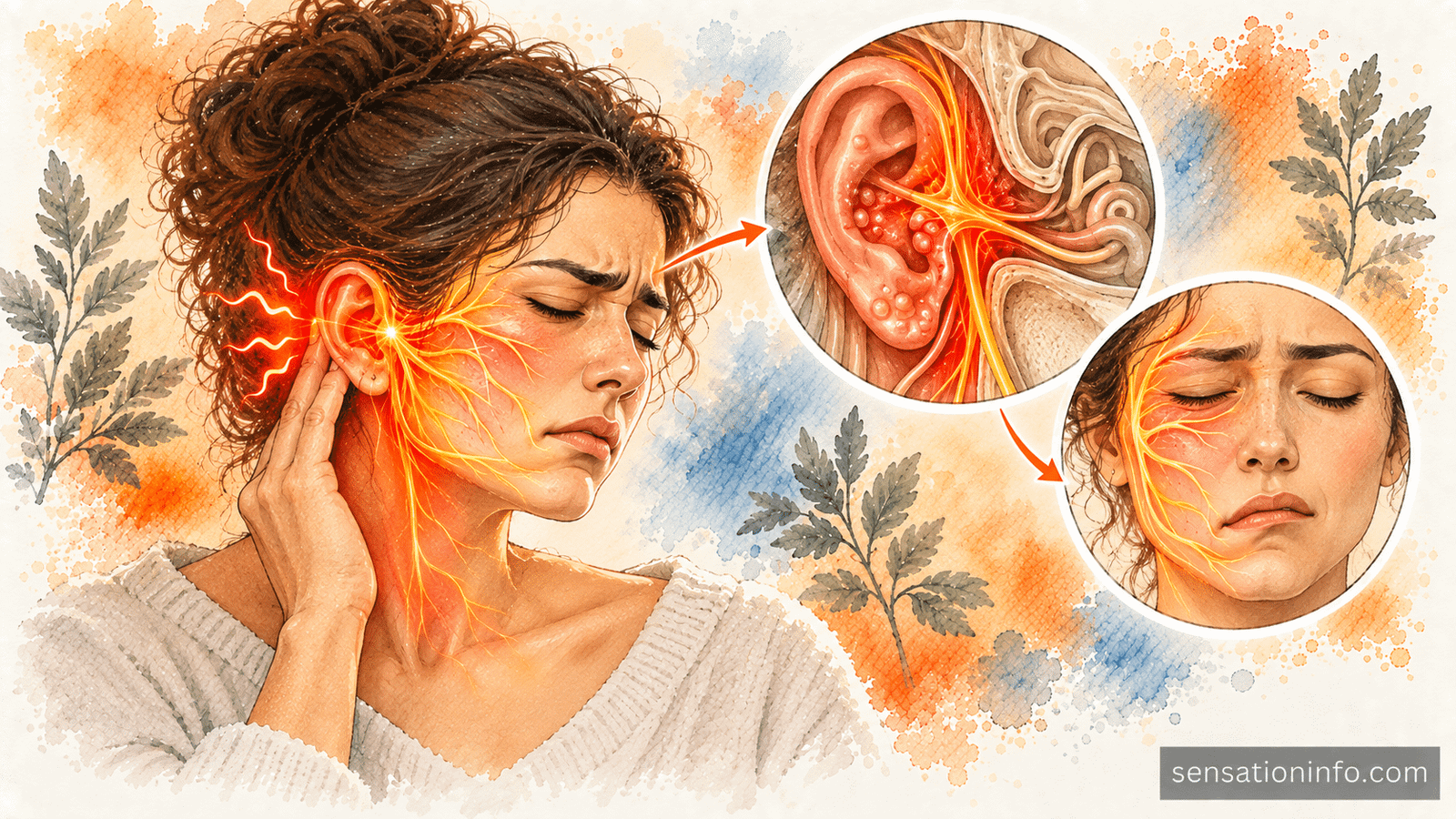

Ramsay Hunt syndrome occurs when the shingles virus reactivates in the facial nerve near your inner ear. This specific location explains why you experience sudden facial weakness alongside intense ear pain and a blistering rash. Immediate medical treatment is critical to prevent permanent facial paralysis and hearing loss.
When to Seek Emergency Care
Any sudden facial weakness requires an immediate trip to the emergency room or an urgent care clinic. Time is critical because antiviral medications work best when started within seventy two hours of your first symptoms. While Ramsay Hunt syndrome is a specific viral infection there are several other serious causes of facial numbness and weakness such as a stroke that require immediate medical evaluation.
Go directly to an emergency department if your facial droop is accompanied by any of these warning signs:
- Inability to close one eye completely
- Sudden hearing loss or severe ringing in your ear
- Extreme vertigo or dizziness that makes walking difficult
- A blistering red rash inside or outside your ear canal
- Difficulty swallowing or breathing
What Causes Ramsay Hunt Syndrome?
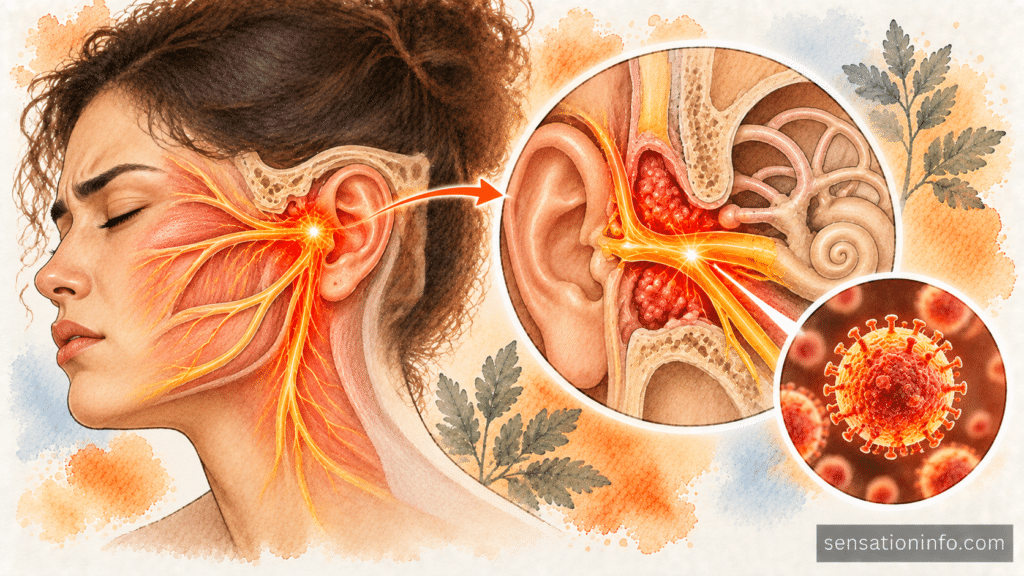
The condition is caused by the varicella zoster virus. This is the exact same virus that causes chickenpox in children and shingles in adults. Because this virus directly attacks your nervous system it is important to understand the link between shingles and nerve pain when evaluating your symptoms. After you recover from chickenpox the virus remains dormant in your nervous system for decades. If your immune system weakens due to stress, age, or illness, the virus can wake up and reactivate.
In Ramsay Hunt syndrome the virus reactivates in a specific cluster of nerves called the geniculate ganglion. This nerve cluster sits deep inside your skull where the facial nerve passes very close to your inner ear structures. When the nerve swells from the viral infection it becomes compressed inside its narrow bone canal. This compression cuts off the nerve signals and causes sudden paralysis on one side of your face.
According to the National Institutes of Health this condition affects roughly five in one hundred thousand people each year in the United States. It is most common in adults older than sixty but it can affect anyone who has had chickenpox.
Ramsay Hunt Syndrome vs Bell’s Palsy
People often confuse these two conditions because they both cause a sudden facial droop. However they have very different causes and recovery timelines. Bell’s palsy is generally less severe and has a higher recovery rate.
| Feature | Ramsay Hunt Syndrome | Bell’s Palsy |
| Primary Cause | Varicella zoster virus | Often unknown but linked to general viral inflammation |
| Ear Pain | Severe and often begins before the facial weakness | Usually mild if present at all |
| Rash | Painful blisters in or around the ear and mouth | No blisters or rash |
| Hearing and Balance | Hearing loss, tinnitus, and severe vertigo are common | Hearing and balance are usually completely normal |
| Recovery Rate | Lower chance of full nerve recovery | Very high chance of full nerve recoveryim |
Key Symptoms and What They Feel Like
The symptoms usually affect only one side of your face and head. You might notice the ear pain several days before any facial weakness or skin changes begin.
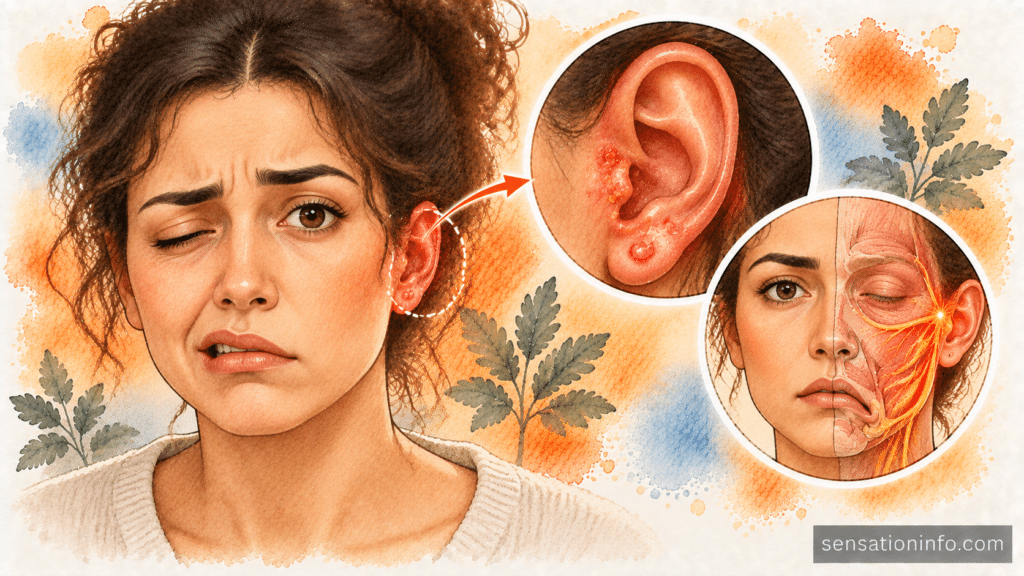
- Intense Ear Pain: You will feel a sharp burning sensation deep inside your ear canal or on the outer flap of your ear.
- Blistering Rash: Small fluid filled blisters may appear on your earlobe, inside your ear canal, or even on the roof of your mouth.
- Facial Weakness: You will experience a sudden inability to smile, frown, or close your eye on the affected side. Your mouth may droop making it difficult to eat or drink normally.
- Inner Ear Symptoms: Because the facial nerve sits right next to the cranial nerve responsible for hearing you may experience tinnitus, sudden hearing loss, or intense spinning vertigo.
How Doctors Diagnose the Condition
Doctors usually diagnose this syndrome based entirely on your medical history and a physical examination. The combination of facial paralysis and a visible ear rash is a strong clinical indicator that points directly to the shingles virus.
If the rash has not appeared yet your doctor might swab your tears or blood to test for the varicella zoster virus. They may also order a magnetic resonance imaging scan to check for specific facial nerve swelling and to safely rule out a stroke or tumor.
Medical Treatment and Antiviral Therapy
Prompt treatment is the most important factor in your recovery. Doctors will typically prescribe a strong course of oral antiviral medications like acyclovir (Zovirax) or valacyclovir (Valtrex) to stop the virus from multiplying.
They usually pair these antivirals with a high dose of corticosteroids like prednisone to quickly reduce nerve swelling. Pain management is also a major priority so your doctor may recommend specific strategies to reduce shingles nerve pain and keep you comfortable while the blisters heal.
Home Care and Eye Protection
While the prescription medications fight the virus you must actively protect your eye at home. When facial paralysis prevents you from blinking or closing your eye completely your cornea is at extreme risk of severe damage and vision loss.
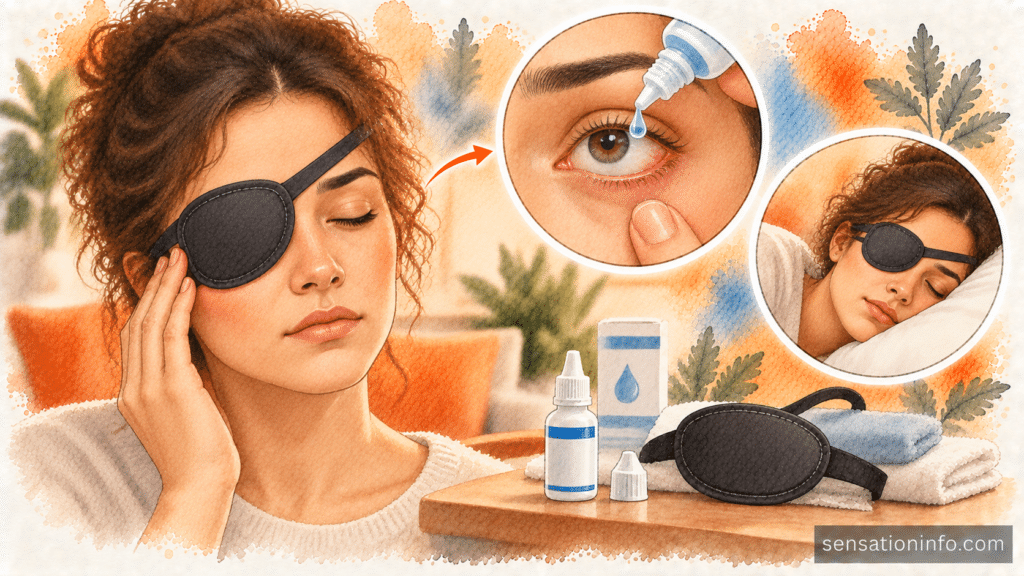
- Use artificial tears frequently throughout the day to keep your eye moist.
- Apply a thick lubricating eye ointment carefully before you go to sleep.
- Tape your eyelid shut at night or wear a medical eye patch to prevent corneal scratching.
- Apply a warm moist compress to your ear to help soothe the rash and ease the nerve pain.
- Explore safe home treatments for facial numbness to help safely manage your symptoms as your nerve slowly begins to recover.
Recovery Timeline and Prognosis
The recovery timeline varies widely depending on how quickly you started antiviral treatment. If you receive medication within three days of your first symptoms your chances of full recovery are significantly higher.
Most people begin to see improvement within a few weeks but complete healing of the facial nerve can take several months. In some cases patients experience permanent facial weakness, lasting hearing loss, or chronic nerve pain that requires ongoing medical management.
Key Takeaways
- Ramsay Hunt syndrome is a shingles infection of the facial nerve located near the inner ear.
- Immediate medical treatment within seventy two hours is critical to prevent permanent nerve damage.
- The condition causes severe ear pain, a blistering rash, and sudden facial paralysis on one side.
- Unlike Bell’s palsy this syndrome frequently causes hearing loss, ringing in the ears, and vertigo.
- Protecting your eye from drying out or scratching is a crucial part of your daily home care.
Frequently Asked Questions
You cannot give someone Ramsay Hunt syndrome. However if you have an active blistering rash you can pass the varicella zoster virus to someone who has never had chickenpox or the chickenpox vaccine.
The acute ear pain usually improves within a few weeks as the rash heals and the antiviral medications reduce the swelling. However some patients develop long lasting nerve pain that requires specific medication.
Many patients recover their full facial movement especially if they start antiviral treatment within the first three days. Unfortunately the recovery rate is lower than other forms of facial paralysis and some weakness may be permanent.
Doctor’s Recommendation
If you continue to experience lingering nerve discomfort long after your initial symptoms have improved you may find our guide on the Best Pain Management Doctors for Nerve Pain in the USA helpful. It explains how specialized physicians approach post viral nerve issues and helps you understand what clinical options are available for long term symptom management.
References
National Institute of Neurological Disorders and Stroke. Ramsay Hunt Syndrome. NIH. 2023.
National Organization for Rare Disorders. Ramsay Hunt Syndrome. NORD. 2024.
National Library of Medicine. Ramsay Hunt Syndrome. StatPearls. 2023.
Mayo Clinic. Ramsay Hunt syndrome. Mayo Clinic Patient Care. 2021.