
A burning sensation in vulva skin after washing is most often irritant contact dermatitis: the fragrance, dyes, and harsh cleansers in scented soaps strip the thin, delicate skin around the vaginal opening and leave it raw, stinging, and itchy. It usually settles within a few weeks to a month once you stop the product and wash with plain warm water. Like a burning sensation in the groin area, though, vulvar burning has other causes too, so burning with discharge, sores, or fever needs a doctor.
Why Does My Vulva Burn After Using Scented Soap?
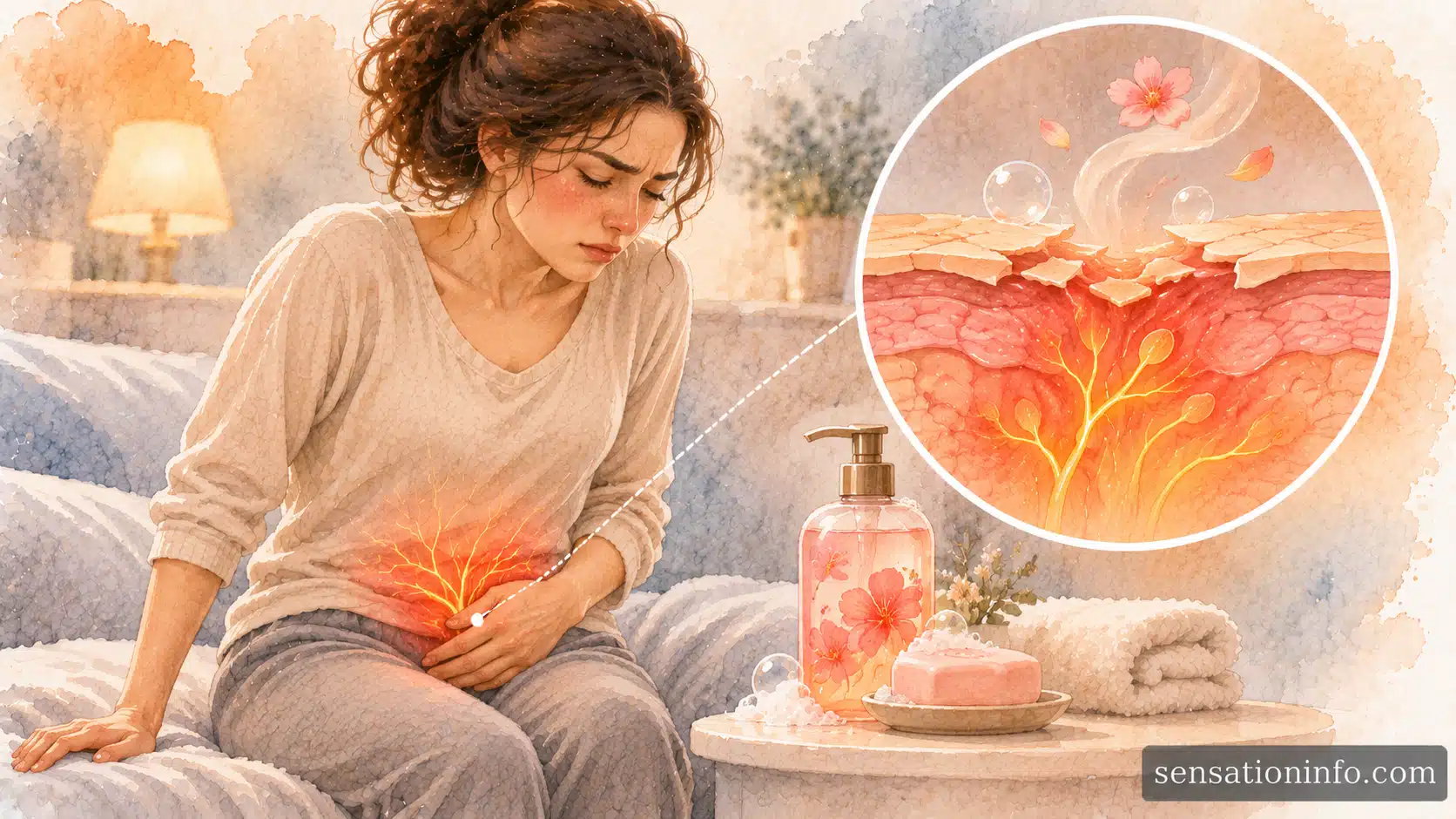
Vulvar skin is thinner, moister, and more fragile than skin elsewhere on your body, so it reacts to products that your arms and legs tolerate easily. Scented soaps, body washes, and bubble baths contain fragrance, preservatives, and foaming agents that wash away the skin’s natural protective oils.
Once that barrier breaks down, the nerve endings in the skin become exposed and irritated. Patients often tell me the burning started after switching to a new body wash, a “feminine” wash, or a different laundry detergent.
Skin is most sensitive before puberty and after menopause, when lower estrogen makes it drier and thinner. Urine leakage, sweat, and scratching make it worse.
Is it an irritation or an allergy?
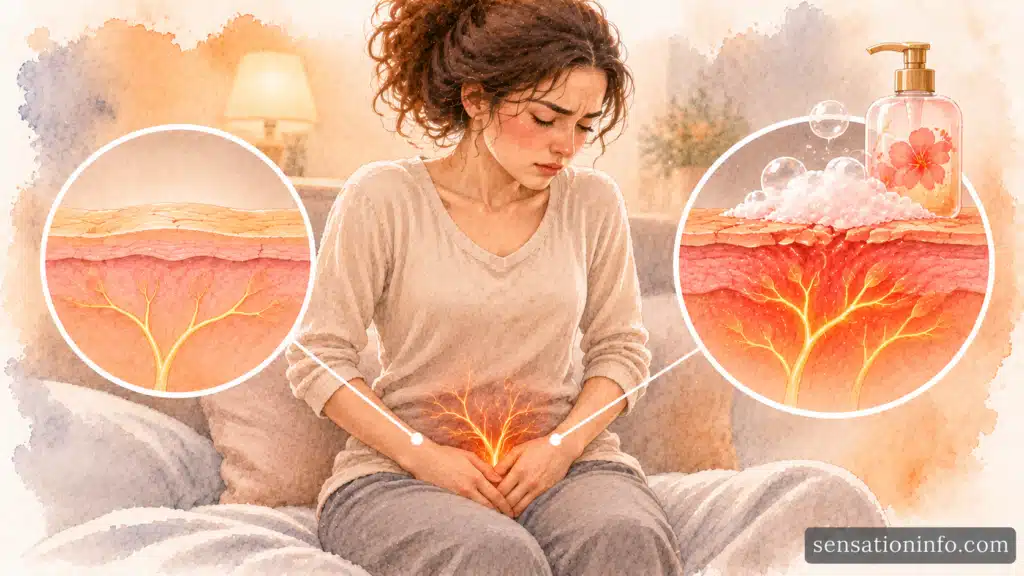
There are two ways a product can trigger vulvar dermatitis. Irritant dermatitis is direct damage to the skin from a harsh substance, and it can happen to anyone with enough exposure. Allergic contact dermatitis is an immune reaction to a specific ingredient, such as a fragrance or preservative, and it can flare even with tiny amounts.
The table below shows how I tell them apart. Knowing which one you have helps you decide whether simply cutting back is enough or whether you need to avoid an ingredient completely.
| Feature | Irritant contact dermatitis | Allergic contact dermatitis |
|---|---|---|
| Who gets it | Anyone, with enough exposure | Only people allergic to that ingredient |
| Main feeling | Burning, stinging, rawness | Intense itching, sometimes burning |
| Timing | Soon after contact, worse with repeated use | Can appear hours to days after contact |
| Common triggers | Soap, bubble bath, wipes, frequent washing | Fragrance, preservatives, nickel, dyes, latex |
| What helps | Stopping or diluting the product | Finding and fully avoiding the allergen |
Is It Soap Irritation, a Yeast Infection, or Something Else?
Soap irritation usually causes burning and itching with redness but no unusual discharge, and it improves when you stop the product. A yeast infection, bacterial vaginosis, or herpes brings other signs that point away from soap.
The symptom pattern table below covers what I check for most. Find the row closest to your symptoms, then look at the urgency column.
| Where it is | What it feels like | What comes with it | Likely cause | How urgent |
|---|---|---|---|---|
| Outer lips and skin folds | Burning, stinging, raw | Redness after a new soap, wipe, or detergent | Irritant contact dermatitis | Home care; see a doctor if no better in 2 weeks |
| Whole vulva | Intense itch with burning | Thick, white, clumpy discharge | Vaginal yeast infection | Doctor visit within a few days, especially the first time |
| Vaginal opening | Mild burning or irritation | Thin gray discharge with fishy odor | Bacterial vaginosis | Doctor visit within a few days |
| One area of vulva | Tingling, then burning pain | Small blisters or open sores, flu like feeling | Genital herpes | Doctor visit within 1 to 2 days |
| Vulva and urethra | Burning mostly when urinating | Urgency, frequency, pelvic pressure | Urinary tract infection | Doctor visit within 1 to 2 days |
| Vulva, often after menopause | Burning, soreness, fragile skin | White, shiny, or wrinkled patches; tearing | Lichen sclerosus | Doctor visit within a few weeks |
| Vaginal entrance or whole vulva | Burning lasting 3 months or longer | Normal looking skin; pain with sex or tampons | Vulvodynia | Doctor visit; ask about a vulvar specialist |
| After sex | Burning soon after contact | Itching, swelling | Reaction to latex, spermicide, lubricant, or semen | Doctor visit if it keeps happening |
What is usually harmless, and what needs a doctor?
Usually harmless: burning that started after a new product, has no unusual discharge, and calms down within days of switching to plain water. This is the classic soap reaction.
See a doctor: burning with discharge, sores, blisters, bleeding, a change in skin color, or burning that lasts longer than 2 weeks despite stopping all products. I also want to see anyone who has tried several over the counter yeast treatments without relief, because repeated treatment for the wrong problem can worsen the burning.
What Else Causes a Burning Sensation in the Vulva?
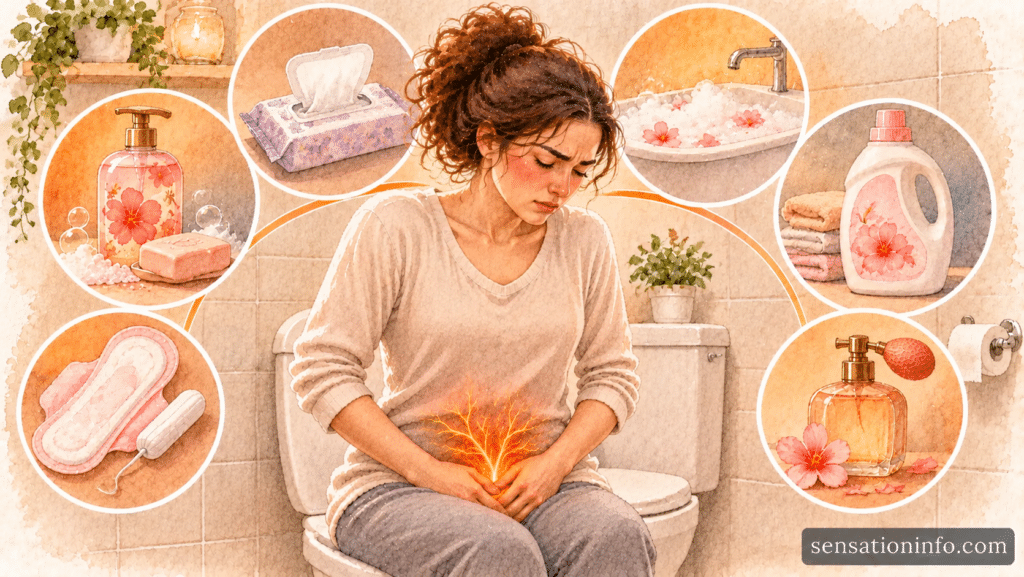
A burning sensation in the vulva can come from products, infections, skin diseases, hormones, or the nerves themselves.
The list below covers the full set of causes doctors consider. Use it to spot anything you have been using or experiencing so you can mention it at your visit.
- Other products: bubble bath, shampoo, conditioner, deodorants, perfumes, douches, talcum powder, scented pads and tampons, panty liners, toilet paper, wipes, laundry detergent, dryer sheets, and tea tree oil
- Medicines and contraceptives: spermicides, some over the counter anti itch creams, latex condoms, and lubricants
- Moisture and friction: wet swimsuits, sweaty workout clothes, chlorinated pools and hot tubs, synthetic underwear, tight jeans, shaving, and cycling
- Infections: yeast, bacterial vaginosis, genital herpes, and urinary tract infections
- Skin conditions: eczema, lichen sclerosus, lichen planus, and lichen simplex chronicus (thick, leathery skin from long term scratching)
- Low estrogen: menopause, breastfeeding, and some birth control that thins and dries vulvar skin
- Nerve related pain: vulvodynia, chronic vulvar burning with no visible cause
If burning flares mainly after sex, a burning sensation after sperm contact can come from semen allergy, spermicide, or friction. If it happens mostly on the toilet, burning after urinating points toward the urethra or a urinary infection.
When does burning mean vulvodynia?
Vulvodynia is vulvar pain lasting at least 3 months with no infection, skin disease, or other clear cause. As many as 14 million American women may have it at some point in their lives, and many see several doctors before getting a diagnosis.
It can feel like burning, stinging, or rawness, often set off by sex, tampons, tight pants, or sitting. Researchers think irritated or overly sensitive vulvar nerves play a role, which is why the skin can feel like normal touch is burning even though it looks healthy.
When Should I See a Doctor?
Most soap reactions can be handled at home, but these signs should not wait.
The thresholds below tell you exactly what to do. If any line matches you, act on it.
- Vulvar swelling with trouble breathing, hives spreading over your body, or lip or tongue swelling: call 911.
- Fever, chills, pelvic pain, or back pain with burning when you urinate: see a doctor the same day.
- Painful blisters or open sores: see a doctor within 1 to 2 days.
- Unusual discharge, a strong odor, or bleeding not related to your period: book a visit within a few days.
- White, shiny, or thickened patches, or skin that tears easily: book a visit within a few weeks.
- Burning that lasts more than 2 weeks after stopping all products: book a visit.
- Burning that has lasted 3 months or more: ask for a vulvar specialist.
How Do I Soothe Vulvar Burning at Home?
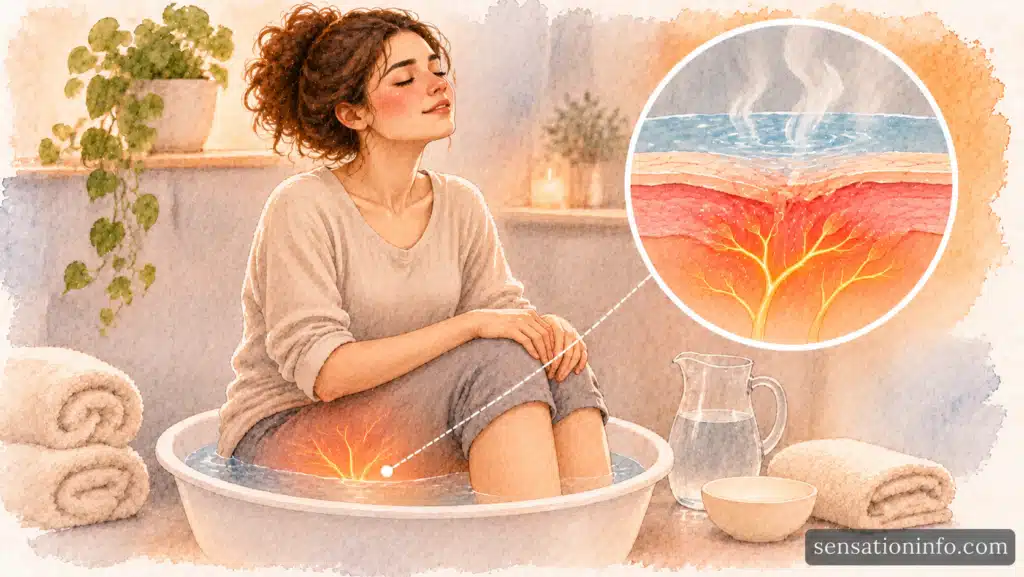
The fastest relief comes from removing the trigger and calming the skin.
The steps below are what I recommend first. Follow them together for two weeks before judging whether they work.
- Stop every scented or new product touching the vulva, including soap, wipes, sprays, and detergent.
- Take a sitz bath, a shallow soak of plain lukewarm water, to rinse away irritants and ease burning.
- Apply a cool gel pack wrapped in a thin cloth for a few minutes at a time.
- Pat dry gently with a soft towel instead of rubbing.
- Protect the skin with a thin layer of plain petroleum jelly.
- Wear loose cotton underwear, or none at night, and change out of wet or sweaty clothes quickly.
- Avoid scratching, which can break the skin and keep the cycle going.
Check with your doctor before using over the counter anti itch or yeast creams. Some contain fragrance, numbing agents, or other ingredients that make vulvar dermatitis worse.
What Soap Is Safe to Use on My Vulva?
Warm water alone is enough for the vulva. If you prefer a cleanser, use a small amount of a mild, unscented, soap free cleanser, and only on the outer skin.
Wash no more than once a day, using your hand instead of a washcloth or loofah. Never put soap or any cleanser inside the vagina, and skip douching completely, because the vagina cleans itself.
Labels like “sensitive,” “natural,” or “pH balanced” do not guarantee a product is safe for vulvar skin. Feminine washes and wipes often contain the same fragrances and preservatives that cause the problem in the first place.
What Will My Doctor Do at the Visit?
The first thing I ask is exactly which products touch your vulva, including laundry detergent, toilet paper, and anything used during sex.
Your doctor will examine the vulva and may swab any discharge to rule out yeast, bacterial vaginosis, or sexually transmitted infections. If the burning does not improve, patch testing can reveal a specific allergy, a cotton swab test can map sensitive spots for vulvodynia, and a small skin biopsy can confirm lichen sclerosus or other skin conditions.
The questions below are worth bringing. They cover what most patients wish they had asked.
- Is this irritation, an allergy, or an infection?
- Should I have patch testing to find the exact trigger?
- Which cream is safe for me to use, and for how long?
- What should I do if it comes back?
If your burning comes with tingling, numbness, or shooting pain elsewhere, our nerve symptom checker can help you see whether a nerve might be involved before your visit.
What treatments might I be prescribed?
For contact dermatitis, the main treatment is avoiding the trigger. Your doctor may prescribe a corticosteroid ointment such as hydrocortisone, triamcinolone (Kenalog), or clobetasol (Temovate) for a short time, and an antihistamine such as hydroxyzine (Vistaril) to ease itching at night.
Infections get targeted medicine, such as fluconazole (Diflucan) for yeast. Low estrogen may be treated with vaginal estrogen cream, and vulvodynia with lidocaine ointment, pelvic floor physical therapy, nerve pain medicines, or counseling.
How Long Does Vulvar Irritation Take to Heal?
Contact dermatitis often clears within a few weeks to a month after the trigger is removed. An infection on top of the irritation can make recovery take longer.
Lichen sclerosus and vulvodynia are long term conditions that can be controlled but need ongoing care. If you have vulvar lichen sclerosus, regular checkups matter, because it carries a higher risk of a type of skin cancer called squamous cell carcinoma.
Many people put off getting help out of embarrassment, but vulvar irritation is one of the most common reasons people see a gynecologist.
Key Takeaways
These points sum up what matters most. Each one stands on its own as a quick reminder.
- A burning sensation in the vulva after washing is most often irritant contact dermatitis from scented soaps, washes, or wipes.
- Vulvar skin is thinner and more fragile than other skin, especially before puberty and after menopause.
- Plain warm water is enough to clean the vulva, and nothing should be used inside the vagina.
- Soap irritation usually clears within a few weeks to a month after the trigger is removed.
- Burning with discharge, sores, white patches, or fever, or burning lasting more than 2 weeks, needs a doctor.
- Burning that lasts 3 months with no visible cause may be vulvodynia, which is treatable.
Frequently Asked Questions
Yes. Scented or dyed toilet paper can irritate vulvar skin and cause burning and itching, especially in people with sensitive skin. Switching to plain white, unscented toilet paper often helps.
Sometimes. Genital herpes can cause tingling and burning followed by blisters or sores, and other infections can cause burning with discharge. Burning after a new soap with no discharge or sores is more likely skin irritation, but anyone with sores, unusual discharge, or a new partner should be tested.
Pads, panty liners, and tampons, especially scented ones, can rub and irritate vulvar skin, and trapped moisture makes the skin more sensitive. Using unscented products, changing them often, and keeping the area dry usually eases the burning.
Doctor’s Recommendation
A gynecologist is the right specialist for vulvar burning that does not settle within 2 weeks of stopping all products, keeps coming back, or comes with discharge, sores, or skin changes, while your primary care doctor can handle a first visit for simple irritation. If the burning has lasted 3 months or more, or if routine tests keep coming back normal, ask for a referral to a vulvar specialist or a vulvovaginal clinic, and expect a careful vulvar exam, swab tests, possible patch testing or biopsy, and a discussion of pelvic floor physical therapy if pain is part of the picture.
References
- Cleveland Clinic. Vulvar Dermatitis: Causes, Symptoms and Treatment. Cleveland Clinic Health Library. 2026.
- Cleveland Clinic. Vulvitis (Vulvar Itching): Causes, Symptoms and Treatment. Cleveland Clinic Health Library. 2026.
- Eunice Kennedy Shriver National Institute of Child Health and Human Development. Vulvodynia. NICHD, National Institutes of Health. 2026.
- Eunice Kennedy Shriver National Institute of Child Health and Human Development. Vulvodynia Workshop Highlights Prevalence of Disorder. NICHD, National Institutes of Health. 2002.
- Mayo Clinic. Lichen sclerosus: Symptoms and causes. Mayo Clinic. 2024.