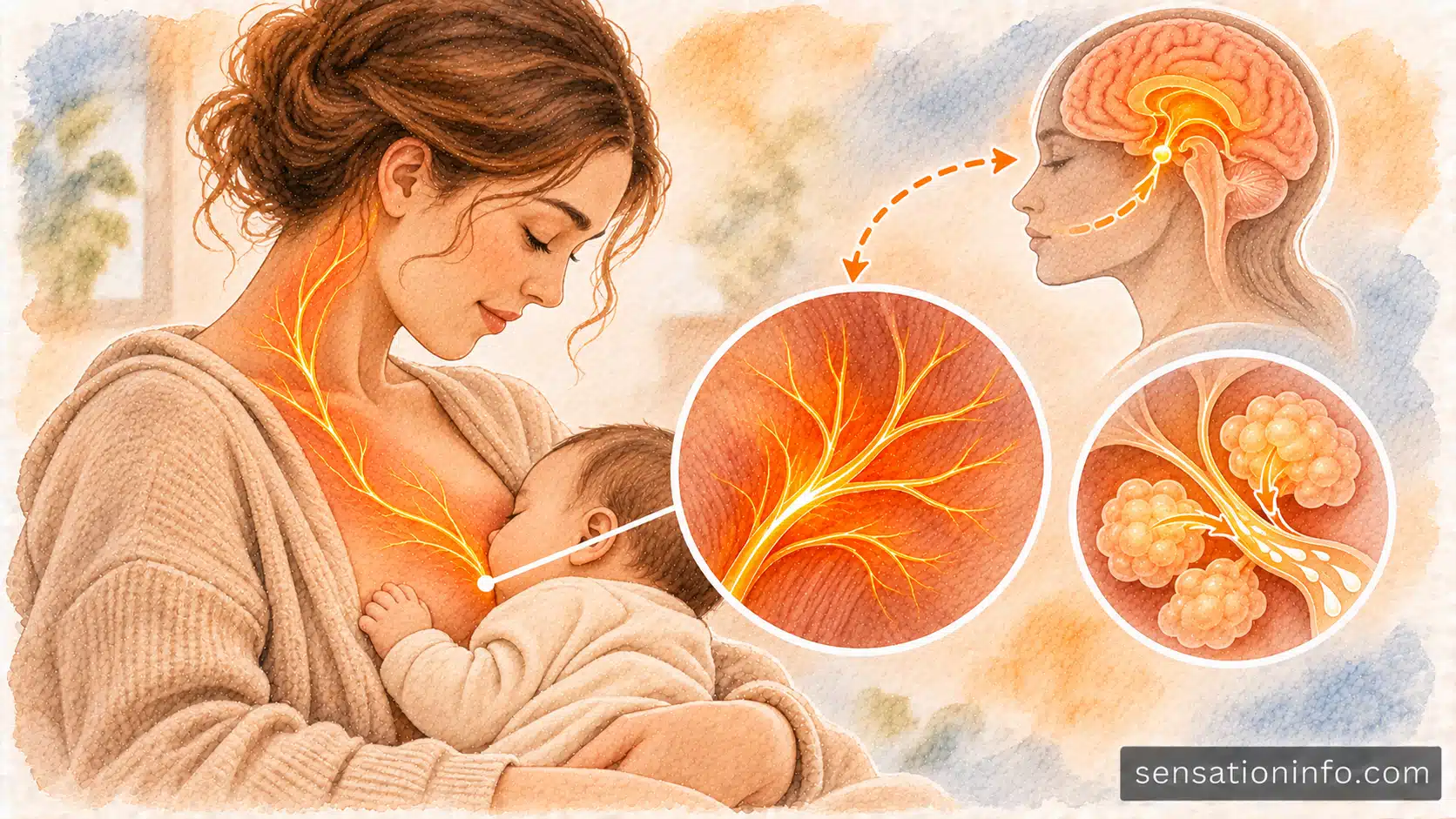

Tingling nipples when breastfeeding are usually a normal sign of the let-down reflex, the hormone driven moment when milk starts flowing toward your baby. The pins and needles feeling usually comes early in a feed, or even when you think about your baby, and passes quickly. But if the tingling turns into a deep burning sensation in the breast, comes with color changes in the nipple, or arrives with fever, something else is likely going on and deserves a closer look.
What Is the Let-Down Reflex and Why Does It Make My Nipples Tingle?
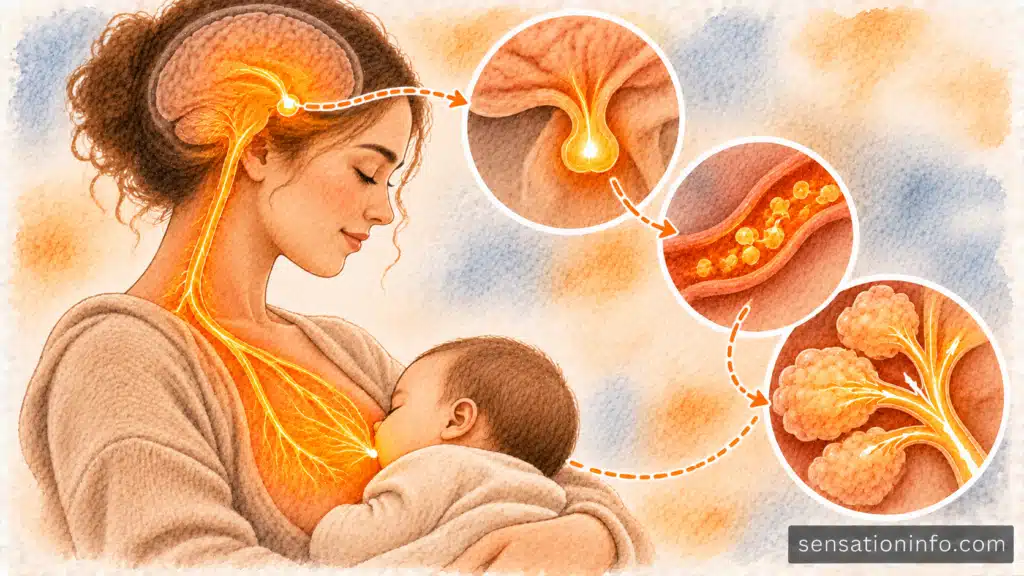
The let-down reflex, also called the milk ejection reflex, is an automatic response that pushes milk out of your breast. When your baby sucks, nerves in the nipple and areola send a signal to your brain.
Your brain then releases oxytocin, a hormone made in the pituitary gland. Oxytocin makes tiny muscle cells around the milk sacs (alveoli) squeeze, which pushes milk into the ducts and out through the nipple. That sudden squeeze and rush of milk is what many women feel as tingling.
In fact, without oxytocin, most of your milk stays in the breast, so that tingle is your body doing its job.
What Does a Normal Let-Down Feel Like?
Patients describe let-down in many ways, and nearly all of them are normal. Compare your own experience with the descriptions I hear most often:
- A pins and needles or “fizzy” feeling in the nipple
- A warm rush or sense of fullness spreading through the breast
- Milk dripping or spraying from the other breast at the same time
- Nothing at all, which is also normal
That pins and needles feeling is a mild, short lived form of paresthesia, an abnormal skin sensation. If you feel nothing, watch your baby instead: bigger, stronger swallows are the surest sign let-down has happened.
Why Do My Nipples Tingle When I’m Not Feeding?
Still, let-down does not only happen at the breast. Your brain links your baby with milk release, so oxytocin can rise just from thinking about your baby.
Seeing, hearing, or touching your baby, touching your breasts, or pumping can all set it off. That is why many mothers notice tingling and leaking in the shower or at work. Let-down can also happen more than once in a single feed, each wave bringing a fresh tingle.
Is It Normal for Let-Down to Hurt?
A mild tingle or brief pressure is normal. But sharp, burning, or lasting pain is not part of a normal let-down, and pain can actually slow the reflex, making feeds harder for you and your baby.
When a mother tells me let-down hurts, the first things I ask are: Where exactly is the pain? Does it happen during the feed or after it? Does the nipple change color? Is there any fever, redness, or cracked skin? Those answers usually point straight to the cause.
What Else Could Cause Tingling or Burning Nipples While Breastfeeding?
Normal let-down tingling is brief and happens during or just before milk flow. On the other hand, pain that lasts after the feed, burns, or comes with skin changes points to a different cause.
The table below compares the patterns I see most often. Use it to match what you feel, then check the urgency column to decide your next step.
| Where it is | What it feels like | What comes with it | Likely cause | How urgent |
|---|---|---|---|---|
| Whole breast, during feed | Brief tingle, pins and needles, warm rush | Leaking from other breast, baby gulping | Normal let-down reflex | Not urgent |
| Nipple tip, after feed or in cold air | Burning, throbbing, sharp pain | Nipple turns white, then blue, then red | Nipple vasospasm, often linked to Raynaud’s | Book a visit within days |
| Nipple surface | Stinging, itching | Redness, cracks, rash, or raised white dots | Nipple damage from a poor latch, contact dermatitis, milk blebs | Book a visit within days |
| One area of breast | Burning, aching, worse with feeds | Red, hot, hard patch; fever and chills | Mastitis (breast inflammation or infection) | Call your doctor the same day |
| Seconds before let-down | Sudden sadness, dread, anxiety | No physical pain | Dysphoric milk ejection reflex (D-MER) | Discuss at next visit |
Usually Harmless vs See a Doctor
A normal let-down and brief tingling when your breasts are very full are usually harmless. By contrast, vasospasm, cracked or bleeding nipples, signs of infection, and pain that keeps getting worse need a proper check, and early help often saves your breastfeeding journey.
How Can I Tell Let-Down Tingling From Nipple Vasospasm?
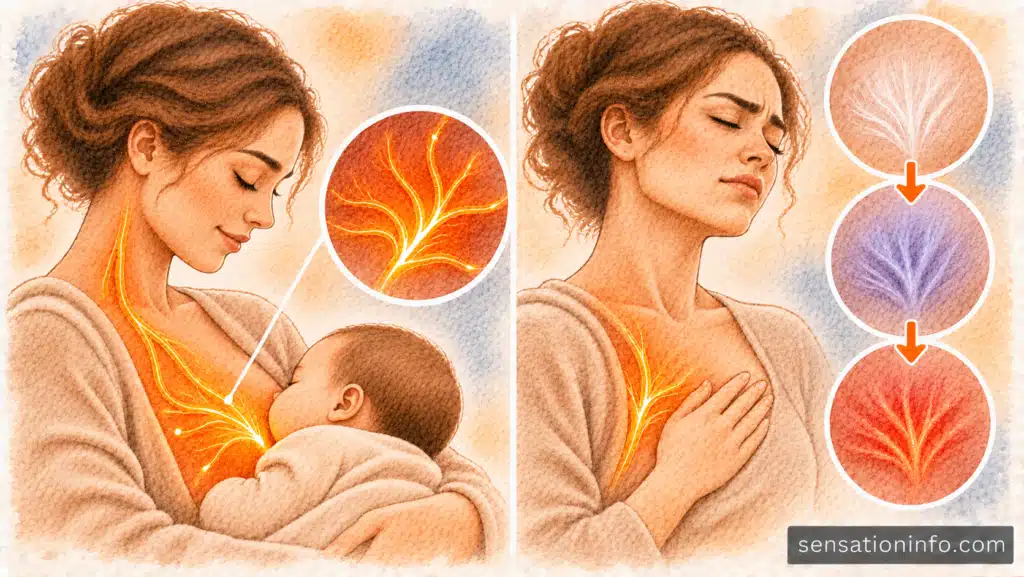
The difference is timing and nipple color. Nipple vasospasm happens when small blood vessels in the nipple tighten and cut off blood flow for a short time. The nipple turns pale or white, then may go bluish, then red as blood returns, and this can be sharply painful.
The comparison below sets the two side by side. It is the checklist I walk through at the first visit.
Let-Down Tingling vs Nipple Vasospasm
| Feature | Let-down tingling | Nipple vasospasm |
|---|---|---|
| Timing | Just before or during milk flow | Usually after a feed, or when stepping into cold air |
| Nipple color | Normal | White, then blue, then red |
| Feeling | Pins and needles, warm rush | Burning, throbbing, sharp pain deep into the breast |
| Duration | Seconds to a couple of minutes | Minutes, and can repeat |
| What helps | Nothing needed | Warmth, better latch, treating the trigger |
Vasospasm is not rare: in one study of new mothers, about one in five reported it by eight weeks after birth. It is more likely if you already have Raynaud’s syndrome, where fingers or toes go white in the cold. On top of that, a shallow latch, a pump flange that does not fit, oversupply, and sudden temperature changes can all make it worse.
What About Sudden Sadness During Let-Down?
A wave of dread, sadness, or anxiety right before milk lets down is called dysphoric milk ejection reflex, or D-MER.
D-MER is a physical reflex, not a sign that you are a bad mother. Instead, researchers believe it is linked to a quick drop in dopamine, a brain chemical, as oxytocin rises. It affects about 5% to 9% of breastfeeding women.
The feeling lasts about 30 seconds to two minutes and fades once milk flows, and for most women it eases within about three months. That said, D-MER is different from postpartum depression, which lasts much longer and is not tied to feeds. If sad or anxious feelings spread beyond let-down, or you have any thoughts of harming yourself or your baby, call your doctor right away or call 988.
Which Symptoms Change How Urgent This Is?
The symptoms that travel with tingling tell me more than the tingling itself. Beyond the table above, these companions change the plan:
- Cracks or bleeding: usually a latch problem; get latch help soon.
- Numbness or tingling in your hands: is not caused by breastfeeding itself and needs separate evaluation.
- A new lump that does not shrink after feeding: should be checked even if painless.
Separately, hand tingling can show up after birth, especially with the bent wrist positions used to hold and feed a baby. Many mothers first noticed tingling in your hands during pregnancy and find it lingers for a few weeks after delivery. If you are unsure where an odd sensation comes from, our nerve symptom checker can help you narrow down which nerve or condition fits your pattern before your appointment.
When Should I Get Help Right Away?
Most tingling during breastfeeding is harmless, but a few signs mean you should not wait. Each red flag below comes with the exact action to take:
- Fever and chills with a painful, red, hard area of the breast: call your doctor the same day.
- Symptoms worse after 24 hours on antibiotics, or a swelling that feels like a fluid filled lump: call your doctor the same day; you may need an ultrasound.
- Thoughts of harming yourself or your baby: call 988 or 911 now.
- Nipple pain that lasts more than a week despite latch fixes: book a visit with your doctor or a lactation consultant.
- Sudden numbness on one side of the body, face drooping, or slurred speech: call 911.
What Will My Doctor Ask, and What Should I Tell Them?
Your own description is the most valuable “test” I have. Jot down the details below before your visit, because they help sort let-down from vasospasm, infection, or skin problems quickly.
- When the tingling or pain starts: before, during, or after feeds
- How long it lasts, and whether cold makes it worse
- Any nipple color changes, cracks, or rashes
- Your baby’s feeding and weight gain, and any fever or red areas on your breast
- Products you use: nipple creams, breast pads, soaps, pump parts
After that, good questions to ask your doctor include: “Can you watch a feed and check the latch?” “Is this vasospasm or thrush?” “Is this medicine safe while breastfeeding?” and “When should I come back if it does not improve?”
Your doctor will examine both breasts and often watch a feed; an ultrasound may be ordered for a hard lump.
How Is Painful Tingling Treated?
Treatment depends on the cause, so normal let-down tingling needs none.
For vasospasm, warmth comes first: cover the nipple right after a feed and use breast warmers. When pain is severe, doctors sometimes prescribe nifedipine (Procardia), a blood pressure medicine that relaxes blood vessels.
For nipple damage, fixing the latch is the most important step, often with a lactation consultant. Lanolin can soothe sore skin, while dermatitis may need a mild steroid cream.
Mastitis, meanwhile, is treated with rest, continued feeding or pumping, and antibiotics if infection is present. You can keep breastfeeding, because the infection does not pass to your baby through breast milk.
Finally, for D-MER, there is no specific medicine yet, but skin to skin contact, deep breathing, and distraction during let-down help most women cope.
How Can I Make Let-Down Easier and More Comfortable?
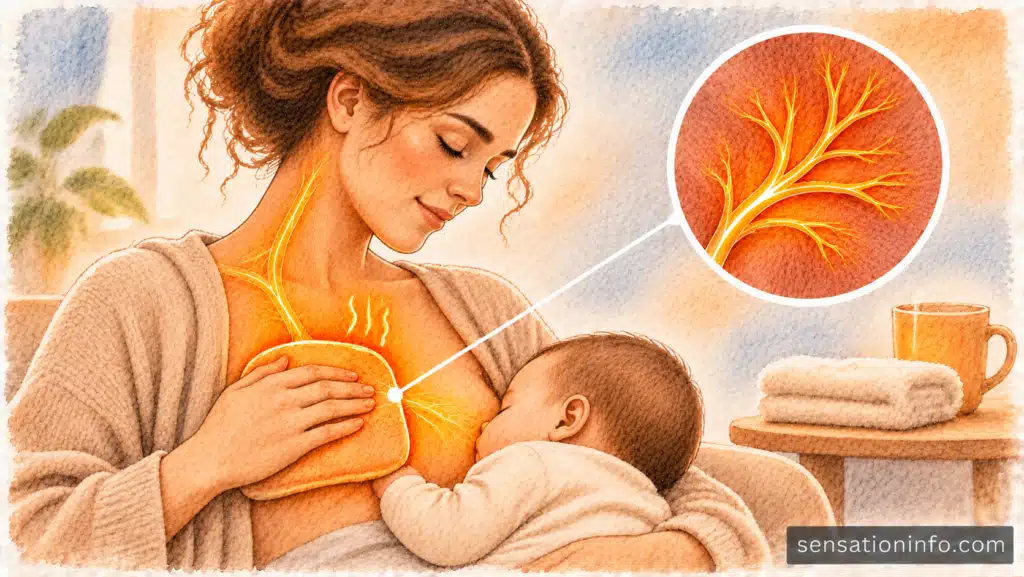
Stress and pain both block oxytocin, so comfort really does matter. These small habits help many of my patients let down more easily:
- Sit in a supportive position and use it consistently.
- Place a warm washcloth on your breast before feeding, and gently massage it.
- Hold your baby skin to skin, or look at a photo of your baby when pumping.
- Try slow belly breathing or calming music.
Key Takeaways
These points sum up what matters most about tingling nipples while breastfeeding. Each one stands on its own if you need a quick refresher.
- Tingling nipples while breastfeeding are usually a normal sign of the let-down reflex, caused by the hormone oxytocin.
- Let-down tingling is brief and happens just before or during milk flow; some women feel nothing at all.
- Burning pain after a feed with a white or blue nipple suggests vasospasm, not normal let-down.
- Fever, chills, and a red, hot breast patch suggest mastitis and need a same day call to your doctor.
- A sudden wave of sadness right before let-down may be D-MER, a short physical reflex that often eases within three months.
Frequently Asked Questions
Tingling during let-down shows that the milk ejection reflex is working, but it does not measure how much milk you make. Your baby’s swallowing, steady weight gain, and regular wet diapers are better signs of a good milk supply.
he let-down sensation often changes or fades as milk supply settles over the first months of breastfeeding. Many mothers stop feeling let-down even though milk keeps flowing normally, which is not a sign of a problem if the baby is feeding and growing well.
Yes, the hormone oxytocin reaches both breasts at once, so tingling and leaking from the other breast during a feed are normal. Many mothers use a breast pad or collect that milk while feeding on the first side.
Doctor’s Recommendation
If you have burning nipple pain, color changes, cracks, or pain lasting more than a week, start with your obstetrician (OB/GYN), family doctor, or a board certified lactation consultant (IBCLC), who can watch a feed, check the latch, and look for vasospasm, dermatitis, or infection. Fever with a red, painful breast needs a same day call to your OB/GYN or primary care doctor, while ongoing tingling or numbness in the hands after delivery is best checked by a neurologist, who may order a nerve conduction study to look for carpal tunnel syndrome.
References
- Cleveland Clinic. What To Know About the Breastfeeding Let-Down. Cleveland Clinic Health Essentials. 2023.
- Cleveland Clinic. Dysphoric Milk Ejection Reflex (D-MER): Symptoms & Treatment. Cleveland Clinic. 2024.
- Cleveland Clinic. Nipple Pain, Itching & Rashes: Could It Be a Nipple Yeast Infection? Cleveland Clinic. 2024.
- Cleveland Clinic. Mastitis: Causes, Symptoms, Treatment & Prevention. Cleveland Clinic. 2024.
- Pillay J, Davis TJ. Physiology, Lactation. StatPearls, NCBI Bookshelf, National Library of Medicine. 2025.