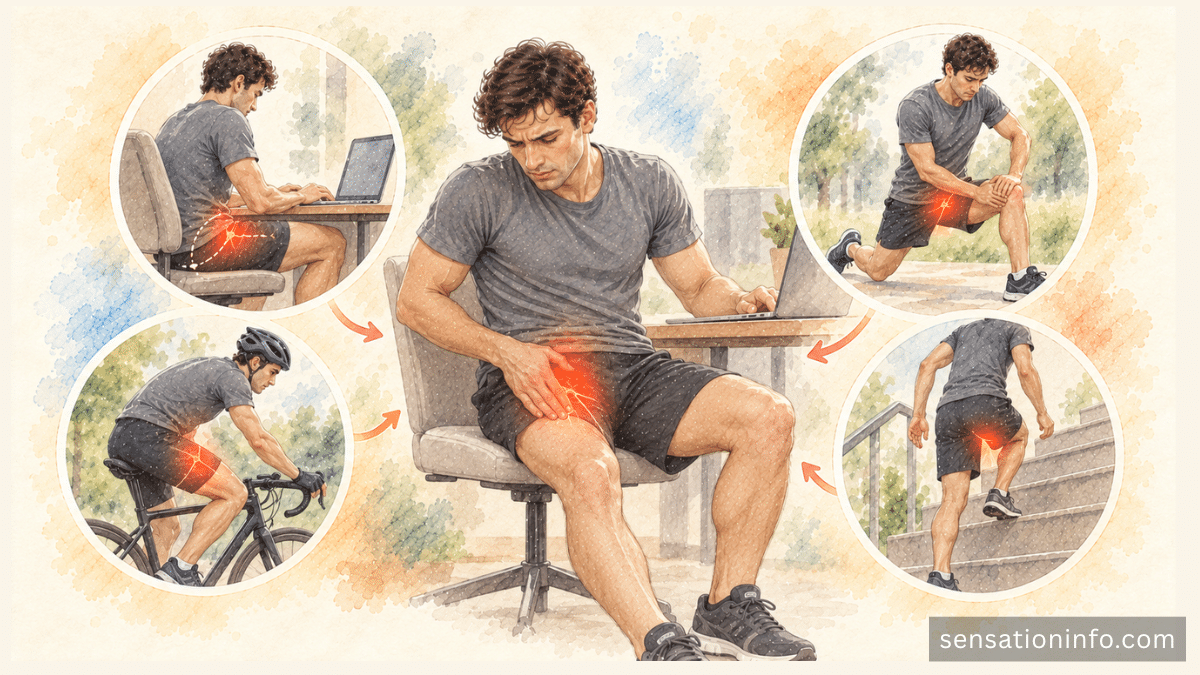

Tingling in the groin may feel like prickling, buzzing, crawling, burning, or pins and needles. It can follow pressure from sitting, a back or pelvic nerve problem, muscle strain, skin irritation, urinary or genital conditions, injury, or a broader neuropathy. New groin or saddle tingling with leg weakness or bladder and bowel changes requires emergency care. Call 112 in India or 911 internationally.
What area is actually tingling?
The groin is the area where the lower abdomen meets the upper thigh. People may use the term for the crease of the hip, inner thigh, pubic region, genitals, perineum, buttocks, or lower abdomen. Mapping the sensation helps separate a skin problem from a nerve, joint, muscle, urinary, or reproductive concern.
| Area | Details to note | Possible direction |
| Skin in the groin crease | Itching, redness, scaling, or rash | Skin irritation or infection |
| Inner upper thigh | Tingling with hip movement or a narrow sensory patch | Local nerve or muscle problem |
| Pubic or genital area | Urinary, sexual, pelvic, or skin symptoms | Pelvic nerve, urinary, genital, or skin cause |
| Perineum or saddle area | Numbness extending between the legs | Lower spinal nerve emergency if new with weakness or bladder changes |
| Groin with back or buttock symptoms | Pain or altered sensation traveling from the spine | Lumbar or pelvic nerve irritation |
| Groin with leg swelling or colour change | Coldness, weakness, or severe pain | Circulation or injury concern |
Use clear, nonjudgmental language when describing the location to a clinician. These symptoms are common medical concerns and deserve a professional assessment when persistent.
When is groin tingling an emergency?
•New numbness in the groin, genitals, buttocks, or inner thighs with leg weakness.
•Loss of bladder or bowel control, difficulty passing urine, or new urinary retention.
•Severe back pain, inability to walk, or rapidly worsening leg symptoms.
•Sudden weakness or numbness in the face, arm, or leg, facial drooping, or trouble speaking.
•A cold, pale, blue, severely swollen, or very painful leg.
•Severe injury to the pelvis, hip, spine, abdomen, or genitals.
•Fever with severe pelvic pain, rapidly spreading redness, swelling, or feeling very unwell.
•Sudden severe testicular pain, severe genital swelling, or fainting.
New saddle symptoms with bladder or bowel changes can indicate serious compression of lower spinal nerves. Do not wait to see whether the sensation improves.
Does sitting or movement change it?
Tingling that worsens after prolonged sitting, cycling, squatting, or pressure on the pelvis may involve a pelvic nerve. Tingling that changes with walking, hip movement, back position, or a heavy belt may have a different source.
| Trigger or relieving factor | What it may suggest | What to do |
| Worse after sitting and better when standing | Pelvic nerve pressure or muscle tension | Reduce pressure and arrange care if recurrent |
| Appears after exercise or a groin strain | Muscle, tendon, hip, or local nerve irritation | Rest from the trigger and seek assessment if persistent |
| Travels from the lower back or buttock | Spinal or pelvic nerve involvement | Seek care if weakness or bladder changes occur |
| Follows a rash or skin irritation | Skin or shingles related cause | Contact a clinician promptly |
| Occurs with urination or genital symptoms | Urinary or reproductive condition | Arrange medical evaluation |
| Begins suddenly with saddle numbness or leg weakness | Lower spinal nerve compression | Call 112 in India or 911 internationally |
A trigger can provide clues but cannot confirm the diagnosis.
Could a pelvic nerve cause tingling?
The pudendal nerve supplies sensation and motor function to parts of the perineum and genital area. Irritation or compression may cause tingling, prickling, burning, aching, or numbness. Symptoms may be worse while sitting and better when standing or lying down.
These symptoms are not proof of pudendal neuralgia. A clinician may need to consider the spine, hip, pelvic floor, skin, urinary tract, and reproductive organs. If you are experiencing uncomfortable friction or heat alongside these nerve cues, evaluate whether you are suffering from deep burning skin sensations.
What other nerve causes are possible?
Lumbar nerve irritation1
A nerve from the lower back can produce altered sensation in the groin, hip, buttock, thigh, or leg. A disc problem, spinal narrowing, arthritis, injury, or muscle spasm may affect the nerve. Back pain, shooting leg pain, weakness, difficulty walking, or changes in bladder and bowel function increase urgency. For radiating pain stemming from spinal entrapment, check if you have lower back nerve compression and sciatica.
Local nerve pressure near the hip
A belt, tight clothing, prolonged sitting, swelling, scar tissue, or a hip position may irritate a nerve near the pelvis or upper thigh. A small patch on the outer thigh may fit a different nerve pattern than tingling in the genital or perineal area.
Peripheral neuropathy
A broader neuropathy can cause burning, tingling, numbness, or altered sensation in more than one area. Diabetes, vitamin deficiency, alcohol, medicines, toxins, kidney or thyroid disease, infection, autoimmune disease, and inherited conditions can contribute. If you notice strange sensory signals manifesting across multiple limbs, consider exploring widespread body paresthesias.
Could the skin be responsible?
Friction, sweat, tight clothing, shaving, soaps, hair products, fungal infection, dermatitis, insect bites, and shingles can cause itching, burning, prickling, or sensitivity in the groin.
A one-sided burning or tingling sensation followed by grouped blisters may be shingles. A moist red rash in the skin folds may have a fungal or irritant cause. Avoid scratching and keep the area dry, but seek care for spreading redness, pus, fever, severe pain, or a rash involving the genitals.
Do not use steroid or antifungal creams on an undiagnosed genital rash without professional advice. To help differentiate surface skin sensitivities from deep nerve signals, you may want to do a deep dive into burning skin sensations and irritation Patterns.
Can urinary or genital conditions cause a tingling feeling?
Urinary tract conditions, prostatitis, pelvic inflammation, sexually transmitted infections, genital skin conditions, testicular problems, and other pelvic disorders may cause pain, burning, pressure, or unusual sensation near the groin. Urinary frequency, urgency, pain with urination, discharge, sores, swelling, pelvic pain, or sexual symptoms should be discussed with a clinician.
Sudden severe testicular pain, marked swelling, nausea, or fainting needs emergency evaluation. Do not delay care because symptoms are embarrassing.
What about a groin strain or hip problem?
A groin strain can affect muscles that bring the thigh inward. It may cause pain or burning with walking, running, kicking, changing direction, or squeezing the legs together. Hip arthritis, labral problems, bursitis, and tendon irritation can also refer discomfort to the groin.
Tingling or numbness is less typical of a simple muscle strain and may indicate nerve involvement. A major injury, inability to bear weight, deformity, or severe swelling needs prompt assessment.
How can you distinguish tingling from numbness?
Tingling means the sensation feels altered, prickling, buzzing, or “asleep.” Numbness means reduced or absent feeling. Both may occur in the same nerve condition, and the difference can be difficult to describe.
Tell the clinician whether you can feel light touch, temperature, pressure, and the position of the leg normally. Do not test sensitive areas with sharp objects or extreme heat.
What should you do during a mild episode?
Change position and reduce pressure on the groin, pelvis, or upper thigh. Wear loose, breathable clothing and avoid the activity that clearly triggers symptoms. Protect areas with reduced sensation from heat, cold, friction, and injury.
Keep a record of the exact location, timing, sitting or exercise triggers, rash, urinary symptoms, back pain, weakness, genital symptoms, and bladder or bowel changes.
Do not forcefully stretch the back or pelvis, repeatedly press the area to test it, or self prescribe antibiotics, steroids, or nerve medicines.
How is groin tingling evaluated?
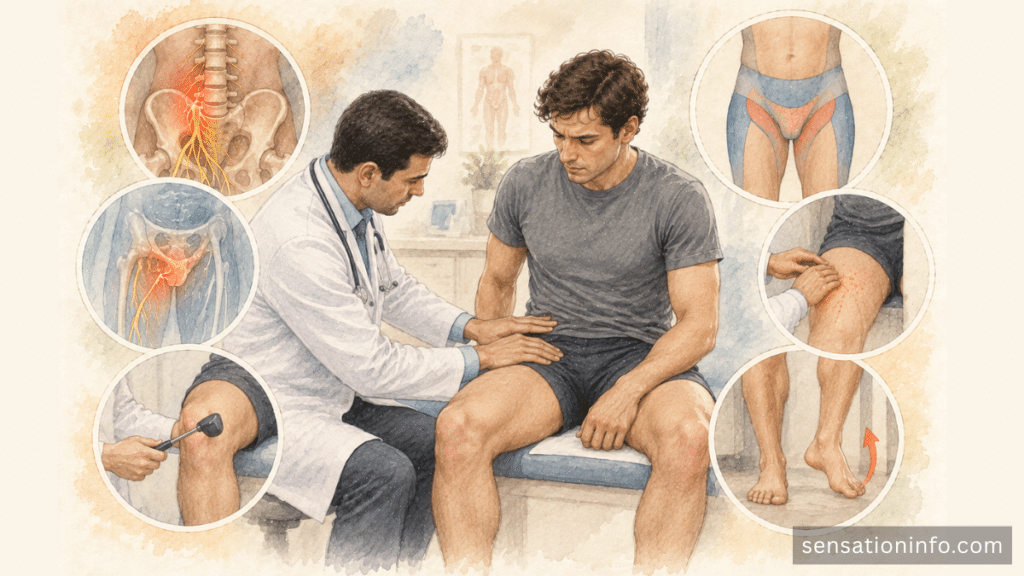
A clinician may ask about sitting, cycling, exercise, sexual or urinary symptoms, bowel habits, childbirth, surgery, injury, back pain, skin changes, diabetes, medicines, and the exact sensory map.
The examination may assess the skin, abdomen, pelvis, hip, back, legs, strength, sensation, reflexes, walking, pulses, and bladder function. Depending on the symptoms, testing may include urine tests, blood tests, imaging, nerve studies, or other pelvic and neurologic investigations.
New saddle symptoms, bladder changes, or progressive weakness require urgent assessment rather than a routine appointment.
How is the cause treated?
Treatment depends on the cause. Pressure related symptoms may improve after activity and position changes, physiotherapy, or pelvic floor care guided by a professional. A muscle or hip injury may need rehabilitation.
Skin infections, urinary or genital conditions, nerve compression, diabetes, vitamin deficiency, inflammatory disease, and spinal conditions need cause specific treatment. Severe spinal nerve compression, major injury, acute genital conditions, or a circulation emergency may need immediate hospital care.
Avoid using a treatment for groin burning or numbness unless the diagnosis and medical suitability have been checked.
When should you see a clinician?
Arrange care if groin tingling persists, returns frequently, spreads, affects sleep or activity, follows an injury, or occurs with back pain, a rash, urinary symptoms, genital symptoms, numbness, or weakness.
Seek prompt care for new saddle symptoms, difficulty walking, severe pelvic or genital pain, fever, swelling, or a cold or discolored leg. Call 112 in India or 911 internationally for sudden neurologic changes, loss of bladder or bowel control, major trauma, severe breathing or chest symptoms, or rapidly worsening weakness.
Key Takeaways
1.Tingling in the groin may involve pelvic nerves, the lower back, skin, muscles, hip, urinary or genital conditions, injury, or peripheral neuropathy.
2.Location matters because the groin crease, inner thigh, genitals, perineum, buttocks, and lower abdomen can have different causes.
3.New saddle tingling with leg weakness, difficulty urinating, or loss of bladder or bowel control is an emergency.
4.Call 112 in India or 911 internationally for serious neurologic, circulation, trauma, chest, or breathing symptoms.
5.Persistent, recurrent, spreading, or unexplained groin tingling needs evaluation by a qualified clinician.
Frequently Asked Questions
Yes, compressed clothing or rigid belts can pinch superficial nerves passing near the hip bone, leading to temporary prickling or numbness.
Not always. It can stem from temporary pressure, skin conditions like shingles, or mild muscular inflammation, though persistent symptoms require formal evaluation.
Immediate emergency evaluation is necessary if groin numbness or tingling is accompanied by sudden loss of bladder or bowel control, severe back injury, or progressive leg weakness.
Doctor’s Recommendation
The most important step is to map whether the sensation is in the skin, inner thigh, genital area, perineum, or a pathway from the back. The existing burning sensation in the groin guide may help readers compare skin and urinary symptoms, but it does not replace an examination of new or persistent tingling.
Conclusion
Tingling in the groin can be caused by pressure, pelvic or spinal nerves, skin irritation, urinary or genital conditions, muscle or hip problems, injury, or a broader neuropathy. Pay close attention to the exact location, sitting and movement triggers, rash, urinary symptoms, weakness, and bladder or bowel changes. Call 112 in India or 911 internationally for emergency warning signs and arrange medical care when symptoms persist or return.
References
Cleveland Clinic. Pudendal Neuralgia: Causes, Symptoms and Treatment.
Cleveland Clinic. Groin Pain: Causes and How to Find Relief.
Cleveland Clinic. Groin Strain: Causes, Symptoms and Treatment.
National Library of Medicine. Groin Pain. MedlinePlus Medical Encyclopedia.
National Library of Medicine. Numbness and Tingling. MedlinePlus Medical Encyclopedia.