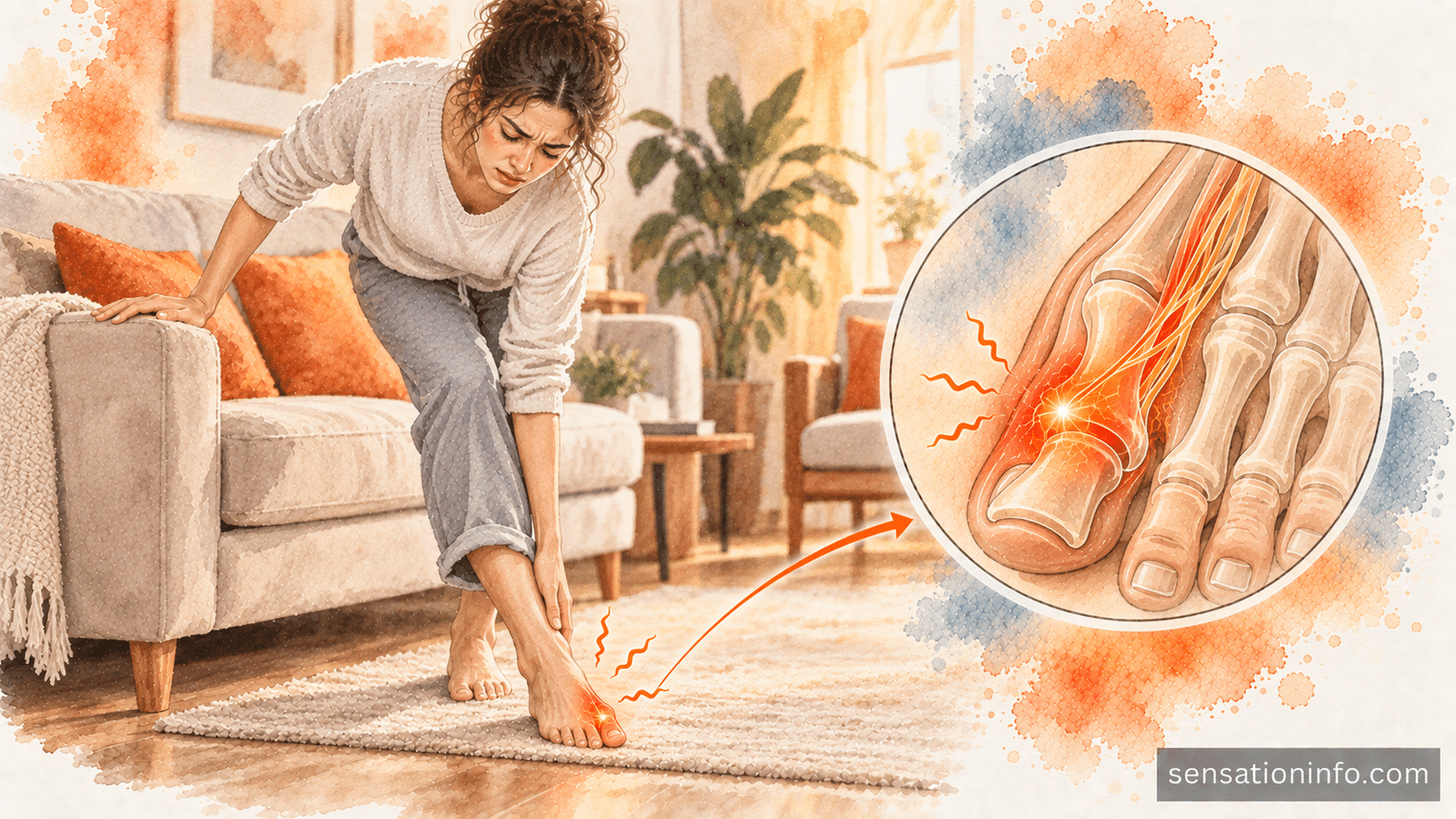

The first time I felt a strange tingling crawl down my left arm, I genuinely thought I was about to star in a medical drama. Turns out, I had just slept on it weirdly. Embarrassing? Yes. Educational? Also yes.
That experience pushed me to actually understand what tingling sensations mean, when they’re harmless, and when they’re a real signal from your body. Over the years, I’ve researched, spoken to doctors, and read through clinical resources from organisations like the Mayo Clinic, Cleveland Clinic, and the National Institute of Neurological Disorders and Stroke. In this article, I’ll share everything I’ve learned in plain language, without scaring you unnecessarily.
By the end of this guide, you’ll know what tingling actually is, what causes it, when to worry, and what real treatment looks like.
What Is a Tingling Sensation?
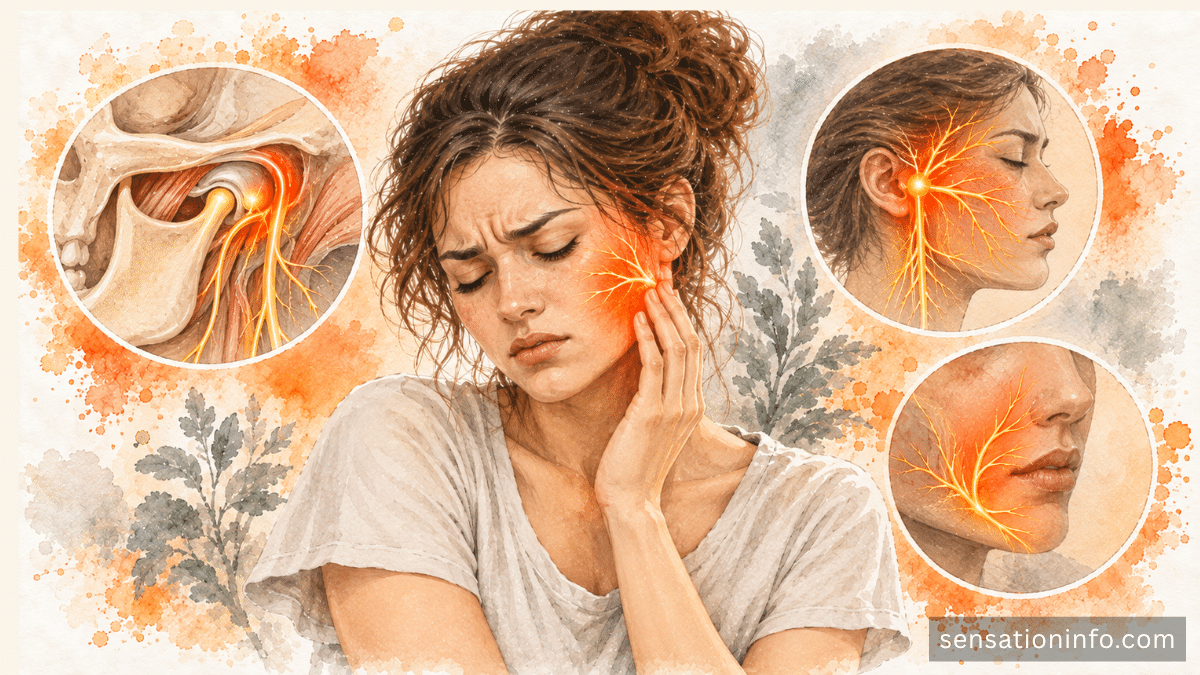
A tingling sensation, medically known as paresthesia, is that familiar “pins and needles” feeling. Sometimes it feels like prickling, numbness, burning, mild itching, or a slight buzzing under the skin.
Most of us experience it occasionally, especially after sitting cross-legged for too long or sleeping on an arm. But when it shows up randomly or sticks around, it usually means a nerve somewhere is unhappy.
Doctors typically split paresthesia into two categories:
Temporary paresthesia happens when pressure cuts off blood flow or compresses a nerve briefly. It resolves quickly once you move.
Chronic paresthesia lingers or returns frequently, and it usually points to an underlying condition that needs proper diagnosis.
Knowing the difference matters more than people realise, because one is harmless and the other deserves attention.
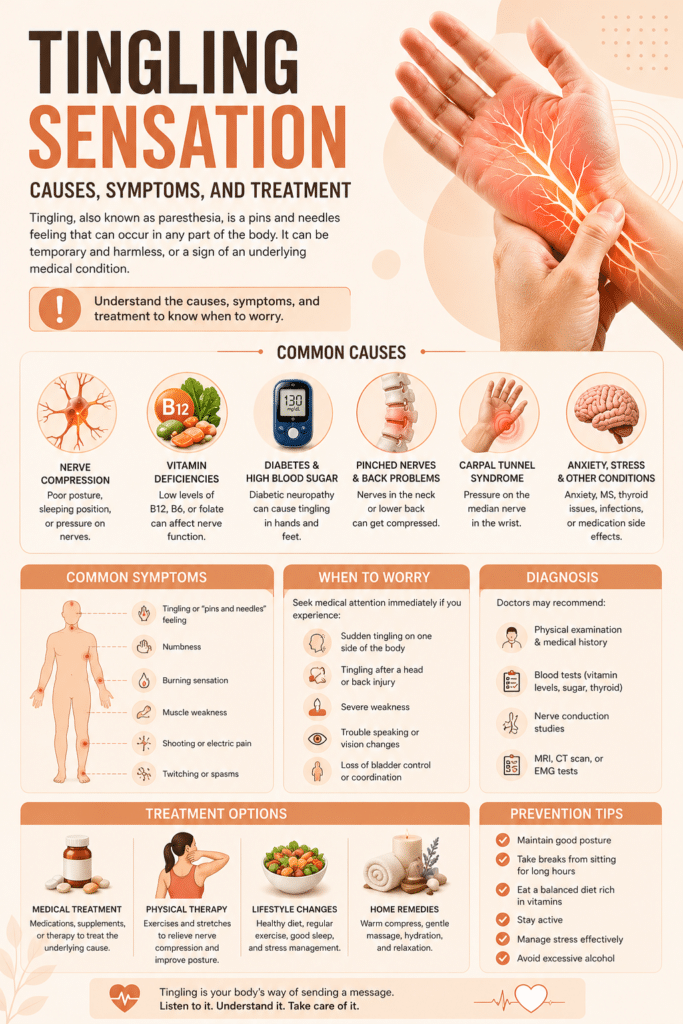
What Causes Tingling Sensation in the Body?
Honestly, the list is longer than I expected when I first looked into it. But here are the most common, well-documented causes worth knowing.
1. Nerve Compression
This is the classic “my foot fell asleep” situation. When you sit, lean, or sleep in a position that compresses a nerve, blood flow drops and signals get disrupted. Once you move, the tingling fades within a few minutes.
It’s the most common type and almost always harmless. If it happens often in the same spot, though, that’s worth investigating.
2. Vitamin Deficiencies
Low levels of Vitamin B12, B6, folate, or Vitamin E can mess with nerve health. I’ve noticed this affect vegetarians and older adults more often, simply because B12 mostly comes from animal-based foods.
Interestingly, too much B6 can also cause tingling. So more isn’t always better with vitamins, no matter what wellness influencers claim.
3. Diabetes and High Blood Sugar
Diabetic neuropathy is one of the most reported causes of long-term tingling, especially in the hands and feet. The American Diabetes Association consistently lists it as a major early warning sign.
What’s tricky is that many people don’t realise their blood sugar is high until tingling, numbness, or burning appears. A simple HbA1c test can catch this early.
4. Pinched Nerves
A pinched nerve in the neck (cervical radiculopathy) or lower back (sciatica) can send tingling all the way down an arm or leg. People who sit at desks for hours, hunch over phones, or lift heavy weights with poor form tend to deal with this more often.
I’ve personally felt sciatica creep in after long writing sessions, and trust me, fixing posture isn’t optional once it shows up.
5. Carpal Tunnel Syndrome
If your fingers tingle, especially the thumb, index, and middle fingers, carpal tunnel could be the reason. It’s common among writers, designers, programmers, and anyone glued to a keyboard.
The median nerve gets compressed at the wrist, and the symptoms often worsen at night. Wrist splints and posture adjustments work surprisingly well in early stages.
6. Anxiety and Hyperventilation
This one surprises people. When you’re anxious, your breathing changes, and altered carbon dioxide levels can trigger tingling around the mouth, hands, or feet. Completely real, completely physical.
I’ve had clients ask, “Am I dying?” during a panic attack. The honest answer is no — but the tingling feels just real enough to make you wonder.
7. Multiple Sclerosis (MS)
MS affects the central nervous system and often shows up early as unexplained tingling, numbness, or weakness. It’s not the most common cause, but it’s documented thoroughly by the National Multiple Sclerosis Society.
If tingling comes with vision problems, balance issues, or fatigue, MS is something doctors will rule out.
8. Stroke or Transient Ischemic Attack (TIA)
Sudden tingling on one side of the body, paired with weakness, slurred speech, or facial drooping, is a medical emergency. The acronym FAST (Face, Arms, Speech, Time) exists for exactly this reason.
No second-guessing here. Call emergency services immediately.
9. Thyroid Issues
An underactive thyroid (hypothyroidism) can lead to nerve-related symptoms, including tingling, numbness, and muscle cramps. It’s often overlooked because the symptoms creep in slowly over months.
A simple TSH blood test can clarify this in minutes.
10. Infections
Conditions like shingles, Lyme disease, HIV, and certain viral infections can irritate nerves and cause tingling. Shingles tingling usually appears before the rash, which is a strange but useful early clue.
If you’ve recently been bitten by a tick and notice tingling, mention it to your doctor without delay.
11. Medication Side Effects
Some chemotherapy drugs, antibiotics (like metronidazole), HIV medications, and seizure drugs list tingling as a known side effect. Always worth checking the leaflet before assuming the worst.
If a new medication seems to be the trigger, never stop it on your own. Speak to the prescribing doctor first.
12. Alcohol-Related Nerve Damage
Long-term heavy drinking damages peripheral nerves. This is well-documented and often called alcoholic neuropathy. It usually starts in the feet and works its way up.
The good news is that early-stage cases improve significantly when alcohol use stops and nutrition improves.
Common Symptoms That Come With Tingling
Tingling rarely arrives alone. Depending on the cause, you might also notice numbness, mild burning, weakness, sharp shooting pain, muscle twitching, or sensitivity to touch.
Some people describe it as their skin “buzzing,” feeling “electric,” or going completely “dead.” Others report a crawling sensation, like an insect under the skin (delightful imagery, I know).
If the sensation spreads, worsens, or affects daily activities like writing, walking, or holding objects, that’s your body waving a small flag. Pay attention.
When Should You Actually Worry?
Here’s where I want to be straight with you. Most tingling episodes are harmless, but some signs genuinely need urgent attention.
You should see a doctor immediately if you experience sudden tingling on one side of the body, tingling after a head or back injury, loss of bladder or bowel control, severe weakness, tingling combined with confusion or vision changes, or tingling that follows a major fall.
These can indicate a stroke, spinal cord injury, or neurological emergency. I’d rather you visit a doctor and feel silly than ignore something serious. Trust me, ER doctors don’t judge — they’ve seen far stranger reasons for visits.
How Doctors Diagnose Tingling
When I once visited a neurologist for persistent tingling in my fingers, the process was more straightforward than I expected.
Doctors usually start with a physical exam and a detailed history of your symptoms. They’ll ask when it started, how often it happens, where exactly you feel it, and whether anything makes it better or worse.
From there, they often recommend blood tests to check Vitamin B12, blood sugar, thyroid function, electrolytes, and inflammation markers.
In more complex cases, they use specialised tests:
Nerve conduction studies measure how fast electrical signals move through your nerves. Electromyography (EMG) evaluates muscle response and nerve health. MRI or CT scans check for spinal compression, brain lesions, or nerve root issues. Skin biopsies can detect small fibre neuropathy in rare cases.
The goal is always to find the root cause, not just silence the symptom. A good doctor treats the source, not just the noise.
Treatment Options That Actually Help
Treatment depends entirely on the cause, which is why self-diagnosing rarely works. But here are real, proven approaches doctors commonly use.
Medical Treatments
For nerve-related conditions, doctors may prescribe medications like gabapentin, pregabalin, or duloxetine. These calm overactive nerve signals and reduce discomfort.
For diabetes-related tingling, controlling blood sugar is the priority. Vitamin deficiencies are usually corrected with oral supplements, or B12 injections if absorption is an issue.
For autoimmune conditions like MS, treatment focuses on disease-modifying therapies prescribed by neurologists.
Physical Therapy
For pinched nerves, posture issues, sciatica, or carpal tunnel, physical therapy works wonders. I’ve personally seen friends recover from chronic tingling just by fixing their workstation, doing targeted stretches, and strengthening supporting muscles.
A trained physiotherapist can also teach you posture corrections that prevent symptoms from returning.
Lifestyle Adjustments
Quitting smoking, reducing alcohol, managing stress, and maintaining healthy blood sugar can prevent tingling from returning. Small changes, big payoff.
Regular movement matters more than people think. Even a 5-minute walk every hour during desk work can prevent nerve compression and improve circulation.
Surgery (in Specific Cases)
Surgery is rarely the first option, but it’s used for severe carpal tunnel, herniated discs causing nerve damage, or tumours pressing on nerves. Modern procedures are minimally invasive and recovery is generally faster than people expect.
Home Remedies That Are Genuinely Useful
I’m not a fan of internet “miracle cures,” so I’ll only mention things backed by real medical reasoning.
Gentle stretching helps relieve nerve compression. Warm compresses improve blood flow to affected areas. Staying hydrated supports nerve function. A balanced diet rich in B-vitamins, magnesium, omega-3s, and antioxidants genuinely matters for nerve health.
If you sit for long hours, take breaks every 30 to 45 minutes. Your nerves will thank you, and so will your back.
Yoga and mindful breathing help with anxiety-related tingling. Epsom salt soaks can ease tingling in feet for some people, though scientific evidence is mixed.
What I’d avoid: random “nerve repair” supplements promising overnight results. Most are unregulated and untested.
How to Prevent Tingling in the Long Run
Prevention is honestly underrated. Most chronic tingling cases I’ve read about could’ve been delayed or avoided with consistent habits.
Maintain a healthy weight. Manage blood sugar if you’re diabetic or pre-diabetic. Get regular blood work done — at least once a year. Avoid sitting in one position for too long. Wear ergonomic supports if your job demands repetitive hand or wrist movements.
And get enough sleep. Sleep is when your nervous system literally repairs itself.
Frequently Asked Questions
Is tingling always a sign of something serious?
No. Most cases are temporary and harmless, especially after sitting or sleeping in awkward positions.
Can stress cause tingling?
Yes. Anxiety-driven hyperventilation is a well-known trigger and very common, particularly around the lips, fingertips, and toes.
How long is too long for tingling to last?
If it lasts more than a few days, recurs often, or worsens, it’s time to see a doctor.
Can tingling go away on its own?
Often, yes — especially when caused by posture, temporary pressure, or stress.
Should I take supplements for tingling?
Only after testing. Taking random vitamins without a deficiency can do more harm than good, and excess B6 can actually cause tingling.
Is tingling in one hand more concerning than both?
Generally, yes. One-sided tingling can point to nerve compression or, in rare cases, a stroke. Two-sided tingling more often relates to systemic issues like deficiencies or diabetes.
Can dehydration cause tingling?
Yes. Severe dehydration affects electrolyte balance, which directly impacts nerve signalling.
Final Thoughts
Tingling sensations are one of those symptoms that can be completely harmless one day and a meaningful warning the next. The trick is paying attention to patterns, duration, and any extra symptoms tagging along.
From my own experience and research, the smartest move is to never panic, but never ignore either. Listen to your body, document what you feel, and don’t hesitate to consult a qualified doctor when something feels off.
Your nerves are basically your body’s messaging system. When they speak, even in whispers of tingling, it’s worth tuning in. The earlier you understand the cause, the easier the treatment usually becomes.
If you’ve been experiencing tingling for more than a few days, take that as a gentle nudge from your body. Book a check-up, get the right tests, and get peace of mind. That’s something I genuinely believe is worth your time.
This article is for informational purposes only and is not a substitute for professional medical advice. Always consult a licensed healthcare provider for diagnosis and treatment.