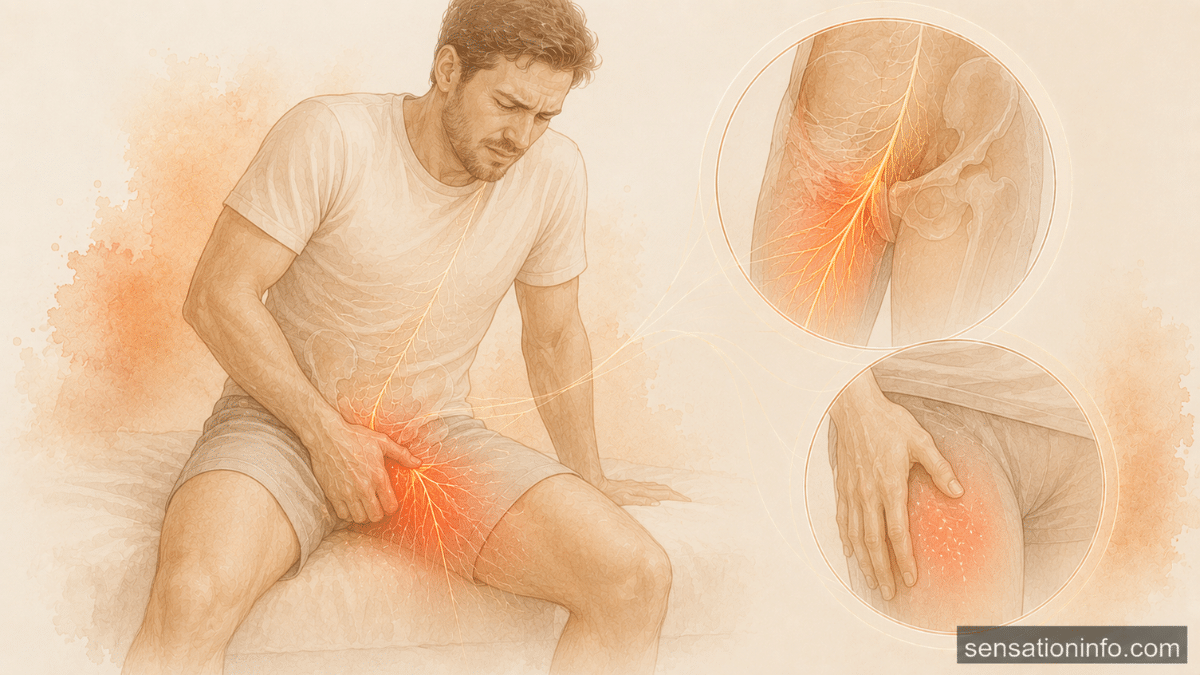

A burning sensation in the groin area is most often caused by a skin condition like jock itch or intertrigo, a urinary tract infection, or nerve irritation from a compressed or entrapped nerve. In most cases it is not dangerous and responds well to treatment, but certain warning signs mean you need medical attention right away. This guide walks you through every common and uncommon cause, explains how doctors figure out what is going on, and tells you exactly when to seek help.
What Does a Burning Sensation in the Groin Area Feel Like?
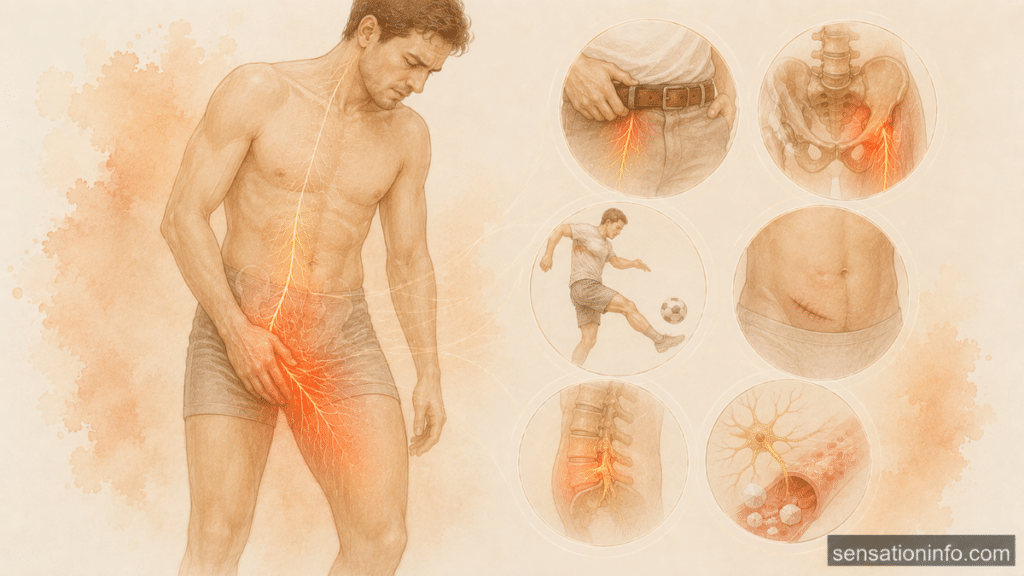
The groin is the crease where your lower abdomen meets your upper thigh. Burning here can show up in very different ways depending on the cause. You might feel a surface level sting that gets worse when skin rubs together, a deep ache mixed with heat after physical activity, or a sharp, electric quality that shoots down your inner thigh.
Some people describe it as a “hot” feeling under the skin that worsens when walking or sitting for a long time. Others notice it only when urinating or after sexual contact. Paying attention to exactly where it burns, what triggers it, and whether there are visible skin changes helps narrow down the cause before you ever see a doctor.
What Are the Most Common Causes of Burning in the Groin?
Jock Itch (Tinea Cruris)
Jock itch is one of the most frequent reasons for a burning, itchy groin. It is a fungal infection caused by dermatophytes, the same family of fungi responsible for athlete’s foot. According to the National Institutes of Health, superficial fungal infections affect 20 to 25 percent of the world’s population.
The hallmark sign is a red, ring shaped groin rash with raised edges and central clearing that spreads outward from the groin crease. The burning and itching tend to be worst along the advancing border of the rash. It favors warm, moist skin and is far more common in adolescent and adult males, people who sweat heavily, those who wear tight clothing, and people with diabetes.
Jock itch responds well to over the counter antifungal creams such as clotrimazole or terbinafine. The NIH reports cure rates between 80 and 90 percent with a proper treatment course. Keeping the area dry, wearing loose fitting underwear, and changing out of damp clothing quickly all help prevent recurrence.
Intertrigo
Intertrigo is skin inflammation caused by moisture, friction, and heat in skin folds. The groin crease is one of the most common locations. According to the NIH, patients typically experience a gradual onset of burning, tingling, and pain in the affected skin folds.
Unlike jock itch, intertrigo is not caused by a fungus at first, though yeast (especially Candida) and bacteria can move in quickly once the skin barrier breaks down. The affected skin looks red, raw, and sometimes weepy. It is more common in people with obesity, diabetes, excessive sweating, or limited mobility.
Treatment centers on keeping the skin dry with absorbent powders, using barrier creams, and wearing breathable fabrics. If a secondary Candida infection develops, a topical antifungal like nystatin or clotrimazole is added. Addressing the underlying moisture problem is the key to preventing it from coming back.
Contact Dermatitis
Soaps, laundry detergents, body sprays, condoms, lubricants, or fabric softeners can trigger an allergic or irritant reaction in the sensitive groin skin. The result is redness, burning, and sometimes blistering that maps to wherever the irritant touched.
The fix is simple: identify and remove the offending product. A mild hydrocortisone cream can calm the inflammation while the skin heals. If the reaction is severe or keeps recurring, a dermatologist can run patch testing to pinpoint the exact allergen.
Urinary Tract Infections
A burning sensation when urinating is the most recognizable symptom of a UTI, but the burning can also radiate into the broader groin area. The NIH reports that acute cystitis alone accounts for about 7 million outpatient visits per year in the United States.
Women develop UTIs far more often than men because of a shorter urethra. Doctors call painful urination dysuria, and it is the single most common urinary symptom. Common signs alongside burning include a frequent, urgent need to urinate, cloudy or strong smelling urine, and pelvic pressure. Men with UTIs may feel burning in the groin, perineum, or lower abdomen.
Uncomplicated UTIs are treated with a short course of antibiotics. Drinking plenty of water, urinating after intercourse, and practicing good hygiene help reduce the risk.
Sexually Transmitted Infections
Several STIs produce a burning sensation in the groin. Chlamydia, gonorrhea, genital herpes, and trichomoniasis can all cause burning during urination, burning on the skin of the genitals or inner thighs, and in some cases painful sores or unusual discharge.
Herpes in particular causes clusters of small, fluid filled blisters that burn and sting before they crust over. Gonorrhea and chlamydia may cause a burning sensation when ejaculating in men or pelvic burning in women. Nucleic acid amplification testing (NAAT) is the standard diagnostic method, and treatment depends on the specific infection.
What Are the Nerve Related Causes?
Meralgia Paresthetica
Meralgia paresthetica occurs when the lateral femoral cutaneous nerve gets compressed where it passes through the groin on its way to the outer thigh. The result is burning pain, numbness, and tingling over the front and side of the upper thigh. According to the NIH, it affects approximately 3 to 4 out of every 10,000 people per year.
Common triggers include tight belts and waistbands, weight gain, pregnancy, and prolonged standing. People with diabetes are at higher risk. The good news is that roughly 85 percent of patients recover with conservative measures like wearing looser clothing, losing weight, and taking over the counter pain relievers, according to the NIH.
Pudendal Nerve Entrapment
The pudendal nerve supplies sensation to the perineum, the area between the genitals and anus, as well as surrounding groin structures. When this nerve gets compressed or trapped, it causes deep burning and aching in the groin, perineum, or genital area. The NIH notes that the condition affects women more than twice as frequently as men.
The most telling clue is that the burning gets worse with sitting and improves when you stand up or lie down. Prolonged cycling, pelvic surgery, and childbirth trauma are common causes. Treatment starts with activity modification and pelvic floor physical therapy. Pudendal nerve blocks have a success rate of approximately 80 percent according to the NIH. Severe cases may require surgical decompression.
Ilioinguinal or Genitofemoral Nerve Irritation
These smaller nerves run through the groin and can become irritated after hernia repair surgery, abdominal procedures, or trauma. The resulting burning pain tends to follow a specific narrow band across the lower abdomen and into the groin or upper inner thigh. Post surgical nerve pain affects roughly 10 percent of patients after inguinal hernia repair, according to NIH data.
Treatment typically involves nerve block injections, medications like gabapentin or amitriptyline, and in persistent cases, surgical neurectomy.
Could It Be a Hernia?
An inguinal hernia develops when tissue pushes through a weak spot in the abdominal wall near the groin. According to the National Institute of Diabetes and Digestive and Kidney Diseases, about 25 percent of men will develop an inguinal hernia in their lifetime, compared to less than 2 percent of women.
A hernia often presents as a bulge in the groin that comes and goes, along with a dull ache or burning pain that worsens with coughing, bending, or lifting. The burning tends to get worse throughout the day and improves when you lie down. Risk factors include a family history (which increases your risk at least fourfold according to the NIH), chronic cough, constipation, heavy lifting, and obesity.
Most hernias are not emergencies, but a strangulated hernia, where the trapped tissue loses its blood supply, is a surgical emergency. Get to an emergency room immediately if you have sudden, severe groin pain with nausea, vomiting, fever, or a hernia bulge that turns red, purple, or dark and cannot be pushed back in.
What Causes Burning in the Groin Specifically in Women?
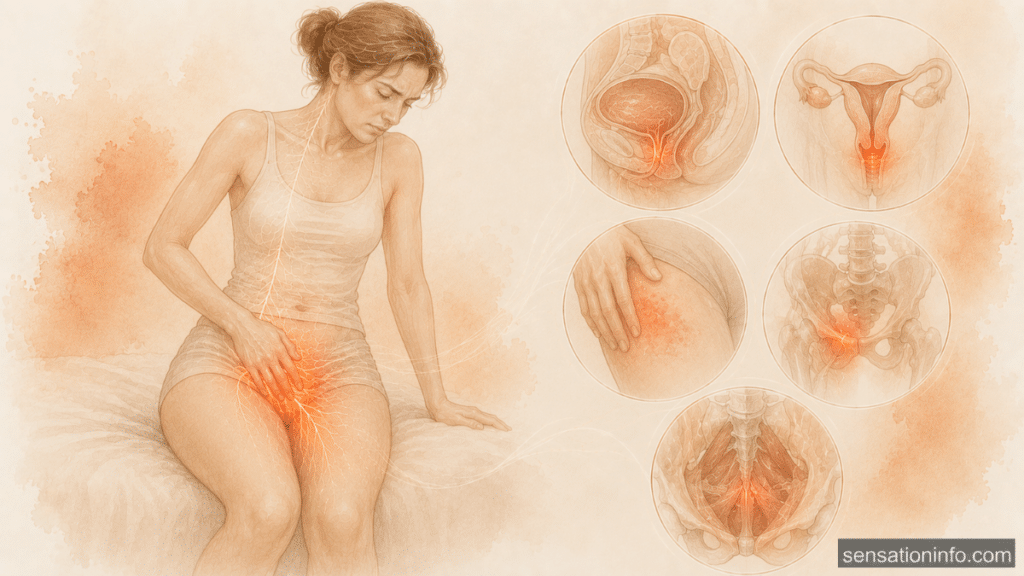
Several conditions unique to female anatomy can produce groin burning.
Vulvovaginitis, an inflammation of the vulva and vagina, commonly causes burning and itching at the entrance to the vagina and surrounding groin area. Yeast infections, bacterial vaginosis, and hormonal changes after menopause (atrophic vaginitis) are frequent triggers.
Ovarian cysts can cause a dull, burning ache in the groin that may radiate to the lower back or inner thigh. If a cyst ruptures or twists (ovarian torsion), the pain becomes sudden and severe and requires emergency care.
Round ligament pain during pregnancy produces sharp, burning groin discomfort, especially during quick movements. It is harmless and happens because the ligaments supporting the uterus stretch as the baby grows.
Endometriosis can cause chronic burning and aching in the groin and pelvis when endometrial tissue grows outside the uterus.
What Causes Burning in the Groin Specifically in Men?
Epididymitis is an inflammation of the epididymis, the coiled tube at the back of each testicle. It causes a gradual onset of burning pain in the testicle and groin, often accompanied by swelling and warmth. In younger men it is frequently caused by STIs, while in older men it often results from urinary tract bacteria.
Prostatitis, inflammation of the prostate gland, can produce a deep burning sensation in the groin, perineum, lower abdomen, and lower back. The burning may worsen during or after urination or ejaculation.
Testicular torsion is a medical emergency where the testicle twists on its spermatic cord, cutting off blood flow. It causes sudden, severe pain in the testicle and groin, usually with nausea and vomiting. This requires surgery within hours to save the testicle.
What Are Some Less Common Causes?
Kidney stones can cause intense, burning pain that radiates from the flank through the abdomen and into the groin as the stone moves down the ureter. The pain typically comes in waves and may be accompanied by blood in the urine.
Hip joint problems like osteoarthritis, labral tears, or bursitis can refer a burning or aching sensation into the groin. This is because the hip joint and the groin share overlapping nerve pathways. The burning is usually worse with movement and better with rest.
Swollen lymph nodes in the groin (inguinal lymphadenopathy) from infection, inflammation, or rarely cancer can produce a burning, tender sensation. If you notice hard, painless lumps in the groin that persist for more than two weeks, see your doctor.
Osteitis pubis, an inflammation of the pubic bone where the two halves of the pelvis meet, causes burning pain in the central groin that worsens with running, kicking, or changing direction. It is common in soccer players and runners.
When Should You See a Doctor?
Schedule an appointment with your healthcare provider if your groin burning lasts more than a week without improvement, if over the counter treatments are not helping, if the burning keeps coming back, or if you notice unusual discharge, skin changes, or painful urination.
When Is Groin Burning an Emergency?
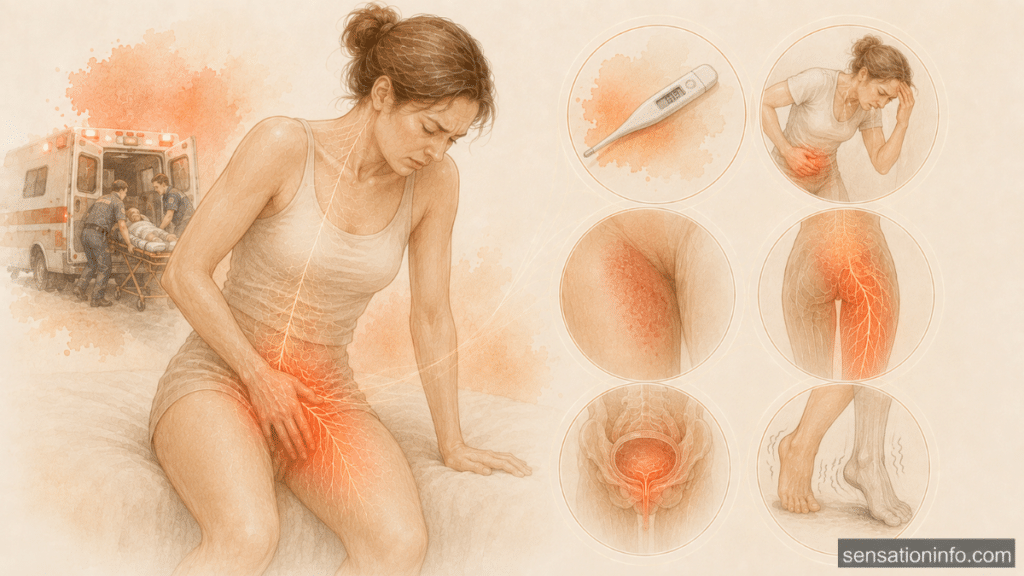
Go to the emergency room if you experience any of these warning signs:
- Sudden, severe pain in one testicle
- A groin hernia bulge that turns red, purple, or cannot be pushed back in
- Fever, nausea, or vomiting alongside groin pain
- Inability to urinate
- Sudden, sharp groin pain during pregnancy (could signal ectopic pregnancy or ovarian torsion)
- Visible swelling or discoloration of the scrotum
These could indicate testicular torsion, a strangulated hernia, ovarian torsion, or ectopic pregnancy, all of which require immediate medical intervention.
How Do Doctors Diagnose the Cause?
Your doctor will start with a detailed history and physical examination. The specific questions they ask and tests they order depend on the pattern of your symptoms.
| If You Have… | Your Doctor May Order… |
|---|---|
| Burning with a visible rash | Skin scraping or culture to identify fungal or bacterial infection |
| Burning when urinating | Urinalysis, urine culture, STI testing via NAAT |
| Burning with a groin bulge | Ultrasound or CT scan to evaluate for hernia |
| Deep burning that worsens with sitting | Nerve conduction study, MRI of the pelvis, diagnostic nerve block |
| Burning with hip or thigh involvement | X ray or MRI of the hip, pelvic compression test for meralgia paresthetica |
| Burning sensation on the skin when touched without a rash | Neurological examination, blood glucose testing |
The pelvic compression test for meralgia paresthetica, which involves applying pressure over the lateral femoral cutaneous nerve, has a sensitivity of 95 percent and specificity of 93 percent according to the NIH.
What Treatments Are Available?
Treatment depends entirely on the underlying cause.
For skin conditions like jock itch, intertrigo, and contact dermatitis, topical antifungals, barrier creams, drying powders, and removing irritants usually resolve the problem within one to four weeks.
For infections like UTIs and STIs, targeted antibiotics or antiviral medications clear the cause. Early treatment prevents complications and stops the spread of sexually transmitted infections.
For nerve related causes, conservative approaches come first. Weight loss, looser clothing, physical therapy, and over the counter pain relievers handle many cases. When those are not enough, prescription medications like gabapentin or pregabalin, nerve block injections, or in severe cases surgical decompression are options.
For hernias, watchful waiting is appropriate for small, minimally symptomatic hernias. Larger or symptomatic hernias are repaired surgically, with mesh repair offering recurrence rates of only 3 to 5 percent according to the NIH.
What Can You Do at Home to Relieve Groin Burning?
These practical steps can ease discomfort while you identify the cause or wait for treatment to work.
Keep the area clean and dry. After showering, pat the groin folds completely dry and consider using an absorbent body powder.
Wear loose, breathable underwear made from cotton or moisture wicking fabric. Avoid tight jeans, compression shorts, and synthetic materials that trap heat and sweat.
Switch to fragrance free soap and laundry detergent. Many cases of groin burning are caused or worsened by chemical irritants that are easy to eliminate.
Apply a cool compress for 10 to 15 minutes at a time if the burning is on the surface of the skin.
For burning sensation in the legs or thighs extending from the groin, try sitting rather than standing for long periods if the cause is nerve related, or do gentle hip flexor stretches if muscle tightness is a factor.
Avoid scratching. Scratching inflamed groin skin worsens the irritation and can introduce bacteria that lead to secondary infection.
How Can You Prevent Groin Burning From Coming Back?
Shower promptly after exercise and change out of sweaty clothing as soon as possible. This single habit prevents the majority of fungal and friction related groin burning.
Maintain a healthy weight. Excess weight increases friction in skin folds, compresses nerves near the groin, and raises the risk of both intertrigo and inguinal hernia.
Practice safe sex and get tested for STIs regularly if you have new or multiple partners.
Manage blood sugar if you have diabetes. Elevated glucose levels increase your susceptibility to fungal infections, nerve damage, and UTIs.
Use proper lifting technique to reduce your hernia risk. Bend at the knees, keep the load close to your body, and avoid holding your breath while straining.
Stay hydrated and practice good urinary hygiene. Women should wipe front to back and urinate after intercourse to reduce UTI risk.
Key Takeaways
- A burning sensation in the groin area is most commonly caused by jock itch, intertrigo, UTIs, or nerve compression, all of which respond well to treatment.
- Burning that comes with a visible rash, itching, and skin changes usually points to a skin condition, while burning during urination suggests an infection.
- Deep burning that worsens with sitting and improves when you stand up may signal pudendal nerve entrapment or another nerve problem.
- A burning groin bulge that worsens with coughing or lifting could be an inguinal hernia, especially in men over 40.
- Sudden severe testicle pain, a hernia that changes color, or fever with groin pain are medical emergencies that require an immediate ER visit.
- Most causes are treatable with over the counter remedies, lifestyle changes, or a short course of prescription medication.
- Keeping the groin area dry, wearing loose clothing, and managing weight are the three most effective ways to prevent recurrence.
Frequently Asked Questions
Yes. Jock itch is a fungal infection that commonly causes burning, itching, and a red, ring shaped rash in the groin creases. It is one of the most frequent causes of groin burning, especially in people who sweat heavily or wear tight clothing. Over the counter antifungal creams typically clear it within two to four weeks.
It can be. Inguinal hernias often produce a dull, burning pain in the groin that worsens with coughing, bending, or lifting and improves when lying down. A visible bulge in the groin area usually accompanies the burning. About 25 percent of men will develop an inguinal hernia at some point in their lives, according to the National Institute of Diabetes and Digestive and Kidney Diseases.
Burning that worsens with sitting and improves when standing or lying down is a hallmark of pudendal nerve entrapment. The pudendal nerve runs through the pelvis and can become compressed by prolonged sitting, cycling, or after pelvic surgery. If you notice this pattern consistently, bring it up with your doctor, as targeted treatments like pelvic floor physical therapy and nerve blocks are highly effective.
Yes. Urinary tract infections cause burning during urination that can radiate into the surrounding groin area. Additional symptoms include frequent urination, urgent need to urinate, cloudy urine, and pelvic pressure. UTIs are treated with a short course of antibiotics and are more common in women due to a shorter urethra.
For surface level skin burning, keeping the area clean and completely dry, applying an absorbent powder, and wearing loose cotton underwear often provide relief within hours. For burning caused by a fungal rash, applying an over the counter antifungal cream like clotrimazole twice daily can reduce symptoms within a few days. A cool compress applied for 10 to 15 minutes can also help ease discomfort temporarily.
Doctor’s Recommendation
If your groin burning follows a specific pattern of numbness, tingling, or a hot sensation spreading across the outer thigh, your symptoms may be related to lateral femoral cutaneous nerve compression, a condition called meralgia paresthetica. This article explains the clinical causes of this nerve condition, how it is diagnosed, and which treatments offer the best outcomes. It may be a helpful next step if your symptoms match that pattern.