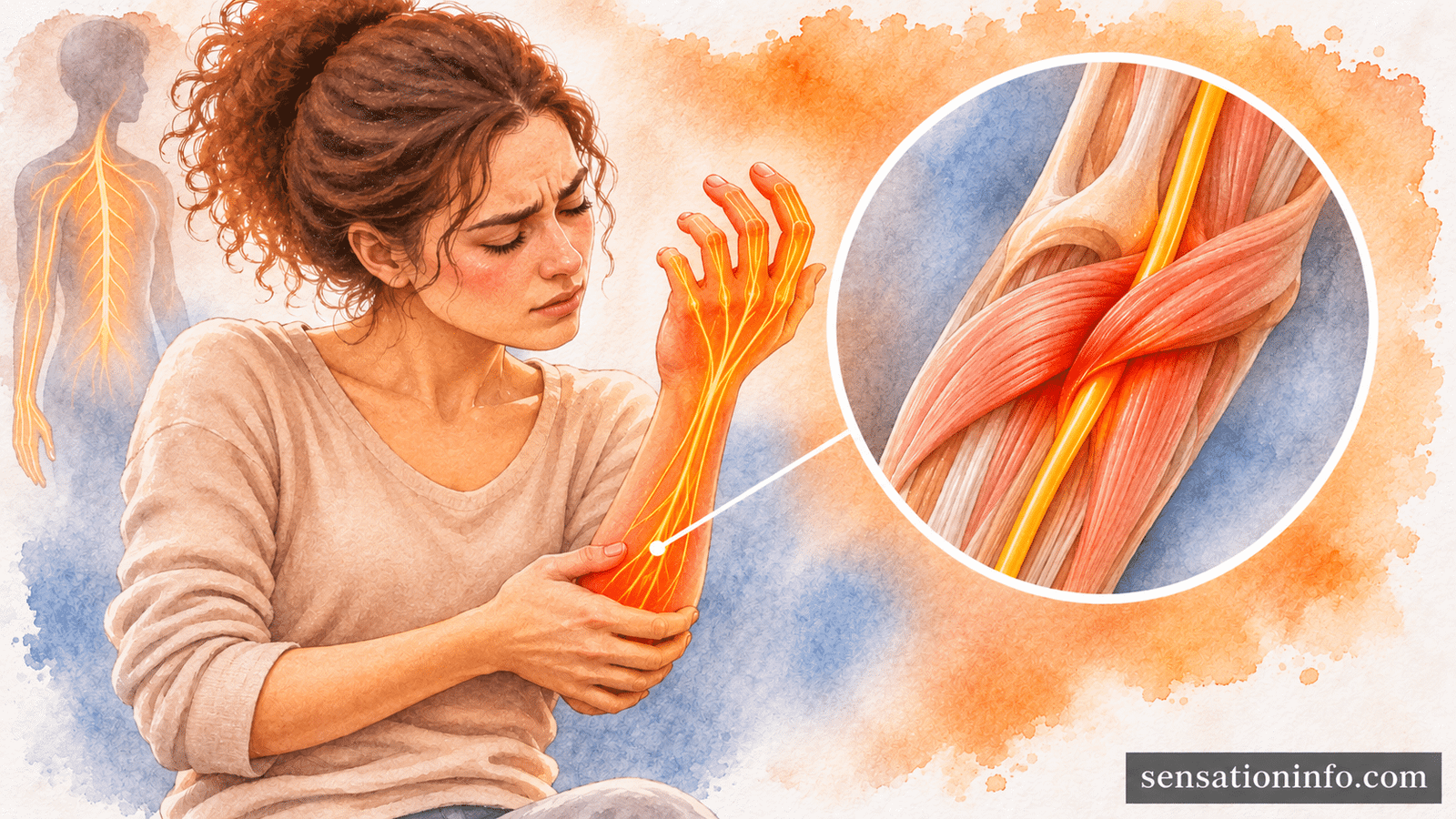

The electric shock sensation when injecting into a vein is fairly common, especially in people who need frequent IV treatment, such as IV antibiotics, chemotherapy or regular infusions. Insulin for diabetes is injected under the skin, not into a vein, so this feeling is not expected with insulin. This sharp, shooting pain almost always means the needle has grazed or directly contacted a peripheral nerve near your blood vessel. While this sudden zap is terrifying, most of these minor nerve injuries heal completely on their own within a few days to a few weeks. But you must monitor how your arm or hand feels over the next few hours.
If you are also dealing with burning pain in your arm after a blood draw, you might be experiencing a venipuncture nerve injury. Here is exactly what causes this shock feeling, how to manage the discomfort safely at home, and the specific warning signs that mean you need to see a doctor.
What Causes an Electric Shock Sensation When Injecting Into a Vein?
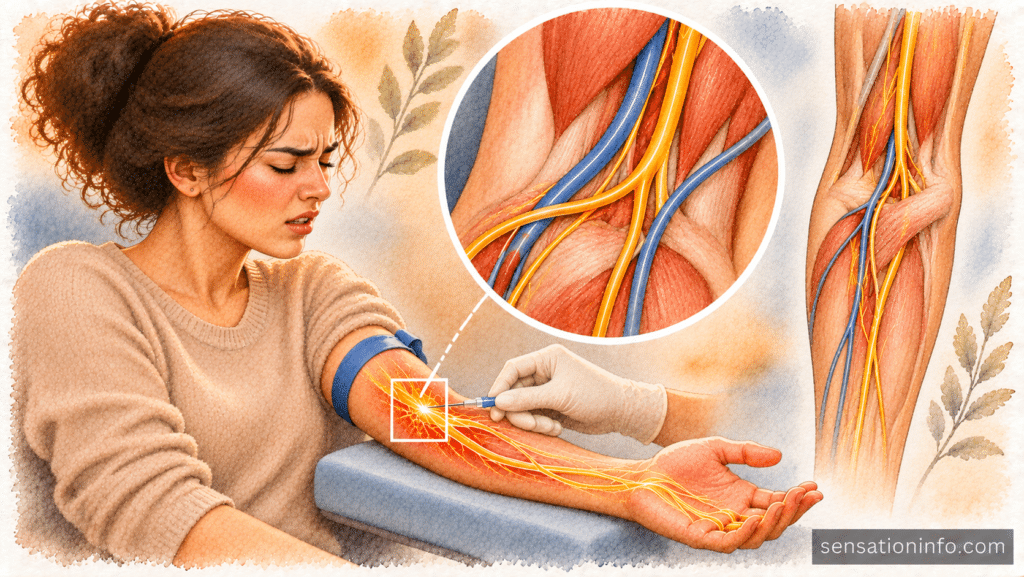
An electric shock sensation during a blood draw or IV insertion happens when the needle tip touches, grazes, or pierces a nerve adjacent to the target blood vessel. The sudden physical impact on the nerve fiber causes an immediate electrical misfire. This misfire sends a rapid, intense signal to your brain that you feel as a zap, shock, or shooting pain traveling down your arm into your fingers.
Your veins and nerves travel together in tight bundles throughout your body. The inner elbow, known medically as the antecubital fossa, is the most common site for drawing blood and starting intravenous lines. This area contains several major superficial veins, but it is also packed with important nerve branches, including the median nerve, radial nerve, and ulnar nerve. Because everyone has slightly different anatomy, a nerve can sometimes sit unusually close to a vein or even wrap over it.
When a healthcare provider inserts a needle, they aim for the vein based on sight and touch. If a nerve is resting directly underneath or right beside the vein, the needle might bump it. This is not necessarily a medical mistake. It is often an unavoidable anatomical complication of phlebotomy.
Look, the moment the needle touches the outer sheath of the nerve, you will feel it. The zap is a protective reflex warning your body of potential tissue damage.
Symptoms of a Venipuncture Nerve Hit
A nerve hit causes distinct neurological symptoms that feel completely different from typical muscle soreness or mild bruising. Knowing the difference between a normal reaction and a nerve injury helps you decide your next steps.
| Symptom Feature | Normal Post Injection Reaction | Venipuncture Nerve Injury |
| Type of Pain | Dull ache, tenderness, or mild throbbing. | Sharp electric shock, burning, or shooting pain. |
| Location | Localized exactly where the needle went in. | Travels down the arm, forearm, or into specific fingers. |
| Duration | Fades gradually over 24 to 48 hours. | Can persist for days, weeks, or trigger randomly with movement. |
| Associated Feelings | Mild stiffness or mild bruising. | Numbness, tingling, pins and needles, or a crawling sensation. |
| Urgency | Very low. Can be managed at home. | Moderate. Requires monitoring and possibly a doctor visit. |

Symptoms That Often Come With a Nerve Hit
Actually, a nerve hit rarely causes just pain. Because nerves carry both sensory and motor signals, irritating a nerve can cause a cluster of strange feelings.
- Paresthesia: This is the medical term for abnormal skin sensations. You might feel tingling, prickly pins and needles, or a feeling like your arm has fallen asleep.
- Dysesthesia: This happens when normal touch feels painful. Your skin might feel like it is burning when your shirt sleeve brushes against it.
- Weakness: A severe nerve hit can temporarily interrupt the signals telling your muscles to move, making your grip feel clumsy or weak.
Red Flags: When to See a Doctor Immediately
Most minor needle grazes improve quickly. But a direct puncture of a major nerve requires prompt medical evaluation to prevent permanent damage.
Go to an urgent care clinic or emergency room if you experience any of the following red flags:
- Pain that is severe, unbearable, and getting worse instead of better.
- Complete numbness in your hand or fingers that does not fade after a few hours.
- Sudden muscle weakness, such as dropping objects or being unable to make a fist.
- Skin color changes, extreme swelling, or the arm turning cold and pale.
- Symptoms that spread rapidly up into your shoulder or neck.
You can also use our nerve symptom checker to see which nerve may be involved in your specific discomfort.
Usually Harmless Causes vs Concerning Signs
It is important to separate harmless anatomical quirks from actual nerve trauma.
Usually Harmless: If the zap happens only for a split second as the needle goes in and immediately disappears when the needle is withdrawn, the nerve was likely just grazed. You might feel a faint tingle for a few hours, but your strength and normal feeling remain completely intact. This is considered a transient nerve irritation.
Concerning Signs: If the shock sensation lingers after the needle is out, or if the pain transitions into a constant burning ache accompanied by numbness, the nerve may have been bruised or slightly punctured. The thing is, this can lead to localized swelling around the nerve, creating pressure that prolongs the symptoms.
How Long Does the Nerve Pain Last?
The recovery timeline for a venipuncture nerve injury depends entirely on how much of the nerve was affected.
Minor grazes typically resolve within a few days. The nerve sheath is slightly irritated, but the internal fibers are intact. The tingling should fade day by day.
Moderate injuries, where the needle caused a small bruise or hematoma near the nerve, can take up to four to six weeks to heal. As the trapped blood is absorbed by your body, the pressure on the nerve decreases, and the shooting pain subsides.
Severe nerve punctures are very rare but take much longer to heal. Nerves regenerate incredibly slowly, at a rate of roughly one millimeter per day. If a nerve requires significant cellular repair, full recovery can take three to six months.
How to Treat Nerve Pain After an Injection
The most effective immediate treatment for nerve pain after an injection is removing the needle instantly and resting the affected arm. If you feel a zap during a blood draw, you must tell the phlebotomist to stop immediately. Never try to push through the pain.
Once you are home, you can take practical steps to manage the discomfort. First, avoid heavy lifting, strenuous exercise, or repetitive motions with that arm for at least 48 hours. Moving the arm excessively can cause the surrounding muscles to inflame, putting more pressure on the irritated nerve.
You can apply an ice pack wrapped in a cloth to the injection site for 15 minutes at a time. The cold helps reduce local swelling and temporarily numbs the area. Plus, over the counter anti inflammatory medications like ibuprofen can help reduce tissue swelling around the nerve. However, typical painkillers often do not work well for pure nerve pain.
If the pain persists beyond a few days, you should see a doctor. They might prescribe specific nerve pain medications like gabapentin or pregabalin. To manage an electric shock sensation in your body that keeps recurring, a doctor is essential for a proper treatment plan. In some cases, a physician will order a diagnostic nerve conduction study to precisely measure the electrical signals in your arm and pinpoint the exact location and severity of the nerve damage.
How to Prevent Nerve Damage During Future Blood Draws

You can actively reduce your risk of nerve hits during future medical procedures.
Always communicate your medical history. If you have had a nerve hit in a specific arm before, tell the nurse or phlebotomist before they tie the tourniquet. Ask them to use a different vein, a different arm, or the back of your hand.
Stay very hydrated in the 24 hours leading up to a blood draw. Well hydrated veins are plump, visible, and much easier to hit on the first try. This reduces the chance of the provider having to probe around with the needle under your skin.
Finally, speak up immediately. If you feel any sharp, radiating pain, tell the provider to stop right then.
Key Takeaways
- An electric shock sensation during an injection usually means the needle has bumped a peripheral nerve.
- The electric shock sensation when injecting into a vein is fairly common in people receiving frequent IV treatments, but it is not expected with subcutaneous insulin injections.
- Most minor nerve grazes heal fully on their own within a few days to a few weeks.
- Burning pain, numbness, and tingling that travel down your arm are common symptoms of nerve irritation.
- You should seek emergency medical care if you experience sudden muscle weakness, severe swelling, or complete numbness that does not go away.
- Tell the healthcare provider to stop the procedure immediately if you feel a zap or shooting pain.
- Applying ice and resting the arm can help reduce inflammation around the irritated nerve.
Frequently Asked Questions
In the vast majority of cases, nerve damage from a routine blood draw is temporary and heals completely within a few weeks, though severe punctures can rarely cause long term issues.
No, you should tell the phlebotomist to stop instantly and remove the needle so they do not cause further irritation to the nerve.
Tingling indicates that the nerve is still inflamed or slightly swollen from the initial needle contact, which interrupts normal sensory signals while the tissue heals.
Doctor’s Recommendation
If you are dealing with persistent numbness or weakness weeks after an injection, you need to be proactive about your nerve health. I recommend reading our guide on How to Get Sensation Back to understand the clinical timelines for nerve regeneration and the specific therapies doctors use to encourage healing.