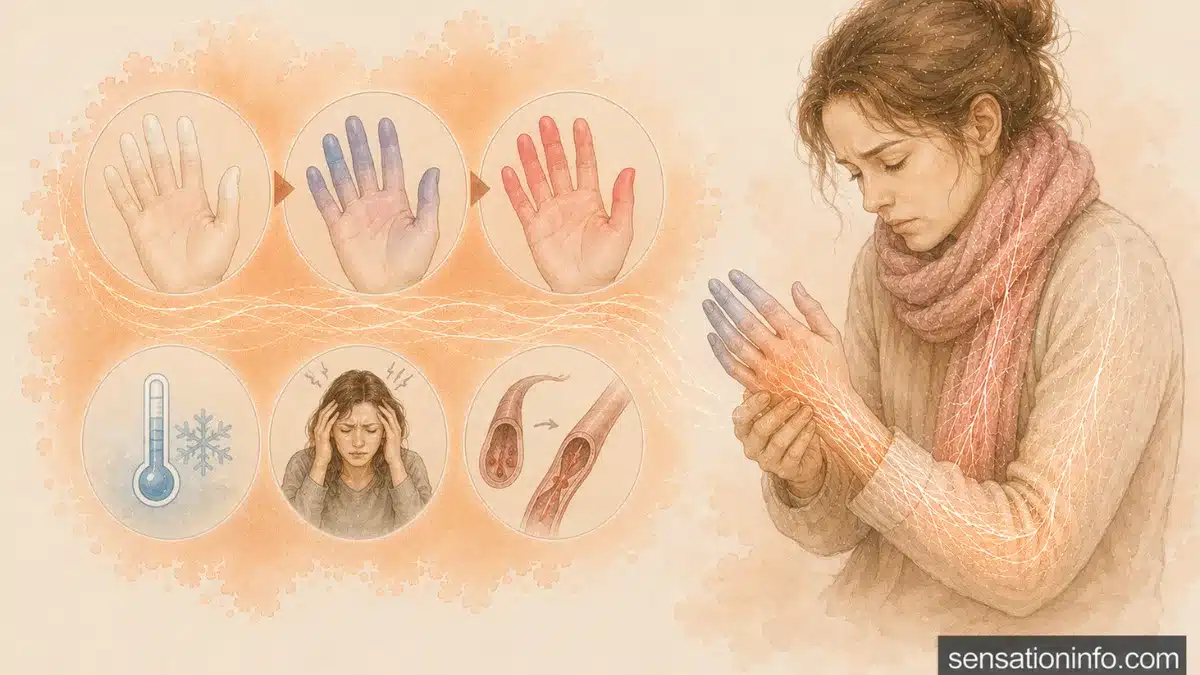

Raynaud’s syndrome is a condition where the small blood vessels in your fingers and toes overreact to cold temperatures or emotional stress. During an episode, these vessels clamp down far more than normal, cutting off blood flow and causing your fingers to turn white, then blue, then red as circulation returns. Most people with Raynaud’s have the primary form, which is uncomfortable but harmless. A smaller group has secondary Raynaud’s, linked to an underlying disease like scleroderma or lupus, which can cause more serious complications. Treatment focuses on keeping warm, avoiding triggers, and using medications when lifestyle changes are not enough.
What Is Raynaud’s Syndrome and Why Does It Happen?
Raynaud’s syndrome (also called Raynaud’s phenomenon or Raynaud’s disease) is a disorder of blood vessel regulation. The tiny arteries that supply blood to your skin, called arterioles, go into spasm when you are exposed to cold or stress. This spasm, known as vasospasm, temporarily narrows the blood vessels so much that blood cannot reach the surface of your fingers or toes.
According to the National Institute of Arthritis and Musculoskeletal and Skin Diseases (NIAMS), Raynaud’s most commonly affects the fingers, but it can also affect the toes, ears, nose, lips, and tongue. Population studies estimate the condition affects roughly 3% to 5% of the general population, according to the American Academy of Family Physicians (AAFP).
The condition was first described by French physician Maurice Raynaud in 1862. Three mechanisms contribute to the problem: overactive nerve signals that tell blood vessels to tighten, blood vessel walls that are more sensitive than normal to cold signals, and, in secondary forms, actual structural damage to the blood vessel lining.
What Are the Two Types of Raynaud’s Syndrome?
There are two distinct forms of Raynaud’s, and knowing which type you have shapes everything about your treatment and outlook.
Primary Raynaud’s happens on its own with no underlying disease. It accounts for 80% to 90% of all cases, according to the AAFP. It typically begins between the ages of 15 and 30, is more common in women, and tends to produce milder symptoms. Most people with primary Raynaud’s manage their condition well with lifestyle adjustments alone.
Secondary Raynaud’s develops alongside another medical condition, most often an autoimmune or connective tissue disease. It tends to start after age 30 and can cause more severe episodes, including painful sores on the fingertips called digital ulcers.
| Feature | Primary Raynaud’s | Secondary Raynaud’s |
|---|---|---|
| Cause | No known underlying disease | Linked to another condition |
| Age of onset | Usually 15 to 30 | Usually after 30 |
| Severity | Mild to moderate | Can be severe |
| Digital ulcers | Very rare | Possible |
| Nailfold capillaries | Normal | Often abnormal |
| ANA blood test | Negative | Often positive |
| Outlook | Excellent; may improve over time | Depends on underlying disease |
What Does a Raynaud’s Attack Feel Like?
A typical Raynaud’s attack follows a predictable sequence. Your fingers or toes first turn white (pallor) as blood flow stops. They may then turn blue (cyanosis) as the trapped blood loses its oxygen. Finally, when the spasm releases and blood rushes back, the skin turns red (rubor) and you may feel throbbing, tingling, or a burning sensation.
Not everyone experiences all three color changes. Some people only notice white and blue, or white and red. The entire episode can last anywhere from a few minutes to several hours.
During an attack, your fingers may feel numb, cold, and stiff. Many people describe the rewarming phase as the most uncomfortable part, with intense tingling, swelling, and a pulsing ache. The pain can feel similar to having a tight rubber band wrapped around your finger.
What Triggers a Raynaud’s Attack?
Cold exposure is the most common trigger, but it does not have to be extreme cold. Situations that most people handle without thinking can set off an attack in someone with Raynaud’s:
- Walking through the freezer aisle at the grocery store
- Holding a glass filled with ice
- Reaching into a refrigerator
- Going outside in cool, damp weather without gloves
- Air conditioning in buildings or vehicles
- Washing hands with cold water
Emotional stress is the second major trigger. Anxiety, a sudden fright, or high pressure situations can cause the same vasospasm response, even in a warm room. Some people also notice attacks triggered by quick temperature changes, such as moving from a warm house into cool outdoor air.
Certain medications can worsen Raynaud’s or trigger episodes. These include some beta blockers used for high blood pressure, migraine medications containing ergotamine, stimulant medications used for attention deficit hyperactivity disorder, and some chemotherapy drugs. According to NIAMS, nicotine also constricts blood vessels and can make attacks more frequent and severe.
What Causes Secondary Raynaud’s Syndrome?
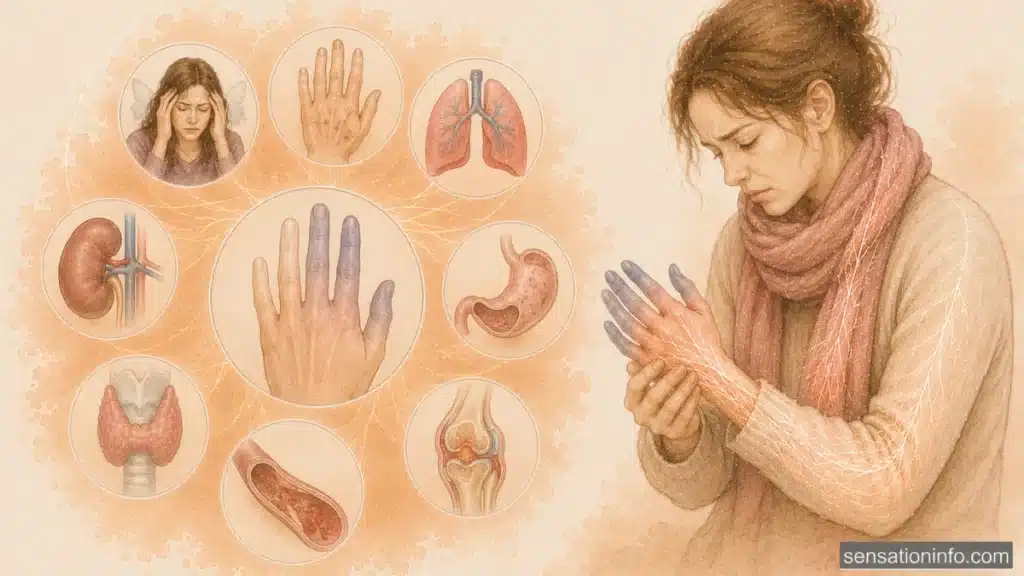
When Raynaud’s is linked to another condition, the underlying disease is usually the driving force behind the vascular dysfunction. The most common causes include:
Autoimmune and connective tissue diseases. Scleroderma (systemic sclerosis) is the condition most strongly associated with secondary Raynaud’s. According to NIH research, more than 90% of people with scleroderma experience Raynaud’s, and it is often their first symptom, appearing years before any skin changes. Lupus (systemic lupus erythematosus), rheumatoid arthritis, Sjogren’s disease, and dermatomyositis are also linked to secondary Raynaud’s.
Occupational and environmental exposure. People who regularly use vibrating power tools like jackhammers, drills, or chainsaws can develop vibration induced Raynaud’s, sometimes called hand arm vibration syndrome. Workers exposed to vinyl chloride or other industrial chemicals are also at higher risk. A history of frostbite can damage nerves in the fingers and trigger Raynaud’s symptoms.
Vascular conditions. Atherosclerosis (hardening of the arteries), Buerger’s disease (thromboangiitis obliterans), and thoracic outlet syndrome can all restrict blood flow to the hands and produce Raynaud’s type symptoms.
Medications and substances. Beta blockers, certain migraine drugs, stimulant medications, some chemotherapy agents, and drugs that cause vasoconstriction can trigger or worsen secondary Raynaud’s.
Other medical conditions. Hypothyroidism, carpal tunnel syndrome, and blood disorders like cryoglobulinemia can occasionally cause secondary Raynaud’s.
Who Gets Raynaud’s Syndrome?
Some people are more likely to develop Raynaud’s than others. Key risk factors include:
- Sex. Women are significantly more likely to develop primary Raynaud’s than men. NIH StatPearls reports a female to male ratio of approximately 9 to 1 for primary Raynaud’s.
- Age. Primary Raynaud’s typically first appears between ages 15 and 30. Raynaud’s that begins after age 40 is more likely to be secondary.
- Climate. People living in colder regions experience Raynaud’s symptoms more frequently, though the condition occurs in all climates.
- Family history. There is evidence for genetic predisposition. According to the AAFP, about 73% of people with Raynaud’s first developed symptoms before age 40, and family clustering is observed.
- Occupation. Workers who use vibrating tools or are regularly exposed to cold environments are at increased risk.
- Smoking. Nicotine constricts blood vessels and worsens circulation to the extremities.
If you frequently notice that your hands and feet feel unusually cold even in mildly cool temperatures, Raynaud’s may be worth discussing with your doctor.
When Should You See a Doctor About Raynaud’s?
Most Raynaud’s episodes are uncomfortable but not dangerous. However, certain warning signs mean you should seek medical attention.
Seek urgent care if you notice:
- A finger or toe that stays white or blue for a prolonged period and does not recover with rewarming
- Open sores, ulcers, or dark spots on your fingertips or toes
- Signs of infection around a fingertip wound, including redness, swelling, warmth, or pus
- Skin that turns black at the fingertips, suggesting tissue death
Schedule an appointment with your doctor if:
- You are experiencing Raynaud’s symptoms for the first time, especially if you are over 30
- Attacks are becoming more frequent, more painful, or lasting longer
- You notice skin changes, joint pain, rashes, or muscle weakness alongside Raynaud’s
- One hand is affected much more than the other (asymmetric attacks suggest secondary Raynaud’s)
- Raynaud’s is interfering with your ability to work or carry out daily tasks
Early evaluation matters because secondary Raynaud’s can sometimes appear years before an underlying autoimmune disease becomes fully apparent. Your doctor can run simple tests to determine whether your Raynaud’s is primary or secondary and catch any underlying conditions early.
How Do Doctors Diagnose Raynaud’s Syndrome?
There is no single test that confirms Raynaud’s. Diagnosis is based on your medical history, a physical examination, and targeted testing to distinguish primary from secondary Raynaud’s.
Clinical history. Your doctor will ask about your symptoms, triggers, how often attacks happen, which fingers or toes are affected, and whether you have any joint pain, skin changes, or other symptoms that could suggest an autoimmune condition.
Nailfold capillaroscopy. This simple, painless test is one of the most important tools for differentiating primary from secondary Raynaud’s. According to NIAMS, the doctor places a drop of oil at the base of your fingernail and examines the tiny blood vessels (capillaries) under a magnifier or microscope. In primary Raynaud’s, these capillaries look normal. In secondary Raynaud’s, especially scleroderma, the capillaries may appear enlarged, distorted, or reduced in number.
Blood tests. An antinuclear antibody (ANA) test checks for markers of autoimmune disease. A negative ANA result is reassuring and supports a primary Raynaud’s diagnosis. Your doctor may also order a complete blood count, erythrocyte sedimentation rate (ESR), and thyroid function tests (TSH). If scleroderma is suspected, more specific antibody tests such as anti centromere or anti topoisomerase (Scl 70) may be ordered.
Cold stimulation test. In some cases, doctors may ask you to place your hands in cold water to observe the response and measure how long it takes for your fingers to return to normal temperature.
How Is Raynaud’s Syndrome Treated?
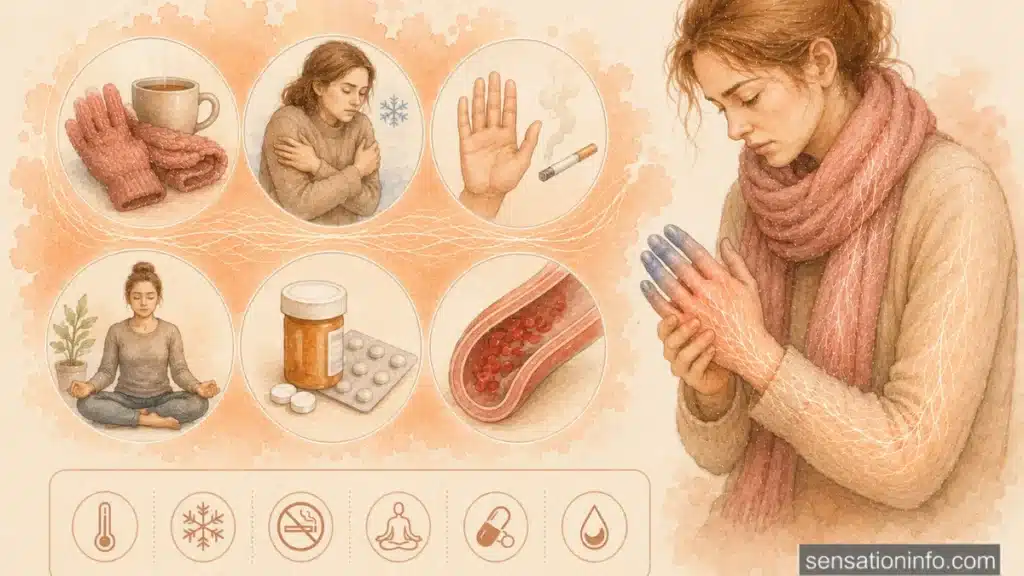
Treatment for Raynaud’s follows a step by step approach, starting with lifestyle changes and adding medications only when needed.
Lifestyle and Self Care Strategies
For most people with primary Raynaud’s, these measures are the most effective treatment:
- Keep your entire body warm. Dress in layers, wear insulated gloves and warm socks, and use a hat and scarf in cold weather. Keeping your core body temperature up helps maintain blood flow to your extremities.
- Use hand and foot warmers. Disposable or rechargeable hand warmers tucked into gloves or pockets provide reliable heat during outdoor activities and in air conditioned spaces.
- Warm up quickly during an attack. Move to a warmer area, tuck your hands under your armpits, run warm (not hot) water over your fingers, or swing your arms in large circles to push blood toward your fingertips.
- Quit smoking. Nicotine constricts blood vessels and directly worsens Raynaud’s. Quitting can reduce the frequency and severity of attacks. Learning how to improve circulation in your hands can also make a significant difference.
- Manage stress. Since emotional stress triggers attacks, techniques like deep breathing, progressive muscle relaxation, and regular physical activity can help reduce episodes.
- Exercise regularly. Moderate aerobic exercise improves overall circulation and may reduce the frequency of attacks.
- Avoid certain medications if possible. Talk to your doctor about alternatives if you take beta blockers, decongestants, or other drugs that constrict blood vessels.
Medications for Raynaud’s Syndrome
When lifestyle changes are not enough, medications can help reduce the frequency and severity of attacks.
Calcium channel blockers are the first line prescription treatment for Raynaud’s. Nifedipine (Procardia, Adalat) is the most commonly used, working by relaxing the smooth muscle in blood vessel walls and widening the arteries. According to the Cleveland Clinic Journal of Medicine, calcium channel blockers reduced attacks by approximately 1.7 fewer episodes per week compared to no medication. Amlodipine (Norvasc) is another option that some patients tolerate better due to fewer side effects. Common side effects of calcium channel blockers include headache, flushing, dizziness, and ankle swelling.
Other vasodilators may be used when calcium channel blockers are not effective. These include:
- Nitroglycerin ointment or patches applied to the fingers to improve local blood flow
- Phosphodiesterase 5 inhibitors like sildenafil (Viagra) or tadalafil (Cialis), which help relax blood vessel walls
- Losartan (Cozaar), an angiotensin receptor blocker that may reduce attack frequency
- Fluoxetine (Prozac), a selective serotonin reuptake inhibitor that has shown benefit in some patients
For severe secondary Raynaud’s, additional treatments may be necessary:
- Intravenous prostacyclin (iloprost or epoprostenol) for severe digital ischemia or threatening ulcers
- Botulinum toxin (Botox) injections into the hands, which can block sympathetic nerve signals and improve blood flow
- Endothelin receptor antagonists like bosentan (Tracleer) to prevent digital ulcers in scleroderma patients
Surgical Options
Surgery is rarely needed and is reserved for the most severe cases that do not respond to medications.
Digital sympathectomy involves a surgeon stripping or cutting the tiny sympathetic nerves wrapped around the blood vessels in the hand. This procedure can restore circulation to severely affected fingers and help heal existing ulcers. It is more targeted than older sympathectomy approaches and has shown better results.
In cases where tissue death (gangrene) has occurred, debridement (removal of dead tissue) or, very rarely, amputation of a fingertip may be necessary.
What Is the Recovery Timeline for Raynaud’s?
Raynaud’s is a chronic condition, but the outlook varies significantly depending on the type.
Primary Raynaud’s follows a generally favorable course. Many people find their symptoms stay stable or even improve over time. Some experience a reduction in attack frequency as they age. With proper cold avoidance and lifestyle management, most people with primary Raynaud’s live without significant limitations.
Secondary Raynaud’s depends entirely on the underlying condition. When the root cause is treated effectively, for example controlling thyroid disease or stopping a triggering medication, Raynaud’s symptoms often improve. When the cause is a progressive autoimmune disease like scleroderma, ongoing monitoring and treatment adjustments are needed to prevent complications like digital ulcers.
| Timeline | What to Expect |
|---|---|
| Weeks 1 to 4 of treatment | Lifestyle changes begin reducing attack frequency; medication effects may take 2 to 4 weeks to become noticeable |
| Months 1 to 3 | Most people see meaningful improvement with medication; doctors adjust dosing based on response |
| Months 3 to 6 | Seasonal medication use (winter only) is common for primary Raynaud’s |
| Long term | Primary Raynaud’s often stabilizes or improves; secondary Raynaud’s requires ongoing management of the underlying condition |
Raynaud’s Syndrome in Special Groups
Women and Pregnancy
Women make up the vast majority of primary Raynaud’s cases. Hormonal changes may play a role in the condition, though the exact mechanism is not fully understood. During pregnancy, some women notice improvement in Raynaud’s symptoms due to increased blood volume and vasodilation. Others experience worsening, especially in the third trimester. Raynaud’s can also affect the nipples during breastfeeding, causing intense pain during and after nursing. If you experience numbness in your hands alongside color changes during pregnancy, mention both symptoms to your provider.
Children and Teens
Primary Raynaud’s can begin in childhood or adolescence, and it is not uncommon for teenagers, particularly girls, to notice their first episodes. The condition is usually mild in this age group and managed with keeping warm. A pediatrician should evaluate any child with Raynaud’s to rule out secondary causes, especially if symptoms are severe or accompanied by joint pain, rashes, or fatigue.
Older Adults
Raynaud’s that first appears after age 60 warrants careful evaluation. In this age group, reduced blood flow is more likely related to atherosclerosis or peripheral artery disease than to classic Raynaud’s vasospasm. Your doctor may order vascular imaging studies to check for blocked or narrowed arteries.
How to Tell Raynaud’s Apart From Similar Conditions
Several conditions can cause cold, painful, or discolored fingers. Understanding the differences helps you communicate clearly with your doctor.
| Condition | Key Feature | How It Differs From Raynaud’s |
|---|---|---|
| Raynaud’s syndrome | Episodic white, blue, red color changes in digits triggered by cold or stress | Classic three phase color change with clear triggers |
| Peripheral artery disease | Constant reduced blood flow to the extremities | Symptoms are steady rather than episodic; affects legs more than hands |
| Frostbite | Tissue damage from extreme cold exposure | Requires prolonged extreme cold; does not resolve and recur the same way |
| Acrocyanosis | Persistent blue discoloration of hands and feet | Continuous rather than episodic; usually painless |
| Erythromelalgia | Burning pain and redness in hands or feet, triggered by warmth | Opposite trigger: symptoms worsen with heat, improve with cold |
| Carpal tunnel syndrome | Numbness and tingling in fingers from nerve compression | Nerve related, not vascular; no color changes |
Common Myths About Raynaud’s Syndrome
Myth: Raynaud’s only happens in freezing weather. Episodes can be triggered by mild cold, air conditioning, or even holding a cold drink. Emotional stress alone can set off an attack in a warm room.
Myth: Raynaud’s is just “poor circulation” and not a real condition. Raynaud’s involves a specific, measurable overreaction of the sympathetic nervous system and blood vessel walls. It is a recognized medical condition with established diagnostic criteria and treatments.
Myth: If you have Raynaud’s, you must have an autoimmune disease. The large majority of people with Raynaud’s (80% to 90%) have the primary form with no underlying disease at all.
Myth: There is no treatment for Raynaud’s. Lifestyle measures help most people significantly, and several classes of medications are available for those who need them.
Can You Prevent Raynaud’s Attacks?
You cannot cure Raynaud’s, but you can significantly reduce how often attacks happen:
- Wear insulated gloves before going outdoors, not after your hands are already cold
- Layer clothing and keep your core warm; a cold torso signals your body to pull blood away from your extremities
- Preheat your car and use heated steering wheel covers if available
- Wear oven mitts or gloves when reaching into the freezer
- Run warm water over your hands for 2 to 3 minutes before going outside
- Limit caffeine, which can constrict blood vessels in some people
- Stay physically active; regular exercise supports better overall vascular health
- Consider seasonal medication use during colder months if your doctor recommends it
Key Takeaways
- Raynaud’s syndrome causes the small blood vessels in your fingers and toes to overreact to cold or stress, producing white, blue, and red color changes.
- About 3% to 5% of the general population is affected, and 80% to 90% of cases are the harmless primary form with no underlying disease.
- Secondary Raynaud’s is linked to autoimmune conditions, especially scleroderma, and requires closer monitoring.
- Nailfold capillaroscopy and ANA blood testing are the main tools doctors use to tell primary from secondary Raynaud’s.
- Lifestyle measures like staying warm, using hand warmers, quitting smoking, and managing stress are the first line of treatment.
- Calcium channel blockers like nifedipine are the first line medication when lifestyle changes are not enough.
- See a doctor if attacks are getting worse, if you notice sores on your fingertips, or if Raynaud’s symptoms start after age 30.
Frequently Asked Questions
Primary Raynaud’s syndrome is not dangerous. It causes uncomfortable episodes of cold, numb, and discolored fingers, but it does not damage your tissues or lead to serious complications. Secondary Raynaud’s, which is linked to autoimmune diseases like scleroderma, can be more serious and may cause fingertip ulcers if left untreated. If your symptoms are worsening or you notice sores on your fingertips, see your doctor for evaluation.
Primary Raynaud’s sometimes improves over time, and some people experience fewer attacks as they get older. It does not always go away completely, but symptoms can become mild enough that they no longer interfere with daily life. Secondary Raynaud’s depends on the underlying condition and usually requires ongoing management.
Raynaud’s disease refers to the primary form, where vasospasm occurs with no underlying cause. Raynaud’s phenomenon is the secondary form, caused by another condition such as scleroderma, lupus, or occupational vibration exposure. Doctors now more commonly use the term Raynaud’s phenomenon for both types, specifying primary or secondary.
No specific food or vitamin has been proven to cure Raynaud’s. However, omega 3 fatty acids found in fish may support vascular health, and some doctors suggest checking vitamin D levels because deficiency is common in autoimmune conditions linked to secondary Raynaud’s. Avoiding excessive caffeine may help, as caffeine can constrict blood vessels. A balanced diet that supports overall cardiovascular health is the best dietary approach.
Yes. Emotional stress, anxiety, and sudden fright can trigger vasospasm and cause a Raynaud’s episode even in a warm environment. The sympathetic nervous system responds to stress by narrowing blood vessels, and in people with Raynaud’s, this response is exaggerated. Stress management techniques like deep breathing and regular exercise may reduce the frequency of stress triggered attacks.
Doctor’s Recommendation
If your fingers or toes frequently feel cold even in mild temperatures, you may want to understand more about why extremities lose warmth and when cold sensation in your hands and feet points to something that needs medical attention. That article covers the full range of causes, from simple cold sensitivity to circulatory conditions, and can help you decide whether your symptoms need professional evaluation.
References
- National Institute of Arthritis and Musculoskeletal and Skin Diseases (NIAMS). Raynaud’s Phenomenon. NIH. 2025.
- National Institute of Arthritis and Musculoskeletal and Skin Diseases (NIAMS). Raynaud’s Phenomenon: Diagnosis, Treatment, and Steps to Take. NIH. 2025.
- Cleveland Clinic. Raynaud’s Syndrome: Symptoms, Causes and Treatment. Cleveland Clinic. 2026.
- NIH National Library of Medicine. Raynaud Disease. StatPea