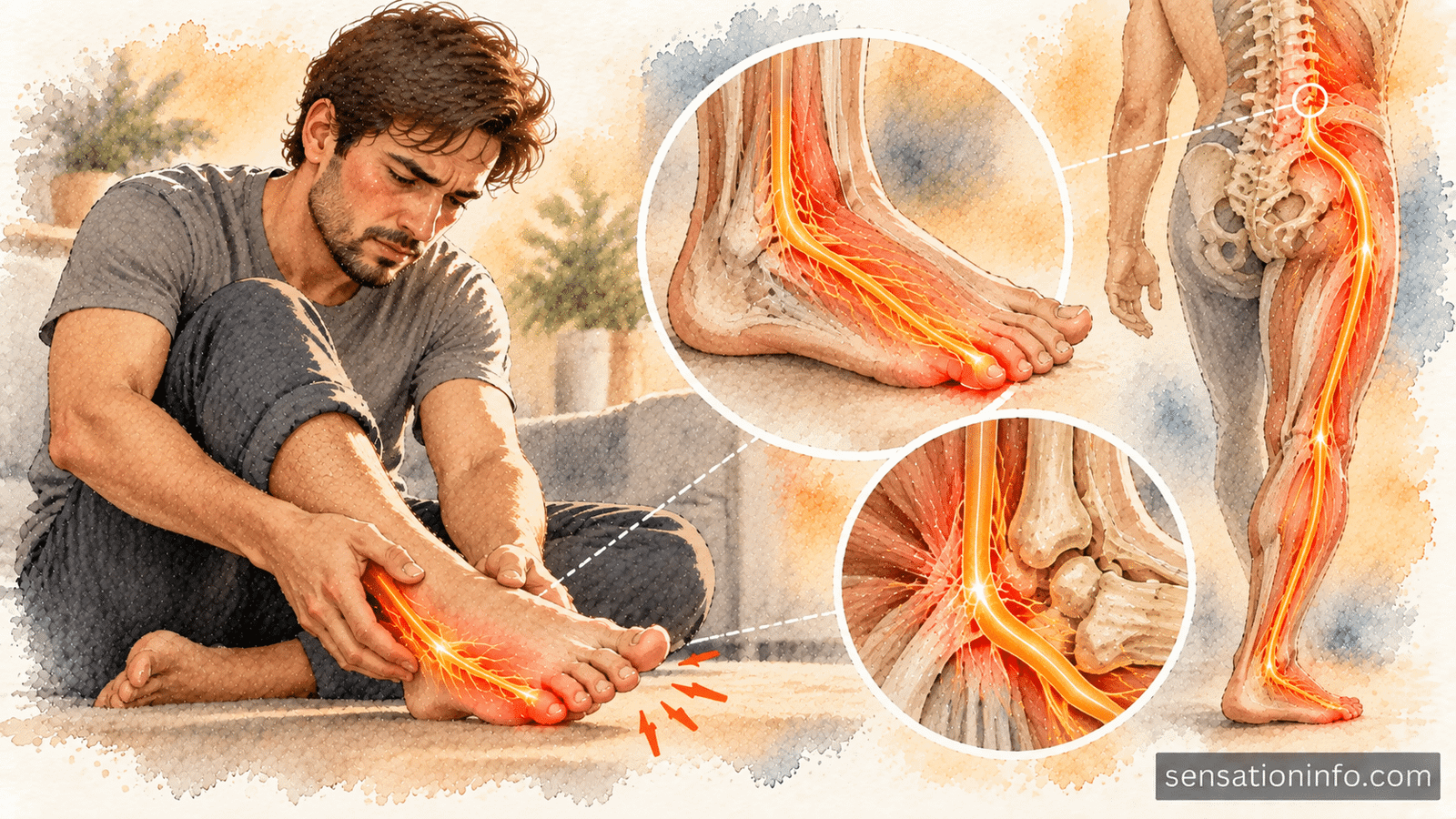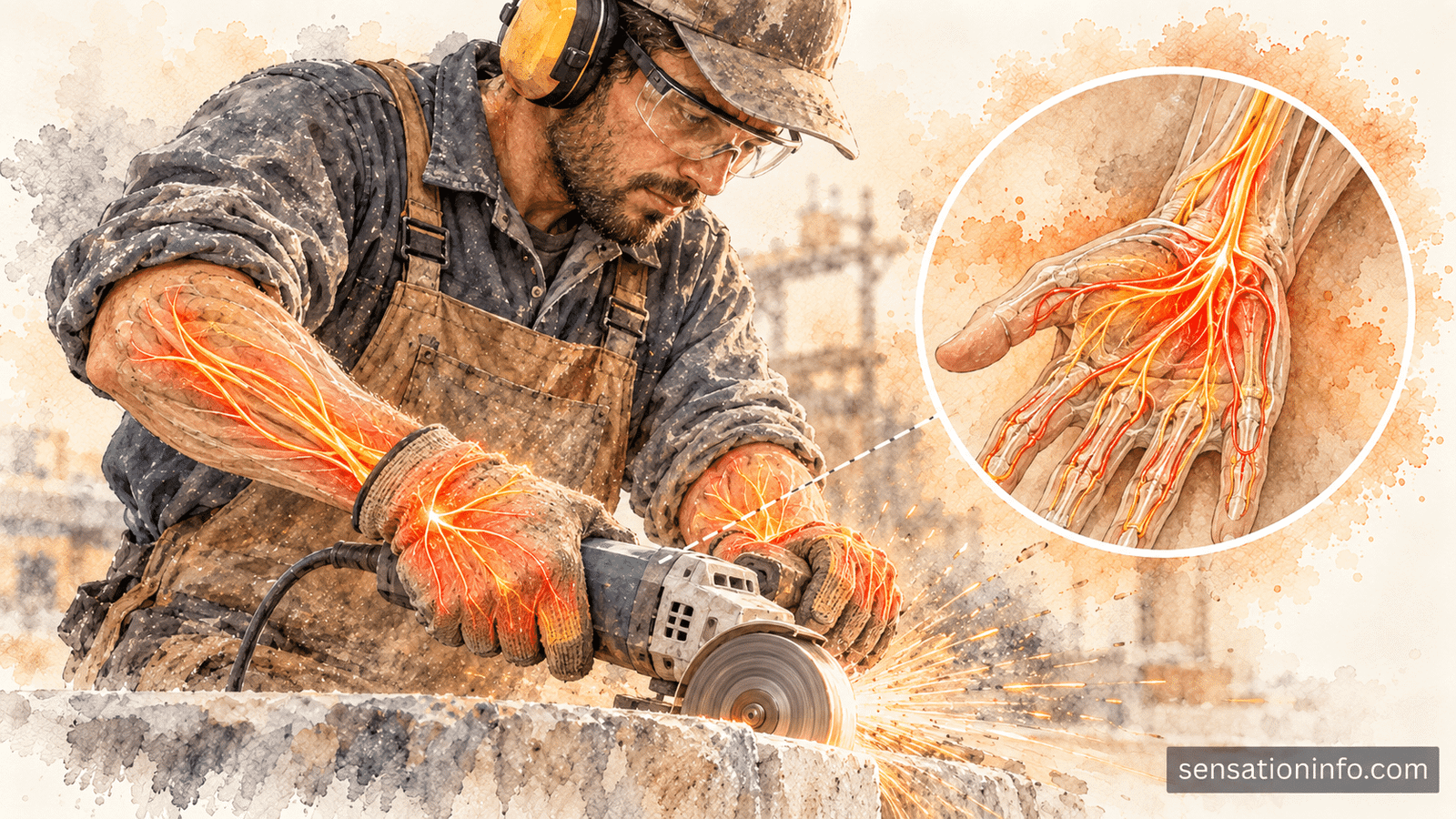

Hand-Arm Vibration Syndrome is a progressive disorder that physically damages the nerves and blood vessels in your fingers. It develops slowly after months or years of operating heavy vibrating equipment like chainsaws, grinders, or pneumatic drills. The intense mechanical shaking travels directly from the tool into your soft tissues, slowly crushing delicate nerve endings and restricting microscopic blood vessels over time.
While the earliest warning signs like mild tingling or fingers turning white in the cold can heal if you stop using the tools, ignoring them is dangerous. Continued exposure to this heavy vibration will eventually cause severe muscle weakness, chronic pain, and permanent numbness in your hands that cannot be reversed.
Red Flag Symptoms That Require Immediate Medical Evaluation
Most vibration symptoms develop slowly over months or years. However, certain sudden changes in your hands or fingers indicate urgent circulatory compromise or severe tissue distress.
Seek immediate emergency medical care if you experience any of the following warning signs:
- Complete loss of blood flow where one or more fingers turn stark white or bluish purple and fail to regain color after gentle warming
- Constant, severe throbbing pain in your fingertips that does not fade
- Dark discoloration, black spots, or sores forming on your fingertips, which signal tissue necrosis or gangrene
- Sudden spreading redness, swelling, and heat accompanied by a fever, which may indicate a serious skin or joint infection
- Rapid loss of muscle control or total inability to move your fingers, especially after acute trauma
If you notice your fingers turning pale during cold weather but color returns within fifteen to thirty minutes after warming, this indicates an episodic circulatory response rather than an immediate medical emergency. You should still schedule an appointment with your doctor promptly to prevent further blood vessel damage.
What Is Hand-Arm Vibration Syndrome?
Hand-arm vibration syndrome, commonly abbreviated as HAVS, is a preventable occupational disorder that affects millions of tradespeople and hobbyists worldwide. According to the National Institute for Occupational Safety and Health, approximately two million workers in the United States face regular exposure to hand-arm vibration on the job.
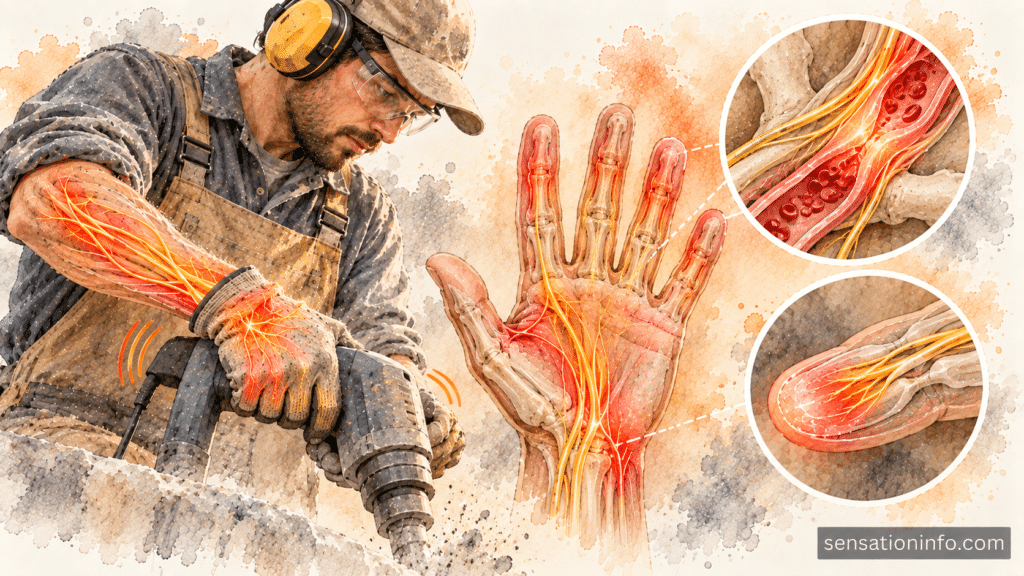
The condition involves three distinct types of tissue injury:
- Vascular injury: The smooth muscle walls of the small digital arteries in your fingers thicken and spasm easily, leading to episodic finger blanching known as vibration white finger.
- Sensorineural injury: The sensory nerves in your fingers lose their protective myelin coating and struggle to transmit sensations of touch, temperature, and pain accurately.
- Musculoskeletal injury: The muscles, tendons, and bones of your hand, wrist, and forearm experience chronic fatigue, inflammation, and reduced grip strength.
Doctors often evaluate the severity of this condition using an international grading scale called the Stockholm Workshop Scale. This system classifies the vascular and neurological components separately, ranging from mild occasional tingling to severe, persistent numbness with frequent blanching attacks across multiple fingers.
What Does Hand-Arm Vibration Syndrome Feel Like?
The symptoms of hand-arm vibration syndrome typically appear in stages. Because the damage builds up gradually, many people ignore the earliest warning signs, mistaking them for simple muscle tiredness after a hard day of work.
During the earliest stage, you might notice brief episodes of tingling in your fingertips after putting down a power tool. This feeling often resembles mild electrical buzzing or prickling. Over several months, this sensation evolves into persistent pins and needles in hands after using tools, especially at night or in the early morning hours.
As the condition advances into the vascular phase, cold temperatures trigger sudden spasms in the blood vessels of your fingers. One or more fingertips turn chalky white, feeling icy cold and completely numb. As blood slowly returns to the area, the skin turns bright red or bluish purple, accompanied by an intense burning ache and throbbing. This episodic pattern represents a form of secondary Raynaud’s syndrome triggered by cold temperatures and vibration.
In advanced stages, you may experience progressive numbness in hands that interferes with daily tasks, making it difficult to button a shirt, pick up small coins, or feel the temperature of bathwater. Your hands may feel constantly weak, stiff, and clumsy.
| Stage | What You Feel (Sensory and Vascular) | Impact on Daily Hand Function |
|---|---|---|
| Early | Mild tingling after tool use, occasional night prickling | No noticeable loss of fine touch or grip strength |
| Moderate | Frequent numbness, fingertip blanching during cold weather | Minor clumsiness, trouble handling very small objects |
| Severe | Constant numbness, widespread finger blanching in all seasons | Major loss of dexterity, weak grip, persistent pain |
How Power Tools Damage Your Nerves and Blood Vessels
To understand why power tools cause these symptoms, it helps to look at how vibrations travel through living tissue. Handheld power tools produce rapid mechanical oscillations ranging from five hertz to over one thousand hertz.
When you grip a vibrating tool, these oscillations pass directly through your skin into the underlying tissues. The mechanical shear stress damages the delicate endothelial lining of your digital arteries. In response to this microscopic trauma, the blood vessel walls thicken, lose their elasticity, and produce excess amounts of endothelin, a potent chemical that forces blood vessels to constrict. As a result, the slightest drop in temperature causes these hypersensitive vessels to clamp shut completely, cutting off oxygen rich blood to your fingertips.
At the same time, mechanical vibration destroys the specialized sensory receptors in your skin, including Merkel nerve endings and Meissner corpuscles that allow you to feel fine textures. Studies compiled by the National Institute for Occupational Safety and Health indicate that prolonged daily exposure to high vibration tools can damage up to fifty percent of sensory nerve fibers in exposed fingertips over several years of unmanaged work.
Common Tools and Occupations at High Risk
The amount of vibration energy your hands absorb depends on several factors: the tool vibration magnitude, how tightly you squeeze the handle, the total duration of daily exposure, and the ambient temperature of your work environment.
High risk tools include:
- Percussive tools: Jackhammers, chipping hammers, pneumatic riveters, and concrete breakers
- Rotary tools: Angle grinders, die grinders, sanders, and polishers
- Reciprocating tools: Chainsaws, reciprocating saws, brush cutters, and hedge trimmers
- Fastening tools: Impact wrenches, pneumatic nail guns, and torque drivers
Industries with the highest rates of vibration exposure include highway and commercial construction, forestry and logging, automotive repair and bodywork, metal fabrication, stone masonry, and shipyard maintenance.
How Doctors Diagnose Hand-Arm Vibration Syndrome
Diagnosing this condition requires a thorough clinical evaluation by an occupational medicine physician or neurologist. Because no single lab test confirms hand-arm vibration syndrome, your doctor will combine your occupational history with specialized physical and physiological tests.
Your evaluation will generally include:
- Detailed occupational history: Your doctor will calculate your daily vibration exposure based on the tools you use, their vibration ratings, and how many hours you operate them each week.
- Cold provocation test: Your hands are briefly immersed in cold water to observe whether your fingers turn white and to measure how long your blood vessels take to rewarm.
- Thermal and vibrotactile threshold testing: Specialized electronic probes measure the smallest changes in temperature and vibration your fingertips can perceive.
- Nerve conduction testing: Your physician may order a diagnostic nerve conduction study to check electrical nerve speed through your median and ulnar nerves, which confirms whether nerve signals are delayed or blocked.
- Vascular Doppler ultrasound: This imaging test evaluates blood flow velocity and vessel wall thickness along the digital arteries of your fingers.
How Hand-Arm Vibration Syndrome Differs from Similar Conditions
Because hand tingling and finger blanching occur in several medical disorders, distinguishing hand-arm vibration syndrome from other conditions is essential for receiving the correct treatment.
The most common condition mistaken for vibration damage is carpal tunnel syndrome causing hand tingling and weakness. While carpal tunnel syndrome involves compression of the median nerve at the wrist, hand-arm vibration syndrome damages nerves and digital blood vessels throughout all fingers exposed to vibration. In many manual workers, both conditions can occur at the same time.
| Feature | Hand-Arm Vibration Syndrome | Carpal Tunnel Syndrome | Primary Raynaud’s Disease | Diabetic Peripheral Neuropathy |
|---|---|---|---|---|
| Primary Cause | Mechanical tool vibration | Median nerve compression at wrist | Idiopathic blood vessel spasm | Elevated blood glucose nerve injury |
| Affected Area | Fingers directly exposed to tools | Thumb, index, middle, half of ring finger | All fingers symmetrically on both hands | Feet first, spreading upward to hands symmetrically |
| Finger Blanching | Common, triggered by cold and vibration | Rare | Very common, triggered by cold and emotional stress | Rare |
| Grip Weakness | Present in moderate to severe stages | Present when motor nerve fibers compress | Absent | Occurs in late stages |
| Occupational Link | Direct cause from power tool exposure | Often linked to repetitive wrist flexion | None | None |
Medical Treatments and Workplace Adaptations
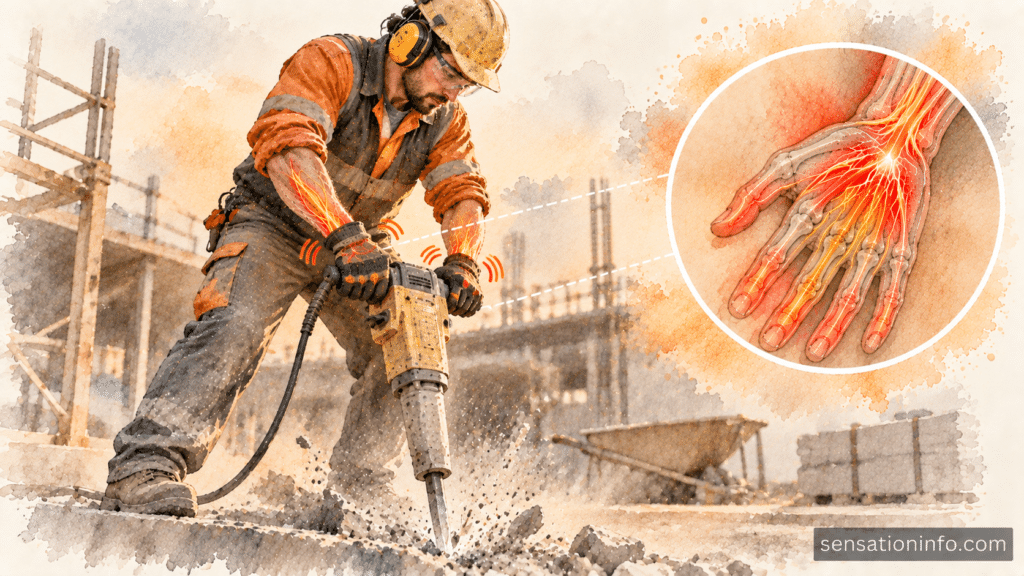
There is no surgical procedure that can instantly cure hand-arm vibration syndrome. The most important step in medical treatment is reducing or eliminating further vibration exposure. When caught early, tissue damage can stabilize, and some blood vessel function can return.
Your doctor may recommend the following medical and workplace interventions:
Prescription Medications for Blood Flow and Nerve Pain
To keep blood vessels open and reduce painful blanching attacks, physicians often prescribe calcium channel blockers such as nifedipine (Procardia) or amlodipine (Norvasc). These medications relax the smooth muscles in arterial walls, allowing blood to circulate into cold fingers.
For individuals suffering from sharp nerve pain or burning sensations, doctors may prescribe nerve stabilizing medications such as gabapentin (Neurontin) or duloxetine (Cymbalta).
Workplace Controls and Ergonomic Adjustments
Your employer or workplace safety officer should implement engineering controls to lower your daily vibration dose. These steps include:
- Replacing older, worn power tools with modern, low vibration models featuring isolated handles
- Implementing job rotation schedules so no worker uses vibrating tools continuously for more than two hours at a time
- Keeping equipment properly balanced, sharp, and lubricated to minimize unnecessary vibration output
- Providing warm rest areas so workers can maintain normal core and extremity temperatures throughout the workday
Practical Home Care and Daily Management
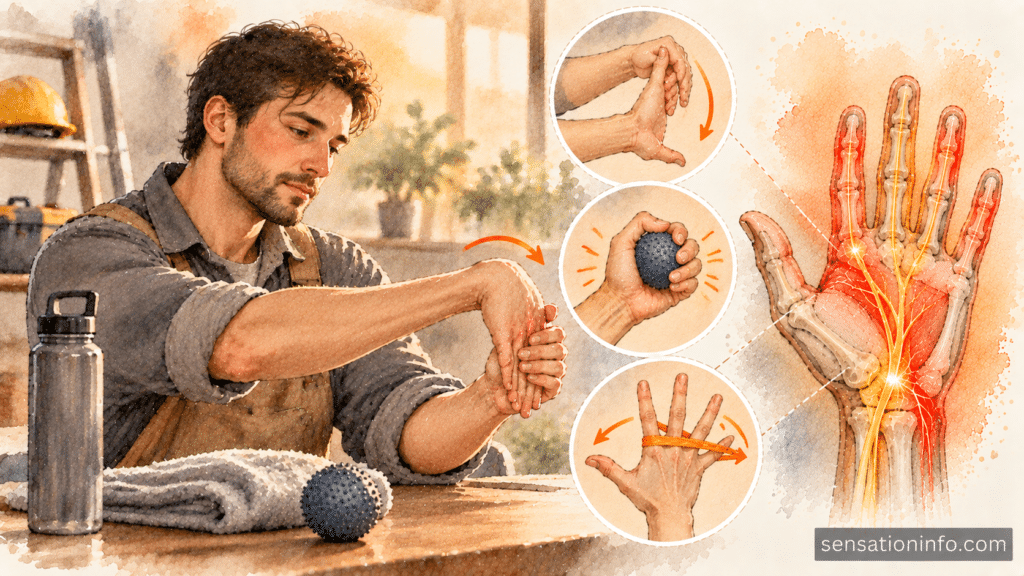
Managing hand-arm vibration syndrome requires consistent daily habits that protect your delicate blood vessels and preserve nerve function.
- Keep your core and extremities warm: Always wear insulated gloves when the temperature drops below fifty degrees Fahrenheit. Dressing in warm layers prevents your body from shunting blood away from your hands.
- Stop smoking and avoid nicotine: Nicotine is a potent chemical vasoconstrictor that significantly shrinks small blood vessels. Smoking dramatically worsens vibration white finger attacks and speeds up permanent tissue damage.
- Practice gentle hand warming: If an attack occurs, warm your fingers gradually by placing them in warm water or inside your armpits. Never place your hands on direct, intense heat sources such as radiators or stove tops, as numb skin burns easily without you feeling it.
- Perform daily finger and wrist stretches: Gentle tendon gliding exercises and wrist mobility stretches encourage circulation and maintain flexibility in your hand joints.
- Use skin moisturizers: Chronic circulatory changes can leave the skin on your fingertips dry and prone to cracking. Apply thick, unscented moisturizing creams daily to protect your skin barrier.
Prevention Guidelines for Power Tool Operators
Preventing hand-arm vibration syndrome is far more effective than trying to reverse advanced nerve damage. If your work or hobbies require power tools, integrate these safety habits into every work session:
- Wear certified anti-vibration gloves that meet the ISO 10819 international safety standard to dampen high frequency vibrations.
- Avoid gripping tool handles with excessive force; squeeze only as hard as necessary to maintain safe control.
- Let the tool do the cutting, drilling, or grinding work rather than forcing it down with heavy body pressure.
- Take a ten minute break from vibrating tools for every fifty to sixty minutes of continuous operation.
- Store your power tools in warm, dry locations so handle surfaces are not cold when you start working.
- Report early symptoms of tingling or cold sensitivity to your supervisor and occupational health clinic immediately.
Recovery Outlook and Long Term Prognosis
Your long term outlook depends heavily on how early the condition is identified and whether you can successfully reduce your vibration exposure.
In the earliest stages, when symptoms consist only of occasional tingling or brief blanching on one fingertip, eliminating or heavily restricting tool vibration can allow blood vessel responsiveness and sensory perception to recover significantly over one to two years.
However, once the condition progresses to severe, constant numbness and permanent vascular thickening, the changes are usually irreversible. Even if you stop using power tools completely, advanced nerve fiber loss and digital artery scarring will remain. In these advanced stages, treatment focuses on preventing further tissue breakdown, managing chronic nerve pain, and preserving your remaining hand strength.
Key Takeaways
- Hand-arm vibration syndrome is a preventable occupational disorder affecting nerves, blood vessels, and muscles in the hands due to prolonged power tool use.
- The earliest warning sign is tingling or electrical buzzing in the fingertips after tool operation, which can progress to episodic white finger attacks in cold conditions.
- Early stage blood vessel and nerve irritation can stabilize and improve if you reduce vibration exposure, while advanced tissue damage is largely permanent.
- Distinguishing vibration damage from conditions like carpal tunnel syndrome requires clinical evaluation, cold provocation testing, and nerve conduction studies.
- Critical prevention steps include using low vibration tools, wearing certified anti-vibration gloves, taking regular rest breaks, and completely avoiding nicotine.
Frequently Asked Questions
Certified anti-vibration gloves that meet the ISO 10819 standard help reduce high frequency vibrations transmitted to your palms and fingers, but they do not eliminate all low frequency vibrations. They should always be combined with regular tool rest breaks, proper grip techniques, and well-maintained machinery.
Symptoms can develop anywhere from a few months to several years, depending on the tool vibration intensity, how many hours you operate vibrating equipment each day, your grip tightness, and your individual blood vessel health.
Cold temperatures cause the body to naturally narrow peripheral blood vessels to conserve core heat. In individuals with vibration damaged arteries, this normal cold response triggers severe arterial spasms, completely shutting off blood flow to the fingertips and causing them to turn pale or chalky white.
Doctor’s Recommendation
If you regularly work with vibrating equipment and notice persistent numbness, tingling, or finger color changes, consulting a specialist is an essential next step. An experienced clinical specialist can measure your nerve conduction speeds, evaluate your peripheral blood flow, and establish a personalized treatment plan to protect your hands from permanent disability.
To find qualified medical experts who evaluate occupational nerve disorders and sensory changes across the country, consult the neuropathy specialists directory for detailed physician listings.
References
- Centers for Disease Control and Prevention and National Institute for Occupational Safety and Health. Criteria for a Recommended Standard: Occupational Exposure to Hand-Arm Vibration. DHHS (NIOSH) Publication No. 89-106. 1989.
- Occupational Safety and Health Administration. Hand-Arm Vibration Syndrome and Vibration Hazards in General Industry and Construction. OSHA Safety and Health Information Bulletins. 2021.
- National Institutes of Health. Hand-arm vibration syndrome: clinical features, pathophysiology, and diagnostic evaluation. National Library of Medicine PubMed Central. 2018.
- Mayo Clinic. Raynaud’s Disease: Symptoms, Causes, and Secondary Vasospastic Conditions. Mayo Foundation for Medical Education and Research. 2023.
- Cleveland Clinic. Peripheral Neuropathy: Types, Symptoms, Causes, and Management. Cleveland Clinic Health Library. 2024.