

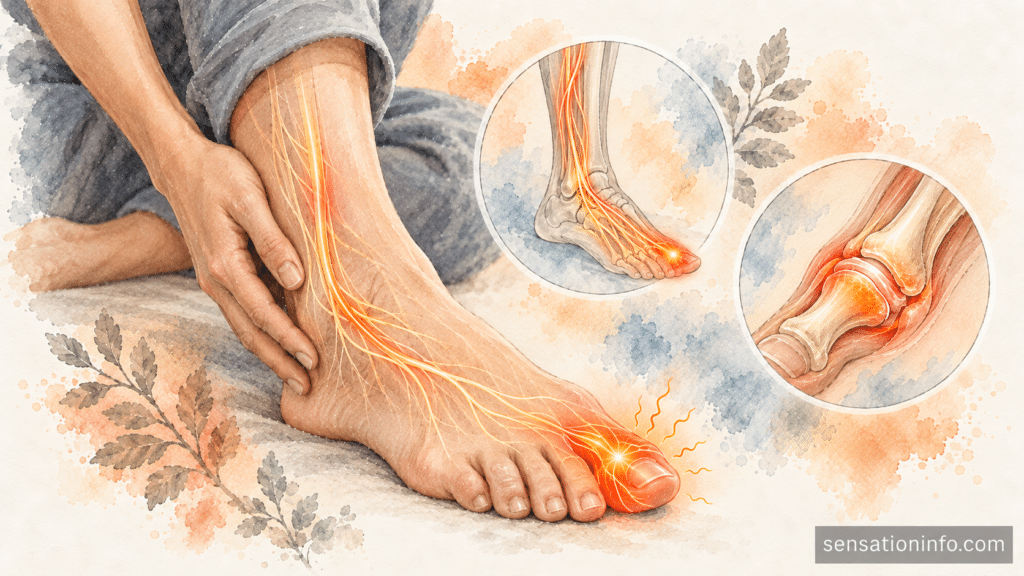
Tingling in your big toe usually happens when a nerve is compressed by tight shoes, a developing bunion, or early joint inflammation. If the tingling feels like a simple buzzing without pain, it is often a mild nerve irritation. If the base of your toe becomes red, swollen, and warm to the touch, you are likely dealing with a joint problem like gout or arthritis. Understanding exactly what you are feeling is the first step to finding the right relief.
When to Seek Immediate Medical Care
Most big toe tingling is not a medical emergency. However, nerve symptoms can sometimes signal a more serious health issue. You should seek immediate medical attention if you experience any of the following warning signs:
- Sudden tingling or numbness that spreads up your leg or affects one entire side of your body.
- Severe and sudden pain in the big toe joint that wakes you up from sleep.
- A toe that feels cold to the touch or turns pale or blue.
- Tingling accompanied by confusion, difficulty speaking, or facial drooping.
- A warm red swollen joint accompanied by a high fever.
Common Nerve Causes of Big Toe Tingling
Nerves act like electrical wires sending signals from your feet to your brain. When these wires get pinched or damaged, they send mixed signals like tingling, burning, or paresthesia. If you want to understand these signals better, having an understanding of to abnormal sensations in your body can help you decode what your body is saying.
Local Nerve Compression
The most frequent reason for a tingling big toe is simple pressure. The nerves running along the inside of your foot and toe sit very close to the surface. Wearing tight shoes with a narrow toe box squeezes these nerves against the bones of your feet. This pinched nerve effect cuts off normal blood flow and nerve communication. Removing the poorly fitting shoes usually stops the tingling within a few minutes.
Tarsal Tunnel Syndrome
Similar to carpal tunnel in the wrist, tarsal tunnel syndrome happens when the main nerve running through your inner ankle gets squeezed. This nerve compression often sends a tingling or burning sensation right down into your big toe and the sole of your foot. You might notice this feeling gets worse after standing for long periods.
Diabetic Nerve Damage
High blood sugar levels over a long period can damage the tiny blood vessels that feed your nerves. This condition affects millions of people. In fact, the National Institute of Neurological Disorders and Stroke reports that peripheral neuropathy affects roughly 30 million Americans. If you have diabetes, managing your glucose is the most effective way to prevent or slow down diabetic neuropathy sensations in your toes and feet.
Joint and Bone Conditions
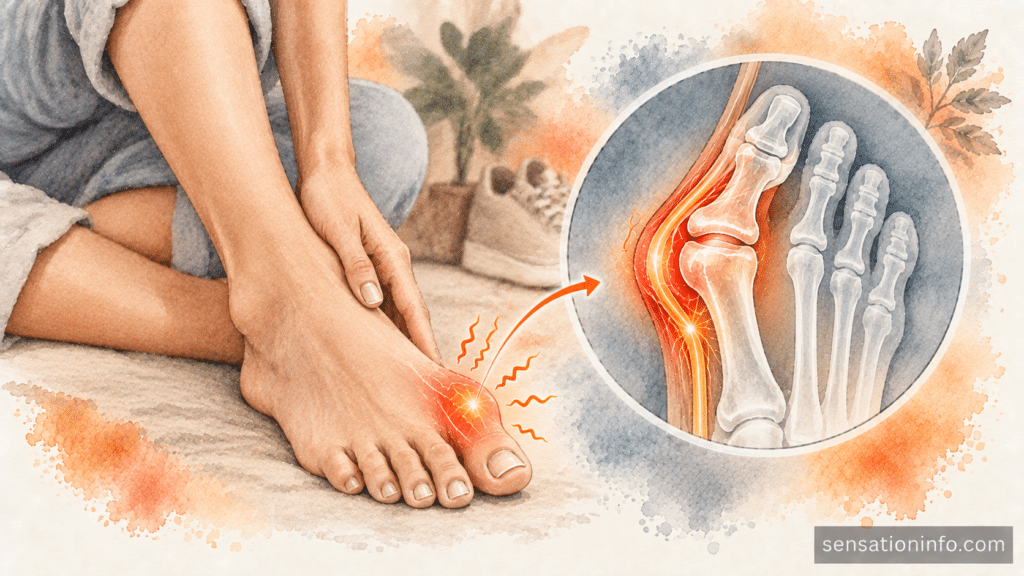
Sometimes the tingling is not a primary nerve issue. Instead, a problem in the joint creates swelling that presses on the nearby nerves. The base of the big toe is particularly vulnerable to joint problems because it absorbs a massive amount of force every time you take a step.
Gout Attacks
Gout is a very painful form of arthritis caused by a buildup of uric acid crystals in the joint. Before a full gout attack hits, some people feel a warning tingling or burning sensation in the big toe. According to the National Institutes of Health, the big toe is the site of the first gout attack in about 50 percent of cases. Once the joint inflammation fully begins, the tingling usually shifts to extreme pain, redness, and swelling.
Bunions
A bunion is a bony bump that forms on the joint at the base of your big toe. As the bump grows, it forces your big toe to bend toward your other toes. This abnormal angle stretches and irritates the small nerves crossing the joint. The Cleveland Clinic notes that bunions affect about one in three adults in the United States. The constant friction against your shoes can make the skin and nerves over the bunion feel numb or tingly.
Hallux Rigidus
Hallux rigidus is a specific type of osteoarthritis that attacks the base of the big toe. Over time, the cartilage wears away, and the joint becomes stiff. Bone spurs can form around the degenerating joint. These sharp bony growths can press against the local nerves, causing a tingling or pins and needles feeling every time you push off the ground to walk.
Is It a Nerve Issue or a Joint Issue?
Figuring out the root cause helps you choose the right treatment. Here is a quick guide to help you tell the difference between nerve irritation and joint inflammation.
| Symptom | Likely Nerve Issue | Likely Joint Issue |
|---|---|---|
| Primary Sensation | Buzzing, electrical, or falling asleep feeling | Throbbing, aching, or extreme tenderness |
| Skin Appearance | Normal color and temperature | Red, shiny, swollen, and warm |
| Triggers | Wearing tight shoes or sitting awkwardly | Eating certain foods or sudden onset at night |
| Movement Effect | Wiggles freely without deep pain | Bending the toe is stiff and highly painful |

How to Find Relief at Home
If your doctor has ruled out serious conditions like gout or advanced neuropathy, you can manage many causes of tingling in your feet with simple lifestyle adjustments.
Give your toes plenty of room. Choose shoes with a wide toe box and a low heel. This simple change relieves pressure on the nerves and prevents bunions from worsening.
Apply a cold pack to the base of the big toe for 15 minutes if the area feels slightly swollen. The cold helps reduce local tissue inflammation that might be pressing on a nerve.
Massage your foot gently. Rolling your foot over a tennis ball can help relax tight muscles in your arch and improve blood circulation to the toes. If home care does not help, a podiatrist can evaluate your foot structure and recommend custom shoe inserts. If you frequently experience complete loss of feeling alongside the tingling, discovering targeted ways to resolve numbness in your toes can help restore normal sensation.
Key Takeaways
- Tingling in the big toe is most often caused by narrow shoes pinching a nerve.
- A tingling sensation that quickly turns into severe pain and redness is a classic early warning sign of a gout attack.
- Managing blood sugar is critical because elevated glucose can cause permanent nerve damage in the extremities.
- Structural foot issues like bunions and bone spurs can physically compress nerves and cause localized tingling.
- You should seek immediate medical care if the tingling is sudden, spreads up your leg, or is accompanied by signs of a stroke.
Frequently Asked Questions
Severe dehydration can cause electrolyte imbalances that affect nerve function throughout your body. While this usually causes muscle cramps or widespread tingling, it is rarely the sole cause of tingling isolated to just one big toe.
B complex vitamins are essential for nerve health. A deficiency in vitamin B12 is a well known cause of peripheral nerve damage and tingling in the feet. Always check with your doctor before starting high dose vitamin supplements.
Yes, as a bunion grows larger, it can stretch and rub against the small nerves that run along the side of your foot. This constant friction and pressure commonly causes a tingling or numb sensation directly over the bony bump.
Doctor’s Recommendation
If your big toe tingling is persistent, spreading, or accompanied by numbness, it may be time to consult a nerve specialist. A neurologist or specialized pain doctor can perform clinical studies to pinpoint the exact location of nerve damage and offer advanced treatment options. You can explore a directory of neuropathy specialists in the USA to find qualified care near you.
References
National Institute of Neurological Disorders and Stroke. Peripheral Neuropathy Fact Sheet. 2023.
National Institutes of Health. Gout. 2022.
Cleveland Clinic. Bunions (Hallux Valgus). 2021.
American Academy of Orthopaedic Surgeons. Tarsal Tunnel Syndrome. 2020.